Episode 62: 2025 Pennsylvania Principal of the Year Laura Tobias on Restorative Leadership, Culture, and Student Engagement
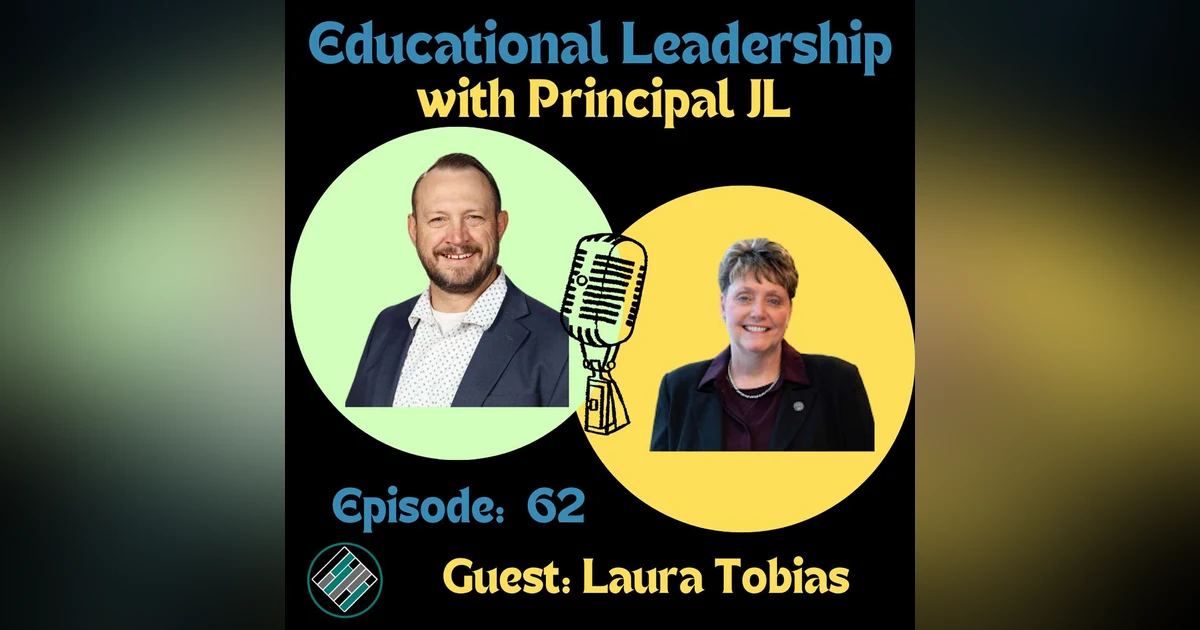

Send a text What if a high school could heal and improve at the same time? Principal Laura Tobias, 2025 Pennsylvania Principal of the Year, shares how she led a 2,400‑student campus through crisis into a culture defined by love, restorative practices, and relentless follow‑through. The story begins with hard truths: post‑pandemic grief, serious discipline incidents, and a community searching for footing. Laura didn’t double down on exclusion; she doubled down on connection, clarity, and stude...


What if a high school could heal and improve at the same time? Principal Laura Tobias, 2025 Pennsylvania Principal of the Year, shares how she led a 2,400‑student campus through crisis into a culture defined by love, restorative practices, and relentless follow‑through. The story begins with hard truths: post‑pandemic grief, serious discipline incidents, and a community searching for footing. Laura didn’t double down on exclusion; she doubled down on connection, clarity, and student voice.
We dig into the daily moves that changed everything: a simple morning message, “We love you”, paired with visible, consistent expectations. Restorative circles became the default for conflict across students, staff, and even families, supported by the React process to surface harm and repair it with dignity. Instead of reflexive suspensions, students complete accountability projects that teach skills and rebuild trust. Discipline drops, belonging rises, and kids start asking for restorative conversations on their own.
Culture sticks when recognition is real and routines are predictable. Laura’s team leveled up PBIS with clear mantras, respect it, own it, advocate for it, represent SC, and Pride Coins that celebrate small, specific wins in the moment. Student-produced videos reinforce monthly themes, while school wide mental health summits give everyone two hours of choice-driven connection before high-stress breaks. Teachers lead sessions based on their passions, building relationships that make learning safer and stronger.
We also talk about the adults: designing teacher-led PD that people actually want, growing aspiring leaders through committees and shadowing, and recruiting the next generation of educators with honest optimism. The takeaway is practical and hopeful, compassion, and accountability aren’t opposites. When schools lead with love, set high expectations, and make consequences teach, communities transform.
Connect with Laura Tobias:
email: lst13@scasd.org
Phone: 814-574-1500
New and Improve
Teach Better Mid Roll Network Ad
Click Here to Connect with Principal JL:
00:00 - Opening And Guest Introduction
04:27 - Laura’s Unlikely Path Into Education
11:05 - From Classroom To Leadership Mindset
18:31 - Post‑COVID Crisis And Culture Reset
25:49 - Daily “We Love You” And Belonging
33:31 - Student Mental Health Summits
41:49 - Restorative Practices And React
49:43 - Circles At Scale And Family Dialogues
1:20 What if restorative practices can transform the culture of your high school? Well, today you're lucky because Argus is a true example of leadership with both heart and results. She has built a culture grounded in kindness, relationships, and data-driven decision making. And the outcomes speak for themselves. Joining me today is Laura Tobias. She is not just the principal of State College Area High School in Pennsylvania, but has also been named the 2025 Pennsylvania Principal of the Year. Since 2021, Laura has led her school through post-pandemic recovery with passion, purpose, and a strategic vision that produced measurable improvements in attendance, discipline, and student engagement.
2:06 Under her leadership, the school has earned the Josten Renaissance Platinum Award of Distinction in 2024 and ranked in the nation's top 1% by USA News and World Report. Her story has been featured in NASSP's Principal Leadership Magazine, the article titled Leading with Kindness, and she has recently delivered a keynote address called Teaching, Leading, and Believing, partnering for the Future of Education. Now let's get to the conversation with Laura Tobias. Welcome back, everybody, to another exciting episode of the Educational Leadership Podcast.
2:55 Today I am so excited to have Laura Tobias on the show. Laura, welcome to the show. Thank you. All right, Laura. I'm going to go ahead and jump right into it. Sure. I'm going to ask you the same question I ask everybody on the show. What inspires you to become an educator? Well, it's kind of one of those long stories. I wasn't going to be a teacher. I come from a family of teachers. My mom was a teacher, my grandmother's a teacher, my stepfather's a teacher. I was never going to be that teacher, right? Like, but in undergraduate, I fell in love with political science and policy and history classes.
3:37 I worked for a congressman and was hoping to go to Washington, D.C. That was, I thought I was going to be president of the United States, right? Like this young graduate and wanted to change the world. Well, that didn't come to fruition as what I thought it was going to be. And my family was like, well, now what, Miss SmartyPants? What are you going to do? So I was like, uh, I love those classes. I love those history classes. So I went back to school to become a history teacher, social studies teacher. At that time, middle schools were becoming very popular. So my mom is in higher education. She was a dean at St. Bonaventure University and a vice president of that university.
4:21 So she said, listen, you need to be certified in elementary and secondary because middle schools could just hire you, right? And you could do it all. So I thought, okay. So I went and got my master's degree in advanced teacher education that certified K to 12 and in two states, New York and Pennsylvania, because St. Bonaventure University is on the border between the states. So it was easy for me to student teach in both states. That's how I ended up in teaching. Started my first job in Hammondsport, New York, on Lake Cayuka. It was like a great gig is your first teaching job. You know, met my husband and moved to central Pennsylvania, where he was from, and ended up teaching here in a rural district for many years, social studies.
5:10 I've taught elementary and high school. That's kind of like my stepping stone. Like it was a path I didn't see, but it actually took me to teaching and being with kids. Yeah. So you kind of talked about you kind of worked with a congressman uh for a while, and then you got into teaching history social studies. So, with that experience, how were you able to bring in some of that real life experience into the teaching part when you're doing social? Do you have any stories on how that helped you? I don't know that I have any stories. I think now it's interesting because when you talk about policy and policy making is from an administrative standpoint, right?
5:51 Thinking back to those days, I was like, wow, it's really coming back to fruition. I as right with the job that I'm currently in. If they ask for policy and reviewing policy, sharing those things with teachers, right? That was an interest back when I started my undergrad. So I don't know that I have really any stories about the history. I think I always tell stories about like I was gonna be president, and this is why. And the kids are like, what? But yeah, it's it's I think I think I tell kids now just because you think you want one thing in a career path, it takes multiple routes and it it changes, right?
6:34 You have to be flexible and you uh and you lean into these opportunities that exist. And I mean, look, I like could I believe I was principal of Pennsylvania principal of the year? Absolutely not. I pinch myself every day because of that. Uh there's so many great people. Like, what I was like, I just love my job, I just go to work. Like, what? Well, that and that's kind of the fun part about education. Like, for me, I wasn't someone that set out to be in education. I thought I was gonna be a physical therapist, and you know, I worked in the factory for a while. I mean, long story short, I got into education because I wanted a coach, and that's how I got into it.
7:16 Never thought to be a principal, but you know, I guess you know, God has other plans for you at times. You talked about teaching history. You were at in New York, you're in Pennsylvania, you kind of been in small rural school as well. Talk about you know how your experiences as a teacher have informed your leadership today. What is something that you learn in your teaching days that helped you to be the leader you are today? Well, I think I lean on every day. I ask myself, are we doing right by kids? The answer to that question better be yes. So I think for me, it's all about kids. Uh whether you're a teacher in the classroom, it's building those relationships with students so that you they know that you're there for them, you care, high expectations, right?
8:05 With that high support. And I think that was kind of my that's what I stood on, right? Like, I'm here for you, I'm serving. And then when you're a teacher and then a coach, right? I've coached multiple sports. You I wanted to do more. Like, how how do I do more? I think when the district asked me to be a dean of students, this is how it started, right? They're like, hey, could you help? You're really good at talking to kids, maybe helping with discipline. People thought I was crazy. They're like, why would you want to do that? Uh that doesn't bother me. Discipline talking to kids, right? They're funny.
8:46 And and you kind of learn to relate to them. So you became a dean of students, right? That's what I did. Then you became I became an assistant principal. You kind of there's this pathway of leadership, and I just wanted to keep doing more. And I think more for kids, but also more for teachers. Like, is there something I have that I could give you to make your life or job easier? So I just wanted to give back and serve. Well, I love that. I love how you talked about, you know, you want to just help kids more. And you're right, a lot of school districts, depending on their structure, you know, dean of students, assistant principal, you kind of still work with the kids uh a lot more, you know. And I know, like as you grow in your principalship or the administration, you just have different things you do, but it all comes down to how do you support the kids.
9:35 I look at as right now my job as a building principal is to support my teachers and my staff so they could be the ones to support the kids. So my way to help the kids is making sure the adults in the building are taken care of so they can take care of the kids in the building. And so that's kind of a you know, a kind of an aha moment when I took over into that principal ship, going from classroom focus into, you know, building focus and you know, leading adults and not just leading kids. And it sounds like you kind of had some of those same experiences. So kind of take us through some experiences you have, maybe as a dean of students, assistant principal that led you into the principalship, and then what's made you the leader you are today as a principal?
10:22 So I think I was an assistant principal at State High for several years and a ninth grade assistant principal before I became the head principal. This happened out of COVID. That I it was a it was a struggle. The principal that was in our role ahead of me was a mentor who then took on assistant superintendent, super, he's currently our superintendent, coming out of COVID as many schools across the nation experiencing just it was chaos, for lack of a better word. And I think students were hurting, our teachers were hurting, our staff, and we had a couple really bad situations, right?
11:08 Um, our high school we had a loss, we had two suicides, we had some serious fights, we had a homecoming dance that I was like, I don't I had to shut it down. I was like, what were we? We did it on the football field, right? Because it was COVID, and we thought, oh, the kids will be great outside. Wrong. So some of those were like big reality checks, and I was filling a role, and they're like, Well, you're not Mr. Johnson, right? Like I was like, but I I played basketball too, and I'm tall. Come on, and but it it it took some time to figure out and get my feet underneath me on like what what's important to me, and I kept re- I you realize real quick, like putting people at the table.
11:58 So I figured out I gotta bring kids in, right? I gotta put them to the table when we had the homecoming dance that was crazy. I was like, listen, I need what what would you guys like for a homecoming dance? And you're gonna come up with a plan. And if you don't come up with a plan, we're not gonna have homecoming. The grown-ups, right? Like, I'm I'm gonna own you're gonna give it to you to own this thing. So that kind of started shifting the way I thought about leadership. It's not just it, this is not me, this is you, and I'm gonna help you. And I'll and I usually say yes to pretty much everything anybody suggests, except they're gonna do the work to do it, and I'll help guide you along the way.
12:40 So there was a change there in that after COVID. And we also had to heal. We know as a nation, mental health in the schools is just it was something I I knew it was there, but when until you're in it, like okay, how do we how do how do we fix this? How do we help kids? How do we help teachers? So we have established mental health summit, we have many groups and organizations, right? We do suicide prevention week. So we're just kind of unified in our high school, a culture about taking care of ourselves and taking care of each other.
13:20 So I think that that's a big part of the start of changing when I stepped into this role as principal. I think I also realized, I'm sorry, I'm rambling. Uh you were at a principal's conference, and I don't know if you've ever heard Hamish Brewer, and he's the skateboarding principal, right? So we were always trying to think of like, all right, when you go to a conference or you hear somebody, you're like, what's that takeaway? And we were coming out of COVID. I was a new principal. There were days that it was hard, right? If he was crying on the way to work or crying home, like what I don't know how to help. What do I do? And Hamish tells his story, and I was like, Oh, that's it.
14:02 He tells everyone that he loves them. I was like, that seems so simple. So I took it, I came back and told my team, I said, guess guess, guess what we're gonna do? I'm gonna tell these kids that I love them every single day. And they were like, What? So I get on the announcements every single day. And I've done it with groups, clubs, athletic teams. Everyone's like, Mr. DeBice, we want to do the announcement with you. It could be small groups of kids, it could be individual students, it could be classrooms, you know. And basically it was it was hey, pause before you post. If it's not your business, it's not your business, leave it better than you found it.
14:44 And remember, stay hi. We love you. I would have bet my paycheck, there's no way. And now kids will walk down the hallway. We love you, Mrs. DeBise. I love you too. Get to class, right? Like, come on. Um, they made a giant cutout of me. I have a giant cardboard cutout. There's like two of me with the heart because I always like to say, We love you. It scares people. It's like, where's Waldo in the high school? And they want photo ops with me, and like it's just crazy. I was like, How did this happen? My assistants are like, You're this is nuts. Like, we we never believed this would be the thing.
15:24 So I think with care, listening, I think guiding students, loving them, but also having those high expectations has really turned our culture and climate around in our high school. Awesome. I really appreciate you talking about some of the hard stuff that you guys kind of gone through because, like you talked about having two suicides. I've had a suicide every year the last three years at my high school, and it's been it's been terrible. So, what we we did this year is we actually did some suicide training where I made all everybody from ninth grade all the way through twelfth grade, where the teachers would lead the training in their small group classroom.
16:05 And we had the kids, we have it called an intervention time or T3. So we scheduled the kids into a T3, they would go over the information. I would actually take everybody that was like we call it a relaxed steady. I take all those kids and all the PE kids into the auditorium, and I would go over, it's a very student-centered suicide training that we did with the kids because I learned or I found that we train our staff, we train our adults, but we didn't train our kids on how to talk to each other when they may come, you know, come in contact with that because they'll they'll become in contact with it way before we will. And so we try to give them tools and and ways to help people that may be struggling.
16:50 And so far, so good, let's cross your fingers that things have gone really, really well. But we've also been able to help kids more because they're more open to coming and talking to an adult where maybe that wasn't the case all the time, and so that's where like that got to me when you talked about that because I started to flash back into that, that those things that I've been dealing with too. It's it's traumatic for a school community, um, and and the teachers, right? Like and the staff, and for us as administrators, like I it kept you up at night. You never want to see this happen. We I think do things like you we have teen mental health first aid that we're putting in classwork, right?
17:34 Some trainings. We have organizations in our community. The Jana Marie Foundation has come in, they're so great and set up counseling sessions, they work with our kids, they help with Suicide Prevention Awareness Week, they meet with parents. So we're just we just outreach to anybody who can come help us. And I think, like you said, students now have this, we've destigmatized. So they they do want to talk about it. This is important to them. And so when we created mental health summit days, we usually do them maybe for before winter break and before spring break, where I'll run a two-hour delay schedule.
18:16 Not really a schedule, but an internal delay schedule. And kids, 2,400 kids and adults, we have all sorts of different activities from movies to tying flies to painting to a puppy station, basketball, like dance, dance revolution, like anything a kid would want for two hours, and it's you just go do with teachers. So we set up board games and card games, artwork, just so that we can connect as a community for those two hours. We have music, our bands play. I mean, it's just it's amazing to see the kids, and sometimes it's just they want to hang out with their friends, maybe in not that stressful academic class.
19:01 They just want to be a kid, they just want to have fun in school, right? Yeah, I love it. I love the idea of just having time where you just have fun. Like it's fun to be at school, and it's you know, we want you here. That's part of the culture you're set in. I really, really love that. The different things you're giving me a lot of ideas now. I'm gonna like my teachers are gonna be like, Where do you get this from? People worry, right? They're like, there's no way two hours, like what of unstructured time? We haven't had a discipline issue yet. Yeah, I bet you they enjoy it, they love it, they want to go play ping pong, or they want to go have an interest and maybe just chill in our auditorium and watch a movie.
19:47 Or, you know, we have our culinary students who might be doing a hot chocolate bar with cookies that they baked, right? Like kids want to have fun. What's interesting is you're building those connections with teachers in a different way, you know, because teachers are leading sessions, some of them are teaching kids how to tie flies, some were teaching them how to knit, you know. Whatever your passion or whatever your strength is, sharing it with kids is they love they love it. It's only for two hours. Yeah, that's awesome. I love it. I love that love those ideas. So, no, let's kind of talk about you you are big on restorative practices in your building and relationship building.
20:28 Obviously, you gave us a lot of examples on how you're doing that, and I really want to kind of have you talk about the restorative practices you do. I think I heard a few of them mentioned as you were kind of talking about the different things you do. So, you know, what led you to do restorative practices or have this type of approach with your school? What was the the is that something that was already there, or is this something that you built over the time? It was already there when I came to State High. I think it has grown and developed even more. Having circles, right? Like we talk about when we came out of COVID, we needed some mechanism to connect, right?
21:12 Even listening, which was hard to students and to teachers. So using that circle model was really powerful. We had many people who are trained in restorative practices within our district, so they could train a trainer model. We have organizations where we bring kids to the table to be part of conversations. We have what is called React, which is I gotta remember this, the acronym respond, engage, advocate, communicate, and teach. And so that's there for to make sure that all people are treated with dignity and have opportunities to learn in a very safe space together.
21:59 You can file a React report if you feel that something has happened to you. It's like SAP. We have SAP student assistant program, but React was is served by our teachers. There's teachers who volunteer to do this, and we have it available that kids could file a React report, adults could file a React report. And what that means is then this team of teachers kind of looks at this report, and maybe we need to have a restorative conversation between two individuals and build some understanding of how they hurt one another, right? Or if we realize there was going to be a fight or there was a fight, how do we help them come back into school?
22:43 Well, maybe we're making them do an accountability project versus complete suspension out. And it's going to require some work with each other. And how do we treat each other in this space? Right. How do we say we're sorry? How do we listen when you've been hurt and not to do it again? Right. So restorative practices is a huge part of our high school, and our kids are involved in it as well. If that answers your question. Yeah, no, I mean you're kind of hit it on. I started thinking about you have a student population of 2400 and you do circles. How do you do circles with that? Many students? Well, usually they're done sometimes in homeroom when we have a homeroom.
23:27 We've done circles. If there was, like I said, maybe a situation between a group of kids, you know, we would bring in some restraint restorative trainers and do a bigger, bigger circle, but maybe with two pockets of kids, right? We've had some adults involved in restorative where they were having a conflict with a colleague and trying to work through that with a trainer, right?
24:09 A restorative person who could lead them through that conversation. We've had some circles with parents and students. It's I think a process. I think we're committed to that process of this restorative mindset. And I think it's it has really helped. I think kids will even say you can ask it, would you like a restorative conversation? This is something we can do and we can help. I think parents appreciate the fact that there's we're also learning, right? Like how how do how do I do that with a student versus maybe just suspension?
24:49 We can do some other things to help you learn. It's a safe place, it's school, right? We should be teaching students how to engage with each other so that when they do leave us and they're in the world, and we're raising great citizens to take care of you and I when we're old, right? We hope that they know how to treat one another and listen and care for each other. So I think our restorative practices are everywhere, and kids are involved in that. You bet. I really appreciate you sharing those ideas and the things that you do because you know I don't hear a lot of high schools doing those things. I think you know, from my standpoint, where I'm at in the state of Nebraska, I've heard it done at the elementary level and done with um you know some of the middle school.
25:35 And I know for like me, we do what we call it a best process. It's just a behavior intervention process to where if a student is not following one of the expectations of the teachers, they go to the best room, or some people will call it the buddy room, where they process with the teacher in there, but then they have to process with the teacher that had them go to that best room or buddy room, however you want to look at that, to where they had to have those conversations because the whole goal is to change the behavior of what the students do. And like the behaviors, we're not mad at you, we're mad at the we we want to make sure we change the behavior. And we talk to kids about that, especially when we're we have to do the discipline or do some of those things to where it's not you, it's the behavior we're disciplining.
26:24 So that's kind of what we do at that level. It's not as advanced as you guys are doing, but I really appreciate you, you know, kind of sharing those things and how you do that, because you could really tell that those practices have really helped you build your culture and really probably gave those kids like they want to be at school because they know it's a safe space. And I really appreciate you you bringing that to the forefront. They realize the adults care about them, right? I think that when you look at discipline, because we've we've kind of tweaked that process as well. We had reports and our disproportionality was high, and we're like, okay, we need to do some different things, right? We're just you can't just kick a kid out of school.
27:06 That's not working, right? Like they just come back without I didn't really do anything, right? They got some days off of school. So we've really taken a hard look at our discipline. We talk it through, we do some a lot of accountability projects where, you know, if a student is vaping or they got into a fight, what kind of project can we build for them that they have to work on during their maybe lunchtime? I take their social time away, right? Versus kicking them out of school. Um, and maybe they work with our Dina students or their special head teacher or another teacher, and they develop a project and then they share that project with me, an administrator or their parent.
27:49 What did they learn from this? Right. Instead of kicking somebody out of school, let's do something different. Now we still suspend. I'm not saying we don't, but I think having that restorative lens and that conversation about how do we teach kids about relationships and how we engage in a space with all these people and why that's significant and important. I think this is helping. It's it is changed. Our discipline has dropped, and I think there's a lot of different things. We also have PBIS. Do you have PBIS? Yep, we do. We do the PBIS Tuesdays where they have a lesson every Tuesday, and we talk a lot about you know how to treat each other, but there's a lot of things into it.
28:33 Like it's every Tuesday throughout the year. PBIS in a comprehensive large high school is hard, right? So we had we created PBIS committee. I have a PBIS code. Develop our mantras, right? Like respect it, own it, advocate for it, represent SC. We I started Pride Coins this year, which is really starting to take off, where we could recognize a person for just any little thing, right? Like uh my theme this year was the power of small. We're doing really well academically, but we want to nudge that data, right? We're doing well with discipline and attendance, but we want to nudge a little bit more. So I've thought about the military and they recognize with coins.
29:17 So I had students develop and a pride coin, we call it because we're the little lions, right? So honor that pride, honor the pride, develop coins where teachers and administrators could give and recognize high school students. Amazing. And then I have other students making videos about the theme of the month or the word that we were talking about. So that has been really powerful this year. And of course, we're on the morning announcements every day and say the mantras all the time. So the kids repeat, right? You have to keep doing it, you have to repeat, and they have to know that you care. I guess be authentic, right?
29:57 Like they laugh at me and they think I'm crazy, but I am a little bit, but it's okay, right? I can love on you, but I have some high expectations. Yeah, I think you and I are alike in that way to where we will hold you accountable, we'll have high expectations. We might be a little quirky at times, you know, and I am I am that way as well. And some people like go on, you know, I do love my job, I do enjoy what I do, and people, you know, will be like, you know what? If Mr. Lenin can be here and have a good time, so can I. Like, well, my day can't be that bad because we know the crap that he has to go through some days. So they they understand the you know the the situations and the things I deal with on a daily basis, but they also know I'm here having fun with the kids, with the with the adults.
30:47 You talked about the pride coins, and this year we had to make a change to our pride tickets. We we're we're we're with the tigers, so we have pride as well within our PBS. And so we have pride tickets, but the kids like would get a pride ticket, they're supposed to turn them in to win a prize. Well, the kids would hoard the pride tickets. So we made the pride tickets to where that once they get one, we cut off the little stub, they keep the tickets so they can hoard the ticket, and we have the stub, we have the teachers put the stub into the the drawing because we do weekly drawings for for prizes and stuff like that at our school. So, yeah, we we we tweak our we have a PBS committee, and my PBS committee is actually helping me.
31:34 We're gonna do breakout sessions in our next PD. We're gonna have four breakout sessions for all the teachers, which is something that we haven't done. It's something I've always wanted to do. Yeah, so we're creating a professional development process with the PBIS team, and they would perform and we would go, What are hot topics? What are things you guys want to know or learn? We gave them some ideas and we give them a chance to really communicate those ideas, and then we had them vote on the top ideas they want to hear, and so the top four made it, and so we have people presenting, and then we're gonna group them in departments and have them rotate. Um, it's gonna be about a two-hour deal, but it's not gonna be the whole diet day, it's gonna be something where you're gonna get something valuable, you're gonna get some PD, it's gonna be, you know, just not Mr.
32:23 Lennon talking at you all the time. It's you know, we have other people that are gonna, you know, do sessions and it gives them ability to lead sessions and have that leadership ability as well. So we're gonna we're gonna try that, see how that goes. But that's kind of how we're you do, yeah. So well, I'm excited about it because it's something I've always like, I want to do this, but how do we do it? And they came to me and said, Hey, we want to do this. I'm like, Great, you like you're reading my mind, and let's do this. So it was a lot of fun. And we're actually just yeah, we're really just really trying to hunker down what that's gonna look like coming up, but they're pretty excited about like I'm getting teachers excited about PD because it's about something they want to learn. So yeah, there's something they want to learn.
33:03 So I'm excited about that. We had things called sure shots, where like every other month where teachers bring their professional development and topic. Like if I needed someone to lead professional development on tier one interventions, or our interventionists are talking about our ACE program or our learning centers, right? So we something similar to that, and where teachers then can rotate through or go to the session that interests them the most. So it's it sounds similar to that. Yeah, we're gonna get them, they're gonna have four sessions, they're all gonna see all four sessions, and we're gonna rotate them that way, but down to where we can do this in a pretty good chunk of time and be pretty efficient about it.
33:44 And so we're really excited to see how that that goes, and hopefully it goes well. I mean, we'll we'll see. You don't know, I don't know until we do it. You don't know unless you try. Yeah, that's kind of the thing, you know, you don't know until you actually try. And so, Laura, we've been talking about a lot of different things and you know, it's been great conversation, and I'd really like to like talk about you know you becoming the 2025 Pennsylvania Principal of the Year.
34:52 I want to know how did you find out? Because I like to listen to the stories on how people find out. Was it a surprise? What is it like a full? I don't know. I've heard lots of different versions on how people found out. So, what's your story? It was a surprise. We were at uh a large admin meeting uh in December a year ago around the holidays, and the superintendent walked up to me and said he was on the phone, he had taken a phone call, and he's like, Laura, I need you to talk to this person. I was like, Oh no, right? Like I thought it was a I thought it was a board member, it could have been a parent. I wasn't sure.
35:32 Everybody's in this room. We were having our meeting, and Dr. Ekbah, the principal's association, was on the phone, and he was like, Hey, I'm calling to let you know that you are our candidate for Pennsylvania Principal of the Year. And I was like, What? I completely surprised, stunned. I mean, it was such an honor to be nominated, and then to actually win it, I was it's just amazing, right? Yeah, I pinch myself every day. I'm truly blessed to be in this career. I love my job, and I got an opportunity to meet all these principals from across the nation.
36:16 It was like just like a dream, right? It was just amazing. Have you ever gone out to the NASSP conference before that? No, no, now I'm like hooked. Like, I'm like, I want like yeah, it's inspiring. It was, I guess you're looking like to fill your cup, right? To be fulfilled. It was just inspiring. And our cohort of principals, I think we just bonded so quickly and over all these different issues, right? Like, comment, how do you do that? And then you're exchanging these ideas that are like, I'm gonna steal that. I want that idea, right?
36:56 And they're like, Well, what do you do? And so you're just kind of sharing these great ideas and that you're using in your high schools. Yeah, no, I I love it too. I know the first time I went out to the NASSP and you know, the the Unite, the United Conferences was in Denver a few years back. And I went, I took my team, we went out there, we loved it. You know, something I can't do every year. Good thing that NASSP is taking a year, you know, not till next February, a year from now, when they'll have their next one. But at the same time, you know, just getting to meet other principals and what they're doing and picking their brains. The person we have in common is Tony Cattani, where I got to meet him.
37:39 Yeah, you got you got to be on his podcast, him and I'm on his podcast. He's yes, you were. So I was on his podcast, then we both ended up on the same flight out, right? So at least I felt like I knew him. We became like easily, very quickly bonded on you're from Jersey, I'm from Pennsylvania. We were on the same flights, we were with Jess Quinter, right? We all flew out together, and then he wins it. I and I it was funny because we walked in the room, I swear he knew everybody. I was like, Tony, what the heck? He goes, It's the podcast. I was like, Okay, it makes sense.
38:20 He's fantastic. Yeah, him and I I I listened to like leaning into leadership with Dr. Darrin Peppard, who's a friend of mine now because we both are in the podcasting world. And I really started, you know, not this last year, but the year before. So I've been doing this podcast for really a solid year. I've had it longer than that because I wasn't very committed to it until lately. But because of that, I listened to Tony's episode and then I started reaching out to him as like, hey, what's hook up? I would like to learn more about your peer observation because it's something that I would like to do something within our school as well, and kind of how he structures it. So we got to talking about that, and then of course, we just talk back and forth.
39:01 We'll text once in a while. He came on my podcast, he eventually I'll get on his, but I told him I know he's busy, he's trying to get to a lot of people, and so just having those connections with people, you know, is fun because then we get to learn from each other, and that's what we like. I love about the podcasting side is getting to meet people like you, have you on the show. We're learning together. Everybody out there that's listening is going to learn from you tonight as well. And we could take something from each other to get better. And the thing is, is listening to other people, like, wow, we do something similar. Like, hey, I'm like, you you go, I'm on the right path. It's like, yes, we're not doing like we're all doing something maybe a little different, but we're all you know doing something similar.
39:44 We're not, you know, I mean, like it's that's it gets validation when you hear the other principals talk about the things they do, and you get that cup filled, like you talked about uh during that time. And so I would encourage people to go to your state conf conferences, your national conferences. We have a really good one here in Nebraska every summer for three days. We have admin days in the central south central Nebraska to where we all get together and it's just a lot of fun. And the national conferences are really fun too. If you get the chance to go, I'd say go. You know, that's my advice on that. Great network and you're making great friendships, and they can call you up and say, Oh, Laura, how tell me how you did that?
40:28 I've had numerous phone calls about painting our parking lot, and seniors get to paint their spot. How did I do that? Where'd I get that from? I stole that. I'm gonna have to ask you because I have seniors asking me to do that. I'm like, how do we do that? And it's they pay money to do it, like so. You have a parking spot, yeah, and we let them design it and paint it, and it's theirs, and we make it like a big event with their parents, and I bring in food trucks and music. And one time I brought in a giant water slide for the day and made it an event for seniors to treat them their special. This the spots are only for seniors.
41:09 I don't have many parking spots on my campus, so that has kind of taken off as well. Oh, cool. Well, I'll probably be texting you about that sometime, as well as restorative practices. We got each other's numbers, so yeah, you know, or the nice thing is, is beyond this episode, our relationship's gonna go beyond that, right? Where you know, like I'm listening, I'm like, well, hey, I'm gonna have to write this down, like you just did earlier. Write this down, we'll have to pick each other's brain. That's what I love about this. We call it, you know, Josh Tovar, he always calls it free PD. So we know this is free PD for people, and you know, you don't have to be stuck in your silos, just turn on the podcast and listen to some of the episodes and get inspired.
41:54 So that's the best thing. So, what I mean, you kind of talked about it a little bit. Your doors have really opened up since you've been the principal of the year. You really got to experience some different things you haven't before. So, how has that ride been for you? What have you learned, you know, through this experience and the people you've met and the things that you have come to to know now that you maybe didn't know before? I think I I'm not crazy, right? Because, like you said, oh every they're doing it like this, maybe just a little bit different, or they have other ideas. I think it's our passion and it's about kids every day.
42:36 And it's so cool to connect with other people like yourself that are like, oh, this is it, right? Like we love our jobs, and this opportunity was just amazing. I to connect with leaders all across the nation. I right, I can't, it just is it was hard for me to believe, right? And and living it is just like the coolest experience. And my my assistants are like because they think I'm crazy. Like I'm like, I mean, I make them do like really some fun things, they think it's crazy, like assistant principal week, right? I said no, I clear I clear their calendars for the week, and I put them in classrooms where they actually do things with kids.
43:21 Like, so for example, AP Art Studio, they had to paint a canvas with kids, kids were their teachers. We did pottery where they had to throw clay with kids. I made them do like Olympics in the shop with our building construction students. I've made them do ride big tricycles around the high school with their favorite student, any student they wanted on a Friday. Like you just get on these trikes and ride, ride or die with your AP, right? Yeah, but I said you need to understand when you're in these roles that there is so much good, and you have to really focus on the good. So I think being principal of the year has just been this most amazing experience.
44:06 I couldn't, I can't even put it into words, how awesome it was, and to connect with all of these colleagues and friends. I write truly they are friends, and sharing our ideas about how to help kids in a high school is just it's the greatest thing. You bet. I appreciate you sharing that with us. So you hear a lot of things about education, a lot of it's not positive. So let's talk about something that gets you excited about the future of education. Is there something out there that gets you really excited about the future of education? Well, I'm now okay. Now that's a stumping question. I'm like, what's exciting?
44:47 I think I've done a couple speaking uh situations with student teachers, right? I did the pashi with professors, education professors, on like what like what are we looking for in education and teaching? And this next week I'm going to the Commonwealth University and speaking to student teachers about uh this is the greatest profession. You get to influence students and impact their lives, and it's just such an honorable profession. And I think for me, uh we need to recruit and we need people to see that, and we need good people with kids every single day.
45:31 So for me, it's like getting out there and being advocating for teachers. We need good teachers, we need people with our kids every single day. Yes, we all have virtual programs, I'm sure. We all know that you can do this. Kids need adults and they need people in their lives. And so I feel like for me, that's really important, and that's something I want to give back. Somebody did it for me, someone did it for you, right? When we were student teaching. But I think that's a big part of it. And, you know, right now it's a struggle. Some people don't want to go into education. It is a lot of it's hard work, it's emotional work. There would be an argument that the pay is not the greatest, right?
46:14 So, what do we do and how do we advocate for public education and recruit? Recruiting to bring people back into this profession. It's important. It's important work. I really appreciate you talking about what's getting you excited and all the things about just trying to shine a light on education, how awesome it is, how much fun it is, and the people that we need, we need to bring people in. I know we do a work-based learning program where we're trying to grow our own in a sense to get people encouraged to go into education so they get to go do an internship at an elementary school as a para and get to work with kids and really try to light that fire.
46:57 And actually, last year, all five kids that were in the work-based learning program, which was our first year of doing paid internships, all five of them are now in school to become educators. So we're like going, that's why we're doing it. So we're trying to, yeah. That's it. That's cool. We have some Aspire Ed classes now that we're starting, and we have a good group of kids who are going through that program and they want to do internships. That's what comes next. So that is cool. And they all want to be teachers. I was like, Yes. So we got to kind of grow our own in a way, but we got to send positive messages out there, like you're doing, going out and speaking and saying this is why education is the greatest profession out there, and all the great things you can do and help and impact and those things.
47:42 So I really appreciate you bringing that up to light and sharing that. So we've talked a lot, a lot of different things tonight, Laura, and we're kind of winding down. You know, if someone was wanting to become an administrator or aspiring administrator, what would you tell them? What advice would you give them? I think try to, if if you're a teacher leader, if you're a teacher who's thinking about this, get to an your administrator, somebody in your district and and at like, how can I how can I do this? Can I serve as a dean? Can I shadow you for a day?
48:23 Can I how can I help? And involve them in committee work. Involve them in some leadership role. Give them a taste of what that's like, right? I highly encourage that. We have a lot of committee work. I believe in in teacher-led, right? I'm I'm a facilitator. I'm like there helping you. What do you think will work? What do you want to try? Let's have a committee and decide. That's how our learning centers came to be was we had a committee looking, do we should we create a flex period in our day? They didn't think that would work. So we went with learning centers. So that has kind of over the last three years really developed into something. So I think if you are interested and you want to lead and you want to make a difference even more than your just your classroom, right?
49:12 You want to help more kids, help other teachers, then there is a way and and seek that out and get involved in your community in some way. Awesome. So Laura, before we go, if people are hearing this episode and would like to reach out and connect with you and learn more, how could they do that? Well, they can they could call me. They could email me at SCASD. My email's available. Lst13 at scasdy.org, s-c-a-s-d dot org. You can call my cell anytime, 814-574-1500, and you can find me on LinkedIn.
49:54 There you go. And then what I'll do is I'll put that in the show notes so people can connect with you. How about that? That's fabulous. I appreciate that. Yeah, no problem. Make it easy. Just go down, scroll up. There it is. When are you coming to Pennsylvania? Actually, I was there. I was actually I spent the night just north of State College, Pennsylvania, when we were traveling to the Pinstripe Bowl to watch Nebraska take on Boston College. So I didn't know you then. So I drove by it once. Okay. Well, sometime when you're on the East Coast, right? And we hook up with Tony, then we all go out to dinner. There we go. We'll have to do that sometime.
50:34 I think that might be happening sometime in our future for sure. So I really appreciate you being on the show. And before we go, do you have any last words you'd like to say? Thank you for having me. It's fabulous. I loved speaking with you, and hopefully there were some ideas there that someone can steal and take and use in their school. Awesome. This was a lot of fun, Laura. Hey, you have a good night. You too. What a great conversation with Laura Tobias. If this episode inspired you, share it with your team or another school leader who needs the reminder that compassion and clarity can absolutely coexist. Make sure to subscribe, leave a review, and follow along with educational leadership with Principal JL on all major platforms.
51:19 Until next time, less be the change in education by being curious and one percent better.