Episode 71: The Missing Link Between PLCs and MTSS: How Schools Improve Student Achievement with Kurtis Hewson
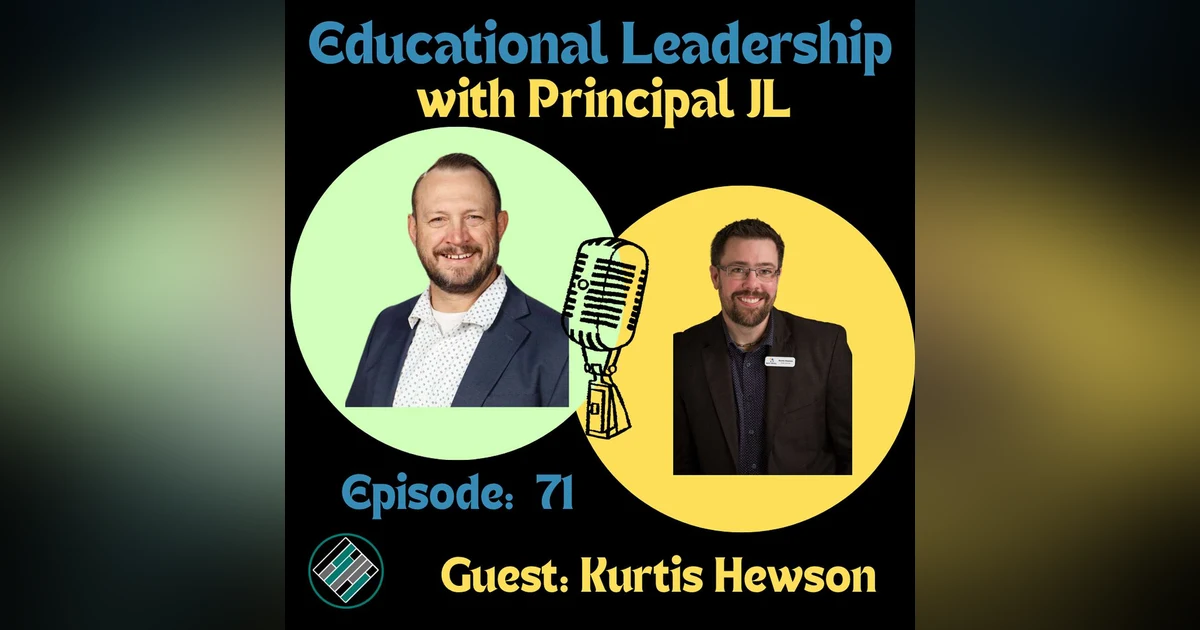
Connect with the Show Here! PLCs can be strong and MTSS can be strong, and schools can still feel like they are missing the connector that turns good work into a coherent system. That “missing piece” is what Kurtis Hewson calls the collaborative team meeting, a simple but highly intentional structure designed to bring classroom practice and student supports into the same conversation. In this episode, we talk about why educators burn out when they work hard but cannot see impact, and how coll...


PLCs can be strong and MTSS can be strong, and schools can still feel like they are missing the connector that turns good work into a coherent system. That “missing piece” is what Kurtis Hewson calls the collaborative team meeting, a simple but highly intentional structure designed to bring classroom practice and student supports into the same conversation.
In this episode, we talk about why educators burn out when they work hard but cannot see impact, and how collaboration changes that equation. Kurtis shares the leadership mindset shift that separates good leaders from great ones: good leaders solve problems, great leaders build systems that solve problems. We dig into practical ways to build a true learning organization, including the idea of “tiering supports, not students,” so the focus stays on what adults can do next instead of placing labels on kids.
Then we get specific about implementation. Kurtis explains how collaborative team meetings can serve as the bridge between PLCs and MTSS, bringing together cross-disciplinary teams every three to five weeks to share evidence, identify real classroom challenges, and exchange strategies that help everyone become 1% better over time. We also cover the practical structures that make meetings effective, including defined roles, strong facilitation, and protocols that keep conversations productive, focused, and psychologically safe.
If you want clearer systems, stronger instructional leadership, and a school culture where every student has a team, this episode is for you.
Subscribe, share this episode with a colleague, and leave a review so more educational leaders can discover the show.
New and Improve
Teach Better Mid Roll Network Ad
Click Here to Connect with Principal JL:
00:00 - What Connects PLCs And MTSS
04:01 - Catching Up With Kurtis Hewson
05:49 - Still Learning As A Leadership Habit
08:51 - Burnout And The Need For Impact
13:19 - Good Leaders Fix Problems
18:45 - Building Layers Of Collaboration
21:17 - Tier Supports Not Students
24:24 - The Collaborative Team Meeting Bridge
30:18 - Cross Discipline Strategy Sharing
36:13 - Roles And Protocols That Work
40:11 - Preventing RFAs With Proactive Help
44:46 - Why The Future Is Collaboration
48:00 - Final Thoughts And How To Connect
What Connects PLCs And MTSS
Principal JLWhat if collaborative team meetings was the piece that connected PLCs and MTSS together? Well, that's exactly what we're gonna talk about in this episode. This episode, I'm gonna welcome back Kurtis Hewson. Now, Kurtis was on the podcast before episode 22, so I would encourage you to go back and listen to that episode. It just talks about his educational journey and how he went from teacher to admin to what he's doing today. And today, what he does is he works with administrative leaders all over not just Canada, but United States, everywhere. And he's really well known for his collaborative response book. Now, in this episode, we're gonna talk about you know, just catching up, what's going on, how's he been, but at the same time, he's gonna talk about what inspired the new book that's coming out on May 19th. It's called Collaborative Team Meetings, The Peace Connecting, PLC, and MTSS. I'm so excited to bring this episode to you. Now let's get to the conversation with Curtis Houston. Welcome back, everybody, to another exciting episode of the Educational Leadership Podcast. Today I am super excited to bring back on the show Kurtis Hewson. Kurtis, I had him on the show probably about a year ago, and we got to learn about his journey. Today, we're just gonna kick back, we're gonna catch up and we're gonna see what's going on in his life and you know, career, and everything that he does out there for educational leaders. So, Kurtis, welcome to the show.
Kurtis HewsonJeff, it's an honor to be back and always love engaging in a conversation. I was sharing with you off recording that I just pulled in, had just been listening to an episode. So it feels like you and I have already been talking for an hour. I was doing a lot of listening during that time, but I feel like we've we've already been together for a while here.
Principal JLSo you you're kind of doing that active listening role on that part, right?
Kurtis HewsonThat's right. I was nodding and smiling a lot.
Principal JLThere you go. So hey, I appreciate you listening to the show out there. That's awesome. So, kind of what's you know, it's been about a year. What's happened over the past year? What have you been up to?
Kurtis HewsonOh, just continuing, Jeff, to work with schools and school districts around a framework that we've come to know and love is collaborative response. And through that work, I just continue to be able to learn, connect, get to spend time with amazing educators, with dedicated leaders. And yeah, the fact that I also get to do this work with my life with my wife is also very, very rewarding. So life is good, my friend.
Still Learning As A Leadership Habit
Principal JLAwesome. So, as you think about the last year, how have you grown as a leader and helping people? What are you have some good stories to tell us?
Kurtis HewsonYeah, I I don't know if this is for you as well, but I find that the more I learn, the less I I recognize that I know. And what I mean by that is just constantly being amazed at different ways of thinking, at reflecting on my own learning. I don't know if you know this, Jeff, but I have a tattoo on right on my arm here. I don't know if people, if they're looking at it, can see it. It says, Ancora imparo. And apparently, Michelangelo had written at the bottom of a piece of work that he had done at about the age of 85, this Latin phrase. And it roughly translates to still I am learning. And the fact that if a master like that at the age of 85 can still put runway in front of them and say, I'm still learning about things on this earth on in this life and with what I do, that's a pretty powerful message that I decided I need to have that with me as a daily reminder. So that's been the continued learning here, is just I think the best way to grow is to recognize there's still a whole lot more to learn. And then how can you engage in that learning with others?
Principal JLYeah, no, I hear you, man. I think over this past year, doing the podcast very consistently, I have learned a ton of new things from other people. And of course, I'm like going, I'm taking that, I'm gonna use that. And you know, how can I apply some of the things that I learned? And I think, you know, when you're an educational leader, it don't matter really what you're doing, if you're continuing to learn to grow and get better, I think that's the essence of what we do in our position because we need to, because we're not gonna have all the answers, and experiences change over time. You may have similar experiences, but things do change over time, and being able to learn and grow and get better is I think a key to our profession. So I really appreciate that insight that you have there.
Kurtis HewsonJeff, don't you also find that if as a leader you can't embrace learning and then really embrace your organization as a learning organization, hey, how can we help that? Or how can we help the people that we are supporting, which is those closest to the kids, to then impart that kind of thinking and mindset with our students? Of we're just constantly learning and growing. And sometimes it's difficult, sometimes we make times we'll make mistakes that we can learn from. But as a learning organization, you just constantly want to be moving and growing.
Principal JLYeah, because if you're not, you're just getting stagnant, and that doesn't help anybody. So no. All right. So, you know, you've been working with a lot of you know, school districts and leaders and things out there. What are some things that people are struggling with? What are some things that are like some common things that you're noticing? Like, hey, you know, these are some things that keep popping up. What could you share with us as someone that works with a lot of different people out there?
Kurtis HewsonOkay, so I want to go at this from a couple different perspectives, Jeff. And this is a great question, one that I reflect on often. What I see people struggling with and constantly coming up is educators feeling burnt out, feeling like they're doing so much and not seeing some of that return, sometimes feeling like they're stretched, like the resources aren't there. And we could have a whole nother podcast episode on how funding could look in education, but just feeling like there's just so much to be able to accomplish and that we're stretched thin. But then I also get to have the experience uh with educators who feel renewed, who feel purpose, who feel meaning. And yeah, they can admit there's things that are very difficult in this profession, but I'm engaging in those with a team, I'm working through them together. I don't feel isolated and and and burnt out. I feel connected and really seeing impact. I I reflect on a message years ago that came up from an educational assistant within our own school building who had remarked to a researcher that it was doing some work around the school and learning from some of the things that we were putting in place. She had revealed to him that I feel exhausted every day when I come home. But here's the difference, Jeff. She then said, But I can't wait to come back tomorrow. And I think we can, if we can embrace that in our organizations to understand that we're doing hard work and it takes effort and time. But I think as educators, I think the vast majority of us are not afraid of the hard work. We're afraid of not seeing the impact that comes from that. And if we can see impact, that's just invigorating for us. I to me, that's those are some of the things that I've seen, and that really is the crux of the work that we try and do is how can we create really robust collaborative structures and processes and systems that allow for that to happen?
Good Leaders Fix Problems
Principal JLYeah, you're you're talking my language there, buddy. Like, I know, like for me, I wouldn't be able to do the job I'm doing as a high school principal without having people in place, having collaborative teams, you know, just like today, yesterday, today, and the next couple of days, I'm gonna end up doing like 13 total interviews, hiring four different positions. Because in the state of Nebraska, a lot of school districts move their timeline up to March 15th. So if you're hearing this, I know this is gonna, I know this is gonna be an episode in like the May time frame, but March 15th is your like, you know, you need to commit to your school district or not are not commit, however you want to do that. But you get locked into your district to where if you would look for another job after that date, the school district can deny you your movement because they can say, you know, because of you know the March 15th date, we'll we'll keep you for another year. Um but or we have to find a suitable replacement. And if they can't find a suitable replacement, they can they can keep you in the district for another year. Now, with that said, that's why I'm just like boom, boom, boom, boom, trying to get these done because I have some open positions, they haven't been open very long, but I'm taking what I have, and but it's taken a team effort to do what we're doing. I just hired a band director yesterday. I'm gonna hire a couple of social studies and a counselor by the end of the week. So it's just like I'm exhausted, but I know I got a team of people that I work with every day. So, you know, I come home, I get ready, and I'm ready to go back and get back at it because it is kind of an exciting time to bring in fresh, you know, people and ideas and learning from those people. So being able to have that teamwork is important, yeah.
Kurtis HewsonAnd this has been one of my key insights this year because I've been working with a lot of leaders, and I'll be quite honest, I work with a lot of young leaders, people that are coming in earlier and earlier, and that are passionate, dedicated, highly skilled, but you know that there's a mindset shift from going as from a teacher leader into that building leader. Like there, you have to start looking and thinking of things a little bit differently. And what gave you success as a classroom leader, there's components of that that can support, but then there's other skill sets to learn and really helping, and especially around the collaborative response work that we do, there's a huge level of instructional leadership, understanding that needs to be in place. And this has been one of my key ahas that has come. And it's easy for me to reflect on this because I sat in the first place for I think far too long. And it was this I think good leaders solve problems. And what I mean by that is someone who's having difficulty is struggling, can a leader can seek them out, can say, you know, share with me, and then how can I help you? What can I do? How can we do this? Or even sometimes let me take that on myself and I can help you with that. Let me carry some of that load for you. I see good leaders doing that all the time, but I think the difference is I see great leaders create systems to solve problems. Good leaders solve problems, great leaders create systems to solve problems. And I think that's the difference that we want to look for is how are we? And it's just like you said, creating that team doesn't happen just from inspirational messages on a professional learning day, it comes from systems and structures and really thinking about how do you do that so that not everything lands in your office, but the systems can attend to it. And then we want to get to a place where those with the problems are engaged in the systems for them to help find the solutions.
Principal JLYeah, no, and I think you know, having strong systems will also empower the capacity of your teachers as well, because then they're not having to run to you for every little thing, you know, they can actually think through things. There's times I purposely make a teacher sit on something. So, and a lot of times when I do that, they'll come back, oh, I gotta find I gotta figure it out. I'm like, good, I figured you would. But it's just one of those deals, like, yeah, I will help you, but at the same time, we do have systems in place to to help each other as well. And like for me, I look at it this way to where I want to have systems in place. So if Mr. Lennon is homesick or I gotta leave the building, the school's not gonna break down without me. Like it's gonna run just fine. Like, if you need me for every little thing, then there's something wrong with my leadership. So I need to build that capacity and have those systems in place. And I think that's really important that you highlight that because, like, like you, I'm a big systems person, and being at a school the size I'm at, I have to have that, or I will run myself into the ground. Like, I can't run a school of a thousand students, 120 staff without systems. Like, even when I was at Southern Valley, when I had about 150 students and about 25 staff, I still had systems in place because that that just helps everybody knowing what to do and how to get together and collaborate and help each other and know what to do in the system that is super important, and that's where that collaborative piece comes in.
Kurtis HewsonAnd and this is where I don't want anyone listening to think, well, you have to be in a big school or a big organization to need systems. I with was with a school two weeks ago where they had 36 children in their building from kindergarten to uh grade eight, 36, and they had some of the best systems I've ever seen in place for what was around 10 adults in the building. They the principal had established just really robust structures and systems, and man, they were working like clockwork. Uh, where you could look at that and go, it's 36 kids. Like, how how how much system do you need?
Building Layers Of Collaboration
Principal JLWell, no, and that's for that's very true. I mean, you need systematic approaches, no matter the size of school you're at, because it just helps everything run, and then people just know what to do when they're in that system. And you know, when you get new people in, it takes time to to teach them the system, but once they get it down, it just runs itself and it's just great. And so I think you know, that's just that's just something that I believe in, we all believe in. And if you don't have systems, you could give Curtis a call, he'll help you out on that is so hey, so we kind of talked about some insights um over the past year, helping educational leaders get better and grow. We talked about some of the challenges um over the past year that you're seeing. Do you have some schools out there that have some really good practices that you're seeing a lot of good results from when it comes to when they get the collaboration piece and the system piece right? Do you have any examples? You kind of gave one already, but you got any more uh examples of schools that are getting it right? And and what does that look like? What does that feel like?
Tier Supports Not Students
Kurtis HewsonJeff, I'm I'm gonna go back a little bit to what you and I had chatted about back in the first time we had a chance to talk. And it's when we talk about this collaborative response work that I do, it's about creating a system that guarantees that we're collaboratively responding to the needs of our students, that no child success is or lack thereof is ever the responsibility of a sole individual, that we're we're stronger. And I believe we talk about this idea of every child deserves a team. I believe our kids deserve to have us working together because no one person can hold all the answers, but collectively we know a lot. So where I'm seeing schools have greatest success is when they have layers of collaboration established, not one meeting once a month where they get together and talk, but they create cis layers of collaboration that just becomes part of the culture. And through this, where we've seen the most impact is when schools can identify four layers, four categories of collaboration that are happening that are not just about responding to kids, but it's about supporting and building one another as we go along. And the schools that can identify those layers and then B consistently clarify for their staff when does it happen, who's involved, what's the purpose, and get crystal clear on those on the intentionality. I've heard someone say in our school, we've tried to ruthlessly organize ourselves for our student success. That's where I'm seeing just incredible impact.
Principal JLI actually shared your book that you gave me the last time that we had an episode with my new curriculum, my new director of learning, and just like hey, collaborative teams and different things like that. So I was actually sitting in a meeting or just we're going through some stuff, and I started noticing some language that you and I have talked about surfacing. And one of the things was you needed tier supports and not students, and I'm like going, I wonder where they got that from. I bet because you were the first person that I heard that from. So I'm starting to see these like collaborative team approaches starting to pop within my district, but then within other people presenting and doing things, and so when I saw the whole, you know, we need to tier systems and not our supports and not students, I was like, that's a Curtis Houston saying right there. And so I thought of you in that moment, so I wanted to share that with you.
Kurtis HewsonOh, that's awesome! And to me, that is a mindset. If we tier kids, it's very easy to say, ah, that's a tier three student, there's somebody else's responsibility. But when we tier supports, it automatically puts the focus back on us because we have to ask, so what should we do when you tier supports? Should we add another layer of support in place? It's it we we have to own it when it's when we tier the supports, and to me, that is full of so much more hope and purpose than just saying, Well, there's nothing we can do.
The Collaborative Team Meeting Bridge
Principal JLThe kids I know, and I think when I think you get that sometimes in education, we've done everything, you know. We throw our hands up, and and there are times that we get to that in our in our leadership team meetings, because you know, our leadership team meetings, we meet every Monday and we get to know our kids really, really well. And with our MTSS approach to attendance and how we do that, we really get to know our kids and we know what's going on, you know, at home, if it's probation, if it's whatever, any type of you know, thing that's going on, we have a good beat on what's going on, and we're able to say, okay, these are the supports we need to provide these kids. And based off of their situation, we get them the supports they need. We go, okay, how's this working? Do we need to go to the next level of supports? And then we go through our process. So we do that weekly as leadership team when it comes to academics, behavior, social, emotional and attendance type stuff as well. And we have a lot of things that we do to do that. And that's that's on top of our PLC work and our collaborative teamwork with our similar response teams that we do every Wednesday from three to four as well, where that's more of the conversation is how are we supporting kids in the classroom and making sure they're learning what they need to learn? So there you go. I'm sorry, I got off on that on that tangent a little bit, but you know, a lot of the things you do are very similar to what we're doing. And I really appreciate the work you're doing to help schools do those things. So you and Lorna have a new book coming out. What inspired you guys to write this book? What were you guys seeing to say, you know what, we really need to focus on the collaborative team meeting section? So I want to let you kind of talk about that. What inspired all that?
Kurtis HewsonYeah, and I want to go from this with two different angles, Jeff. So, first off, in our collaborative response work in the book that you mentioned that you had shared with your director, we talk about these layers of team. We talk about tiering supports and not students. We talk about using data and evidence to help flag who we should talk about and transform those conversations. But within it, we talk about a really specific structure called the collaborative team meeting. And the new book is we're 99% sure at this point in time that it's going to be titled Collaborative Team Meetings: The Peace Connecting PLCs and MTSS. And so one was we find that this meeting is fundamental. And we have so many questions that people ask about how do you structure it, how do you facilitate, how, how do we clarify its purpose? But the dual purpose is for exactly our conversation, Jeff. Schools that have PLC structures in place and are seeing impact happening from it. Schools that have MTSS structures and see the impact on it. Whenever we've worked with schools that have those and we explain this collaborative team meeting, they go, Oh my goodness, this is the thing that is going to take us from being at an exceptionally high level to get even to that. Next place. I often say if you're a school that has that going on, you've got a fire burning really bright. The collaborative team meeting is going to pour gasoline on it. It's just going to take it to that whole new level. So that was one of our purposes in writing this is to be able to explain, share, and then just show the multitudes of ways that we've seen this structure evolve, shift, change how schools are utilizing it to, and I often say the secret is we are going to reduce the number of meetings in your building by adding one more. And we're never saying to people, Jeff, you should stop doing your PLCs. No, that's one of the really important layers, or stop that weekly MTSS uh for attendance and behavior. We say, no, that's a that's a layer that we call the school support team layer that's looking at individuals. What we're trying to do is put a bridge in between those that's going to, in a really purposeful and intentional way, be growing everybody's practice bit by bit in response to individual issues that we're seeing for students. So I listened to uh your episode with Chad Dumas and really loved when he said in our PLCs, we're answering those four questions, and we're really I loved his shift in language to what is it that we guarantee students will learn? Your MTSS teams are saying, Well, who are students who have significant barriers or challenges or things that we need to help support or maybe clear out of the way or address? But then what we want to get to is in this collaborative team meeting to be able to say, when we've said this is what we want to guarantee students can learn, can there be a mechanism before it ever escalates into showing up on your MTSS weekly meetings that we could be having a conversation with our teachers in classrooms to say, hey, when a student has this issue going on, what do you do in your room to respond to that? What do you do in your room? And I know you're a big believer, Jeff, in always getting just one percent better. The collaborative team meeting lives by that ethos. Every conversation, everybody's toolbox is growing by 1%, which has substantial impact over time. We're we're we're growing our practice in small increments by leveraging the most powerful resource I think we have in schools, and that's the educators working one, two, three, four doors down from me. When we can leverage that, man, it's I don't need the most experienced and knowledgeable special populations coordinator within my building. I just need to find a way to get the teachers who have centuries of teaching experience talking and communicating and leveraging each other.
Principal JLLet me know if I'm getting this right. Okay. So we have our PLCs where we talk about, you know, what do kids need to learn and know the guaranteed viable curriculum? You know, how are we supporting those kids, right?
Kurtis HewsonYeah, and Jeff, I would expect that's in your schools, probably largely happening in subject-based or department-based teams, primarily.
Cross Discipline Strategy Sharing
Principal JLYeah, yeah. We call them our similar response teams where we kind of drill down into our actual subjects and content areas and like algebra, you know, teachers and you know, English 10 teachers, they all drill down on what the kids need to know and learn, and then they create intervention opportunities for those kids. Now that's the academic side, and then like our leadership team meeting, we're talking about what are going on in the kids' lives, the barriers that we need to help remove. And so, what I'm hearing you say is how are teachers helping when they can they be that first line of defense when a kid's struggling? How do they respond to that kid in a way we're trying to remove barriers so they don't get on to the leadership team's, you know, docket of things? How can we support the kids within the classroom with, you know, some some training, some knowledge that is not necessarily academic, but it may be, you know, more interpersonal relationships with the students. And how do we help remove barriers so they can learn before we have more problems down the road? Am I getting that right? Am I hearing that correctly?
Kurtis HewsonYou are 100% bang on. And what we say is in this collaborative team meeting, it's a very specific protocol or structure that we utilize. And I often say, engage in collaborative, we call it collaborative planning, which i.e. PLCs. The reasons we used a more broad term is we saw schools that were engaging in collaborative planning, but it wasn't true to the PLC model, but they had other structures in in place that were working really well for them. What we're saying is plan uh and and PLC with those that you share a similar teaching experience, then every three to five weeks, could we come into a space where I'm with people who I don't share a common teaching experience? So picture this, Jeff. If you could set up, let's say every fifth week within your school, an opportunity for an algebra teacher, a phys ed teacher, someone who's teaching cosmetology, a science teacher, and then one of your counselors, an administrator, perhaps. We've seen schools that have a pair of or pair of professionals in that, but we get a diverse group together, and then we follow a protocol that I'll describe for you in a little bit. And what we're doing here is I had one school leader who almost described it like weaving a bag. We've got meshing of collaboration happening, that it's not just you're with the same four people over and over again, you're now creating deeper networks and relationships with those that let's face it, in a large high school, I may never get down to the fine arts wing of the building to collaborate with a colleague there. But man, the way one of those art teachers sets up assignments for their students that clarifies exactly the outcomes to be done. If I knew how to do that in my science classroom, the same way the art teacher did, game changer for us. And that's what we're trying to get to in the collaborative team meeting.
Principal JLAnd I think one thing you kind of touched on there, what I'm what I'm thinking uh uh when I hear this is you know, there's there's kids that thrive in certain situations and maybe not thrive in other. But when a teacher may be struggling in a situation, they could talk to the teacher where that kid's thriving and learn like, what do you do? Like, how do you support these things so I can try to be successful? They may not even be in the same content area, but they could definitely learn different strategies on how to help a particular student or situation to where they can have the same success for that the other teachers having because their approach may be a little different. And you know, and I think leveraging your experiences across the board and leveraging your your talents in your building, I think is really important. That's actually one of my next steps is how do our staff leverage each other? And so that's something I'm getting. That's I'm thinking about all the time right now.
Roles And Protocols That Work
Kurtis HewsonSo, Jeff, and and with this, I imagine that when somebody says, Man, how do you get the kid engaged in your room? Because I can't in mine, lots of times the response is it's no big deal. I do this, and the teacher that's explaining what they do may literally feel like this isn't out of the ordinary, it's just natural. Doesn't everybody do this? And the response is no, not everybody does. And I once had a teacher there, and I share this in workshops all the time, where a teacher had said, We said, How do you how do you build the relationships that you do with students? Because other people need to know how how you go about doing that. And the teacher just said, I just do my thing. And our response was, okay, explain your thing. Like we really have to have you articulate how you do that because someone else in the room, what's obvious to you as a teacher, someone else is gonna go, Oh, that's brilliant. Hadn't even thought of it that way. And the simplest example I ever saw or heard, Jeff, was in an elementary when they were saying, Well, I just explained to the student what it is that they need to do for their assignment individually. And another person said, Well, I do that too. But then when we asked, How do you do that? And the person said, I get down so that I'm at eye level with the person, and then I make sure that I have a little whiteboard in front and we can jot down ideas with this to help the student get started. And the teacher listening goes, I had never even thought of that. And again, the person, the other person goes, Well, it doesn't seem like it's that difficult or that remarkable. And someone else in the room is just, oh, that's gold, pure gold. This is where I get so excited in these collaborative team meetings, Jeff. I hope you can hear and see the passion. Is I'm nearing my 30th year in education. I've been in hundreds of these collaborative team meetings. I was in one, we're recording this on Wednesday. I was in one on Monday, and I walk out of every one of them going, I just learned something I didn't know before. I learned of a website, a resource, a strategy, an approach, something I had not considered, which to me is remarkable. If we could be doing that over and over and over again, whoa, how powerful would that be for supporting each other?
Principal JLYou bet. And I love it. You're talking about how teachers are learning from each other and getting those little nuggets, getting that 1% better for themselves. Because, like you said, what seems obvious for somebody may not be obvious for another person. And that's where the power of collaboration and learning from each other and and just having those that time to have those conversations is really important. So I appreciate you sharing that out. So, with that said, what what is, I mean, I think you you kind of talked about it, but you know, let's kind of just lay it out. What is the big the things that you want people to take out of the new book, the collaborative response team meetings?
Kurtis HewsonYeah, so with the collaborative team meeting, it's just really understanding that it's very intentionally structured and organized, and every piece of it is built upon some aspect of potentially psychology or 20 years of learned experience. We've mastered this particular meeting to such a high degree, and it's been through mistakes made personally. So let me give you one small example. I never realized that in a meeting, let's let's forget the collaborative team meeting. Let's just say any meeting, there should be roles established. We should clearly articulate who's facilitating today, who's taking notes. Do we have a timekeeper? If so, what are they doing? What's their job? I see schools that then we create an interrupter role. And it's this person's job to knock on the table when someone goes off on a tangent, and not because they're being rude or trying to cut the person off or that they don't value what the person is saying. It's because we as a group have determined that's one rule that we want established to keep us focused. And where I say this is learned experience is when I first started engaging in meetings, Jeff, I thought I was doing everyone a favor by holding all of those roles. You just focus on the conversation there, my my friends and colleagues. I'll take on the heavy lifting of ensuring this is a successful conversation for us, and it was foolhardy. It went back to I can't do this on my own. A, I'm not building capacity and anyone else around me. And let's be honest, I'm not doing any of these roles well. So, this is what the big book is filled with is learnings, adaptions. And then, as we go in and model a collaborative team for someone, and then they come back and six months later say, We've made this one little tweak to it that we find effective and go, brilliant, brilliant. We need to write that down. And in fact, we're gonna start sharing it with other people if you don't mind, because that's a brilliant adaptation. This is what the book includes. Just how do you make it sounds kind of silly that it's you know going to be a fair size book? I don't I know what it is in draft format, it's 137 pages. I don't know what that'll look like when it gets to print, but it seems kind of funny to have 137 pages to describe a 45-minute meeting that happens every three to five weeks, but it's just chalk full of how do you do this well? What are some of the resources you might need? And how do you take this meeting structure that if you do it well, it's going to transform how you talk about kids on your building. And in your case, Jeff, take a building where collaboration is already strong and the systems are fantastic, and just add one more layer to it.
Preventing RFAs With Proactive Help
Principal JLI love everything you're saying there. I think you know, having a book where you in your mind, you're saying, you know what, this seems pretty reasonable, pretty, you know, duh. But then someone's gonna read that and go, wait, that's what I need to do. You know, I mean, they're gonna have their aha moments.
Kurtis HewsonThis is one of the reasons we wrote it, is because as we were talking with schools that had plcs primarily and MTSS structures, when we described this, they went, Oh my goodness, this is the piece that that we've been craving to tie it all together. Brings it all together and is building up our capacity because I know for a fact that in some of those MTSS conversations, even if it's not said out loud, there might be whispers sometime of man, if only the teacher did this, this might not end up on our radar. And I don't mean that as a judgment, I don't mean that as a criticism, but I know that conversation happens. It did in our school, and we wanted to create a space of if this teacher knew what someone across the hall knew, think of how powerful that would be for them. This is what that meeting does.
unknownYep.
Principal JLAnd then that kind of gets me thinking a little bit because we have an RFA system, a request for assistance system that teachers can put in, and we have a list of things they have to do, right? Yeah, and so when someone puts in an RFA and it comes to our team of the leadership team, we start going, okay, what did they do? We start checking off, like, did they miss something? Because if they did, we go back and say, This is where you're at in the process. We need you to do these things before we move forward with that. Now, if they do, we do some other things as well. But maybe a meeting like this would help that teacher not get to that RFA down the road. Yeah, so I could see the value in that.
Kurtis HewsonLet's paint this picture here, Jeff. I'm that classroom teacher, and I'm I'm really doing the best that I can. And let's be honest, nobody has all the answers. Nobody. Everyone struggles. And you come back to me with the checklist. And one of the things on there is have you chunked the assignments for the students effectively? That's one of the check boxes. And in my head, I'm going, I don't know how to do that. I don't know what you mean by that. But you're also sitting from assumption of, I assume we did workshops on this for multiple years. I assume everyone knows how to chunk assignments effectively. But what if we could have that proactive stage, like you said, where we get into a conversation and I bring up that in my classroom, I have a key issue that I'm seeing for a student that they are unable to get started on assignments effectively. This is my key issue that I'm dealing with. And others in the room can say, okay, I have a student where that's also. So now it becomes where I'm also seeing that. So now it's a shared issue. Now I don't feel so I don't feel like a loss of a teacher that you know I'm wearing a badge of shame because I'm dealing with this. Others are saying, Yeah, me too. And then when we open up the door and say, What could we do? When a teacher says, Well, one of the things I do in my room is chunk assignments, there's a space for me to go, how do you do that? What does that look like? Do you see how that's just putting one more react or proactive step in for someone to feel safe enough in that conversation to be vulnerable and say, I don't know how to do that? Or even better, for a facilitator who knows two people in the room struggle with it to not put them on the spot and to say, Hey, hey Jeff, when you say that you chunk assignments, describe to us how you do that. What does that look like? Do you have a sample of an assignment where you've done that? It becomes really, really powerful.
Principal JLYeah, I love it. I mean, it's one of those things. I I really love the idea and how that works and kind of getting teachers to use their expertise. And and this is like cross-discipline. This isn't like people in the same discipline talking. These are people that are, you know, like you said, from different areas of the building or different content areas that we have here that would help each other out. I think that's really great. So, man, this has been a go ahead.
Why The Future Is Collaboration
Kurtis HewsonI was gonna say, and with that, Jeff, again, please do not take out of this conversation. Let's stop doing our PLCs and do this instead. We're saying no, do this in addition to, and I guarantee less and less students are going to land on those weekly MTSS meetings, and there's gonna be less and less of the boy. We need to talk about Darcy. Let's get all the right players around Darcy. Again, it the systems that you create. This is just one more layer that has incredible power. Jeff, uh, when this book comes out, there's a copy coming right direct to you, my friend, as soon as it's ready.
Principal JLYou bet. I'm excited. I'm gonna read it and see how I can look at implementing something like this as well.
Kurtis HewsonWell, and then you'll be the one to get back to me and say, Yeah, we took that, but we've made these two critical changes, and that'll be then the time for me to go. That's brilliant, awesome. We're going to start sharing that when we're talking to other schools.
Principal JLYou bet. I yeah, I'm excited to read it and see what you got going on there, and maybe somehow we can you know get better at doing something like that because that is really a step that we probably need to take is something in that direction that help everything just flow together with what we already do. So I really appreciate this conversation tonight, Kurtis. This is kind of just flown by, and we're just you know, I'm having a lot of fun. But before we get going here, what gets you excited about education? The future of education, what's gets you excited? Sometimes all you do is hear this doom and gloom. So, what gets you excited uh about the work out there?
Kurtis HewsonIt goes to what I already shared here, Jeff. And what gets me excited is our kids every day have amazing, amazing adults working in their lives in schools, from the teachers, the bus drivers, the front office staff. And again, if as leaders we can find ways to bring that expertise together, that excites me. It excites me when I'm in a meeting and I see a second-year teacher going, Oh, this has been so powerful for me, not just the ideas that are coming up, but just knowing that I have a team around me, and then to hear the 30-year vet say, yeah, me too. This has helped so much. I this is what excites me is I don't think we need new programs. I I know that the technology, of course, is always going to advance and and look for us, but I come back to the relationships and connections. If we can establish those in our schools, we have so much passion and expertise that I think I think what we can see for kids is limitless when we can can leverage that well. That's what excites me about the future. Is I I'm driving my wife and I are trying to drive a mission that no child or sorry, no individual should be left on their own in this profession. We should be a truly collaborative profession, which I don't think we've been traditionally. I think there's been too much of close your door and try and do your best for these kids and let's open it up, blow the doors figuratively, blow the doors off of it and make this a truly collaborative profession. Because again, I think every kid deserves us working as a team.
Final Thoughts And How To Connect
Principal JLThat's what excites me. Awesome. Yeah, collaborative work is I think the way to go because far too long, you know, in America. I know you're up in Canada, and you know, maybe education systems are you know similar but different in some ways. But the America's education system was based off of the factory, you know, being able to produce you know, kids that are gonna go work in a factory, go work in the industry and things like that. And then it became college bound. And guess what we're getting to now? We are now, you know, college ready and career ready because guess what? We have this big gap in the industries and the skills professions now because everybody went crazy with you have to go to college, that's the way to go. Which there's nothing wrong with that, but there's a lot of other ways that kids can can be successful in life as well. And so that's something that I see. But I think the collaborative piece is a huge you know, get for people that are doing the work because, like you said, you can't do this alone. If you are, you're just gonna burn yourself out and you won't be in the profession very long. And I think that's so important today because when you hear about people saying I'm burnt out, I'm tired, well, it's covered out because you're not collaborating and having systems in place to keep some things off your plate so you're not getting so burnt out. And I think that's really important for people. People to know. So Kurtis, hey, it was great having you on the show. Is there anything you'd like to say before we go?
Principal JLNo, Jeff, it's just it's been a pleasure. And again, love the work that you're doing and just leveraging different insights and your own insights. I I know as someone who listens to the show on a very regular basis, like I shared, it's yeah, it's just helpful to hear these insights. And again, I love the idea of let's just get one percent better with each and every each and every day, each and every action that we're taking. You bet. I appreciate you listening to the show and learning from all the great people that come on here. So, yes, like you said, you know, we we want to be one percent better and be curious. In the end, we are going to be able to change education together. So appreciate you. You have a great night.
Kurtis HewsonYeah, you too, Jeff. And good luck with your hiring. Go, Tigers.
Principal JLThank you. What a great conversation with Kurtis Hewson. This episode was a lot of fun to catch up with Kurtis and all the great things he's doing. And if this episode resonated with you, please share it with someone that needs to hear it. Also, like and subscribe to this podcast so you don't miss another powerful episode like this one. If you like to connect with Kurtis in the show notes, there is some information. I have his website there that you can go to. And also, eventually, when his book comes out, you'll be able to order it through his website as well. Like I always say, be the change by being curious and one percent better.