Episode 77: How to Successfully Merge Two Rival High Schools: Leadership Lessons with Virginia Principal of the Year Derek Cantrell
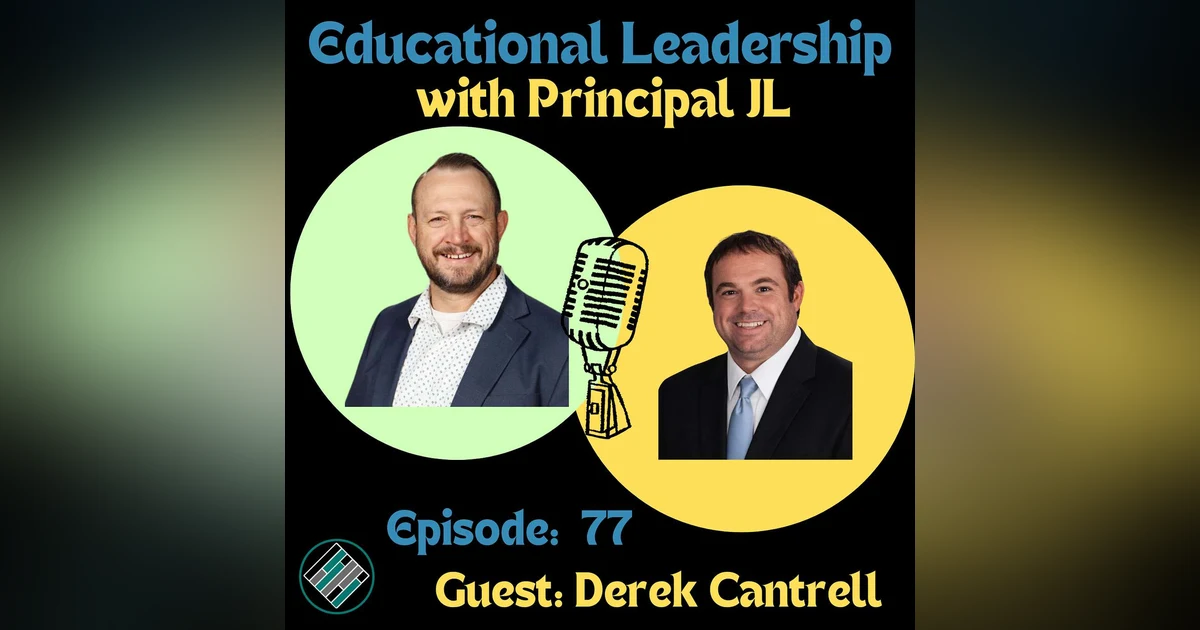

Connect with the Show Here! Two rival high schools can share a zip code and still feel like different worlds. When consolidation finally becomes real, leaders inherit decades of pride, fear, and unfinished arguments, and the smallest decision can feel personal. We sit down with Derek Cantrell, principal of Alleghany High School in Covington, Virginia, recently named the 2026 Virginia Outstanding High School Principal, to unpack how he helped bring two communities into one school without erasi...


Two rival high schools can share a zip code and still feel like different worlds. When consolidation finally becomes real, leaders inherit decades of pride, fear, and unfinished arguments, and the smallest decision can feel personal. We sit down with Derek Cantrell, principal of Alleghany High School in Covington, Virginia, recently named the 2026 Virginia Outstanding High School Principal, to unpack how he helped bring two communities into one school without erasing what people loved about the past.
We dig into what made the merger possible, what made it hard, and the specific trust building moves that mattered most: advisory meetings that surfaced real concerns, student shadowing and tours to reduce anxiety, summer events designed to create low pressure connection, and a communication roadmap built on intentional “over communication.” Derek shares how they honored key traditions while creating new systems that helped staff and students feel like one team, not two groups forced to share a building.
Then we shift into instructional leadership and the day to day reality of being present in classrooms while managing nonstop demands. Derek explains his “people over paperwork” mindset and how he uses AI in school leadership to reduce repetitive work, including custom GPTs that turn observation notes into actionable feedback, plus tools for standards alignment, assessment rigor checks, and faster data review. He also shares practical advice for administrators who want to lead change, build culture on purpose, and use systems to move attendance and engagement.
If you want the full playbook, Derek also points listeners to Better Together and his resource hub at bettertogetherleadership.org, and you can connect with him on LinkedIn or X at Derekcatch19. Subscribe, share this with a leader who’s navigating big change, and leave a review so more educators can find the show.
Connect with Derek Cantrell:
Website: Bettertogetherleadership.org
Book: https://a.co/d/0d4btKQ1
LinkedIn: https://www.linkedin.com/in/derekcantrell19/
New and Improve
Teach Better Mid Roll Network Ad
Click Here to Connect with Principal JL:
00:00 - A High Stakes Consolidation Story
03:25 - What Pulled Derek Into Education
07:30 - PE Class Chaos And Leadership Lessons
13:26 - The Jump From Teacher To Admin
17:36 - Culture On Purpose Not By Accident
22:11 - Why The Community Finally Consolidated
29:52 - Trust Building Before Day One
37:17 - Wins That Proved Better Together
41:22 - What Instructional Leadership Looks Like Now
47:09 - AI To Cut Paperwork And Gain Time
54:54 - Where To Start With AI
58:44 - Systems That Move Attendance And Culture
01:02:39 - Book Takeaways And How To Connect
A High Stakes Consolidation Story
Principal JLHave you ever thought about what it would take to consolidate two high schools, but not just any two high schools, but two rival high schools in a way that brings the community together? Well, today's guest has done exactly that. His name is Derek Cantrell, and he serves as the principal of Alleghany High School in Covington, Virginia. He was recently named the 2026 Virginia Outstanding High School Principal. Throughout his career, Derek has become known for building strong school cultures, developing instructional leadership, helping schools use data and artificial intelligence to improve teaching, learning, and finding ways to reduce administrative workloads so leaders can spend more time with people. Now, let's get to our conversation with Derek Cantrell. Welcome back, everybody, to another exciting episode of the Educational Leadership Podcast. Today I am bringing in the 2026 Virginia High School Principal of the Year, Derek Cantrell. Derek, welcome to the show.
Derek CantrellThanks for having me on, Jeff. Really appreciate the opportunity to tell a little bit of our story here at Alleghany High School in Virginia.
Principal JLAnd I'm excited to bring you on because I'm really interested in that story. I've kind of read up on you a little bit. I'm just like, well, I'm really excited to hear how you did it. Like, but we'll get into that eventually, right? I'm going to go ahead. I'm going to start you off with the same question I asked everybody on the show. What inspired you to become an educator?
Derek CantrellWell, education's always been a part of my life. I grew up, my mother was a teacher. She taught kindergarten and pre-K. So I kind of saw that impact from her on a daily basis. And my uncle, who also raised me, was a shop coach, and then he got into a principalship in the technical
What Pulled Derek Into Education
Derek Cantrellcenter and finished up in that realm. So they both were big impacts on my life and really kept, you know, I kind of went to school my whole life, I like to say. You go from being a student to going to college to coming back into that and the things that they did, and you could see the impact that they had on others throughout their life and their journey definitely pushed me in that direction. And I just, you know, try to be that role model and the person that they were. I still hear things from how they impacted folks when they were in school and they coached them. And it definitely, definitely is pretty inspiring. Both of them have passed away, sadly. So I don't have them with me to this day, but they definitely still impact the person that I am and in my journey.
Principal JLAwesome. Now, Derek, what subjects did you teach, or what did you teach, what levels? And could you tell me scenarios or just some stories about being a teacher that helps inform your leadership today?
Derek CantrellWell, I started as an elementary physical education teacher. So total utter chaos, I guess you would say, as as you as you have people, you know, getting people to sit down and take instructions on a line sometimes is a challenge with pre-K and kindergartners for the first little bit. But you know, I think along the way you learn that being flexible and being kind is super important. I remember, you know, starting off one cute little story as I was standing in the hall in an elementary school. I was out standing in the hall and the kids came by and they they started calling me Jim. And I'm like, you know, why do they keep calling me Jim? Because their teacher told them they were going to gym today. So I'm Jim within that part. So that was really neat. But I think as as a teacher, I had the unique opportunity to work at a lot of different schools. Being an elementary PE teacher, sometimes you're working it in small areas, two or three different schools at a time. So that I think that really helped me see what different leadership was and be able to pull from some of the strengths that that those folks had and kind of helped mold the leader that I wanted to be as I moved forward. But I think that you know, as a teacher, being able to know that you you make an impact, and and kids definitely know that if you're willing to go to bat for them and build those relationships, they're they're gonna go to bat and be successful for you. So I think that that's super important, and relationships always come first when you when you put the money in to invest it in kids, in that, you know, that that good things are gonna come from that part of it.
Principal JLAwesome. So PE teacher elementary side, you know, that's like hurting cats, is what I've heard. Now, I have a physical education background as well. I have a math, I've taught math mainly for 11 years, but I did teach some PE, and I do have some experience teaching the littles and and PE. And yes, it's it's like like I say it's like herding cats. So it's very interesting. You know how to work with those kids. It's rewarding, but it's it's it's controlled chaos. Yeah, there you go. Control chaos, another another way to look at it as well. So I do appreciate that. Now, how many years did you teach?
Derek CantrellI taught for 10 years. I did start off in elementary, had a little bit of middle school early on. It was a K through seven school where I started. Then I came back to the county that that I'm in, that I that I grew up in and taught elementary, K through five. Then we had a school close in our county and then transitioned to middle school. Always coached high school throughout the time with baseball. So did have my foot in the door a little bit in the high school world, but high school definitely wasn't the part that that was, hey, I want to be a high school principal. Hey, I'd like to really be an elementary school principal along the way. And you know, that's never came about to this point. And I really enjoyed the high school piece of it for sure, and probably
PE Class Chaos And Leadership Lessons
Derek Cantrellyou know wouldn't really choose to go back at this time with how how much things happen in a high school and the impact that you have seeing cars walk across that stage at the end.
Principal JLYou bet. No, and I kind of like knew like through my field experiences that I'm not going to elementary. I mean, I I have bits and pieces of it in my career. I know I was a 7-12 principal before coming to Hastings High School here. So it was a K-12 district on one site. So I was able to go over to the elementary and say, and sometimes I have to cover for the elementary principal. And so it's just a different world over there. The best part about the elementary kids was I go over there, I was a rock star, they gave me hugs. Mr. Linden was the best. Like, oh, this is I know I can see why people get, you know, would love to be elementary, but I just secondary is where my heart is. That's where that's that's just that's just where my jam is, right? That's that's what I love is the secondary side. And you're right. I mean, it'll when you get to see the kids graduate, you see that kid that struggled all the way through and they make it across the stage. That's like a huge celebration. So people don't understand that unless they've actually done that and seen those those those things as well. I mean, so go ahead. No, you go ahead.
Derek CantrellYeah, but seeing that kid, like you said, the struggles that you're in here the week of graduation, finishing up testing, and they finally get it, and just the excitement and the high fives, and that it's just it's so worth it at that point.
Principal JLYou bet. No, I that's part of the job that I love. And the people don't realize in education, you don't see the fruits of your labor or the rewards of your your work until years down the road. Because you don't know how you impact kids in the time being, but down the road, you may get that letter, you may get that email, get that phone call. A kid may just stop into your office and said, This is how you impacted me. Thank you. Like I've had those similar things happen to me, and that that's what makes this job worth it for sure. And so what was it that said, you know what? I'm no longer gonna do this teaching thing. I'm gonna go over here, become an administrator. What is the story? What got you into administration once you realize that's the path you wanted to go?
Derek CantrellYou know, our our division at the time was doing, they paid for our classes in the master's program, kind of got into it. Hey, it's a free master's program, I can have that endorsement. It's an extra $3,000 stipend a year. If I get into leadership, you know, so be it at any point with that. But I had some folks, some of the some of the principals that I worked for, I think saw in me that I had leadership capabilities and pushed me in a direction to try things that were outside of my comfort zone, like leading a reading club, being an RTI chair, and and some of those things I think really, you know, helped push me to being a leader and going into that. And I think it was great. Our division gave us the opportunity once we were in the leadership program to go and basically fill in for principals when they were out and substitute. So you got a lot of different experience at a lot of different levels. And one year I had the opportunity to fill in about the last six weeks of an elementary school, one of the bigger elementary schools in our division, and had to do all the observations, all the end-of-the-year stuff. And I always think the beginning and the end of the year are always the most difficult parts of the year. If you can get through those, you know, good things will happen because it's just so fast. But being able to have those folks believe in me and that really kind of pushed me there. Like I said, I always hoped to be an elementary principal, interviewed for an elementary principal job and kind of uh in a high school one at the same time and you know, hoping for that, you know, had the belief of our city schools that was a part of this journey with the county, you know, believing in me to be the principal at Covington High School. And that was an 8 through 12 high school, kind of like you mentioned, 7 through 12, a little unique, about 350 kids. So had that opportunity, and I was the final principal of that school for the final seven years, and that building opened in 1939, so long history there. So that was kind of my journey going from elementary to middle school, getting the opportunity to get in that program and train and learn from leaders in our division, and then jumping to the city schools as their final principal for seven years at the high school.
Principal JLYou bet. So, what are some lessons you learned when you were the high school principal for Covington?
Derek CantrellYou know, I think when you jump into situations, I always think put people first, relationships matter, and and they really help move the work the right way. And culture doesn't happen by accident. You know, I think if you don't go in and be yourself and be the leader that that you are, don't try to be somebody different. That if you don't set that culture, it's gonna create its own. And I think that that trust is built over time, being consistent, being the person that you are, don't let leadership change you, go in and continue to be upbeat, kind, I think are important for me. And I always think celebrate, celebrate as much as you can, recognize people. How can you really just recognize and uplift the people
The Jump From Teacher To Admin
Derek Cantrellin your building for the good things that they're doing and just show them that you really value them and they care that you care? But super people driven, super relationship driven, and I think that that really helps move the needle and get you going in the right direction.
Principal JLYou bet. And then so you're there for seven years. So, what was the journey like going from that position into now you're gonna be in charge of a new high school and you're consolidating two rival schools? So, what what was that like? What was some of the background? What was the reasoning for the consolidation? Because I always like to I like to learn from that because I actually was a principal of a school that consolidated literally six communities total, but it was six, they went to three and then they went to one. Um, but and so I just like to hear those backstories. So, what was some of the reasonings for consolidation and what was that journey like from learning about it to going through the process, and what did you learn through that process?
Derek CantrellIt it's something that's really been in our community talked about for about 40 years. I remember as a student in this community, I was a student in the Alleghany County Public Schools growing up, and every so often it would come up for a vote in our community for consolidating schools. It would come up for a vote, it would get voted down. It'd come up again in five to 10 years and get voted down again. So it's something that was pretty pretty regularly talked about throughout our throughout my childhood and and even being a teacher. And what drove it was declining enrollment. We were a railroad town early on, so that once the railroad left, some of the jobs left, and we we have a paper mill, the hospital, and the school are the biggest employers still to this day. So declining enrollment, uh getting getting tougher to find teachers to fill positions within our community, I think were some of the driving forces of that. Both schools, like I said, Covington was built in 1939, so long-standing traditions and pride. Alleghany High School was built in 1963, and and as a and as I say with that rival part, there was a cup for the football games, the Brackman Cup. So every Friday night in the fall, the whole community was there. You win that football game, it carries that that energy and pride for that whole school year throughout that whole piece. So just a lot of people that were super prideful, a lot of traditions, and we really had to find a way to bring all that together and and and truly make it better together with that approach. So that's a little bit of that story, and and the actual vote happened right out of COVID on the first day of school. So you have all that excitement of school, you know there's a vote that evening, and you're unsure. The the Covington community was quite vocal about not wanting to consolidate. So that vote was that happened that evening. Actually, the school boards voted, both local school boards and both local governments. So it wasn't a vote to the people, and that vote happened, so you kind of get that grieving, that gut punch for you're gonna lose your high school and your school community. So, how do you work through that in the next couple years and still move forward and put your best foot forward and honor those kids that are the last graduating class of 2023 was our final year of Covington High School.
Principal JLSo, if I understand you right, the Covington High School dissolved and they moved into the Alleghany High School.
Derek CantrellYes, Covington High School students came to Alleghany. The Covington High School building is a current middle school right now for everyone, so that building is still being used. But yeah, our kids came down. It were the Alleghany Cougars, it was the Alleghany Mountaineers and the Covington Cougars. So we kept the mascot from Covington. We blended the colors a
Culture On Purpose Not By Accident
Derek Cantrelllittle bit so that we could keep some of that, some of the you know, the things that came from both school systems. So that was kind of intentional to keep some of that along the way instead of start brand new and fresh.
Principal JLSo, I mean, that's really kind of cool how you did that. You were able to kind of keep some of the history and traditions alive, you know, but you're able to, it sounds like you did some compromise in there between the two communities and schools to try to bring this together. So I'm pretty sure there was a lot of challenges to that. So, what would you say was some of the challenges to bringing these two high schools that arrive and kind of give people an idea like how big is this community, you know, and how big is the school like combined together?
Derek CantrellAll right, Covington High School is about 350 kids, eight through 12. Alleghany was sitting around 500, so combined were that upper 700s to 800 as a high school, and and now it's one high school in our in our county. So we did have the two with the city part. So we came together, and the challenge was you have that pride and traditions that's built over time, and instead of focusing on what we couldn't control, we listened, we communicated, what are people excited about, what are people concerned about, and then tried to answer those concerns before we started day one of school. And you know, we knew we weren't gonna make everything perfect, but we tried to honor traditions that that happen in both schools, whether it be you know a capping ceremony at Covington High School versus uh Expo Day or putting hands on the wall that seniors did. So we looked at what's the best things that both schools did that we wanted to continue and carry forward, but also how could we create new systems, new things that that could make us better together with that part? And we truly focused on that relationship piece and being consistent throughout the part and communicating because we felt like if we over-communicated, that would be a great strategy so that people knew what was happening, they understood the why. And because if you don't communicate and you kind of put yourself in a bubble, you know, narratives and things are gonna start themselves, so you're better off to over-communicate on the forefront of major change, I think super important. But we definitely had folks in the community that were against the consolidation, so we had to make sure that we were upbeat and positive as much as we could be. We owed it to our kids and our staff to do that and put our best foot forward with that part of it, and and truly know that bringing resources of two schools with staff, students, and and all that we can offer kids more, we can be fully staffed, we can have more dual enrollment classes and and truly be better together as two as one school.
Principal JLAll right, and I love the the tagline there, the better together tagline to get people together, get them on the same you know, team and working together on that. Now, when it came down to it, you know, you were the Covington principal at the time when this all happened. So, what was the story? How did that evolve to where you were gonna become the principal of the consolidated Alleghany and Covington together? What was that like? Like, was that something you knew a year or two in advance that that was gonna happen? Like when you knew the consolidation was going to happen, what was that timeline like? Like, what did that whole process look like from the time that you find out to we're opening up the door to to consolidation and going in our new direction?
Derek CantrellSo the 22-23 school year, the divisions consolidated, the high schools were still split for one more year. 23-24 was the first year of the combined high school. So in the fall of I guess 22, that is when we we had two high school principals, two middle school principals, one of our CTE director was retiring. So everybody had the opportunity to apply for any of those positions. So you could, you know, apply for all of them, you could apply for that, and other folks could as well. So you went through that process. I was hired in October 22, the year before, kind of about a year out before we started. So still doing the job at Covington High School, was actually the athletic director
Why The Community Finally Consolidated
Derek Cantrellat that time. We we had somebody that was out so doing that and planning for consolidation. So it was a lot of stuff happening at one time for me for that year. One thing that I think I did that really helped is create a culture and communication roadmap to make sure that we hit the right stakeholders and all stakeholders along the way with communication. What are you excited about? What are you concerned about? Making sure that we announced coaches and interviewed coaches along the way at the right timeline, you know, putting out our mascot, unveiling a mascot, our colors, all the different things that go into creating that excitement and that pride and keeping staff informed about who's going to be the department chair, what are the logistics of the furniture, getting here? So a lot of communication just to make sure that everyone was in the loop. We valued everybody's opinion and scheduling and really helped build those relationships before day one.
Principal JLSo, what would you say? What are some intentional leadership strategies that helped you build trust? Because I think you know, you're still doing the job at Covington while you're doing all these other things to get ready for the new position at Alleghany, but yet you still have to build trust. You got to be intentional, you gotta unify two schools that are rivals. So, what would you say help? Helped you do that?
Derek CantrellWe did a lot in the spring with staff for one and students before we started and throughout the summer. So we had student and parent advisory meetings throughout the year and got together, talked about excitements and concerns, tried to answer the concerns. Some of them I remember a kid I had in 11th grade at Covington was like, I feel like I'm gonna be a freshman as a senior starting at Alleghany the next year. So we ended up doing some shadowing events for our kids. Our leadership students would go down and shadow, they would come back, and then they would get to tell our grade levels about the day, and we had conversations about that. We did some open houses in the evening where families could come down and tour the building in the spring before the next year. We got our kids on our leadership and advisory teams together to talk about those traditions and how we could merge and kind of create the best of both worlds. How can we be better together? So, what are the things that we need to do and think about? We we created from talking to our kids and our staff summer events that we did one about every other week throughout the summer, where kids could come to the school, they could win prizes, we had food, we had games, we had movies, just being super intentional, but that relationship piece. On the staff side, our division had mingle events. So we got together during the afternoon for PD, basically relationship building. We did tours of Alleghany High School, Covington High School, we brought in food trucks, we built relationships, we talked about the next year, we talked about goals and aspirations and what we wanted to be and what our focus would be, and really just dove head in and and our staff couldn't have done better. I mean, I I like telling the story a couple weeks into school, I remember walking down looking for a teacher on our second floor and walked by, and all the Da gone teachers on the second floor were eating lunch in the same room, and that wasn't forced. That was something that they still do to this day, and that just shows the culture that was created early of just making sure we value people and put those relationships first. But I really think the over-communication and listening was super important. We put people before the logistics, the logistics were a little bit of a nightmare. We started later because you're bringing furniture from all over the place, you're having to paint the school different colors, you're having to change logos, put new things in, and get ready for that. But we kept people updated of when we put signs on the door, we made a Facebook post and showcased it. When the lockers were painted Carolina blue, we we sent it out. You know, hey, look at this. This is this is moving forward. We're so excited to be the Alleghany Cougars. We start school in two weeks, you know, can't wait to see you. So the more you can celebrate and showcase the things that you're doing before day one, you know, create those wins before you start. And I think it really helps create that momentum.
Principal JLAwesome. I really love that. I really loved how intentionally you were before you even got the building open, all the different things you were doing just to keep people together, help understanding like you're looking at the pot, like this is happening if you like it or not. Oh, you know, like there's going to be some apprehensions, there's going to be some concerns. And so you're you're navigating that as well as but think about all the the newness and the you know the excitement that comes with the consolidation and bringing everybody together when it comes to that. So I would love, I love hearing how how that, you know, because a lot of schools are are consolidating, you know, throughout the country because of dropping enrollment, they still happen today. And it's just really interesting to hear how you navigate that because I'm pretty sure there might be some people out there getting ready to navigate something similar to that. And so as you think about and you look back on, you know, this consolidation and bringing everybody together, what is something that you're you're like, I mean, there might be a lot of things you're proud of, but what is something that you would say, yeah, that was like a the a very proud moment in that transition?
Derek CantrellThe first thing that comes to mind, I remember the faculty meeting at the end of the first year, and just sitting down and coming into that and and and talking to our staff about we did something that was 40 years in the making that people doubted, doubted could ever succeed, and and we knocked it out the park. We we came in, we put people first in relationships. We were you know instructionally sound the first year and improved from where we were. We we didn't have the situations, the people being upset with each other from both schools and fights and things that you would think could possibly come from that. So I think really looking at the end of where we came, the work that put we put into to making it happen, building all that excitement and success, and our our teams were successful, our school was successful, and you wouldn't have known that we were a consolidated school. So just sitting in there and telling those folks that you know we've done something that has been talked about before some of us were born and and really did a great job of putting people first and and we celebrated that and we communicated, and and like I said, if if you don't
Trust Building Before Day One
Derek Cantrellcreate that that culture intentionally, one's gonna be created for you, and it might not be the one that you want. So really, you know, work with your folks on what you want to be about and and and do it. And and I think if you put people in that part part of it, it's gonna set you up for success before all the other pieces. So and any leader that's going through change, value your people, listen, good things come from that.
Principal JLAwesome. Now, you're also known for instructional leadership. So what does great instructional leadership look like in today's schools?
Derek CantrellYeah, I think in today's schools, uh, as we go into this next part, I think with some AI, that you know, I like to think that AI can give us some time back to do people over paperwork. I think great instructional leaders are present. They're they're in classrooms, and and you know, as a high school principal, how hard that can be if you're not intentional and you don't find things that you can take off your plate by some means, whether it be AI, whether it be, you know, your weekends and different times, but it's so important to be out in your building, be in classrooms, understand teaching and learning, and really be a part of the process where you're you're not simply just out there to be an evaluator, you're working with teachers, giving them suggestions and ideas and really being that team. And I think that you know, we we did learning walks this past year. I think we're super great for our admin team. We got out, we we focused on a lens with engagement, with rigor, and went in as a group, all of us, and and looked at what we were seeing, came out, talked about it, and tried to tighten up what we were, you know, our our observations and our feedback. So that was really cool, and it was really neat to get the data from that and dive into it. And I think it's neat in our school. I had an English teacher actually come in yesterday, and they've already picked a book that they want us to buy for a book study, and and not something that, hey, you got to do a book study, that they're jumping out, selecting those. Our math department has done that for the past few years as well. And it's great that we've we've created a culture that we're continuing to learn, we're continuing to move the needle with that, and and everybody is good with that. And it's really cool that folks pick something that you don't have to as an administrator say, hey, you're doing this. So that's that's really cool to see. So I think those are some things that that are important for for leaders, and just you know, in high school, it's a little bit different. You're you're not always the expert as you walk around to different classrooms. You're you go into a calculus class, a doubt, unless you've taught calculus, you're not the expert going in there. So you definitely have to rely on your folks and and their expertise and and listen to them because they can help with scheduling, they can help with ideas, and don't don't ever feel like you you can't walk up and ask for an opinion because that's super important in this leadership stuff that we do. Value the people that are the experts in your building.
Principal JLYou bet. And I appreciate that. I mean, that's something that you know I try to tell my staff. Like, when I come in to just, you know, hang out, watch whatever, like I may not understand what you're teaching sometimes, but but I guarantee you, you know, good teaching is good teaching no matter what you're teaching. And so my goal is to help you get better no matter what or where you're at, and ask questions, you know, why did you do that? I'd really like to know, just because they are the expert. Like, high school is content driven, so yeah, they're gonna be the experts in their area. Don't ask me to teach an art class, don't ask me to teach, you know, English or you know, certain I could probably teach history though. I mean, I can probably I like history, but there's just some things that I'm like going, yeah, no, that leave those guys doing that. And um, you know, having great staff to work with is is a bonus. I really like the fact that you have staff that are going, like, hey, we want to do this as a book study, like they're finding their own PD and they're driving it. You don't have to do that, you don't have to be like, we gotta get better, and this is what we need to do. And sometimes I think as leaders we can tend to fall into that. Like, I don't want to make my staff do something that I'm not willing to do myself or I haven't done myself. And so, you know, do I've thought about do we do a book study or not? I mean, I've done one in the past as a teacher because I had to, but I didn't know, like, I'm like, I always go back and forth, should we do one? Was it be good? I don't know, but at the same time, I do try to guide them and help them where they're at so they can get better. And I use I utilize AI to help me with that because AI will sometimes help me brainstorm things that I don't think about. I think people don't realize as an instructional leader, when you're out there, you can really only go off of your past experiences to help other people, right? And if your past experiences are limited, you're gonna be limited on how much you can help. So that's why it's really important as leaders to always continue to learn, learn new things, you know, get ideas from other people, read books, listen to podcasts. Like there's so many ways we can do that so we can we can fill up our toolbox so we can go, aha, I know how we can fix this, right? Or how we can get better at this. And I utilize AI in that capacity, help me brainstorm ways I can help my teachers get better in their instruction. And I think the last couple of years of doing that has really helped develop some of the teachers that I have in my building. So you also like to use AI to streamline and do those things. So, how do you use AI? How do you see it benefiting administrators as we move forward?
Derek CantrellYou know, like I mentioned earlier, the people over paperwork, how can we utilize AI to automate some of the repetitive tasks that we do as leaders that allow us to be more visible and more into our school? So, some things that I've done, I really like I I sometimes I get going down a rabbit hole and just get out of control on creating things and making stuff. So that that's one of my kind of passions there. I like to tell the story. I was a computer major, computer science major for one day. I went into college to be a computer science major. I sat down, they started talking about HTML and JavaScript. And the guy was like, if you don't know these, you shouldn't be here. And I was like, I was hoping you would teach them, but that wasn't the case. I did not know them. So I was a one-day computer science major. But with AI, you can do a lot of that stuff nowadays with creating and making things of your own. So that that's something I feel like I've getting back into the computer science dream that I had. So working on some things there. So I like to I like to create custom agents and some of the things that I've done, you know, if you don't pay for chat GPT or don't have the plus version, highly encourage
Wins That Proved Better Together
Derek Cantrellany school leader to do that. That allows you to create custom GPTs. And what I mean with that is you can put in your documents, your knowledge, your forms. So, say for instance, we use one for formal observations. We put in our district formal observation, our summative, our walkthroughs, all of the different things that our division has. But then we also put in some of the PD that we've had as a division that that that helps us with those observations. So we have we've had strong associates in that focus on focused feedback that's actionable to staff. So that's in there. There's other trainings that we've had. So we take notes, we go in, we take notes, you come out. So you can take your notes that are very descriptive. You don't have to worry about putting it in that, you know, long summative form. You just take the notes with bullets, you come out, you hit enter, it puts it into our formal observation, comment, and makes it actionable. The teachers can use that from. So that's super, super time saving, about 45 minutes, sometimes an observation. It took me to take my notes to put them into the comments in the way that I wanted them to be. So that's one really cool tool that I have that I've that I've created. We use other ones with data that you can really do some really cool things with data analysis with AI. You know, definitely got to be careful with with putting, you don't want to put student things in through that. So you can take that out, but or you could put in some student numbers from your school that aren't identifiable there. So there's ways to work around that. But we've used Julia's AI to look at question by detail reports so that you can look at the item, the question strand that was asked at what level, how many times we got that right, at what percent, color code it, give it back to teachers, what are your strengths and weaknesses, and what are some things that we can do to help move the needle? You can do that for formative, for benchmarks, for SOL end-of-the-year assessments, and be able to give them actionable feedback quickly within that part. I also like to give teachers some tools for lesson planning to help them, like you said, brainstorm, create those engaging hooks and make sure that we're putting discourse into the lessons. But a neat thing we did this past year is an assessment and rigor check for assessment. So it took one of our earth science teachers used it pretty religiously, put an assessment, it checks depth of knowledge, it checks rigor, it checks alignment to make sure that assessment is meeting that strand of the SOL. And he improved by about 25%, making sure the kids see depth of knowledge, level two, three, and four. But you know, the goal, like I said, is to utilize AI to take away some of those tasks. It's not replacing teachers and leaders, it's helping us spend more time where we need to be. And I think that, you know, don't jump out there and try some stuff. And I've been working in Codex the last couple days and got a little bit out of control trying to create websites and operating systems. And it's been a lot of fun. And I think I'm going in the right direction, creating a kind of an all-encompassing thing for our counselors that that take our SOL grids, can verify SOL scores from reports that you put up, and then to be able to print out sheets that check credits, graduation requirements, and even print out a thing like here's for the kid with where you're at and what you need to do. So kind of in the process of building that, and that's it's been a lot of fun the last couple days.
Principal JLAwesome. It sounds like you are having a lot of fun inventing and just brainstorming. If you have people out there that are kind of like, you know, I know about AI and know it's helpful, you know, they might be a little they're curious, but might be a little hesitant. Where would you encourage them to start?
Derek CantrellYou know, I think you start small. I think you you
What Instructional Leadership Looks Like Now
Derek Cantrellyou mentioned it, you know, if you get stuck as a teacher or a leader, brainstorm. It's the best brainstorming partner there is. Put something in, hey, I'd really like to do this. Could you give me some ideas of how we can make that happen? And boom, there's ideas for for maybe a special event, an activity, a lesson, a hook, any of those things. And if you don't like what you get from for the first response, I always think the follow-up question is more important sometimes than the initial one. You know, ask those questions as you move and it'll get you where you want to be. You can create all kinds of things. You can create, you know, I've got into where I just communicate with the chat bot in the regular chat in chat GPT, and then as we have a conversation, be like, hey, I'd like to create this to solve this problem. You know, let's talk through it. I want to be able to be able to create you know something to solve to solve a problem like lesson plans, and then I want it to do this, it needs to check Virginia standards. We want to make sure we have this in it, and then just have that communication. And at the end, create that script that I can then put into the custom bot, and you're done. So you can kind of just brainstorm with it for what you're wanting to do, but start small, ask, ask questions. It's great for brainstorming creativity. If you get stuck planning a lesson or an activity, you know, hey, what what are two things I could do to really make this engaging for students? And it'll give you some really cool ideas. And then once you get one, hey, create this activity for me. Give me the station cards, give me the scaffolds, give me the lesson extension, and boom, you got a pretty dynamic lesson in about five minutes.
Principal JLYeah, no doubt. And I know we have teachers, we you know, our staff does use AI. We do have a program called Magic School AI, where it does help streamline and help them, you know, be able to differentiate instruction, but also scaffold things much easier, much quicker. And the number one thing was how much time they saved and how much time they got back, and they're not doing it, you know, 10 o'clock at night the day before, you know. They and they're just like amazed on like how accurate it is, and it's even getting better as we get going. Like the law, the more people use it, the better it's gonna get with things. So let's talk about like inspiring administrators. So if someone's out there like, hey, I'd like to be an administrator someday, what advice would you give them?
Derek CantrellYou know, I think as you go into leadership, be yourself. I think it's super important. Don't try to be someone else to be a leader. You got there for who you are, and I think that's super important. You don't want to be that leader that gets power and changes who they are as a person. Build relationships first before trying to make major change. Don't jump in day one and go, hey, we're gonna change everything. Listen, you know, I think if you go in, you have three meetings before you start, you know, what are you excited about? What are you concerned about? What's one thing we're what's two things we're doing great, one we could do better. If everybody says the same thing on something we could do better, you got an opportunity for change. Make sure that you listen to your staff, ask questions like we talked about earlier. You have some great people in your building that are experts of a lot of different things that can really help you be successful. And it's okay not to know everything. You can find that answer, and and you're not expected to know everything, especially like us in a high school. You're not the person that knows everything of every corner of every inch of the building. You have other people that you can delegate things to. I think that's super important as a leader. You can't do it all yourself, you know, involve your team, work with your team because that's super important as you move forward, because those are the people that you want to set up to take over for when you lead. And you got to give them those opportunities to be leaders. So I think those are some great things as you're coming into a role to value and definitely you know impact your your success rate.
Principal JLI love every single one of those. Very good, you know, advice for people that are wanting to get into this role. And you know, I always say get into some like leadership roles before you try to become an administrator, like you know, be a department head, try to help put some committees. And I've had some people do this, they come and ask me what can I do to prepare myself to become an administrator. And I said, Well, these are some things you can do. And I let them know, and lo and behold, they do it. Like it's like because now you have something to speak to. Because if you don't have leadership opportunities to speak to before you go out and get that interview, it's be really hard for you to break into administrator
AI To Cut Paperwork And Gain Time
Principal JLif you don't have some background, some knowledge, some things that you have already done that you can relate to that role if you haven't been put in those positions yet. So I would encourage anybody to talk to you know other administrators on how to set yourself up to be able to step into that role. You're not gonna know everything like you said. You never will. You learn on the fly half the time most of the time. But at the same time if you have some sort of experience that you can speak to that's gonna go a long way to somebody that doesn't. So I think that's a another piece there I like to just I'll just throw in for free. So you know you wrote a book Better Together but what inspired this book and then what do you hope people take away from it?
Derek CantrellThe book's not just a total story of the consolidation. So it's a little bit of the history going through some of the things that that were important in our community. It talks about some of the things that we did in in our podcast here about the going up to the to the first day of school what was important to build that plane before we got there creating that that that plan without a plan type of part there and then the really hope was it's more of kind of a leadership playbook there's a lot of different systems and culture things that we've put in place to recognize acknowledge and extend the good things that people are doing in our building so the hope is there that folks can look at that they can find things that they can implement and tweak and adjust and and put into their building like our Cougar Code, our Cougar Scholars Club, a lot of things that just find ways to tell stories about our kids and our staff and just continue to uplift them. So it's kind of a playbook a story and and something that that school leaders or any kind of leader going through change could listen to and and read and do a book study with there's questions in there if there's a a leadership team that's looking for a book study there's questions in there that you can discuss about going through major change and how systems are important to build that consistency and then lessons that we learned from going through major change that we did. So the the hope was to tell the story but also give leaders an opportunity to find things that they could take away from that journey and also some systems that we put in place that they can implement in their school.
Principal JLAwesome well that sounds like a really good book for people to go ahead and grab up and to kind of learn some things because I'm a very I'm big on systems. I like systems and I I just don't think you can run a high school without them if you're running a high school without a system I don't know if you're doing very well I might need to check on you make sure you're okay but systems are huge and there's a lot of different ways to get the results you're looking for and it's just always fun to learn how other people do it. Because really the systems we have in place at my high school it's kind of a hospod of other things like hey I took this from here we took something from here and then put it because you're not you know you're looking outwards sometimes to bring something in that might help you and in another school maybe doing something that you never thought of and how does that work for you oh maybe it could work for us and then what we do is we tweak it for us and so we've done that several times within the last four years of me being the principal here at AC TI to where this was our problem and we brought in a collaborative effort team I mean it wasn't just me over there making decisions we came together we researched together to go hey we think this is going to work and then we come up with the system and we implement it and lo and behold it has worked every time so far so I really enjoy just learning how other people do things and because there might be something you do that I might be able to use so that's that's what I enjoy about learning from other people.
Derek CantrellI mean I enjoyed listening to you like I mentioned earlier on Tony Cattani's Proud Principal podcast and the systems on like this yeah he's he's one of my type of guys to listen to and all we're you know like we've put things in from good standing programs. We've got a huge impact this past year by putting in a good standing program that focused on attendance and tardies and discipline we we saved about 3,000 days on attendance lowered our chronic absenteeism by 9% 70 some students were less chronically absent and so that that was super impactful. We we called it a cougar code and students if they went above 12 tardies or seven unexcused absences went out of cougar code so they lost athletics activities trips proms but as if they were working towards the recovery they got those back so as long as they're going to recovery sessions they they were able to do that. So like you said those systems can be super impactful from things like that to all kinds of different ones that that are out there and definitely you know borrow steal adjust tweak and utilize the great things that people are doing around this country because there's a lot of them happening.
Principal JLYeah you bet and those are some of the things that people are tackling right chronic atheism you know how how do you help people understand that school's important and showing up you need to be there so you can learn it blows your mind on how many times are like people like school's not that important. Well it kind of is important it's more important than you realize but then I think when you raise the bar and you raise the expectation not just for your students but for your staff they go and hit it like they go hit it almost every single time and I have to remind my school board of that sometimes like hey we're gonna raise the bar on here but every time as a principal that I have done that we've hit it and why should we settle down here when we know our kids need to be here so let's go get it to this point because we all know if that's the minimum they're gonna at least hit that and then anything over that is gravy right and so if your minimum is higher than most other people's minimum then you're gonna be cheating at a higher level than most other people and I don't think people understand that concept sometimes but that's that's kind of how I've done things the last eight years as a principal and the last four years here.
Derek CantrellSo I went through that a couple years ago you know with it we had kind of two different systems for graduation and and you know we had the bar it you had to meet the requirements you know wherever the bar is like I like to say you're gonna reach it so make sure the bar is above where you want to be so that you can be successful. I'm like I I really liked hearing that cool it was awesome.
Principal JLYeah yeah because we just recently raised the graduation rates at our high school because our borrower was here and I said no no no no we need to go here because we're expecting you to take in this case 250 credits right we're expecting you to take that and I expect you to pass every class why would I have you take more credits than you actually have to have to graduate that didn't make sense to us well we also know that we run into this problem I don't need that class to graduate therefore I'm gonna skip it or I'm gonna fail it well that doesn't help the teacher
Where To Start With AI
Principal JLdoesn't help you I mean it doesn't help your overall GPA I mean you're hurting yourself more than anything but the kids know how to work the system and if you could close the loopholes in those systems you're gonna be much better off and so that's kind of what we're we're actually doing right now where we're in that work right now to where we're closing that loophole and once we close that loophole then you can no longer have that excuse so we're trying to take away those excuses as well and so wish us luck on that we still got a few things to iron out on that but it has been approved. So we are going to graduate or we're gonna increase our graduation rate to 250 now the question becomes exactly how are we implementing it right and so I have a way I want it to go other people have ideas but but we're we're right now working through that and hopefully by the end of July here we'll have it solved so it's just it's just it's just the collaborative effort. We just got to figure that out I think I know which direction we're gonna end up going but at the same time it's just gonna we need to talk some things out when it comes to that I want everybody to feel good about how we're gonna implement it and so they can support it in the public as well as you know within the school as well.
Derek CantrellSo and this has been a great conversation Derek what is coming up for you what do you got coming up I know you do some speaking engagements and you're gonna travel around do some of that so let us know what you're up to how can people connect with you and follow the work that you're doing all right yeah it's getting to that you know kind of that busy season we just got back from going to our state principal association conference and it had kind of one of the final recognitions there for the state principal of the year it was that was really awesome and cool for that honor. And next week going to present at making schools work doing a presentation on culture and then one on people over paper work with AI got a presentation at the National Rural Education Conference in San Antonio in October and then ACT vision for CTE with some work that we're doing with a school store with our SPED and CTE students. So a lot you know getting out there and trying to go out and share what we're doing trying to work on possibly some AI workshops with some school divisions and basically you can follow me on LinkedIn or X Derekcatch19 I think on both of them just created a website like I said I went down my Codex rabbit hole one thing I came out with is I created me a website better togetherleadership.org it has on there for anybody a bunch of the custom agents that I've created whether it be for observations rigor checks lesson alignments encourage anybody they're free hop on there check them out it also has some other things that we're you know doing throughout there so that's kind of a cool resource hub there so that that's out there and available as well but definitely if you anybody has any questions or want to reach it reach out definitely let me know on any of those platforms be glad to help with anything from AI to to school changing culture.
Principal JLAwesome well and this is what I'll do Derek is I'll take you know you got to send me that website so I can put it in I'll put your website I'll take your handles and I'll put them in there so people can easily just click on and find you and connect with you much easier that way in the show notes that I do for every episode. So I'll do that for you so when people are listening to this episode they can scroll down click and boom they have access to you so that's that's something I could do for you to make sure people can easily find you you know for for those conversations and to see what's here going up I think one of the things that I'd be interested
Systems That Move Attendance And Culture
Principal JLin is checking out your website and checking out those little those GPT you know spots that you've created I I would probably I'm gonna probably go look at some of those because some of them sound pretty good. My friend Principal Mo created one for me for my observation for my school because oh I got some I can do this and it works fabulous. I'm like going I didn't know you could do that so her and I had a conversation about a month or two ago now about those things. And so yeah she's she's huge into AI and she does a lot of great work with AI too. So I really appreciate um you putting that out for people to to work through because a lot of the things you're talking about are very practical things people need to help streamline their work because if you're not using AI to streamline your work you are spending a lot of time on things you don't need to be right and so try to streamline as best you can you want to get some of that time back so you can do the work that you're meant to do which is to be with people and help people not do paperwork all day long.
Derek CantrellSo get rid of some of that paperwork and get out there and be with your people as much as you can Derek this has been an awesome conversation I really appreciate being on the show is there anything you'd like to say before we go no just you know thank everybody for what you do you know definitely listen to these podcasts get out there it's the best PD in the world you're learning from folks all over the country and the great things that they're doing and like Jeff said you know utilize those those programs those systems tweak and adjust because it it can move the needle in your building and make a difference. So just highly encourage leaders to listen to podcasts like this to learn from people in the field and if you're not somebody that goes out and talks about what you're doing go do it if if you're doing something neat we all need to hear about it because it's important to grow this profession and learn from each other.
Principal JLSo highly encourage folks to get out there go present a conferences here on podcast the awesome things you're doing in your buildings and with that we're gonna go ahead and close out the show thank you for being here what a great conversation with Derek Cantrell if you found value in this episode please share it with someone who needs to hear it. Please like and subscribe to this podcast so you don't miss another impactful episode like this one. Please feel free to reach out especially if you know somebody or if you would like to be a guest on the show so we can share your impactful insights about educational leadership. All you have to do is you can email me or use it at the text me link in the show notes. I hope you guys enjoyed this episode thank you for listening until next time be curious and 1% that are