Episode 84: Michelle Pourchot on School Leadership, Building School Culture, and Developing Future Principals
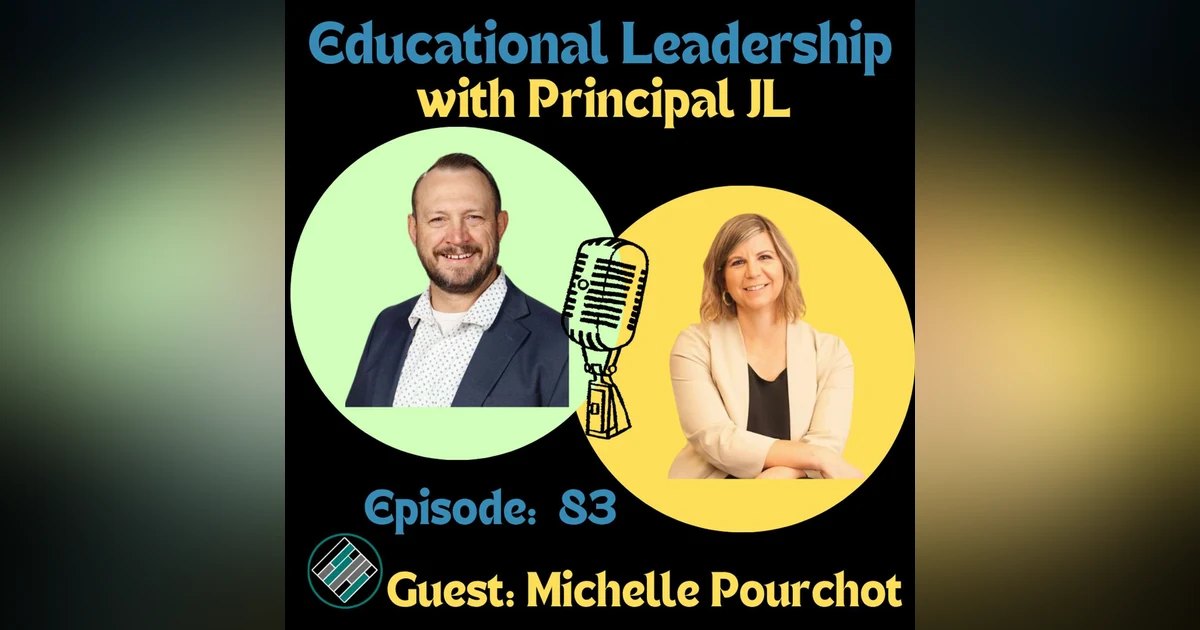
Connect with the Show Here! The biggest leadership wins in schools rarely look big in the moment. They show up as a quick hallway check-in, a follow-up after a hard day, or a decision made with a child’s future in mind. We sit down with Michelle Pourchot, a veteran educator who served 29 years in Title I schools and spent 20 years as an elementary principal, to get honest about what actually moves a campus forward. We talk about the leadership mindset she carried from kindergarten teacher to...


The biggest leadership wins in schools rarely look big in the moment. They show up as a quick hallway check-in, a follow-up after a hard day, or a decision made with a child’s future in mind. We sit down with Michelle Pourchot, a veteran educator who served 29 years in Title I schools and spent 20 years as an elementary principal, to get honest about what actually moves a campus forward.
We talk about the leadership mindset she carried from kindergarten teacher to reading specialist to principal, and why relationships are not optional if you want real academic growth. Michelle shares how one intense year in a high school setting changed the way she led in elementary school, especially around retention and the long-term consequences of early decisions. If you care about school culture, instructional leadership, staff morale, and student engagement, you’ll hear practical reminders you can use immediately.
Michelle also explains why she wrote The 30-Day Leadership Challenge, a no-fluff leadership development resource built around action steps to grow confidence, influence, and impact. We close with encouragement for new administrators on setting healthy boundaries and avoiding burnout, plus what excites her about the future of education through student leadership opportunities.
Subscribe so you don’t miss future conversations, share this with a colleague who needs the boost, and leave a review to help other school leaders find the show. What micro habit are you committing to this week?
Connect with Michelle Pourchot:
TikTok: @great2lead
Instagram: @great2lead
New and Improve
Teach Better Mid Roll Network Ad
Click Here to Connect with Principal JL:
00:00 - Why Experience Shapes Leadership
02:34 - Michelle’s Path Into Education
05:01 - Teaching Roles And Relationship Habits
06:49 - How Administration Found Her
10:12 - High School Lessons On Retention
14:24 - The Micro Moments That Matter
19:07 - Building Culture In Title I Schools
24:09 - Advice For Aspiring Administrators
27:43 - Why She Wrote The 30 Day Challenge
32:37 - Great To Lead Resources And Support
36:22 - Student Leadership And The Future
39:26 - Boundaries And Avoiding Burnout
42:11 - Share The Episode And Stay Connected
Why Experience Shapes Leadership
Principal JLWhat does 20 years in the principal's chair teach you about leadership? And after nearly three decades in education, how do you take everything you've learned, the successes, the mistakes, the difficult conversations, and the lessons that only experience can teach, and use it to help the next generation of school leaders? Well, that's what my guest, Michelle Pourchot, has done. She has spent 29 years serving in Title I schools, including 20 years as an elementary principal. Now, after retiring from the principalship, she has taken those experiences and pouring them back into other educational leaders. She is also the founder of Great to Lead, where she works with new and early career principals and assistant principals to help them build confidence, increase their influence, and make a greater impact. She's also the author of the 30-day leadership challenge, which is a practical lesson to build confidence, influence, and impact. Now let's get to the conversation with Michelle Pourchot. Welcome
Michelle’s Path Into Education
Principal JLback, everybody, to another exciting episode of the Educational Leadership Podcast. Today I am super excited to bring on the show Michelle Pourchot. Michelle, welcome to the show.
SpeakerThank you. I am so excited to be here today.
Principal JLAwesome. And I'm excited to have you. And we were kind of talking a little bit before. You're from that little small town called Santa Fe, if I remember right, between Galveston, Texas, and Houston, Texas, right? All right. And so I'm going to go ahead. I'm going to start you off with the same question I ask everybody on the show. What inspired you to become an educator?
SpeakerWell, I remember when I was little, my grandmother worked in the same district in which I went to school. And I would go visit her classroom after school. And I remember it being so much fun to get to play teacher. And I also remembered how much the kids, when they saw her out in public or in the community, because we also lived in that same community, you know, they would call her name like some big celebrity around town. And she taught for about 35 years, very much an inspiration. And, you know, of course, like other little girls, I played school a lot, but she was definitely my inspiration for becoming a teacher. And I just I looked up to her and and saw how much uh she loved it. So, and there's a lot of teachers in my family, teachers and nurses, pretty much 80% of my family.
Principal JLSo yeah, like yeah, that sounds a lot about your family. They're in the care profession, you know, they're in the people business, right? So when you got a family of nurses and teachers, really kind of fall like on that same, you know, line of like we take care of people, we're in the people business, and and that's very interesting perspective to see because I mean I find that true is a lot of times where a lot of there's been a lot of people that switch over from nursing to teaching and things like that, because nursing's not for everybody sometimes. But then we do have nurses in my building that come in and they teach, you know, CNA classes and phlebotomy and different things, and it's like they're a natural fit. It's really crazy kind of how that works out. So that's really cool to kind of just hear, you know, what inspired you to become an educator.
Teaching Roles And Relationship Habits
Principal JLWhat did you teach, you know, as a teacher?
SpeakerOkay, so I started off teaching kindergarten, and that was an adventure in itself. And then I transitioned into becoming a reading specialist. There's there are not many around, but they were called reading recovery. So I did ring recovery for a while and then did intervention and things like that. That was pretty much my nine years in the classroom or teaching.
Principal JLSo all right. So nine years in the classroom, you know, have a various roles in that capacity there. So, what are some things you learned as a teacher that help you, you know, as a leader when you became that principal down the road?
SpeakerYou know, one thing that was always important to me, no matter what role, was the relationships I formed with my students. And in kindergarten, you know, kindergarten is one of those fundamental years. And one of the things that was so important was realizing that this year that they have me as their teacher is their only experience that they have in, you know, as a kindergartner. And I brought that into everything I did as a leader. Like each year needs to make an impact on a student, no matter if it's their first year in education or their fifth, you know, their fifth grader is about to leave. So just trying to make sure that we maximize every moment, not only as a teacher, but when I was a reading teacher and then as a principal, making sure that we really focused in on what you know, what our students need, not just academically, but building those relationships and making everyday count.
Principal JLSo
How Administration Found Her
Principal JLawesome. So, you know, top for nine years, and then you decided, hey, I want to try this principalship stuff. So, what inspired you to become an administrator? Was there someone that you know nudged you, pushed you along, or did you just figure it out it's time to try the next thing?
SpeakerNo, it was not even in my thought process at all. I was, I remember it was my principal called me in for end-of-year evaluation. And after the evaluation was done, he he looked at me and he said, Have you ever thought about going into administration? And I remember sitting back thinking, no, never thought about that. And once that seed was planted, I was, I thought I started looking at things differently. Like, yeah, I I think that is something that I might want to try. And that journey started. I started taking on more leadership roles on the campus and just kind of seeking out those things. And I fell in love with it. You know, I loved helping kids, but I loved helping adults as well. And I think it just it was a natural progression that it took. My first administrative job was actually a testing coordinator at a high school. So I've been elementary my entire, my entire career. And but my first administrative job, I was like testing coordinator slash AP at a high school. And I will tell you that one year at a high school forever changed the decisions that I make at the elementary level. And it was such an amazing opportunity to see where, you know, I taught kindergarten, but then being at the high school, seeing what the end result is. And, you know, I was very scared, but it was probably one of the most impactful years that I had. But, you know, I didn't think of myself as an administrator. Someone else saw that in me. So that is one thing I try to be intentional about when I see others. I try to encourage them, hey, you know, you have what it takes. Because sometimes we don't see ourselves like others see us. So that is what started my journey.
Principal JLAwesome. Now I'm gonna go back to that one year in high school because I'm a high school principal. Now, the closest thing I got to elementary was when I was a 7-12 principal in a K-12 district in a small rural school, and it's called Southern Valley here in Nebraska. And so I got to play elementary principal when the other elementary principal was gone, and I would go down and help out. So I kind of see, you know, I kind of understand it a little bit, but I wasn't like in the weeds or anything like that. So, with that one year of experience in the high school setting, and then going to be, and I I assume you went down to become an elementary principal. Yes, yes. What are some things you learned in that one year that you took with you when you started becoming an elementary principal? That you go, you know what, we're gonna do things differently because I saw this and this is what we needed. What are some things that you go? This is what we got to do to help these kids get set up for later in their careers. I'm just really interested to hear your perspective on this.
High School Lessons On Retention
SpeakerYeah, I think for me, the number one thing was what retention did to students at the high school level. So when we were to retain them, say at the lower levels, what a profound impact it had on them once they got to the high school. You know, we were dealing with the school that I was at was almost 100% low SES. And it was a very rough high school. And to see the dropouts, to see, you know, some of the kids, there's no way you're going to get a you know, a 20-year-old back in high school. They've been retained two years, like the dropout rates, the the struggles that students had. And so when I went back to elementary, I put everything through that lens. Like if we make this decision for this child now in kindergarten or first grade, what is that going to going to do to them when they are in high school or they're a six 17-year-old sitting in a sophomore class? You know, there's so many factors that go into the little decisions we make and the relationships that you make with kids at the L, like you set them up foundationally, what they believe in school, how they approach school, do they love reading? Do they love writing? All those things, they can't hate school when they're in third grade. You know, they have a long way to go. So really putting an emphasis on creating a love for learning, but also being very intentional with the things that we did, whether it was intervention or, like I said, a big thing was retention. I was so against retention once I worked at the high school level because I saw what it did. And, you know, that's a whole nother subject, you know, whether to retain a student or not. But that was probably the biggest shift for me is the little decisions we make at elementary will compound over time and have a true effect on the student and if they finish high school or not.
Principal JLWell, that's a great perspective. And we could probably do a whole nother episode on retention. I have my thoughts on that too. Being at a high school setting as a principal, I see a lot of kids get pushed through of the system and not a lot of accountability. Not saying that they're not doing their job or anything like that at the elementary or middle school levels, but what I see is when kids get pushed through without accountable things being held accountable, it double tuck doubles our work sometimes. So we're like, okay, you gotta show up, you gotta do these things. Oh, we don't just push you into the next grade, you actually gotta get the credits before you move on to the next grade, and that's a hard concept for a 14-year-old kid sometimes. And so I see that too, but then you what I really loved what you talked about is how you want to build that foundation. Because I think, in my experience of interviewing elementary principals, their biggest focus is building a foundation of for kids to love school and to have a great experience, but also learn. And so when they get to the next level, they're set up for success. And I think that's what really great elementary principals do to help principals like me not have my hair get pulled out sometimes. But but yeah, on the same times, I really love like just hearing that, and just you know, that's so true, you know, at the elementary level. And I'm not an elementary principal, so I don't know, but I hear that a lot to where you guys are really focused on building those foundational pieces because those are things those kids are gonna carry on with them through life, and I think there's something to say about kids don't come to school hating school, right? Something happens right somewhere along the line that causes them not to enjoy school. So if we're we're making school miserable for them, well that's not helping anything down the road. So I really enjoyed just listening to that perspective. So
The Micro Moments That Matter
Principal JLyou know, you were principal for 20 years, so you probably got a lot of stories you can tell. We don't got time for all of them, but what are some things that you learned as a building principal that helped shape you into the leader you are today?
SpeakerWhew, that's a that's a big question.
Principal JLI don't know. It could you can go a lot of ways with it.
SpeakerI think one of the things I what I thought leadership was and what a good leader was isn't exactly how things played out. And what I mean is going into leadership, going into the principal role, I was picturing the big things, like the big decisions are the ones that are gonna make the biggest impact, but I was very wrong. It's those micro moments, those micro decisions, time after time after time that truly make the biggest difference. And I had this really came to light probably, I don't know, about 10 years ago. A teacher she had retired, or she was going to retire, and she came in and she was like holding this book, and tears were already starting to come down her face. And she said, I just want you to know how much this you how much it meant to me when you followed up on my son when he was struggling and when he was sick. And I'm thinking, I don't even really remember the the interaction, but I do remember, you know, I I do make a habit of checking up on my teachers. And what that moment taught me is sometimes it's the moments that we don't even take the time to really let sink in that will have the biggest impact on someone. And so I really started focusing on all those little moments. And I had a sign by my door that said every interaction matters. It was three little plaques, and it was right when I walked out the door because it's in those moments, whether it's a student, a staff member, a parent, we can have so many missed opportunities if we are so in our own zone, focused on what we need to get done, that we really can miss what matters the most. And so one thing that I feel is very fundamental to being a leader is focusing not so much on the big things. We can't ignore the big things, but I think our true effectiveness happens in those micro moments that sometimes slip so fast that if we're not careful, you know, we will miss those.
Principal JLSo oh, perfect. That you're you're right up my alley, you're talking my language when it comes down to I have a saying that I call it talk about being one percent better, and I don't just talk that about that with my staff, but I and my tagline for this podcast is be one percent better, right? So I talk about that like all the time with my staff, with my students. It's like to the point to where in the daily announcements at the beginning of the day, the tagline is said, be one percent better today, go tigers, right? That's that's kind of how we finish off the the daily opening for the school day. And even to the point where kids go, Are you being one percent better? So, what that means is you're talking about those little incremental changes, right? Kind of like uh compound interests, those little incremental changes compound into bigger things, good or bad, depending on which direction you're going with it. So if you're doing these incremental changes, having these positive interactions, those things are gonna build up. And like you said, you do them so naturally sometimes you don't even remember that you're making an impact until like years down the road. And I think that's the unique thing about education is we don't understand our impact until years later. When someone comes back and says, Because this happened, it gave me the courage to do this, or this is how my life's going because of this interaction I had with you. And it was such a great interaction, and it could go the other way too, but I'm just saying I see it more on the positive side than anything. So I really enjoy just listening to you talk about those incremental changes. I call it habit stacking too, like what little habits are
Building Culture In Title I Schools
Principal JLyou gonna do to build capacity for everybody in your in your building as a leader, and and from there, you know, that's that's just kind of like yeah, I I I am totally 100% with you on that. So really appreciate you sharing that. So what did you learn about creating culture for both students and adults in your school in your schools? Because it sounds like you know, reading your bio, you have a Title I challenges, right? And those are tough places to be as a leader. So, how did you build that culture?
SpeakerYou know, one of I alluded to it earlier, but I I wanted to create a culture where not only students wanted to come to school, but teachers wanted to come to work. And I do feel that relationships is the foundation for that. And it's easy to say to focus on relationships, but sometimes it's harder to do that when you have the heaviness of maybe accountability or upper administration or all the demands on you as a principal. But way back when, from the beginning, I have always put a focus on relationships over scores, over things on paper. And I feel that that shows in your interactions, it shows in every conversation, it shows in the decisions that you make, trying to make it a happy place for students and staff. Happy doesn't mean well, I don't there's a term that I've come up with. I don't want a happy, crappy school. I want a I want, I don't just want a happy, a happy school, I want a school that you know is going to show excellence in everything. And I do believe if you create the right culture, the scores, the grades, the all the other stuff will follow. But it's taking care of your people and your people taking care of their students and you know, just building a culture where we are here for one another. We're gonna do whatever it takes, whether it's your child, my child, a child down in another hallway, like we're gonna come together as a staff and creating opportunities for that within a campus are very important, but it's it's in what you do, not in what you say and what you do over time. And I think when you model that as a leader, when you when you put yourself in those shoes, like I'm here to serve, I'm here to help, I'm here to do whatever I can. Like my thing was, what can I do as a principal to make your job easier as a teacher? And sometimes that meant, you know, putting more on my plate, but in turn, that allowed the teachers to do what they needed to do in the classroom. And I use the word serve because I do feel that in this role we are to serve others. And our teachers have that same mindset and that same mentality with their own students. Like, what can I do to help you? And when you have that culture of everyone just digging in deep and doing what it takes, if you focus on your relationships, I have seen firsthand that the academics will follow every single time. And kids want to work hard for a teacher that they love, just like teachers want to work hard for an administrator that they love. So there's not one easy answer. It's just kind of goes back to those microhabits, the things that you do consistently day after day, and building those relationships behind closed doors and you know, in front of everyone. They they definitely matter and have a profound impact on the culture that you build.
Principal JLYou bet. And I agree with you when you talk about like I take a really interesting take on school improvement. So I don't look at school improvement as we're gonna raise our reading scores 3% on our state standard. I that's not my goal. My my school improvement goal is how do we we get kids to want to come to school and they enjoy their experience? Like those are things we focus on, and like it's all about relationships and building those relationships, not well just with for me, not just with our staff and students, but with the community as well. And uh no, and how do you give Kids' experiences to where, you know, like they want to come to school. And I tell people like all the time, this isn't a prison, like this is a school. We're here to learn, we're here to have a good time, but we also need to do the things we need to do and take some ownership in your learning and stuff like that. So it all works out. But I really, yeah, I really can get on board with what you said right there. And so we have a lot of like, you know, people that are thinking about becoming an administrator, or we might have some new principals listening to this episode.
Advice For Aspiring Administrators
Principal JLSo, what advice would you give an aspiring administrator?
SpeakerYou know, over the years I've had a lot of principal interns, those going to school to be an administrator. And I will say the ones that excelled were the ones that sought out opportunities. Sometimes it might not be the most glamorous job, but going to your current building principal and saying, Hey, I want to be an administrator. What are some things I can do? Just seeking out those opportunities is probably one of the best things that you can do because it does matter. Not only does it put you through the lens of, hey, this person is a potential administrator, but also it shows that you are willing to do whatever it takes, that you're willing to help out and you grow as a leader as well. So I would have interns that would basically get their assignment sheet out and say, okay, I need to do this, this, this, and this. And then I would have other principal interns that would say, Hey, I'm here. I want to learn, I want to grow. Give me anything, I'll take it because, you know, because I want to learn. And I think those that pursue that and take initiative are definitely seen in a different light than maybe someone else going out for the same job. And the other thing that I would say is remember that every single day is an interview. People are always watching. There's never a time where you are not being watched, especially if you've made it known that you want to be an administrator. So that's on social media, that is how you interact with others, you know, your peers, what type of team member you are. Just you have to start looking at things through a different lens. So always be on your A game and seek out opportunities are the two things that I would definitely do.
Principal JLYou bet. And that got me thinking about like when I wanted to be, you know, when I was working towards the being an administrator, I sought out opportunities like to lead. I mean, I was a coach, I've been a head football coach and head wrestling coach. So yes, I had some natural leadership roles already, but what could I do? Like what committee could I be a part of? Or, you know, what can I do outside of the normal, you know, teacher role to help me get ready and things like that. And so I really enjoyed that because you know, people that want to get into this role need to get some sort of, you know, resume building opportunities to show these are things that I've done. So when I get into that interview, I could speak to actually doing some of this work and how can you apply what you learn into the different scenarios they love to give you in those interview uh, you know, questions when it comes down to being administrator. And I have have a couple of people in my building that said, Hey, I want to be an administrator. And I said, Okay, you gotta do more. Like this is what we gotta do. We got to get you doing these type of leadership roles, and they sought them out, they did them. One of them now is an AP within our district, and I know the other one is probably looking to become an AP here real soon, and so it's really fun to kind of watch them grow as as leader, teacher leaders right now into those roles. So it's a lot of fun when they do seek out and you give them something and they just go with it, and so and uh it's a lot of fun to just to help them get to their goal too. And so let's talk about your book. What inspired you to write the 30-day leadership challenge? Practical lessons
Why She Wrote The 30 Day Challenge
Principal JLto build confidence, influence, and impact. And what problem were you hoping to solve with this book?
SpeakerSo I read a lot, a lot during the summer, but and there's so many amazing books out there. I'm sure you have read your fair share as well. But what would happen is I would read books, I'd highlight, I'd have tabs, and then I would need that information later. And I might have a little bit from this book and a little bit from this book and a little bit from this book. And it was, I could never remember where it was that I needed to refer back to or even what book it was in. I just I couldn't find a place to put it all together. So that is what drove me to write this book. I'm very much just get to the point. I want it practical, no fluff. You know, I as a leader, I didn't like to waste anyone's time. Like if we're gonna have a faculty meeting, we're gonna get to the point. If I say it's gonna be 10 minutes, it's gonna be 10 minutes. You know, I just I hate wasted time. I never want to waste anyone's time. So I took a lot of the things that I'd read. I first of all sat down and I thought, what do I need to build confidence? What do I need to lead others? And what do I need, what skills do I need to leave? And you know, a lasting impact. And I just narrowed it down. There's 10 topics in each of those three sections. And the entire book is compact. It's not, I don't add the theory in there. I don't have a lot of again, no fluff if I want to sum it up. It's just get to the point. This is the skill. This is what you can do to improve. I try to include some type of real world example. So people from the, and not even school world, but corporate world who are demonstrating that leadership quality. It has some type of exercise that you can do. So here's the skill, here's someone that's doing it right now, here's a way for you to learn how to do it, and now let's practice. So each day ends with action steps. I actually had this book sitting on my desk. So I wrote it, but I still had it sitting on my desk and I would refer to it. I remember, I don't even remember what the topic was, but I remember thinking, wait a minute, I do know how to do that. I'm gonna go to my book and I'm gonna look at the steps because I know that this works. There are very practical things in the book. So you don't have to use it as a 30-day challenge. It's very topic-based. So you might want to just go to it for difficult conversations, or maybe you're making a big decision and it has some tips on how to do that, or the difference in coaching and mentoring, like all the different things that we have to do as a leader. It's the most what I felt was the most important landed in the book. And the 30 days, sometimes every action in the book, you're not going to be able to practice in those exact 30 days. But the 30 days was meant to just build momentum. Like we're going to get in the habit of reading and applying, and you know, just do get in the getting in the habit of that sets a good, you know, pace for you as a leader because you can never, you can never stop growing. Even though I'm retired, I'm still listening to podcasts, I'm reading books. I, you know, I'm not, I don't feel I'm done, you know, with helping others yet. But that is why I wrote the 30 day challenge. We don't have a lot of time. We need to get to the point. And I wanted it to be a quick resource for for new leaders, especially. I think the book will be very, very helpful. It's nothing anyone hasn't heard. There's no, you know, grand ideas. It's just get to the point. Here's some things that can help you, and here's how to do it.
Principal JLAwesome. I really like that. Very direct, very like, hey, you need this, I got this for you. Check it out. And then what we'll do, Michelle, is we can uh link your book to the show notes so people can easily find it and check
Great To Lead Resources And Support
Principal JLit out and see the practicality that you've placed into that. I really like that, you know, you kind of brought a lot of things together to help principals navigate through things and like, yeah, you say a 30-day challenge, but it's something that they're gonna always be able to go back and refer to. And you talked about your own experience. I wrote the book and I still use it, you know. And so I think that's really great to like just you know hear how you came about it and how you used it, because then other leaders, you know, can use it in that capacity as well. So tell us about great to lead. You know, why did you create it? You know, you're helping now support principals, assistant principals, or just educational leaders out there. Just tell us more about the work that you're doing today.
SpeakerI just, you know, it just kind of goes back to wanting to help. And that's why I started that started with a YouTube channel and just putting out content, things that would help new leaders. And that kind of grew into doing, you know, some TikTok things and really active on LinkedIn. But I also wanted to tell people I have I'm creating free resources, things that either I used or I think would be helpful. I have a stand store, which is great to lead, great, and then a number two in lead. And it has a lot of free resources as well. It has like some sessions on difficult conversations, it has a leadership quiz, things you need to know as a new leader. But the whole premise of great to lead is the focus that it is, yes, it is hard, but there's it is also very rewarding. And if I can help someone with some practical tips, either building their confidence or helping them through a difficult conversation, that's why I created it. And I know I've said it before, but I'm very much let's get to the point. I don't have a lot of time to waste. So all the content that that I do produce, I try to keep that in mind, like valuing people's time and making sure that whatever I do share, it is intentional and it's something that they can apply right away. So that's just wanting to help and creating content to do that was my whole my whole goal of Great to Lead.
Principal JLAwesome. And what we could do is any, you know, social medias or websites that you have, we can also link those in the show notes. So it makes it really easy for people to find you as they listen to this episode. So, you know, it's been really great having you on the show today. You know, if people wanted to reach out and connect with you, what's the easiest way for them to do that?
SpeakerMy website is just great to lead.com. But all of my everywhere I'm found on LinkedIn or YouTube, TikTok, it's just great. You can just search great to lead, great to lead, and that's the best way to reach me. But you can reach me directly from my website as well. Just if you have a question, I'll be glad to get back with you.
Principal JLAnd for all you guys out there, this is an audio podcast. It's great, the number two lead. Yeah, is it two like too?
SpeakerOh, yeah, because I'm holding up, I'm holding up a number two.
Principal JLYeah, no, it's all good, it's all good with that. And so, Michelle, this has been really great having you on a show. But before you go, I have one more question. With everything that's going on in education, you know, we hear, you know, the good, the bad, the ugly, all those things. But before we go, what is something that excites you
Student Leadership And The Future
Principal JLabout the future of education?
SpeakerYou know, I don't I don't know if this is a nationwide thing or not, but one thing that excites me is I feel that at least at the elementary level, we are trying to be more intentional on creating leadership opportunities for our students. And whether it is creating jobs for them where they actually have to like apply and they can get fired from. But I feel like it wasn't just my campus. I've seen more of a trend that we are really trying to build strong leadership skills in younger students so that they do have the opportunity to lead as they get older. And I don't mean just leading, like principal leading, but leading their peers, creating opportunities for that, making opportunities available for them to practice those leadership skills or speaking or mentoring. So again, I don't know if that's just my school or just my area, but it does excite me that I think students are starting to, younger students are starting to get more opportunities that maybe weren't necessarily available until they got older.
Principal JLSo I don't know if that's quite what you were looking for, but that's no, I think you're kind of hitting on somewhere on that. I mean, you're kind of hitting on something that I've seen to where, you know, how can we build leadership capacity within our student body, right? And that's something that can be elementary, middle school, or high school. What leadership opportunities do they have? And, you know, like for me right now, I'm taking my staff through the seven habits of highly effective people. And so, with that, I'm doing that with my staff right now, but it might be something that builds into our students because we're talking about how to be proactive. Like that's habit one. How do you be proactive as an adult? But then we could teach our kids how they can learn to be proactive and how they can lead from where they're at and those type of things. And so I there is something going on with hey, how can we give more opportunities for our students to have leadership opportunities and to build capacity for them so they can be a more well-rounded, effective adult when they get older? And so I do think there's a lot of credibility in what you just said there. So, Michelle, this has been a great interview. I really enjoy having you on the show. And I'm not gonna say interview, actually conversation. Really great conversation and having you on the show today. Is there anything you would like to say before we go?
SpeakerJust an encouragement to maybe new administrators, and that is one thing I wish I would have learned how to do earlier on in my career is the balance between work and home, school and home. I
Boundaries And Avoiding Burnout
Speakerthere will always be something to do. There'll always be something on your to-do list, and it's not worth getting burned out. Everyone needs your the best of you. Your school needs the best of you, your home needs the best of you. And if you can learn early on how to set those boundaries, you are setting everyone up for success. But I think as new leaders, we don't want to fail. We don't want to let anyone down. We feel we need to be there for everyone all the time. And I think you can still accomplish that and still have healthy boundaries. So I think if people could new administrators could establish that early on, I think they will have longevity in the career because sadly we do see so many not last long. And I think that it that's probably why they just get burned out. So learn that healthy balance from the beginning and you'll be good to go for many years.
Principal JLThere you go. And I always like to talk about work-life balance as be the best you where your feet are at. So if your feet are in the job, you be the best version of yourself and doing your job the best you can. If your feet's at home with your family, be the best parent, father, husband, you know, mother, you know, whatever you're doing at home, be where your feet are at. And that's how I look at work-life balance. Wherever your feet are at, that's where you need to be intentional and having those experiences and really focusing in on the people around you in that moment. So be where your feet are at, depending on the moment, and you will be just fine. And leave work at work. Don't try to take it home.
Speaker 2I think very good advice.
Principal JLPeople try to like take that home, and you know, there's times you're right. There's times where I'm like, you know, there's there's times where I feel guilty, like, am I doing enough, but I know I'm doing enough. It's just, you know, I have to get over the fact that I feel guilty about things I shouldn't feel guilty about. Yeah, and I think we struggle with that as leaders from day one, I think, because we're thinking to be a good leader, you gotta be in your building 12, 14 hours a day. You do not, right?
Speaker 2You do not.
Principal JLIf you're doing that, you're just gonna get burned out, and you know it's gonna affect other things, not in a positive way. So Michelle, I really enjoyed having you. Sorry about that, Rand, everybody, but I really enjoyed having you on the show today. I'm gonna go ahead and let you go. Have a great evening.
SpeakerAll right, thank you.
Principal JLWhat a great conversation with Michelle Pourchot. If this episode resonated with you, please share it with someone who needs to hear it. Also, please subscribe to this podcast so you don't miss another great episode like this one. We'd also like to hear from you, and please
Share The Episode And Stay Connected
Principal JLemail me at the.principal.jl @ gmail.com. You can also hit me up on my social media platforms @ principal . jl. Also, I also like to take the time to thank all the educational leaders out there, the principals, the assistant principals, everybody that does the work. I appreciate all you do. And I want to thank you guys because this month is October. This is National Principal Month, and I just wanted to share my gratitude with you and thank everybody from the bottom of my heart for all the work you do. And always remember to be curious and 1% better.