Episode 74: Principals' Perspectives: Building School Culture, Leading Teachers, and Preparing for a New School Year
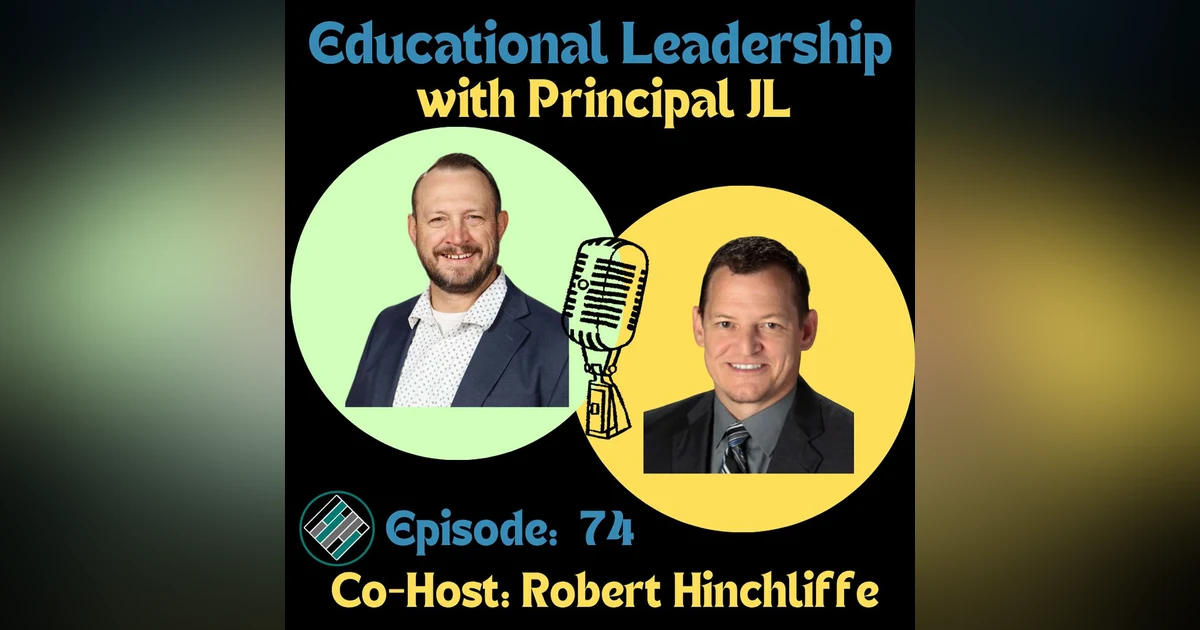
Connect with the Show Here! Two principals sit down with no script and compare the real, messy, meaningful work of educational leadership. Robert Hinchliffe, Nevada Elementary Principal of the Year, brings the metro elementary lens from Las Vegas. Principal JL brings the rural secondary lens from a comprehensive high school. Different contexts, same mission: help adults grow so students win. We start with what it takes to set the school year on the right foot: principal messaging, a clear th...


Two principals sit down with no script and compare the real, messy, meaningful work of educational leadership. Robert Hinchliffe, Nevada Elementary Principal of the Year, brings the metro elementary lens from Las Vegas. Principal JL brings the rural secondary lens from a comprehensive high school. Different contexts, same mission: help adults grow so students win.
We start with what it takes to set the school year on the right foot: principal messaging, a clear theme, and the habits that actually move a staff forward. We talk about why “fun” themes fall flat when they don’t connect to a shared goal, and how themes like habit building or “be the change” give you something you can reinforce all year through recognition, coaching, and modeling.
Then we get practical about systems. We unpack the shift toward inclusive special education, what co-teaching should look like (and what it looks like when it’s pretend), and why access to high-quality instruction and HQIM matters for every learner. We also dig into team-building moves, PLC structures, staffing changes, and the secondary reality of managing many departments while keeping one common purpose. Along the way, we tackle competitiveness, accountability, trust capital, and the truth every principal knows: adults can be harder than kids.
If you’re a principal, assistant principal, or teacher leader looking for grounded leadership ideas you can use this year, hit play. Subscribe, share with a colleague, and leave a review so more educators can find the show.
Connect with Robert Hinchliffe:
Website: https://roberthinchliffe.com/
Tik Tok: @rhperspective
New and Improve
Teach Better Mid Roll Network Ad
Click Here to Connect with Principal JL:
00:00 - Welcome And Why This Is Unscripted
03:40 - Principal Of The Year Reality Check
07:25 - Picking A Theme That Drives Growth
14:00 - Rebuilding Teams After Major Staffing Moves
21:41 - Inclusion And Co-Teaching Without Training Wheels
29:56 - PLC Changes And Raising The Bar
36:32 - Graduation Credits And Student Pathways
43:42 - Competitiveness And Accountability With Care
52:49 - Trust Capital And Meeting Adults Where They Are
59:14 - Managing Adult Conflict Inside And Out
01:03:59 - Themes With Purpose And Lasting Impact
Welcome And Why This Is Unscripted
Principal JLWhat is it like when two principals sit down and share their perspectives? That's exactly what's happening in today's episode. I am welcoming back my good friend Robert Hinchliffe, who is the elementary principal of Tyrone Thompson Elementary in Las Vegas, Nevada. And he brings the elementary principal perspective, and I get to bring the secondary principal perspective. He's in a metro area. I'm in more of a rural area, but we both see education very similarly, but differently in certain aspects. But at the same time, what's awesome about this episode is we don't script anything. We just sit down and say, we're going to start here and then we just start having a conversation. I hope you enjoy this conversation and you're able to just sit back and relax as two principals share their perspectives. Now, let's get on to the conversation. Welcome back to another exciting episode of the Educational Leadership Podcast. Hey, today is an exciting episode because we are going to bring back Principal Robert Hinchliffe to the show, and we're going to talk about principal perspectives. Yes, principals, that's my perspective, his perspective. He's elementary, I'm secondary. There's a lot of you know similarities, but also some differences. And so I think it's really good that you guys hear the different perspectives from the different levels of education when it comes to being a principal out there. Now, Robert, I heard you're an award-winning principal now. But is it the 2026 National Principal of the Year? Let's everybody give them a big round of applause. Yeah.
Robert HinchliffeTo be fair, it's not the national principle of the year, it's just the the principal of the year for elementary schools in Nevada. So you're you're you're propping me up a little too high there.
Principal JLWell, maybe I was looking at the NAESP as the national
Principal Of The Year Reality Check
Principal JLone. National Association. Yeah. You know what? That's why we talked it out. So the National or not the National Nevada. Nevada. So we are honored to have award-winning Nevada Elementary Principal of the Year of 0.26. Principal Robert Hinchliffe. Everybody, go, yeah. There you go.
Robert HinchliffeThank you. I I I have the human the the humble part of me really doesn't like that, but I guess I'm gonna have to get used to it at some point in time. But yes, I I was blessed to be named the elementary school principal of the year in Nevada for 2026 for the National Association of Elementary School Principals. So great, great recognition. I appreciate it. You know, like I always say, or I said in my post on Facebook, nobody wins Coach of the Year with a losing team. So I am just blessed to work with great, great people who make the school amazing, and then I get to talk about it. But a huge honor, I appreciate it. Sadly, though, the only thing it's gonna do is probably make me want to work harder to validate the recognition.
Principal JLYou bet. Well, congratulations, my friend. You're well deserving. I know you're doing a lot of great, awesome things there. Something I've been thinking about. I mean, right now I'm starting to finish up my three-week, you know, hiatus from the building. Ended up going to East Tennessee, did some vacation. You can see me here. I got, well, can't see me, but I have my my Hurley American hat on. I got my USA soccer shirt. I'm ready to go for the World Cup soccer game tonight. Hopefully they can win the knockout game and and move on into that. It's just been a lot of fun to see, you know, the world coming to the U.S. or the in it's the 250th anniversary. So 4th of July is coming around, and that's like my favorite holiday. So I'm all jacked up, ready to go for Saturday coming up. Getting it, you know, family's gonna come, we're gonna have a barbecue, have some good times. So but I'm thinking about like, okay, how am I going to set the school year on the right foot? Now, there's things that we've been doing as principals probably since spring to start getting ourselves ready for you know the beginning of the year, but really right now I'm thinking about my messaging. What message do I want to send my staff? What is the theme of the year to where we get ourselves off to a good start, but yet there's a theme that we can carry on through the year, and always think about how can my staff can get better? Different things, and so I've done like the one percent better, you know, every day doing that, being curious, you know, all these different types of things this year. It's gonna be habit building. What kind of habits are you going to build as a professional to get better every day? So that kind of ties into my one percent better every day, but then what kind of habits are you building? Because you can have these goals, right? And you can set these goals, but how you get to those goals are the habits you build to get there, and so that's really what I'm thinking about. How am I gonna package that up and how am I gonna deliver that as a message to my staff? So, what are some things you're thinking about on the elementary side?
Robert HinchliffeYeah, I'm kind of the same way. I I'm a huge theme person. In fact, one of my books is Dream Themes, and where I basically talk about my philosophy is with the theme, is it should relate to one common goal your entire staff can achieve. So, like going back, I've built on it, which leads into this year where you know, last
Picking A Theme That Drives Growth
Robert Hinchliffeyear um our theme was it's our time, and it was all about using time well and not wasting time. So essentially everybody could think about did I waste my time today or did I do something valuable with my time. Two years ago, it was be the one, you know, be the be the one teacher that is a great colleague, be the one teacher that helps that kid that's never had help before, whatever it might be. But what I am thinking about is this year my challenge, and I'm using the theme to kind of go into it, is I think we talked about our last podcast where I made 15 changes between second and fifth grade. And that's a lot when you have some quick math 27 people in those grade levels. So essentially over 50% of second through fifth grade is changing, and the goal of that was to create some better teams within those grade levels. So for me, and my messaging for the whole staff is bringing it back is now I have, in my opinion, everybody where I think they're going to be able to do their best. I know the staff, I know their personalities, I know the groups, I put them where I think they can do. And again, elementary is a little bit different than high school, but now for me it's messaging and just saying, okay, let's bring it all together as a team, let's bring it all together as a school from the top-down global, you know, three amigos type thing, one for all, all for one. So, really, I have to lead and be be the model myself of team, team, team. You surely, Jeff, know the movie Hoosiers. So it kind of I'm I'm kind of playing upon Hoosiers a little bit because Gene Hackman, it's team, team, team, team. So I'm using Hoosiers a little bit this year in the in the messaging and bringing it back and and just trying to create a group of people. Again, now we have this group of people, all 83 of us, who are in it for the right reasons. They all chose to be here. They're where I want them, where they're gonna do their best. So it's really just coming together as a team, or as Gene Hackman would say, five pistons firing together. For us, it's like 83 adults firing together, which, when you think about it, to try to get 83 adults to fire together is gonna be hard. But if any group can do it, the group at Tyrone Thompson can.
Principal JLThere you go. Well, and that's the great thing about your group of people is you kind of built this up over the last seven years to where like I'm in my fifth year, so I've hired quite a few of the staff there, but I have a lot of staff that have been there forever. Like, I have one teacher that's been here for 40 years. I don't think he ever wants to retire. I mean, I I really don't think he's like, Yeah, this is what I want to do, like, cool, you know, I'll keep him as long as he wants to stay, you know. Yeah, he does a great job and those things like that, and it's not an issue on that end, but it's just like for me, I have 120 staff total, not just like have a 75 like certified staff, plus everybody else is like my my classified with you know, administrative assistants, my paras, and all those kind of I think something that we're gonna have a challenge this year, and I don't know what kind of challenges you're gonna have, but one of the challenges I'm gonna have this year is we are actually going to it's more of an inclusive model when it comes to our special education. So we have had it to where we would segregate, which you're not supposed to do. I know, guys, I'm you're taking care of it. We would segregate our sped kids because we wanted to make sure they got the supports they needed, right? Well, we're not supposed to segregate our sped kids, we're supposed to put them out into the wild, like put them out in the content areas and you know bring the supports to them as where they need it. Because not every SPED kid has a math goal or an English goal or a writing goal, and in the in uh in the secondary side, you can have content-specific goals on special education, but now what we're doing is we get away from what we call these supported classes, they're not gonna be any more supported classes, so now the kids are gonna be really out there and having access. And the key is we have to give kids access to high-quality instruction, high quality materials, and all those things. So you'll list you'll hear high-quality instructional materials, HQIMs. I think that's how I'm saying it. Yep, I think I said it right. HQIM. Yeah, like that's the big theme that we're going with because A, we're trying to get better instructional materials for our staff, but yeah, we want to make sure all kids have access to that, which is legal, you know, legal things when we have to get to go down those routes. So now this what we're doing, the inclusive part is now people have to really have to really actually co-teach. They co-teach, and we can see my quotations here, but they don't really co-teach. Like it looks like they're doing it, but they're really not planning like they're supposed to. So, one of the things I got to be more intentional on is hey, I want to make sure every SPED teacher that has a co-teacher, when they co-teach, they have the exact same plan time so they can plan better. So that's one of the intentional things I'm gonna do this year because we're gonna go to the co-teach model, but we're gonna actually jump all in. We've kind of been talking about it the last couple of years, but this year it's like rip off the band-aid, let's go. And so that's one challenge that we're gonna have this year is getting everybody on the same page. What does co-teach look like? Like I said though, but the last two years we've been talking about it, we've been doing trainings, but now it's kind of like, no, we're actually gonna do this for real, real. Like there's gonna be no, there's gonna be no backups to it. And so in mainly, is because we have a test score that shows that our SPED staff test low the lowest out of out of our testing, and a lot of that is because our SPED kids are not getting the same access to education as the other kids, and so this is how we're trying to a up that score, but B, do things that we're supposed to do, and some people are fucking it, they don't like it, but at the same time, it's what we need to do and it's what we should do.
Rebuilding Teams After Major Staffing Moves
Principal JLSo that's one of my challenges. What challenge do you got coming?
Robert HinchliffeYeah, I agree with you on that. You know, I mean, one of my my things is you know, you teach who walks in your door. Doesn't matter, you know, you can't you can't use a disability as an excuse. You know, disabilities are not, you know, poverty is not a disability. It just, you know, you just have to learn to teach students and meet them where they're at, no matter what, which is a challenge. And in high school, God bless, God bless you, because I'm basically elementary. But you know, it's kind of going along the same way. You know, I here it's the team is you bringing it back to the teams. Like I have, you know, second, third, fourth, and fifth that are all new, you know, they know each other, but again, I've got to bring them together as a grade level within the scope and sequence of the whole school. So one of the one of the changes we're doing is we did some changes to our PLC structure just to be a little more involved with people who are not necessarily used to each other. The great thing about the teams that I've created is they've already spent most of the summer planning their stuff, anyways. I think one of the one of my strengths, I would say, is I know everybody and I I really think I do a good job of putting them where they can be successful in elementary school. And I think elementary principals out there, if a grade level is struggling, don't be afraid to make changes and try to get some more cohesion in a grade level. You just have to, you can't let five people ruin each other's lives or let one person ruin four people's lives. Don't be afraid to make changes. I mean, we're a five-star school in Las Vegas, but yet here I am making 15 changes, of which many affect the testing grade levels. You have to be willing to do that, but at the same point in time, lead from the front, serve the people, you know, like hey, come on, we can do this. So, while yeah, I made them, I'm also gonna be right there bringing them together in grade levels and as a whole. So that's again, that's my mind frame is just bringing people together for the good of the team constantly, constantly, constantly. If I can do that, there's no stopping this group of people. But again, you're like you've hired a lot of your people. I've hired 99% of ours, but I think I think the stat is is somewhere around 30% of the original staff is still here. So you're still weeding your garden constantly. You have to. And what I've also found is when you pluck the lowest hanging fruit, someone else becomes on the bottom. So they have to decide do I want to be here or not, and you just keep up in the expectations as you go. Um, that's really my life in elementary school. But I'm really excited this year because we have a good solid group of people. And if I do my job of bringing them together and giving them everything they need to be successful, then we will be successful.
Principal JLI bet. No, I think that's great. I know for us, we're just trying to like figure out like what's that next step because like we've done a lot of work behind the scenes for our systems, and now having the systems in place, one thing we're doing is we're actually increasing, that was been approved, we're increasing our graduation credits to 250. So we went from 225 to 250. Now it's gonna take a few years for that to you know get to where it needs to be. But what it does is it solves an issue that we see when it comes to kids skipping class, especially their senior year, where I don't need to go to this class because I don't have to have it to graduate. Well, now every class that you take throughout your high school counts towards graduation, no matter what it is, it's elective, core, whatever it is. Now, you could still fail up to seven courses and still graduate, but before that it was nine and a half courses and they could still graduate. But what I'm anticipating, I don't really I'm anticipating, I do not think it's gonna have an effect on our graduation rate as people think, because we already got systems in place to help them. We already have the summer school program, we already have the different we call it, I call it, we call it different, I call it different tracks in my mind, but we have different tracks for different kids depending on where they're at. Because we have kids that like traditional, this is the traditional route. We have kids that are all online, then we have kids who are kind of hybrid. They're kind of like partly online, partly in class. It just depends on their circumstances. And you talked about beating kids where they're at. That's exactly what we're trying to do with these kids, is your track is based off of your circumstances and your situation. We have a whole process that we go through with our leadership team to determine what's the best solution for that student to help them graduate, to help them get the skills they need before they graduate. We don't really focus on college, we do, we're like, yeah, we want you to go to college, but yeah, we also have our career pathways. Um, we would like you guys to look at too. But you call the three E's, is what I like to call it. You're either enrolled in school, you enlist in the military, or you are employed at some sort of job when you leave. You do one of those three things, then you're gonna be successful, and you're on your way out the door on a successful track. And I think that's kind of what we're really thinking about when it comes to trying to help kids, you know, get to that next level, that post-secondary goal. But that's kind of what we think about is like, what is our next thing? And and for me, it's you know, really trying to build my staff up, because if I build my staff up, they'll build the students up. And our test scores came back decent. I would say we've we've improved a little bit with our ACT, not where we want to be, but you know what? This is the first time that we've been over an 18 composite since I've been here, and so we've jumped our composite about three-tenths of a point, and that's actually pretty good, pretty decent. And that's with the new test. So I actually figured our composite would drop below what it would was, but actually, our composite went up with the new test. So I was a little bit like surprised, excited, and nervous all at the same time because you know, now we'll get another year of trying to raise those scores, but how can my staff get better at what they do personally so they can help the kids get better in the classroom? So that's kind of what my thoughts are. How about you?
Robert HinchliffeDo you? I was just talking to three teachers today about this. In your opinion, so Shauna, the AP here, and her and I have made a pact, and we don't have to hire many people, but one of the first questions we ask candidates is, are you competitive? I don't know about your staff, but I have really gotten to where I prefer competitive people because they don't want to be second, they don't want to be viewed as inferior, they want to keep learning to be better than this, and what that does is that just raises the bar on everybody. And we can't all be great
Inclusion And Co-Teaching Without Training Wheels
Robert Hinchliffein all areas, that's not possible. You know, I just expect people to sprint in their areas, but thinking about your staff, and I don't know how they are, you know, you want them to look inwardly and say, What can I do better? But do you find that some people who aren't competitive don't do that as well? I guess is kind of how I phrase it. You know, again, I'm competitive, second sucks, it's the first loser. Uh, we don't here to be second, you know. That's that's dumb. Why are we here? We're here to be first, but that's the competitor in me. That's the small town sports person in me. And I wonder if you see that in high school, if the non-competitive people, it's not that they care less, it's that they care differently.
Principal JLYeah, I would say, you know, for the most part of my staff, they're good people and they do a great job. They care, they want to do well. And and this is one thing is like the departments are trying to figure out how they can up their game from previous year scores, how can they utilize the pre-ACT data to increase the knowledge for the kids? And so they do a lot of work within the PLCs to do that. I think that's where a lot of that comes down to. And we do have some people that aren't as competitive, and they're probably some of our probably lower performing staff. Our more competitive staff members are ones that are probably achieving a little bit higher, they're actually going above and beyond, and they're not like worried about doing too much, you know, or anything like that. Because I have staff members, like you ask them to go the extra mile. Are you gonna pay me? You know, to go the extra mile. Like, you should go the extra mile because intrinsically you should want to, right? Because we're all here for the same thing, as the hell, but that isn't true all the time, right? It's like that's right, as a principal, I sit here, I have intrinsic motivation, I want Hastings High School. To be the best high school, not in just the state of Nebraska, but in the nation. Like if that's not your goal while you're here, then why are you here? Like our goal is to become the best. Period. Hastings high on the map. People will go and go, I want to go to that high school. That's where I want to be because they got to go on. Now, I've been saying that since I've been here. And people know that like I'm competitive, but yet there's a lot of, you know, we're in the people business, right? So there's a lot of different personalities you gotta manage, but at the same time, I think it comes back to the people that are more competitive are the ones that seem to reflect more, are the ones that seem to want to take those steps and step up. Like I have people that want to become admin. So I say, This is what I need you to do. Like, you gotta step into these type of roles and get these types of experiences. Because if you don't, you're gonna have nothing to talk about when you won't try to go get these roles. You're not gonna have something to lean back on, and so you can see them like advancing themselves and doing those things, and then we have people that are just ho hum happy to be there, twiddle their thumbs. Like, I think I don't know if we can get totally get rid of that, but at the same time, you put some pressure on it to help them. Do you really want to continue? And I found that when you up the expectations on your staff, because they'll up the ex and we also up the expectations on our students too. But when I up the expectations, I filter out some of the people that don't want to be there, or this is too much, or that's too hard, they'll go find somewhere else to be. And so that's happening, and I'm okay with it. Like, yeah, okay. That that's okay, we'll find somebody else.
Robert HinchliffeYeah, yeah. I mean, you're you're not wrong. I'm just the expectation's always been to be the best. At the same point in time, though, we've got a lead. You know, you we can't be we can't be cracking the whip. We've got to be the people pulling the you know, pulling the cart also. So I think you gotta be, you know, you gotta be that kind of leader. Nobody wants to, you know, nobody wants to be told, you know, do more for someone who's doing less. Yeah. So that's a very important lesson. My mentor, uh, she used to say, slow, constant, steady pressure. And she would do that to people, and they would, I I've always kind of said, you know, taking her thing, like, you know, like slow, constant, steady pressure, it either makes you crack or it turns you into a diamond, one or the other, and people will decide which way they want to go. So, you know, you just keep raising the bar and raising the bar, and you expect greatness out of people. But I think too, you have to know your people. Some are not gonna be, I mean, let's just be honest, some are not gonna be as great as others. But if they can be great in their role, a great, you know, I have some people, I kind of call them silent assassins. You won't see it before or after school, but for that seven hours and eleven minutes, they are fantastic at what they do. Okay, that's great. Run in your lane, be amazing in what you do, cheer from the sidelines for those that are that are doing awesome stuff. But I think you have to remember not everybody's gonna be like us, and they're gonna, you know, and another thing too, people are at different points in their lives. You know, I have a lot of people who are young mothers, and they have, you know, they have one-year-olds, two-year-olds, they they just don't have the time personally as to where my kids are all in college or high school. You know, we can do a little bit more. So I think you've got to take into account the makeup of your staff and their and their personal lives as well. But you know, just expect everybody to kind of sprint as fast as they can in their areas. One of my my you know, my friend and colleague Brad Johnson says, you know, we hire people for their strengths, but we coach them on their weaknesses. And I think too, like that's very true. Let's let's teach people to take their strengths and move the building forward as best they can rather than picking on it for what they don't do. You know, like he I've said this before, I think I said this last time, you know, Patrick Mahomes is meant to play quarterback, so let's let him play quarterback, but you gotta you gotta still value the person who's you know the third string wide receiver, whatever, but that person also is doing the best they can in their role. So, you know, everybody's gotta just kind of compete, so to speak, to be better or 1% better, as you said, daily.
Principal JLYeah, I think you kind of talk about something there, talking about like we focus on people's weaknesses where they can get better, but what are some areas you that you're strong at to get better? I think being able to help staff recognize their strengths so they can utilize those strengths for the you know greater good of the group, you know, when it comes down to it, I think it's really important to highlight. Actually, I read a book, you know, just recently called The Leader and Me, and they kind of talk about that to where they talk about you know, everybody has something to get better at, like that's cool and everything, but let's talk about what we can do rather than what we can't do, right? And so just like with our with our students, we want to meet our students where they're at. I want to meet my adults where they're at, and every adult in my building has different circumstances and they have different life things going on. And I think a couple years ago, it got played out to where people understood if they would come to me and talk about what's going on, I will meet them where they're at and help them. But if you just like turn a blind eye and just do whatever you want, and then when I hold you accountable, you can't get mad at me because you didn't come talk to me first. Like, I had a couple of staff members realize, well, if I communicate with Mr. Linden and I let him know what's going on, he's gonna help me through this situation, even though it's a personal situation, I don't really want to tell him, which is fine. I don't need to know the details, but I can't help you. And if you're doing something because of something going on and I don't know about it, I can't help you with that. And then it
PLC Changes And Raising The Bar
Principal JLmakes me think that you're being shady, and then I'm writing you up because you're being shady, and next thing you know, you know, I find out what's going on, and it's like, well, why didn't you just tell me? Like, I will help you with that. Like, this is some things I have some leeway with things. There's things I can do to help you with those situations. So, with that, I think even this past year, staff members have started to figure out if I have something going on, don't try to dodge the bullet or try to like not tell Mr. Lynn, at least go to him, let him try to help you and work some things out. Even have a new counselor that's getting ready to come in. I had a conversation with her, and she's like, I got young kids, and I gotta drop a light going. All right, I got you on this. This is how we're gonna approach this. And guess what? You're not the first person with young kids that have to drop their kids off at X time at an elementary and get to the building. Like, this isn't the first time I've dealt with this. So, this is how we can do that. And I'm gonna give you some grace, but at the same time, don't take advantage of it, right? Like, don't take advantage of my grace. But at the same time, that's where with what we do, right? We try to help them with those situations. Now I'm not up here advertising I'm gonna solve all your problems, but if there's something that you need help with and it's a contractional time thing, I can flex some things around to help you and help you understand it's okay, this is what we can do, this is how we'll handle it, and everything's good. But I don't run around advertising those things, but people know now, like, good Mr. Lennon, if you need help, he's gonna help work with you, and that's what we do. And so, like you talk about that. That's kind of I wanted to make that point. I I do that too, to where I try to meet my adults where they are, like we want our adults to meet our kids where they're at.
Robert HinchliffeYeah, exactly. You know, you can't one of the areas I think admin who struggle, in my opinion, my perspective, is they're just too rigid with certain things, you know, and it you can't you can't be that way. Out here in Vegas, like next year we got our our start and end times moved forward. So we start at 9.15 and we get out at 326. There's no doctor's appointments at 3.26 or 4 o'clock. So I can't be so rigid. I mean, people have to go to the doctor, they have to do whatever, but that's where you build what you know, what Dr. Johnson could, Brad. I just bring him up all the time because him and I are so similar. You build trust capital. You know, just don't bite the gift horse in the ass. Don't have an appointment every Friday at two o'clock or something like that. But at the same point in time, if you have you know a parent or a father or you know, an expectant mother, expectant father, and they have to go to those meetings because they should, or those appointments, you have to understand that that they can't make those at 3:30 or 4 o'clock. It has to be 3. Okay. Well, do you want them to take a half day, or do you want them to just you just want to cover their room for half an hour? Again, you have to understand people's people's places in life, or you know, their medical, you know, they might have some medical stuff going on. Remember that you are in charge of humans first, and as long as they don't take advantage of you, and if they do, well, then you'll deal with it. But my goodness, you know, you extend the grace that you want. Great lesson from church once. Do for one what you wish you could do for everyone. Just think about the human first, because if you think about the human first, if you treat them well, they will go above and beyond for you when they can.
Principal JLYep. I think you kind of hit on that, right? If you take care of your staff, they take care of you.
Robert HinchliffeRichard Branson, take care of the staff and they take care of the clients. Yeah, absolutely. That's my whole that's my whole thing.
Principal JLYep, and that's kind of what I I try to do is like, hey, I'll take care of you. And because I know if you I take care of you, yeah, you're gonna take care of the students, let's take care of everything else we need to do. But at the same time, like sometimes, like, I'm gonna go on a tangent here because sometimes I have staff members, they're adults, but I feel like I'm babysitting children with adults once in a while, and it drives me nuts. I'm like, going, why can't we as adults figure some of this stuff out? Like, like, yes, that happens. I get that, but at the same time, I want to give you the you know autonomy to do your job, and when you can't do the things that are, you know, the little things that are expected of you to do, I can't trust you with some of the bigger things either. But I think something that drives me nuts and it happens every year. I'm going into my ninth year as being a principal. No matter every year I've been a principal, I've had to manage some of my adult behaviors or you know, some of the things that like, why can't you just get along with somebody? Like, how hard is it to agree and disagree and move on and things like that? And so if you have some situations where you're just like, oh my gosh, why am I having to manage this as a principal? Because sometimes the adults in the building can't get along with each other all the time, all the time. I mean, you're yeah, it's just like it's just the hardest part of my job.
Robert HinchliffeEvery admin will probably say that they will retire because of the adults long before the kids. It's the adults, yeah. You I shouldn't have to tell you to read your email or to show up on time, all the things, right? Or you know, I mean, just that's the most frustrating part is you know, I mean, again, we're all human, we all do things, but when you do something that's just stupid or lacks common sense,
Graduation Credits And Student Pathways
Robert Hinchliffethat's frustrating. I'm sorry that I'm frustrated with you, but you just shouldn't slap a kid or something like that. I'm making a bad example, but you know, like again, it's those things. Again, we all have difficult parents, we all have things we mess up on. You know, I had a teacher once and she she dropped an F bomb in class, and she came and she said, My worst fear happened. I said the F word, and I said, What I hear you say, Miss So-and-so, is that you won't do it again. Again, we all have things, but just it's the stupid things that drive us crazy, you know that. I mean, my goodness, just you know what, communicate. Hey, I got a flat tire, I'm gonna be late, or whatever it might be. But yeah, you're so right. The adult adulting seems to be hard sometimes for some people, and then they get mad at us, you know. Like uh, I I everybody wants you to know my perspectives, everybody wants you to be honest with them, but then when you are, you're the a-hole. Hey, come on, guys, come on. You know, I I actually I've actually in my career, I won't say who, had a teacher that messed up, and we had a meeting, and it was basically like, Did you know? And she said, Yes, it was my fault. I messed up, I deserve this. And I said, Thank you very much. Let's not let it happen again. Take accountability when you do something stupid. It just, I don't know, like adults, you're so right. I don't know if you have this, you know. When I say adults, people right now are thinking adults in the building, but the adults outside of the building also can cause a problem, and that's almost more difficult to navigate your supervisor or superintendent or or whatever. And I'm not saying that that here in Vegas, I'm like both those people in my district, but you know, like again, parents outside of the building or whatever it might be, they're out there too, and that you get the adults that suck up our time take away time from the kids and the and the the work that matters, and it drives both of us crazy. I know it does.
Principal JLYeah, I know. And I I do have some adults, like I have a short list of adults that I'm the only one allowed to work with, right? Like, I'm not gonna let anybody else work with them but me right now, because A, I've built a relationship with that adult, but at the same time, that adult had to struggle with things, and so I have a way that I could talk to that person and be like, hey, let's talk through this, and things are fine, and for some reason, I'm the only one that can do it, and so I just said that person anytime they need anything, just hey, come straight to me, just you know, pass go, collect your $200, send to Mr. Linden. Like, don't don't mess with it just because that person could suck up time from other people real quick. So I'm like going, yeah, just pass it off to me. So I do have some of those short lists of people that are not like people in my ability, but people outside my ability that I deal directly with because of situations happened in the past, but it just helps that person, but also helps my building and helps everybody else in the building.
Robert HinchliffeIt's just gonna get to you eventually, anyways.
Principal JLIt's just gonna, yeah. Basically, it's just like that person's a fast track to me. Even though we have these systems in place, we've already worked through that, they just fast track to me. We'll just work through it and that yeah, and then going, hey, da da da I'm like, Yep, all right, thanks, and we'll go from there. But yeah, I mean, I have some of those to where I have some outside adults that were, yeah, they can they can cause you some headaches too. And it's just like like I think one of my first couple of years as a principal, not in the position I'm in now, but my first principal ship, there was times where I was like going, I'm actually telling a parent how to parent. Like I'm having a conversation. Hey, maybe you should do this, or maybe you shouldn't do that. Have you thought about these things? And I'm coaching a parent on how to parent, and that was the one thing that blew my mind when I became a principal. I never thought I would sit there and have a conversation with an adult on how to raise the kid, and I'm just like that. Have you had that type of experience before?
Robert HinchliffeYeah, I have. I guess I look at it a little bit differently. I understand why that would be frustrating, but well, they're asking me questions.
Principal JLWhat do I do? Well, you could try this. Well, I never thought of that.
Robert HinchliffeYeah, yeah, but I mean, I guess like a one-way, at least they're asking for help, you know. They're not they're not hitting us in, like, no, that won't work, or I'm not doing that, or or things like that.
Principal JLBut I had a grandma, grandma and a mom working before, yeah, you know, I wasn't coming at them like you should do this, blah, blah, blah. They were asking me for advice. I gave it to them. Yeah. It blew my mind, like, why do I need to tell you how to raise your kid? And that that to me was a spine bowl. And when I gave them some suggestions, they thought, like, wow, that's the greatest idea I've ever heard.
Robert HinchliffeI'm like, okay, well, take take away the phone.
Principal JLOh, what a great idea.
Robert HinchliffeYeah, it's just it's just fascinating.
Principal JLI mean, our maybe bedtime should be 8:30, maybe 8 o'clock.
Robert HinchliffeYeah, perhaps we shouldn't stay up till 3 in the morning, and then you know, then that contributes to us being late or something like that. You you're so right though. Adults, adults are the biggest challenge. I expect kids to be kids. Kids are gonna mess up. But yeah, you're you're so right. Like, if you my dad used to say, if you can't say anything nice, then don't say anything at all. If only adults could do that, it would be so helpful.
Principal JLI think sometimes we get, you know, just like, you know, I'm older now, I know more. And I think some of the things that we work through a lot of the times is because everybody went to school at some time in their life. So they think they know how schools run, especially the state legislators, lawmakers. I know how schools run because I used to go to school. Well, you don't work in them day in and day out, so you don't know how they run as well as they could. But at the same time, everybody has their perceptions on how a school should work, but then you have to explain to them doesn't quite work that way. So working with people like probation, they like to tell people, well, the school can do this for you, and they come to me and say, Hey, probation says XYZ, you can do this. And I'm like, that's not how it works. Probation, love them. We work well with them. We've had a conversation like probation. Don't promise some things you can't can't can't keep because let us worry about that. We'll help you, you help us, but at the same time, you know, let us work through things and help the
Competitiveness And Accountability With Care
Principal JLhelp the people where they're at. But yeah, I've had that too, where probation will make these these outlandish promises to families, and then families get mad at us because, well, promotion, they said this. I'm like, no, that's not gonna have so people think they know how things work, but then after we've had those conversations, now we're in a better place. So now we know they know what to say and what not to say to people, and like just send them over to us, we'll take care of it from there. Like, I've had that too.
Robert HinchliffeYeah, you you know, I got to thank him while you're talking there. I said, you know, I said my dad said, Don't if you can't say anything nice to say, don't say it all. And I'm thinking about you know, one of our colleagues, Chris Culver, who's doing great work. Great work, it's all about you know kindness and being kind. And Chris would probably make the argument, Chris. If you listen, I apologize for putting your words in your mouth, but Chris would make the argument that sometimes saying things that are just brutally honest is being kind. My wife would make that argument that he's just here it is, it is what it is, right? So I think another thing we kind of work with is you have those people who just lay it out there and they don't, you know, the honesty is kind in their mind. I'm gonna tell you that I think you suck at your job, but that's me being kind because I'm telling you how I feel. The delivery might not be right, but they're being kind because they're being honest. And what that what occurs, I think, from leaders sometimes is when people are like that, well, they're telling it to people who don't appreciate that kind of approach. And the next thing you know, you've got this tug of war of so-and-so hurt so-and-so's feelings, and so-and-so did this when in reality this person was just trying to be kind and fix a problem and tell you how they felt. So, those are other like I can't do a I do a uh presentation called Managing Personalities, and that's really what we do. We manage our people and their personalities, and you kind of put them in places that they can be successful knowing what they bring to the table. And it's very fascinating sometimes when adults in their mind are adulting and going to someone and saying, Hey, this is how I feel, but then you have the other side who doesn't like that. Just another facet to our job that people outside the building don't understand, and then that person comes running to you, yeah.
Principal JLAnd what they want you to fix it because they told me what they thought of me, and I'm not happy about it. Yeah, and then you're mediating, right? Yeah, we're good that we're counselors, we're psychologists, we're a lot of things, you know, when it comes to being we're more than just principles, we're more than just principles, I think for sure.
Robert HinchliffeHey, out of one of your books, yeah, and that's kind of where it came from. You know, is that we're more than just what our what.
Principal JLour job description says yeah you know we're counselors we're we're everything yeah yeah so geez Louise I had a thought I just can't chase it back in my brain that's okay yeah like I was thinking about too how do you with high school you know again great elementary is just different because you have a fifth grade but then high school I guess you have departments but then you probably have some off kind of offshoots of those departments again I don't know exactly what but you know like construction or foreign language they're not English they're not math are they part of departments still yeah how does that how does that go my school's big enough to where we have a world language department where we have our French or Spanish and our German teachers now they teach different languages but we have like three Spanish teachers one German teacher one French teacher and they're the world language department even though they teach different languages there's a lot of commonalities between them when they teach their different subjects areas and we can you can get up to four years of four language in all three of those those languages um but then we have our FCS department which is our family consumer science which we have three people for that then we have our STS department now our STS department can bring in your business your your skilled technical your engineering your your construction your manufacturing your F set FCS gets involved with that those those people kind of gravitate together and they kind of PLC and work like work-based learning type opportunities that we have our kids and so we actually have work-based learning pathway to where kids can start their junior year as long as they have taken an entry level and some sort of skill technical training they can get into that to where by the time they get to their senior year they can have a year long paid internship and so they get to kind of explore the different avenues they're thinking about we've had kids work in hospitals at banks at construction sites and within the school system you know a lot of different areas uh we had a we had a girl watch a surgery because she's thinking about wanting it to be a pediatrician and got to watch a surgery you know and cool things like that. So we have yeah they have time where they get to work together within that they call them our specials our music department you know with us being a large high school a large comprehensive high school honestly because we got about anything and everything you think about uh you know we have an orchestra we have a choir we have not more than one choir but we have a choir teacher a band teacher an orchestra teacher and our band teacher also helps the middle school and our middle school band director helps our high school band director so like we they kind of have their own thing but then they have a district wide music you know they get together and they look at things and plan things and and they kind of have they kind of have their own plc world as well as well as your content areas and things like that. So a lot of what people would consider like sing our art departments kind of the same way art department there's about three to four three of them actually one two three yeah three of them they work together on the art department stuff but they also will work with cross curriculum with other people as well and so that's kind of how our school set up but a lot of those like smaller districts like a you know 712 type districts there might be only one art teacher there might be a and so we call them singletons to get them the PLC is more challenging in that setting than it is in my setting. So that's kind of how that structure is laid out for us and I'm really fortunate to have that.
Robert HinchliffeYeah so like I'm thinking you know from you know from a different standpoint of what I have going on is if I were magically to replace you it would be a great challenge for me to try to bring all of these different departments and people together for one single common goal. I mean the common goal is to get kids to graduate or the three E's but to come together you know to be the one for kids or for the staff or the community or you know to use your time well bringing it back around it would be such a fun fascinating challenge. I feel like you have a you feel like you have some some great some great challenges to you know to bring all these people together for one common purpose elementary school you know it's just grade levels and specials and it's been boom we're all here for the kids to get them to sixth grade to be you got 92 different things and I try to think like wow that's that's that's pretty cool. I mean I have 17 SPED teachers in my build yeah so like again I think you know stuff I've used in the past and and you
Trust Capital And Meeting Adults Where They Are
Robert Hinchliffeknow like relationships over everything was one and basically we just you know anytime someone did something that had something to do with a relationship you know that's what we promoted and recognized. So you could do the overarching thing kind of my way but I'm like my goodness there's so many different different things coming at you it would be it would be interesting.
Principal JLWell I'm fortunate enough that I have great APs I have a full-time ad does their ad job and they have their lane my aps have their lane I have my lane and we kind of have a system like this is kind of how like not everything gets dropped on Mr. Lennon's plate. I think the one thing I had to learn when I took this job was I didn't have to do everything like I used to at the small district because I was anything and everything like I didn't have to well my assistant principal had to tell me more than once my first year we'll handle it. If we need to let you know we'll let you know like like let us do our thing like we got this you don't have to worry about this no more so I had to spend a year figuring out what I didn't have to worry about. And now I got a really good handle on like this is what I do and how I do it and this is kind of how we work as a team going into the fifth year you know I'm excited about it but yet we still have some challenges some things we need to to work towards to get better and that's kind of where I'm at right now that's why I'm I'm thinking like how do I build habits in my adult um people so they can become just better people so they can be better educators better for kids and I think that rubs off on the kids as well but at the same time that that's where my brain is right now that's where I'm yeah you're trying to try to figure out how to do like you know get the books of seven seven daily habits of successful people I think that's the title something like that.
Robert HinchliffeI want to say too I got since I have this this form in the moment one thing that drives me crazy like your your theme is based upon what you need your staff to do mine is bringing us together as a team as a whole one thing that drives me crazy I just gotta say hopefully someone out there will think about this is Disney is not a school theme it's just not Star Wars is not you can intertwine it all you want to but it's not a goal the goal you know yeah it's fun to dress up as Disney people that's fine your goal your theme should be something everyone on campus can get to not everybody likes Disney can they do it sure but again if you're doing themes make it wrapped around the one goal you want your whole staff to accomplish for the year where do you want to go it might be one percent better and that's your theme how do we do one percent better oh you know we're all gonna dress up as Disney characters because that's how we're gonna be 1% better. Fine. But again please have your theme have a purpose and a point to it for every staff member to make your campus better in some way that's just a perspective and it's just a soapbox right there but it drives me crazy when I see people not maximizing what you're doing to move your school forward.
Principal JLYeah no I totally agree with that. That's why I like think a lot about okay what's this year going to look like you know what's up how can I inspire encourage my staff like that's kind of the mode I'm in right now. And I'm getting ready to present at the Nebraska admin days and so I am actually thinking through that presentation which is be the be the change so how can we as principals be the change for our kids or school and our adults and I'm excited about that opportunity but I get a lot of these thoughts in my brain I got to get them down. My presentation is pretty much done but I guarantee you I'll probably stare at it over the next two to three weeks before I have to present it and fine tune it but that's kind of like my overarching theme is be the change. How can we as principals be the change for our staff or kids or community how are you getting better because if we're not modeling you know what we're expecting our adults to do then they're not going to do it because they're gonna be like hey if they're not willing to do it why should I do it and I always tell my staff this I will never ask you to do something that I either haven't done or be willing to do myself.
Robert HinchliffeI think that's something that you got to remember when you're thinking about these themes and how are you going to motivate your staff and get them ready for the 26 27 you hit the nail on the head going be the change is a great theme because then you can recognize and reinforce anybody that does something new or changes in some positive way you have to recognize it and reinforcement one of the coolest things has happened in my career is but you know my I I wrote the books more than just APs more than just principles. It's all based on more than just teaching last year I got to go to CCSD 46 which is in north of Chicago and their theme for the year in the district was more than a building and it was based upon the books that I wrote and it was the coolest thing not because so much of the books and me getting to present and be the keynote speaker but because they were celebrating the fact that they are more than just a group of single classrooms here and there they were more than a building to kids they were a second family to the staff they were more than a building to the community and I think that was a great one because when you think about it globally we are more than just a single classroom or a single office. So again that's just an example of a theme that can totally be used to bring in people from outside or to bring people together to be more or you know be the change or one percent better. It just use themes for a good thing I beg you there's so much power in it and you can bring together the counselor with the construction guy you're something like that because they can all celebrate being the change they're just powerful
Managing Adult Conflict Inside And Out
Robert Hinchliffeuse them.
Principal JLYes I appreciate it man hey it's been a lot of fun to do this episode we're getting up on that hour time frame of when it comes to our show and so I wanted to just thank you for being on the show and sharing your perspectives this is a lot of fun and just so people know this is unscripted we don't script this we just kind of just say hey we'll start with this topic and we just go we flow and go right and so you know I really appreciate bringing you on and sharing your perspectives and you know and it's always nice to have someone that's an award winning principal as well but at the same time you know I really appreciate it.
Robert HinchliffeBefore we go do you have any last words you like to tell the audience I appreciate the chance to speak with you always the great thing about you know when you find your people you can just talk about things and it's fun and you know again you being you know it's fairly rural high school me being suburban elementary you're in Nebraska I'm I'm Vegas obviously but it's just fun to see the education in a lot of ways we have the same challenges and the same the same great parts of it and you know we have the best job in the world principle it's 98% of the time it's the best job in the world the other two percent is pretty good but you know again it's it's it's just fun and and it's always good to talk to people and try to help help the people out there that are struggling or that they need ideas or whatever. Your goal in in your position and you agree with this is our goal should be to make an impact. It shouldn't be the title's gonna go away in a few years when we retire but did your impact last longer than you did is really really what your goal should be so for those of you out there listening make an impact this year what you know how are you going to do it but be memorable some way all right everybody we're gonna go ahead and we're gonna wrap it up hey Robert thanks for being on the show talk to you soon man what a great conversation that I just got to have with Robert Hinchliffe.
Principal JLRobert thank you for being on the show I hope you guys enjoyed it these type of episodes are unscripted and we just start going like we just start talking about different things in education is that pop in our mind. So I really hope you guys got a lot out of this episode. If you did please share with someone who needs to hear it please like and subscribe to this podcast so you don't miss another awesome episode like this one. And also if you would like Robert and I to give a you our perspective on something that you're working through or you're dealing with as an educational leader please write into the show. You can email me I have a little connect link as well as also a uh send me a text link in the show notes as well we'd love to hear from you guys as an audience and we would love to be able to respond to things that you guys are working through so thank you guys for listening to the episode until next time be curious and 1% better