Episode 86: Principals’ Perspectives with Robert Hinchliffe: School Discipline, Special Education & the Future of Public Education
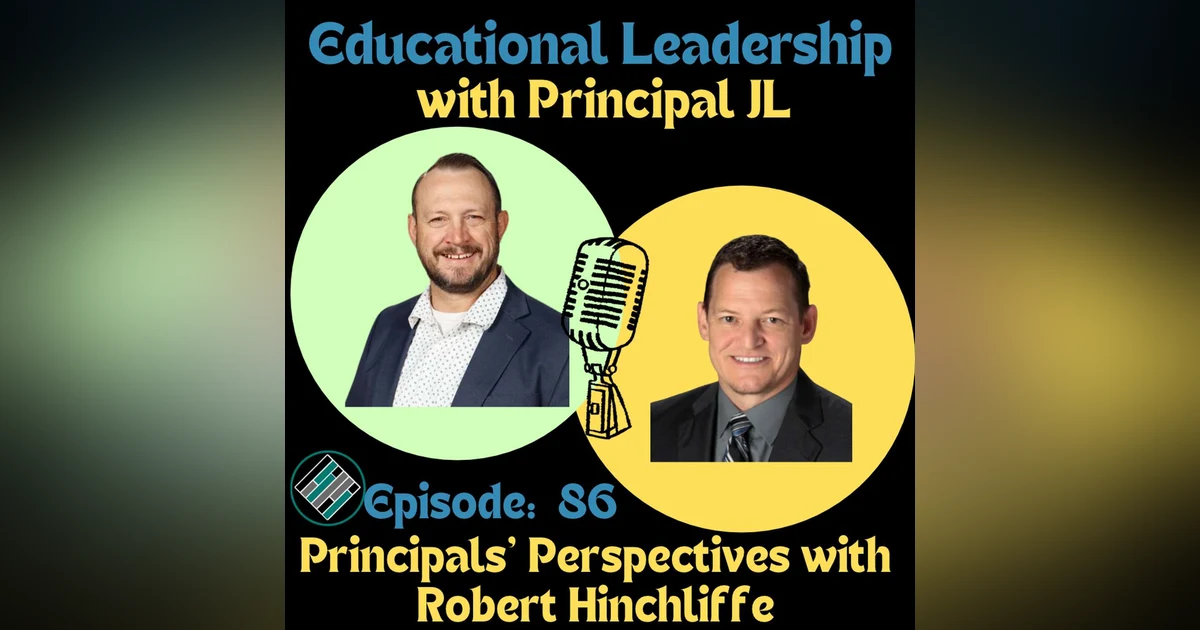

Connect with the Show Here! The first quarter feels different this year, and not in a good way. We’re seeing more suspensions early, more vaping, and more students testing limits before they even understand the routines that keep a school running. I sit down with my friend Robert Hinchliffe for a no-script Principals' Perspectives conversation, comparing what high school and elementary leadership looks like when the pressure is on and the days are already full. We get real about student beha...


The first quarter feels different this year, and not in a good way. We’re seeing more suspensions early, more vaping, and more students testing limits before they even understand the routines that keep a school running. I sit down with my friend Robert Hinchliffe for a no-script Principals' Perspectives conversation, comparing what high school and elementary leadership looks like when the pressure is on and the days are already full.
We get real about student behavior, consequences, and the leadership tightrope between being firm and being supportive. We talk freshmen adjustment challenges, restorative follow-up after suspensions, and the practical work of helping kids learn from mistakes without letting one student derail learning for everyone else. Then we move into the complicated world of special education: IEP discipline rules, manifestation determinations, least restrictive environment decisions, and what happens when a small number of high-need situations pull time and staff away from the rest of the campus.
From there, we zoom out to policy and reality: unfunded mandates, rural school constraints, and why principals have to advocate more directly with lawmakers. We also debate chronic absenteeism and whether paying students to attend school actually solves the problem. Finally, we land on career readiness and what success should look like after graduation, including the “3 Es” and why skilled trades, certifications, and flexible pathways can be life changing.
Subscribe, share this with a fellow educator, and leave a five-star review so more school leaders can find the conversation. What’s the biggest challenge showing up in your building right now?
New and Improve
Teach Better Mid Roll Network Ad
Click Here to Connect with Principal JL:
00:00 - Welcome And No-Agenda Setup
02:51 - Suspensions Surge And Vaping Reality
04:59 - New Students And Freshman Adjustments
06:30 - Consequences Plus Restorative Reentry
10:05 - IEP Discipline And Manifestation Rules
19:01 - When One Student Consumes Resources
27:26 - Appropriate Placement And Real Access
33:49 - Boundaries Transfers And Eligibility Rules
37:37 - Forgotten Schools And Unfunded Mandates
48:31 - Attendance Problems And Incentive Debates
57:08 - Career Readiness And The Three Es
01:02:06 - Trades Pathways And Modernizing High School
01:11:14 - Wrap Up Plugs And Listener Outreach
Welcome And No-Agenda Setup
Principal JLWhat happens when two principals sit down and talk education? Also, what happens when these two principals are in totally different parts of the country? Oh, and one's an elementary principal and one's a secondary principal? Well, you get the principal's perspectives, of course. And my good friend Robert Hinchliffe and I sat down and did an unfiltered no agenda session where all we did is hit record and we just talked education. In this episode, we talk a lot about how the school year started, kind of where we're at, and kind of where we're going in the school year. And we kind of just touch on a lot of different topics. That's what makes this episode so much fun to do. And so I hope you guys get a lot out of this one. So sit back and relax as Robert Hinchliffe and I take you on a ride. Now, here we go on the principals' perspectives. Welcome back, everybody, to another exciting episode of the Educational Leadership Podcast. I am so excited to have my friend Robert Hinchliffe in the house. Boom, we're doing another Principals' Perspectives episode. We're so excited. We're just gonna riff, guys. There's no plan. We don't script this. We talk a little bit before, but we just really just we just go. Here's a topic. Let's talk
Suspensions Surge And Vaping Reality
Principal JLabout it. So one thing that I talk about, and I it's something interesting this year. I'm in my ninth year as a building principal. And for some reason, I don't know what it is, what it is in the air. And I heard from other principals around the country. It's been a really challenging start to the year. And I'm gonna explain something to you. In the first quarter of this school year, we have suspended the same amount and just a little bit more than I did all last school year. And first nine weeks, I have suspended more kids than I did all of last year. Now, for me, that's crazy because it seems like we have this issue going and we're just being consistent with our expectations. And it's just really weird because it's like we feel like we have all these systems in place, all these things work, we know they work, but people are deciding to make bad choices. People are deciding to do, and a lot of it's vaping, it's not just nicotine, it's THC. One thing is another epidemic is edibles coming in. Like those are things that we're seeing right now in public education. No matter where you're at, doesn't matter if you're small school, because I dealt with this as a small school rule principal as well as a large suburban urban school that I'm in now. But Robert, do you are you seeing some of the craziness this year that I am? Because man, this just has been a crazy, crazy start of the year. How about you?
Robert HinchliffeYou know what's interesting is I honestly up till about a week ago, I wasn't seeing the crazy. My crazy is more budgetary sped, which I think you know we'll get into a little bit. But now I'm elementary, and so that's a little bit different. We are blessed, you know. We have such a stable staff that's been here and they know things, and so they do a great job just ironing things out before it even gets to us. Not to say that we don't have fires, but I think just over time now, being so consistent for a few years, it's paying off finally.
New Students And Freshman Adjustments
Robert HinchliffeMy thought was for you when you said that, though, is how many are freshmen coming in that are learning the hard way? Because that's the majority, you know. Speaking of crazy, I think the majority of our problems, problems isn't the right word, the majority of the things that pop up are the kids that are new to our school that don't know that we're here to help them or don't know that we have these routines, procedures, expectations. Once we get them ironed out, then we're pretty good. I mean, we get some hot spots from other schools, and I think we're gonna fix them. And we try to, but I think the majority of us, I'm gonna guess like you is are new students to our campus. So again, I don't know if that's your thing, but when I think about the crazy, so to speak, it tends to be those kids.
Principal JLWell, I will tell you that data will support its freshmen. I will a data will support that it's freshmen trying to figure out the high school. When you go from the middle school to high school in our district, we hammer, man. Like we don't mess around, it's we have expectations, we're gonna hold you to it. Not saying they don't hold them to an expectation down in the middle school, but we just have a different level of expectation on things because like if you if you do this, like if you get caught with a nicotine vape, you get so many days. If you physically hurt somebody, you're gonna get so many days. If you get caught with a THC vape, you're gonna get so many days, and you're gonna get a charge. You're you know, it's like there's all these consequences you get, and we are working with kids where their frontal lobes aren't fully developed, they're gonna make bad decisions.
Consequences Plus Restorative Reentry
Principal JLOur goal is to help them. Like, hey, we want to help you, we want you to make good decisions, you're gonna have consequences. So, how can we not do this again? So, we do some restorative justice practices. You know, I have conversations with them when they come back off of suspensions like, hey, did you stay caught up? These are things you need to do. Here's some resources for you, so you have a place to go if you're having these certain issues, and just trying to let them know, hey, we care about you, won't you hear? But we're gonna be like, you know, we're like a surrogate parent. We're gonna be tough on you on certain things because part of my job as the principal is to keep a safe and orderly environment so people can learn. And if you are doing things that are wrecking that, I am not gonna sit by and just let you do it. It's plus at the same time, I want to get you help, I want to make sure you're doing the right things. Hey, you need to understand the system. Like we do a whole freshman day, which has worked really great to where they understand our processes and our systems and our expectations. So when we do have these things come up, we can say, remember when we talked about this? Yeah, okay. Like, and the parents
Robert Hinchliffewe don't
Principal JLparents have to get to it too.
Robert HinchliffeWe're elementary, so we don't see. I mean, and this is that's reason number 2402 that I am elementary school and not really school. Um, I don't want to deal with I don't want to deal with drugs really, although in elementary school sometimes I don't want to deal with any of that stuff or you know, boyfriend, girlfriend, craziness. But you know, like you have your non-negotiables like I do. Like if you hurt a staff member, of course, you're gonna get suspended. Things like that. You know, like if you drop an F-bomb, we're gonna just talk to you. Like, dude, time and place, don't do it. But you know, I need you in school. But I think so much for me, I don't know if this is the same for you. So much for me is am I gonna be supported by the parents? Because in elementary school, we're trying to teach them to be good humans so that in middle school they'll make good decisions in bad times, all of that. But I suspended a kid once when I was first a principal way back in the day, and lo and behold, I looked outside right dismissal, and there he was writing his brand new hoverboard. And I'm like, okay, obviously the parents are completely okay with what he did and they're not gonna support me. So sometimes I'll just be like, no, buddy, you're gonna sit down here and you're gonna do the work and you're not gonna get off easy. Now, if I have a parent that I know is gonna take care of the problem, it's a little bit different. And I know some people don't like that because you know you want to be zero tolerance or black and white, but for me personally, I don't know how you feel about this, Jeff, but for me, most cases are case by case, person by person. And I try to remember that they're humans and they're kids and they're supposed to make mistakes. But to be fair, I am elementary school, so like I mean, I don't deal with near the stuff you do.
Principal JLYeah, I would say we do go case by case with certain kids. Like, we may have a kid do something, but we know it's not gonna be really handled at home. And so we will do things a little differently to make sure they understand that this is unacceptable. And you know, in a way, like, you know, we we will change some things up or tweak some things depending on a kid and their situation. Now, if we know they have a supportive family and they're gonna hammer, we let them, we let them do their thing, right? And so it is case by case, but we also one thing we always have to think about first thing we have to think about before we suspend is we have to go as this a special education student. Because
IEP Discipline And Manifestation Rules
Principal JLif you like it or not, you have to treat them differently when it comes to suspensions, because you have to have so many days before you start manifesting. And for us, it's you once you hit 10 days, you have to manifest. We always try to manifest around eight. So if a kid gets taken out of the classroom environment where they're supposed to have access to education like everybody else, it doesn't matter if they get kicked out or if they're suspended, that counts against that counts as a day, right? It doesn't matter if they're they're you're gone for one hour, it's a whole day that you have so you have to like think about okay, this is what the kid did, this is our normal like consequence that we want to be consistent with, but we might take a day off so we don't get to that 10 day as fast. Fair not, you have to think about those things because we have to follow certain federal laws through a student's IAP, and because they have a you know an IEP, we have to just be very cautious on how we do things on that. So that's kind of one of those conundrums we get into because we know in this manifestation that their choice wasn't a manifestation of their disability. We all know this, but we still have to go and do the paperwork and do the prior rent notice and all those fun things that go with it. But yeah, that kind of gets frustrating because you want to be able to treat the kids the same, but you can't and you have to take things case by case. So that's kind of what we do. And I have two really good assistant principals that do a really nice job to keep me informed, but that we all understand our expectations and how consistent we want to stay with those things.
Robert HinchliffeI think, and I'm assuming it's the same with you, but I think one of the big areas that is really causing a conundrum for leaders and for teachers is SPED. I mean, you know, that you see all kinds of memes on online where it says, you know, one student's need shouldn't outweigh the other 29 in the class. And I think we can all agree to that. But, you know, if you dig into the kids' background or whatever it might be, and they are, you know, they are found to be emotionally disturbed and they have an IEP, well, that changes things. And that is really, really hard for us, I think most leaders to accept. I don't disagree one bit with the premise behind SPED that some kids need certain things. I don't think any great educator disagrees with that. Where I struggle, honestly, is sometimes I feel like their rights supersede the rights of gen ed kids and keeping them safe. And that's that's kind of a struggle for me personally. Because, you know, like once they get out of school and they do something, they don't get to say, oh, I had an IP. Like the judge isn't gonna be like, oh, you know. So again, I think that's one thing I struggle with. I I know parents struggle with it, I know teachers struggle with it. For example, you know, if a child is supposed to be in elementary school, if a child's supposed to be pushed in to general ed, but then they're getting pushed in and they're just causing a ruckus and they're taking away from the learning of others, well, then all of a sudden that becomes a problem. I think it's just such a multifaceted topic, but bringing it back is you're 100% right. You know, when a student gets in trouble, whether or not we want to look into it or not, their background or their IEP does play a part in it. And again, everything's case by case. It really brings it back to why I have to do that. You have to just kind of look at all facts and all parts of the the story to make the best decision possible, but ultimately, no matter what, you're trying to get them to learn that this is not okay and we can't do it anymore.
Principal JLNo, I agree. I mean, when I think about working with kids, I work with, I mean, just to give you guys some data here, we're 18 to 20 percent free or 18 to 20 SPED population. So think about that in a thousand school, thousand student school. 180 to 200 IEPs in my school. That's not even counting the hundred 504s. So if you count 504s and IEPs, we're we're pushing 30 percent. So almost 300 students out of a thousand have some sort of accommodation or special need or some sort of of documentations for for supports. Like we want to support kids, but we also are really high on verifying, so we got to get better at you know, maybe not verifying every kid for emotional disturbance out there, but it seems like that is the big one. Emotional disturbance and behaviors are the two biggest tricky verifications out there because people are going to argue with you, and I've been through these IAPs, that their emotional disturbance, their choice that they did, even though we know it's a choice, it's because they're emotionally disturbed and they have no, they couldn't control themselves. What's people want to argue it's not a manifestation of their or that it is a manifestation of their disability. Where I disagree a lot with is where you have to be able to discern what a choice is and discern what what their triggers are, because their choices aren't triggers, but they want to try to they try to want to lump that in. I've been in through some battles with people that want to argue the point. I'm like going, no, I totally disagree. It's a choice, it's not a trigger. Like a trigger would be you get startled and that sets you off. That's a trigger. Just there could be so many different things. And for us, we have like four different levels of special education in my building. So one is our resource level. Our resource students go to our regular class settings, they have accommodations, they have supports, they may be in a class with a co-teacher, they may be in a class not with a co-teacher. Okay, so those kids get pushed into the regular ed setting because their abilities they're they can do it, they're giving access to the general ed curriculum where our other kids are in specialized programming. So we have a skills one, which is our behavior kids, the kids that are identified as mostly sturber behavior kids, and so they go through a specialized programming to where they may not be in school for the full day, but some of them can, some of them can't. Um, but their whole goal is to learn coping skills so they're not disruptive in this classroom setting. And I'm telling you, there's kids in that setting that disrupt that setting, and it's not fair to the other kids in that setting. And so we have to get creative on how we're gonna educate that kid because I will not, as a principal, allow one student to mess up the education of everybody else. I will figure something out, I will figure something out to make sure they're educated and they're not and they're not and they're getting what they need, but at the same time, they're not disrupting the education of other people, and I think that becomes a tricky line because people want to say, well, they're not with their peers. Well, sometimes they can't handle that. Sometimes they it's just not that's they're not at that level yet. So how are we gonna get them to that level? But in the meantime, how am I gonna educate them to get them to that level? And those are things people want to, so you have to start with the least restrictive environment, and you have to work to the most restrictive environment, and so we have all these different levels to do that, and even we get to the most restrictive environment, we even have to go to a more restrictive environment because they can't even handle that, and so that gets really kind of by law by laws and everything, that gets really touchy, and we have to do a lot of documentation, we have to prove a lot of stuff, we have to let the data speak, and we have to do a really good job in case someone wants to challenge it. We should be able to support ourselves in the court of law, and that's the sad thing about it, but at the same time, we're trying to help everybody learn, not just one kid is not more important than everybody else. And I totally get I am totally 100% on that, and I try to do a I try to do a good job as a building principal to make sure that doesn't happen. And if I have a kid blowing up a classroom, we're gonna address it.
Robert HinchliffeAnd that's the thing, you know, it's I think people forget, you know, for example, we just we we had a student the other day, and it took six
When One Student Consumes Resources
Robert Hinchliffeadults to be in the room to help this student. And yeah, they might be they might be placed in that classroom, and that's great, they're placed in the right environment. But what's happening is when six adults are in the room helping that student, the other 970 kids on campus are not getting what they need, so to speak, or the teachers aren't getting what they need because we can't be instructional leaders, we can't go do this, we can't help out there. So it's it's one of those things where one student can disrupt the environment in many ways. They can disrupt it from the learning of others, but I think we forget that sometimes they take time away from helping others as well, and not to say that they don't need help. I don't want people to think that that that's that's what's going on, but I think the struggle, the the conundrum of a leader is to help all kids, but sometimes you feel like you're not helping all kids or all staff members because one or two are taking away from the others. Like, for example, I have you know, we make decisions to to alleviate things. So I have one student who spends recess and we we walk around because walking with me is much safer for everybody than it is to have him on the playground. And he has an IEP. Okay, well, you know, again, you you're you're working with kids in a different way and you're trying to keep them safe, but you're trying to follow all the rules as well. And I think it's so hard sometimes to walk that line and to balance balance everything out while giving your best to everybody. It's one of those things where it's just a challenge, especially when your school or my school, where you know, I just looked mine up, I have about 19%, 19% of 970 kids that have have just some kind of IEP. That's a lot, one out of five, right? So again, you're just walking this fine line where as a servant leader you want to help everybody, but it's the old, it's the old Hawthorne effect, or or I think it's the Hawthorne effect where or maybe it's a different one. That's the Hawthorns when you stand by someone, but there's some kind of effect where where you know 80% of your people take up 20% of your time, or 20% of your people take up 80% of your time, and you can take that like 90% or 10% of the people take up 90% of your time. It's like a you know, it's like a graph, but it stinks because you want 100% of your people to take up 100% of your time, and and you're just balancing this out, and you know, you're getting ran ragged trying to help these few certain kids, which they need at the cost, sadly, of the other people on campus.
Principal JLYeah, I think what people will go, well, they have to have access to the same education. I agree, they need to have access, but at the same time, I think you have to have a level of expectation to access certain things. Now, I can have a kid be in a totally different space and still have access to the same education. Maybe they just need a different space or location that works for them in that situation, or when they get to a certain point, they have a place to go so we can use our coping skills so we can get you back into the other place. But you have to write that stuff in because if you don't write it into the IAP, anytime you send a kid out, that counts as the day of being out, right? Even if they're going for half an hour to go decompress,
Robert Hinchliffethat
Principal JLcounts that they're not being they're not being educated because they're decompressing. But if you're if you're smart and you write it into the BIP and you write it into the IAP, you'll be better off because it's part of their plan to help them regulate so they can be in that space. And so those are things that we have to think about and how we do things um when we work with a certain population. And a lot of those kids are really great kids and we really enjoy them. Like you said, there's there's probably a handful that are probably the more challenging, you know, when it comes to that. And and I've had, you know, I have challenging staff and I have challenging parents, just like we have challenging students. And we want to help them, but at the same time, there needs to be some level of you know, understanding that there has to be a level of expectation somewhere. There has to be a level of, you know, hey, this is professional, you know, have to be a level of professionalism, has to be a level of could, you know, of you know, of how you're gonna treat other people because we're not just teaching them, you know, reading, writing, and arithmetic anymore. We're teaching them. Social skills. Why? Because the world has said the public schools are a great place to solve all our problems. So we're we're over here, we're over here fixing things. We got a lot of federal unfunded mandates, and we also have a lot of state unfunded mandates to where they want us to fix everything. And it's getting to the point to where you're tapping the schools out, man. Just let us do our thing.
Robert HinchliffeYeah, you're just spreading us too thin. We're becoming the jack of all trades and the master of none. It's fascinating, you know, because we the things in elementary school that we kind of have to work around, which is a struggle. You know, the inclusion is hard for us for students, students on the spectrum or students in, you know, a room for autistic students or students with autism. That's hard because you know, so often sometimes we're sending them right into environments that are overstimulating, you know, like the lunchroom. There's 250 kids in there, there's a lot going on. But because they are supposed to be included during lunch, which again isn't a bad thing, but it becomes a challenge not only for the kid, but for us. And then you know they get overstimulated, and if they can't regulate in some way, well, now you're just setting them up for a difficult afternoon. Or when they go into specials, and our music teacher, who's the state, you know, the state teacher of the year last year, and she's got all kinds of things going on. You're playing music, and you're basically you're triggering every potential thing for these for these kids, but yet they have to be in music and they should be in music. It's just a fine line there. It's fascinating though, because one thing I love is you know, I I was in a music the other day and and there was so we have another struggle we have. I don't know if you have this, but you know, we so we have self-contained autism, which has eight kids and an aide, and they'll go to music, let's say, but they are pushed in inclusion with 33 fourth graders. That's a lot of kids. Now we're up to 41 kids in a room, and there's one aide, and God bless her, she's doing the best she can, but there's all these things going on and all this stuff, and then it starts to take away from the gen ed kids as well, and you get into that that gray area there up you're trying to balance everything, and it's really, really hard. And I don't like a lot of people want to say, Oh, we need more training, we need more AIDS, we need more of this. I don't know that that necessarily would help, and I think that's what bugs me because you can't give kids one-on-one AIDS, there's not enough people or money, and one-on-one aids are really, really sticky. I don't know if you've ever had one before, but that's a sticky wicket, and so I think it it always comes back to for for me is that I want to fix things, but I don't know how to fix this situation, so we manage it the best we can for the greater good, and I think that's just where I ultimately kind of try to lie. It's just I'm gonna help as many people as I can as best I can.
Principal JLYeah, and my thing is as I look at appropriateness, I'm like, is this really appropriate for this student? Is this are they gonna get something out of this? I mean, I had a situation this year where special education kid wanted to take a foreign language, and I didn't know that kid's cognitive
Appropriate Placement And Real Access
Principal JLlevel. This kid is would be in her upper level special education programming, where a lot of those kids are nonverbal, they need restrooming, they need special cares. I mean, just that's kind of what it is, right? And I had to learn more about that kid to make sure are they gonna get something out of this class? Because number one, if they're just in there for socialization and they're not in there for learning, and if they can actually learn and socialize, I'm good with that. But if they're just in there to be in there and but they're not learning anything, I'm not okay with that because that could lead to other things down the road. So my thing is is this kid, yes, was able to learn from the situation, was loving it and getting to learn a different language that they never thought they would have access to. So there's a success story there to where, okay, this was appropriate for this kid because they have the ability to sit in there and do the work. And they may have may take a little longer to do the work, but they're learning, they're getting something out of it, and that's what what ultimately I wanted for that kid. But at the same time, if the kid's gonna go there and they're and they're and it's above their head and it's just not gonna work out for them, let's put them somewhere where it is more appropriate. And so I look at the appropriateness of each kid when they get put into that. And I have to really rely on my my SPED case managers to know that. And so if I have questions, I go straight to my SPED case managers and go, okay, give me their IQ, give me their test results. Is this appropriate? What are your thoughts? And we go through that to make sure that the kid is put in a place that it could be successful, but it's not going to be something that's gonna overwhelm them. And we also make plans for kids that we know get overwhelmed, and we give them ways to go and cope and decompress, and it might be a separate room, but we have those avenues, but it's very well documented, and parents know what it is. The kid knows how to access it. Now, I'm dealing with high high school kids, so I can have these kids go do different things than you can at the elementary level, you know, where a kid can can take himself from a classroom to what we call a pause room. You know, we have the ability to do that much easier at our level, but we do have things in place to try to help with those kids when they do get overstimulated, they know how to respond and where to go when those things happen.
Robert HinchliffeYeah, see, I was thinking the whole time, like you can change their schedule and you can have them go here or there as to where we're kind of locked in with the specials and and things of that nature. I love it though, it's fascinating to me. I you know, when I go into rooms with with students who are unself-contained, and you know, you'll have two or three that love art, and then you'll go into music and there'll be two or three that are dancing while the other the other ones are just struggling. And you know, I think that's ultimately a testament to the arts in a way, because a kid can identify with certain things like PE or music or or you know art, things like that. It's just it's you know, when you start to put this many kids into a system, you see kind of everything, and it's fascinating trying to do the best you can for every kid on a campus, no matter what they might come with. But I was thinking too, I don't know if you see this, but I know I have a lot of friends right now. Another struggle they have is some students who are self-contained are they don't know, you know. I want to be fair to the students. I'm not trying to say anything bad, but they communicate through their actions, right? They're non-verbal, so they communicate through their actions. And some are communicating in such a rough way that they're hurting the AIDS, or they're we have AIDS that are being sent to the ER because these kids are communicating that way, and and it's violent, and they don't know they're doing it, I don't believe. But it's one of those things where should they be on a comprehensive campus, or where do we go with that? I don't know how it is back, you know, uh in Nebraska. You know, we have some we have some special schools for students that are severe, and I think they they do a great job, but you know, it's always that that challenge of what's the right placement for everybody? What's the right place?
Principal JLFor us, Nebraska, we take everybody. It don't matter. We don't have special schools, well, unless you want to go to a private school, but they get to restrict their enrollment and they get to pick and choose who they want to have come
Robert Hinchliffein.
Principal JLBut for us as a public school, it doesn't matter. Like, come all, come, you know, come one, come all. For us, it's like you live in our district, you're in our boundaries, we're we have to educate you. We're I think that's
Robert Hinchliffeyou know, that might just be a perk of being in a perk of being in Clark County, which is extremely urban. You know, we're blessed to be able to have resources like that. I am a complete proponent of your style, where my zone is my zone. And the student that lives in my zone, that's the ones that I'm going to help. Those are the ones that that, you know, again, are technically allowed to come to the school. In Vegas, we don't really work like that. You have self-contained, and a student from a completely different zone can be bust into yours because you have a certain program. And I struggle a little bit with that because I often worry that some people just try to get those students out of their school and aren't willing to put the work in. And I hate I hate the thought of a student ever leaving our school. You know, whenever we we have you know, we have a self-contained class, which is the difficult, difficult kids. And you know, we we are more than willing to keep them here because again, we're invested. They're like once you step on campus, we're invested. You're our kids, but I don't know that everybody has that same mindset, and that's a struggle as well. So again, I I think you know, it's great having the extra resources, but I like yours because when they move into Hastings High School, they're yours and and you're gonna have to work with them and do it.
Principal JLYeah, we have boundaries. We have kids that transfer in and are opt-in and things like that. And in Nebraska, if a student is in your district for two years and they move 30 miles down the road and they want to stay in your district, you have to accept
Boundaries Transfers And Eligibility Rules
Principal JLthem back. You're required to accept them back. You can't say, Well, you live in that district, you have to now. If they've been in your school district for less than two years, then you don't have to accept their option enrollment.
Robert HinchliffeDoes that apply to sports as well?
Principal JLEverything.
Robert HinchliffeIt's interesting because you know, here if you move to a different high school zone, you have to sit out a year because they start to think that you're moving just to put
Principal JLit in the middle of the state.
Robert HinchliffeYeah,
Principal JLwe have we have eligibility rules when it comes to that. But I'm just saying, like accepting an option in when you when you have to and when you don't have to. I think those rules get a little gray and tricky. Like when it comes to athletics, if a kid is in your school district and they move 20 miles down the road and they want to continue coming to your school and they want to continue doing your activities, then yeah. Like now we have it to where if homeschool kids want to come in and participate in activities, they have to take at least five credits, which is one class, and they have to pass it. But at the same time, that gets them eligible for the state of Nebraska's eligibility to where they can be eligible to participate in whatever sport or activity they want to at the school, as long as they live within our district. And so we have those, those, those kids that are homeschooled kids that will come in and be a part of our school in those those ways as well. Yeah, it just gets really tricky. So, you know, they don't want people moving around and transfer. So you have to sit out 90 days regardless.
Robert HinchliffeOkay.
Principal JLRegardless. No, if you move out of the district and you opt back into it, it doesn't pertain to you because you're staying within the district that you're that you moved out
Robert Hinchliffeof.
Principal JLBut if you move out of a district and you res and you have residence in another district and you want to go to that district, it's 90 days regardless now. It used to be as long as you go to the school in the district you live in, it was okay. But because kids were doing that so much, and we'd have phantom addresses or phantom apartments, or you know, these these phantom, you know, locations.
Robert HinchliffeYeah, it's a mailbox like Friday Night Lights, it's a mailbox type thing. Yeah,
Principal JLyeah. So the state decided it don't matter if you move to another, you're sitting out 90 days, and you can opt into another district before May 1st and still be eligible for the fall. So as long as you transfer and opt before the May 1st deadline, you're eligible for anytime after the May 1st deadline, then you have to set the 90 days. So there's that little caveat to it, but that's more like recent, probably the last three to four years that they've been kind of been more of a stickler on that, just because of if you go to Omaha or Lincoln, they have open enrollment for from eighth grade to freshman year. So you can literally have a one-time, you know, go school shopping and figure out where you want to go. But once you're there, you're there. And so what kids will do is go to one school district for one activity, move back to another school district for another activity, and it would cheat the system. So they would go to this school for this, but this school for that. And so they decided no more of that. So they got a little bit stricter on those things when it comes down to that. But yeah, you can literally live an hour away from a school that you want to go to, and you can opt into it if you want, as long as you have means of transportation to get there.
Robert HinchliffeYeah, you know, we kind of got off his bed there. I was just thinking too, I was in a documentary um called The Forgotten School.
Principal JLOh, yeah, tell me more about that.
Robert HinchliffeYeah, that was cool. Uh, so my friend Jeremy Brooks, he's from California, and he did a great thing. He did a documentary on schools, rural, rural
Forgotten Schools And Unfunded Mandates
Robert Hinchliffeschools in California, who are basically forgotten. And hopefully it becomes something you can watch in Nebraska. But ultimately, he highlighted four principals' that are facing challenges in small towns in Northern California. And essentially, they're having mandates from political from the polit politicians that they can't they can't do. And so what made me think of it was this was the SPED stuff, because you know, if you if you if you have a student who I'm just gonna make something up, maybe is wheelchair bound, and they live in a rural city that the state pretty much has forgotten about, it talks kind of like this situation where to put in a ramp into the bathroom is a hundred thousand dollars, and they don't have the money to do that. And so then you get into that sticky wicket of, well, the student is entitled to this, but the school can't afford it. And then what you get into is well, then you have all kinds of regulations and codes that you have to follow to build the ramp, and you have to get all the permits to build the ramp. And so it was really a great microcosm, kind of what we're talking about, where oftentimes we want to help the kids, but people are getting in the way of it, or regulations are getting in the way of it. And so this documentary did a great job because, like, for example, one thing in in Northern California is they had an electric bus mandate. They had to buy so many electric buses, and the amazing thing was the electric bus could make it down the hill to a football game because they had to travel so far to football games, but it didn't have enough electricity to get back up the hill to get home at night, and so they constantly had that. Like we have to buy this bus, but yet it can't do what we needed to do. And then when the bus would break down, they had nobody to fix it in their small town, so they would have to get it towed down to the valley, and then it wouldn't have enough power to get back up the hill. But those are the kind of things I think where politicians and people get in the way, and it comes, I think you know, I was thinking about Spanish mostly those small towns, but I got to be a part of that documentary because I'm from a small town in Washington State, and Jeremy asked asked me to be a part of it. But ultimately, you know, I'm sure in rural Nebraska, or people listening to this in rural areas, you're facing things such as building a ramp, and you can't get it done to help the kid, but yet you can't just get a bunch of dads together on a Saturday afternoon to build the ramp because then it's not coded or permitted. Like again, I think sometimes we're getting in the way of progress to help people, and and I don't know that that's necessarily a good thing.
Principal JLYeah, it's crazy that they're like they call them unfunded mandates, right?
Robert HinchliffeYeah, they
Principal JLwant to say, you have to do this. Oh, by the way, figure out how to pay for it. Oh, by the way, you're gonna have to do these things. Oh, by the way, you know, I mean, like to me that's ridiculous, and that's part of why, like, I'm excited about getting ready to go to DC coming up because I'm gonna be part of the national education principal summit. It's MPA that's doing it, and since I'm part of that organization and I'm part of the you know, the state represent representation for Nebraska, I get to go do those things, and so understanding like you guys are asking us to do things that make no sense to us sometimes because you guys think because you went to school that you know how schools work, but you haven't really worked in the school, you understand how things work, the regulations we have to go through, and I think that's the part as principals or as educational leaders, we got to do a much better job is advocating our legislation in our states and our Congress and our Senate to make sure they understand how education works and how certain things are going to affect us. Because if they get if they could put a story, a personal story or a face to that thing, then they might think twice before passing something that would be just ridiculous for us to do. And that's kind of where I go back to. You say we have to do these things, but reality says something totally different. I'm gonna find a way to make it work within the reality, not within your fantasy. And so that, and if you're gonna sue me for it, oh well, I'm gonna make sure I'm helping this kid.
Robert HinchliffeThere was a there was a principal, I forget her name, who was great in the documentary Forgotten Schools. Look at my if you look at my Facebook, you might see it. Jeremy Brooks, the Ed Talk podcast. But anyway, she was basically saying that they couldn't tear down a bathroom or remodel a bathroom to make it compliant without having to trench like a hundred yards through asphalt in order to put in a charging station for electric vehicles of which she's never gonna use. It was something wonky like that, where the code and the regulation required them to trench for no reason, basically. It's stuff like that where I don't think the politicians, you know, maybe they're well-intentioned, maybe they're not, but they need to think through or do some carve-outs or something where there should be a simple, simple appeal. But then she gets into the fact that there's no such thing as a simple appeal. You know, you have to appeal to this person, appeal to this. There's so many things that that politicians do for better or worse, and they there's just so many unintended consequences within our profession. And I think
Principal JLa lot of times the documentary
Robert Hinchliffejust shows a lot of them.
Principal JLA lot of times they're passing a law to make a dollar. That's what they're doing. They have some sort of lobby, lobbyists in their back pocket, they're gonna make some money on the end, and they're gonna pass the law if it makes no sense or not. That's the reality of the politicians we're dealing with, and it don't matter what side you're on,
Robert Hinchliffedoesn't they all
Principal JLthey all go to Capitol Hill or they go, they go or become a senator or congressman, they come back a lot, a lot more rich, a lot more money in their pocket than they did when they showed up. And I think in Nebraska we're getting tired of it. Yeah, yeah, yeah.
Robert HinchliffeWell, I think I think everybody is, you know, that's why you're gonna see it go back and forth for a while. But if the politicians fixed the problems, we wouldn't need the politicians. It's really what it comes down to. It's kind of like they say
Principal JLproblems to stay in to stay to have a job.
Robert HinchliffeRight, right, right. Like I've made I've made uh I've made a joke. I said, you know what, I create problems so I can fix them and look good. It's just you know, like that's kind of how they are, but going back to it, like the rural schools are dominated by the urban cities, usually, not so much Nebraska, but where I'm from in Washington State, Seattle and Tacoma pretty much run this the state, and so rural schools get hit the hardest with all these regulations and mandates that are just unattainable. Like if you run a rural school and you have, you know, you have to decide between a teacher or getting a bathroom brought up to code, which way are you going there? You know, or well, now you're getting fined to $10,000 a day because you're not bringing it up to code. It's just like these constant struggles that rural schools have. And you know, I think I think I'm sure it's happening in Nebraska somewhere because it's such a big rural state, but the unintended consequences, and I don't believe the politicians really care, and to be honest with you, you know, especially in California, I'll say it rural Northern California with a hundred voters, they're not worried about you. They're just not, they're worried about the big cities, right? Because that's where they get the power from. And that's one of the struggles, I think. Being it goes, I mean, you can even put that to us is ultimately are they worried about what we go through? Are they trying to fix the problems? Are they really listening to us? That's debatable. But you know, then people like you and I are trying to fix the problems, and we're just running up against, you know, just ramming our head against the wall and it drives us crazy, and then we go on a podcast and we talk about it and we'll get it all out.
Principal JLYeah, and I also think that we need to be more in their ears because we're not. Sometimes I think our our our us being silent is part of the problem. I think we have a big voice and we need to freaking use it to the point to where if every principal in their state was contacting their local state senator on a regular basis about things. And like think about how many principals are out there.
Robert HinchliffeYeah, I mean, if you know who your state
Principal JLcentered are, like, think about that.
Robert HinchliffeI do, yeah.
Principal JLLike, think about like how many people in their ears because guess what? The squeaky will gets the what?
Robert HinchliffeDegree. Well, it gets replaced, though. That's the problem. It gets replaced. Yeah, you
Principal JLain't gonna replace public school principals. I'm sorry. No,
Robert Hinchliffebut yeah, I think too, you know, the problem is also, and I've I've written about this, is I don't know a single topic where we can get a hundred percent of educators to agree on the answer. You might have one that pops into your head, but I cannot think of one other than maybe the fact that every kid needs to be in school every day. I don't even think we would get I we have teachers that don't believe they should be in school every day. So I honestly uh in fact, I think it was
Principal JLuh
Robert Hinchliffedang dummit, I can't remember which book it was. I must have too many books, but I know I wrote about this. I don't believe we could get 100% of educators to get in the senator's ear about one single topic and all agree on it. And that's another fascinating thing about what we do. There's so many that's my whole thing. It's all about perspectives, you know. Like there's so many different viewpoints on everything. You know, there's someone who's gonna be mad at what we said about SPED, and someone who might be like, Yeah, like we got to think about this. In education, I cannot think of a single topic where we all 100% would agree that that needs to change.
Principal JLYeah, the only thing I can think of is everybody agrees in order to learn, you gotta be in school. That's that's all I got. That's all I got. I mean, that's that's that's the that's the truth. You can't learn. Like,
Attendance Problems And Incentive Debates
Principal JLI'm gonna tell you something. A kid was being tested for an IEP. The kid's attendance was so bad, we couldn't with confidence verify the kid actually has a disability. So we can we couldn't give them an IEP.
Robert HinchliffeAnd that's where we come with it
Principal JLbecause you're not in school enough for us to be able to educate you in a way that we can make an honest decision about your abilities when it comes to education, and we're not gonna give you a federally mandated IEP if we can't prove that, and so that that's something that people don't think about to where if you're not in school, you ain't gonna learn. I go, school's pretty easy. You show up, you do the work, turn it in, stay out of trouble,
Robert Hinchliffeeasier than when we were in school,
Principal JLbut for some reason it's really hard for people to do.
Robert HinchliffeHere's the thing, though, okay? Let's let's say that we all agree, all 100% of educators agree kids have to be in school. I will guarantee you that not all 100% are going to agree on how to make sure that they are in school.
Principal JLYeah, well, you might have some people that say, My kid can learn online, they don't need to go to school.
Robert HinchliffeYes, or you're gonna have, you know, like the parents who are like, Well, they're they don't need to go to school, they already know everything. You I had a kid once that missed like 65 days, and he would come in on Fridays and just pass the test, and then he's like, I'll need to be here. But even then, it you know, like you can take two different ways, like until you know, we're gonna say, Oh, we need to hold parents accountable, okay? Great. How? Well, we're gonna garnish their paychecks or we're gonna we're gonna fine them for when kids are in school. Okay, great, good luck with that. Okay, well, take the positive way. Any student that has 99% attendance K through 12 automatically goes to the University of Nebraska for free. How many would take advantage of that? I don't know. I I did yeah, we might agree that everybody needs to be in school, but we would never then agree on how to fix it, and then we would never follow through on the rules for fixing it. And I think that's where a lot of the problems in education lie is that we're too busy like fighting the system to really make good changes.
Principal JLSo, have you heard about a school district that is paying their students to go to school?
Robert HinchliffeYeah, and why?
Principal JLI thought that was very interesting. You're gonna your way of battling chronic abteism is to pay school or pay your students to come to school. Like to me, it was just like, well, go to school is usually something that you do.
Robert HinchliffeNow I can
Principal JLit's like
Robert HinchliffeI could make the argument, okay? I can make the argument, it's an investment in the future. I can make that argument, sure. You know, it costs less to fix children than it does to fix broken men and women, right? So
Principal JLI
Robert Hinchliffecould make the argument, well, we're gonna pay you whatever to go to school. Well, they still gotta like it. I mean, in today's world, if a kid doesn't like elementary school, it is really, really challenging because we have chronic absenteeism. Well, ultimately, it's it's really a chronic absenteeism rate for parents, is what it is. Now, high school is different, they can get up and they can walk and they can drive, but a kindergartner needs a ride somehow, and so you know, here we are, we get we get quote unquote punished for not having kids in school. You can go on and on and on, and I could pay that little kindergartner 10 bucks every time they walk through the door, they don't know what the 10 bucks is or how much it is. And so you you're like again, we agree that the problem is the problem, but we can't agree on a solution. So now you have people just trying random things, and you know, basically our thing is we just we'll just talk to you, but we try to make school fun, so you want to be here. But that's that's the thing, and that's one you know. Sorry, back to my and now I'm getting so epoxy. But you know, one of the reasons that I truly believe every classroom, every school is different. It's a different leader, it's a different group of teachers, it's a different group of support staff, it's a different group of parents, it's a different group of kids. So you we try to paint them into this box of everybody just do this and everybody just do that. It doesn't work that way. Hastings high school is different than Waitsburg High School where I'm from. You're a different leader than I had. And I think we have to let people use their abilities to make school fun and to make kids want to be there. But so often we just do things that make them not want to be there. And it's just again, it's a struggle. We all agree, okay. I you know what you proved me wrong. I think you might have thought of the only thing we all can agree on, which is kids need to be in school to learn at school. But again, it comes back to how are we going to get them there?
Principal JLYeah, I think that's the next key, right? Getting there is so many different ways. So I'm gonna read something to you.
Robert HinchliffeAll right.
Principal JLSo school districts paying students in 2026, Detroit Public Schools in Michigan, $100 per week for high school students, $50 per week for middle school students. Charleston County, South Carolina, $25 per week. The students will receive incentives attending school every day. Oakland Unified school district in California is $50 per week. So those are the three schools that are paying or three districts that are paying their school. So I want to see what their attendance looks like after this year. See if it works because they've are they on to something? I don't know.
Robert HinchliffeI will bet you that I will bet you the $100 isn't enough.
Principal JLNo, well, if you think about it, $100 a week, 18, 36 weeks roughly. Uh now let's let's $3,600 a year.
Robert HinchliffeSure, but let's sad as it is, as sad as it is, kids can make more money doing a job, or I mean, maybe they're in a gang and they're they're doing that, or they got this going on, or maybe you know, like Bryce Tarper famously left high school and dropped out so that he could go to community college at the age of 16 because he knew he was going pro. So he knows that uh that hundred dollars isn't gonna mean anything to him, he's gonna make millions. There's so many different circumstances. I don't think 100 is enough, but where does it stop? Where does it stop? And then your property taxes get raised because we got to fund it more, and then now your class sizes are larger because we had to cut a teacher to pay for this uh this mandate that we now have.
Principal JLYeah,
Robert Hinchliffeit would be
Principal JLinteresting. I'd be interested to see how it works. I know some school districts do like an incentive program to where if you come to school, you get like these what do you call well? I'll just say tiger bucks, right? You're gonna get tiger bucks and you get so many, you go to our online store and buy stuff, like stuff you can go to the store and buy. And so that's an interesting concept that I've seen around. For me, it's just like show up and do the work, right? But
Robert Hinchliffewe're also in school.
Principal JLat if you're not in school, we'll take credit away. Like, it's not that hard. Show up and do what you're supposed to do.
Robert HinchliffeLike, that's the thing, is high schools have that tool. Elementary, we don't,
Principal JLyeah. Yeah, no,
Robert Hinchliffewe're just passing you along unless unless it's really, really, really egregious. So, again, I I think you know, here we are again with here's our problems we're facing, but what are we gonna do about it?
Principal JLYeah, and I think there's so many different ways to peel back those layers and trying to figure it out. And I think what it comes down to, there's not gonna be one solution for that. No, there's not one size-fit-all solution. I think it's gonna come down to as a principal, you got to know your building, you got to know your people, you got to know your community, you got to know what is the support looks like and how you can leverage that to help, you know, with some of the things you're working through. And I know
Career Readiness And The Three Es
Principal JLfor me, I'm dealing with the 54% free and reduced population. So I have a lot of lower sexual economic kids on top of, you know, 20 to 30 percent between IAP, another 10% on for 504s when it comes to kids with that that need help or have some sort of accommodation. So there's a lot of challenges, but how do I tap into our community resources? We do have our work-based learning program where we get kids out of the community working with people where they get paid to do that, and so we're just trying to find ways. How can we connect our kids to our community? So A, they have some sort of skill when they leave that they can get employed. And I think for us, it's all about what are we doing to get them ready for the for the workforce. So when they leave here, they have some sort of certification, they have some sort of way to make a living when they leave our school. And I think Tony Katani calls it the three E's, right? Employed, enlisted, or enrolled, right? You're gonna be enrolled in college or some sort of trade school, you're gonna enlist in the military, or you're gonna be employed somewhere outside of the school once you finish. Like you can get your kids to do those three things, all of them. You're doing something, and that looks different from one school to another, from one school in Nebraska to another school in Nebraska to another school in California, Florida, Wisconsin, Nevada.
Robert HinchliffeYou gave me an interesting idea. You gave me an interesting idea. Going back to the politicians, perhaps all of you high school principals who have all this great knowledge, you should change the grad rate to the 3E rate. You know what? Let's look at the 3E rate. Yeah, they graduated, but if they're not employed, they're not enlisted, and they're not enrolled, what are they?
Principal JLSo, funny thing, Nebraska has changed how they they grade their schools, and part of that grade is post-secondary readiness. Are you employed, enlisted, or enrolled? And so, how are we having them access things beyond their graduation, beyond what they're learning at the school? And so that is actually a part of our metric now within our a quest verification and classification.
Robert HinchliffeDo they have to have that decision made what the day they graduate, or do I have like all summer to figure out what I want
Principal JLfor the most part? Like or can I just
Robert Hinchliffecheck a box that says I'm going to the military?
Principal JLNo, no, you have to actually be enlisted. We have to actually prove it. We actually have to be able to prove that you're enrolled in a college, you enlisted in something, or you have some sort of employment. We're just called our post-secondary strand. And so that's one of the things that they're measuring the success of a school. Is what are you doing to get these kids to go beyond high school? And it doesn't have to be go to a four-year college, it could be go to a trade school, it could be you get certified in a program. Like there's so many ways to do that because I'm telling you, the trades right now are blowing up. The trades are where the money is at.
Robert HinchliffeIf
Principal JLyou want to be someone that's gonna advance really fast and make a lot of money quickly, go into a trade right now because you're gonna make more money quicker than you would go to four-year college.
Robert HinchliffeI'm sure you listen to him. I listened to Mike Rowe. You know, the way I heard it, Mike Rowe, and he's all about the labor force and skilled trades. You're 100% right. If you have the skill of being a welder or a carpenter or an electrician, don't go to college. Go in, I'm just saying, I'll say it. Don't go to college. Go be an intern somewhere, and you're gonna love it. You're gonna love it. It's kind of it's I I I can see it turning a little bit where college is not near as important, which is a good and a bad thing. But man, why do you go to college for two years and then drop out and then go to basically be a laborer? Just just go and start working your way up. There's if you can manage to find a way to be an underwater welder, you will live the high life forever because there's not very many of them, and they need them everywhere. You're so right. You're so right. And I love that's why I love about your high school is you find ways to get these kids into things. In fact, I just I just had a discussion with someone on TikTok today, and I was saying, I think a lot of schools or a lot, a lot of school is antiquated in a way. You know, like for example, we're teaching high schoolers sign and cosine, and this is just my example. I always come back to. Well, I can look that up on my phone right now. I don't need to get out a piece of paper and try to do a quadratic equation or whatever. And this this person wanted to argue with me about it and say, no, we still
Trades Pathways And Modernizing High School
Robert Hinchliffeneed to do that. And I replied with, I just disagree because I know at least two students that hated school. They hated school, but they were smart because you know what they wanted to do? All they wanted to do was fly airplanes. That's what they wanted to do. And when they were finally in high school and can go and go to an aviation program at a high school, they excelled because that's what they wanted. They knew that. But what we do is we just keep kids in this college readiness path where you have to do math that you hate or write paper. We have to do a better job, and I think you're doing a great job of that of getting them into something that they're passionate about.
Principal JLYeah,
Robert Hinchliffeand so again, it comes back to it like we have solutions, but can we get them there?
Principal JLYeah, no, and that's kind of what we're focused on is like I would say I saw it 10 years ago where the trades are gonna be, there's gonna be a hole in the trades, and that was be the next wave of where kids need to go. And I was still teaching 10 years ago, now I'm in my ninth year of being a principal, but I saw it then when I visited the Metro Community College, and wow, this is gonna blow up. And so what my focus is as a principal is how do we get kids skills? What programs do we have? What needs are we meeting? What are the kids really interested in? Do we have a program that kids don't really want to take because they're not really interested? If they're not interested in that, we cut that and maybe we add a program they actually are interested in. I think we did a survey and like 26% of our kids are are wanting to get into healthcare. So we have phlebotomy, we have a CNA, we have a medical terminology, like we have these things that were there that we can say, hey, you guys can go this track. Hey, we have a kid that wants to be a mechanic. Okay, you go to our automotives. You gotta have 12 college credits before you're done in our high school in an automotive program.
Robert HinchliffeYeah,
Principal JLthere you go. Like, like we have these ways we find out what the kids are their needs are, we kind of like program our our school that way as best we can. And if we see a need starting to come, we find a way to to meet that need. I am I do have I do have limited space. I can't put every program I want in the world. You
Robert Hinchliffedon't have an airplane hanger.
Principal JLI don't I don't have that ability, but if you give me a chance to build a school, you give give me an opportunity to build a high school, I will build you the most comprehensive high school you can imagine. It
Robert Hinchliffewould be great, right?
Principal JLBecause I would be like, this is what kids need. Like, like we want kids to be college ready. You know, we've been on that train for 20 plus years. That train is shit, it's gone. Like
Robert Hinchliffewe still have
Principal JLkids that could need to go to college,
Robert Hinchliffeyes,
Principal JLbut we need kids in the trade, they're both equally important.
Robert HinchliffeLet's get
Principal JLthem where they where they're gonna excel and where their skills and their talents go.
Robert HinchliffeYes,
Principal JLas they're gonna be happy what they do, they're gonna make a crap load of money when they do it. I
Robert Hinchliffecan't
Principal JLdo it.
Robert HinchliffeAnd they're gonna
Principal JLlive a great life.
Robert Hinchliffe100%. I can't help but wonder how many kids dropped out of high school because they didn't have something that they were passionate about keeping them there. They had to go do sign and cosign and struggle through math. They hated writing, and all they wanted to do hypothetically was work on cars because they loved cars, but the high school didn't have that or didn't have this. It's hard because not every high school can do that, of course. But you know, again, I think I think you're so right. We have we have to move this ball forward, whether it's building, whether we have a carve-out to build a ramp where we need it, or we can do, you know, help special ed students this way, or we can help the high schooler who hates school but loves flying planes, whatever it might be. I think we have to just we have to be willing to change and adapt. And that's not necessarily education strong suit.
Principal JLNo, we're a system that is we've done the same thing for 100 plus years or more, and we get stuck in our ways. And I think at times you have to re rethink about how we do it. Like, I'm not saying reimagine it because that kind of has you know, some people don't like that that imagery, but I'm just thinking, like, there's gotta be better ways to do things, and I'm telling you, there's things that we do that maybe some schools don't, and maybe some schools do, but if it helps a kid learn, or if it helps a kid, you know, get educated and get and get on with their life, we're gonna do that. Like, if it means they have to go to our alternative learning center because of their situation, that's where they're gonna go. Hey, if they come do the traditional setting, great. Hey, we need to make a hybrid schedule, great. Like, we have a lot of options to educate you, but some people get stuck in their way and say you can only do it this way.
Robert HinchliffeAnd that's
Principal JLdon't say that's the only way, don't be narrow-minded. Like, think about, and that's something that we have done here in the last five years is really challenge ourselves. Like, how can we educate kids in a way that helps them learn, but also helps them, you know, graduate because not every kid's designed to go through a traditional setup. But
Robert Hinchliffesee, you're you're and again, I you know I appreciate you. That's I mean, reason number 900 we get along so well, but you're progressively thinking, you're thinking forward. There's principals out there that just don't know. This is the way we've always done it. Or teachers, I'm gonna lecture to you for 60 minutes and you're gonna listen. And if you don't do it, you don't do it. We we gotta kind of move past that. You know, it's it's just one of those things where if we have
Principal JLthat box,
Robert Hinchliffeyeah, we gotta get out of the box, man, for sure.
Principal JLI think sometimes we put ourselves in this box and say, we only could do school this way. Nah, there's lots of ways to do school. As long as you're following your rules, you're
Robert Hinchliffeyou're
Principal JLlike for us, it's rule 10. Like as long as you're following your state laws, you're okay. Like
Robert HinchliffeI like to know your
Principal JLlaws and know what you need to do, but there's so many ways that you can educate kids that's gonna help them be successful and get them to where they want to be. Like, I will graduate a kid early if they make the effort and they do all the work and they meet all the requirements. I've graduated kids a year early before. Why? Because they wanted to get to their life, they wanted to get to a program that they were excited about. I I will do that. Like, I will graduate you early if if you're if you do what you need to do, right? I have a kid right now that's taking 90 credits.
Robert HinchliffeHe can handle it.
Principal JLYou know how many credits you can actually take in a year? 80. He's doing all and he's taking all 80 credits on top of that, taking an independent day on top of that. 90 credits in one year just because he wanted to do something with something to do with uh drafting architecture, and he was really interested in it, didn't have time to put in his schedule. So we created an independent study for them.
Robert HinchliffeAnd we had to
Principal JLget creative how to do that.
Robert HinchliffeBut why should we stifle that creativity? We shouldn't. Well, no, sir. I'm sorry. You can only take 80. You know that just drives me bonkers. I hate that we we have to get out of that mindset. And you you can't always be all things to all people. You just can't. But if you can be if you can be a lot of things to a lot of people, and um, like there's a good saying, do for one what you wish you could do for everyone.
Principal JLAnd
Robert HinchliffeI think you know, if we can do that, that's a good thing.
Principal JLWell, and the thing is, is now I know we can do it, right?
Robert HinchliffeYeah.
Principal JLAnd so, you know, we can challenge kids like, hey, these are things we can actually do because we've done them. And you know, you don't know what you don't know until you actually have done it or you know, figured it out. And I think those are those are things like you run into a situation. I think I've ran into more situations that like I go, man, this is really kind of crazy that I am going through this now. Like, I haven't dealt with this before. How are we gonna do this? And it's a lot of just working through collaborating with your staff and getting everybody together, especially my leadership team. We've problem solved so many things this year already. You know, it's just crazy. Some of the things that just pop up on your plate, and then we have the resources, which we're lucky to have to get to the certain kids or certain families so they can get what they need, so they can be educated, they can come to school, they can have the things they need, so they can, you know, be do what they need to do when it comes to just the education school inside. So yeah, it's been it's been really crazy start of year for sure, and a lot of things with a lot of challenges, and it's been it's been interesting. So, Robert, this has been fun, man. It's
Robert Hinchliffealways fun
Principal JLthis for a little bit over an hour. I think we got some. I think this is kind of like therapy for us, right? A little bit, yeah, so
Robert Hinchliffeboxy therapy, free, free therapy for me, anyways. But yeah, it's uh it's always fun. You you find you know, I mean, you and I like we just appeared on a podcast the other day and just click. There's people out there you just click with, and it's it's fun when you meet those people, and then you can just
Wrap Up Plugs And Listener Outreach
Robert Hinchliffehave some dialogue and get some ideas and and hear the great things that are going on, and it's just it's just kind of validating in a way.
Principal JLYou bet. And if you guys have a great story, I'd love to hear from you. Please send me an email.
Robert HinchliffeExactly.
Principal JLThere's a little plug there, Robert. It's been a great time tonight, just sitting back, just just letting it rip, right? Just talking about whatever pops in our in our brains. And some people may agree, some people may disagree, but that's okay. That's called that's called dialogue, right? That's called, you know, hey, if you want to have us discuss your perspectives, let us know. We would love to get other people's perspectives and talk about things that you guys are interested and maybe want us to have our perspectives on. Um, so it's been really great, Robert, to have you on for another Principals' Perspective episode. Uh, before we go, is there anything you want to say?
Robert HinchliffeNo, I mean if you get a chance, I wanted to plug my uh my friend Jeremy Brooks' movie. He's getting it out, it's independent film, but if you're interested, get a hold of me however you want. www.roberthinchlift.com. It's called Forgotten Schools. If you're a rural school principal, I think you'd really, really be intrigued by it. And it's really neat. I hope he does well. He's he's getting it out there, trying to. And then, of course, as always, if you need an inspirational keynote, you can get a hold of me as well. I'm blessed I get to go to Colorado and Kansas Thursday. So I got three, three coming up the next five days.
Principal JLBecause I'm not too far from the Kansas border. I looked, I
Robert Hinchliffelooked. I'm actually uh I'm going to Ingalls, Kansas.
Principal JLOkay.
Robert HinchliffeSo I fly to uh I fly to fly to Colorado Springs and I drive south to Pueblo, and then Thursday, Friday I speak there, then we drive four hours north to Estes Park, and then then I drive, I drop, uh drop two people off the airport, and then I drive uh the Denver Airport, then I drive to Ingalls, Kansas, which is right outside of Dodge City.
Principal JLOkay, yeah, that's south southwest.
Robert HinchliffeYeah,
Principal JLyou're you're closer to Oklahoma, not up, not up in my neck and woods. You start getting into like Smith Center or you know, Concordia, Kansas, Salina, Kansas. So those areas are
Robert Hinchliffenorth. About
Principal JLan hour away.
Robert HinchliffeHey, I I'm I'm not picky, man. I'll go anywhere in Kansas. And that's the whole thing. Like it kind of like you know, being being from a rural school, so often I feel like those those people don't have the budget for it or can't don't think that people will come and inspire your folks. And I think that's definitely a myth. You know, there's there's people like myself or others that would gladly come out to a place with people working hard that would love to tell them how great they're doing.
Principal JLAnd you I'm gonna tell you from a Nebraska rural school principal standpoint, rural schools have money, and especially in Nebraska when we have land evaluations as high as we do. Some of our rural schools do pretty well. They can afford they can afford some great keynote speakers. In
Robert Hinchliffethat case, at the same time,
Principal JLbe affordable too. Yeah,
Robert HinchliffeNebraska or anybody else in the rural areas, www.roberthinchliffe.com.
Principal JLYou bet. You bet. And what I'll do, Robert, I'll put your information in the in the show notes as always. And I'd love people to reach out. Robert does a great job, and I know one of these days our paths are gonna cross, and we're gonna actually sit down face to face and
Robert Hinchliffeand
Principal JLbreak some bread for sure. And it's really fun to watch, you know, you're what you're doing and being able to go out to California and hit the red carpet and see that, you know. I think you and Josh Tavar.
Robert HinchliffeTobar was there, yeah.
Principal JLTobar was there. Like, that's pretty cool to see a couple of people that have been on the pod, you know, hooking up and doing some great things. I just saw Todd Bloomer hanging out with Principal Kafele, you know, and so it's like it's kind of like I had those guys on my podcast. So it's like
Robert HinchliffeI
Principal JLmean,
Robert Hinchliffeyou I told you before, you've had all the all the guys on there. You you know everybody, I just know a few people.
Principal JLI don't know if I know them, but they've been on my podcast.
Robert HinchliffeIt's been a good
Principal JLconnection, you know. And I'm not gonna spoil alert, I am gonna be bringing Jimmy Casas on. It's that's down the road, but
Robert Hinchliffeyou know,
Principal JLwe gotta sit down and do our recording.
Robert HinchliffeWe
Principal JLactually figured out a time that to make that happen. So that will be a fun one. I got a lot of uh great guests coming up that just gotta line them up and get them get them recorded and and get them out. So I've kind of been on a lull lately, but I'm ready to start picking things back up and get things rocking and rolling again. So, Robert, hey, great having you on the show. I'm gonna let you go and we'll do this again soon, my friend.
Robert HinchliffeAnytime, man. Anytime. Appreciate you.
Principal JLWhat a great episode of the Principals' Perspectives. I hope you guys got a lot out of that episode. We enjoy doing them. If you guys would like for us to give our perspectives on something you're going through, please send us an email at the.principal.jl @ gmail.com. You can also write into the show by just scrolling down in the show notes to connect with the show here. And it takes you to the fan page and you can leave a message. And yes, people do leave me messages, and yes, I do answer them. Also, please like and subscribe to this podcast so you don't miss another awesome episode like this one. Also, leave a five star review so other awesome people can find the show just like you did. Until next time, remember to be curious and 1% better.