Episode 85: The Dad Difference with Dr. Deborah Higdon & Dr. Chacko Abraham
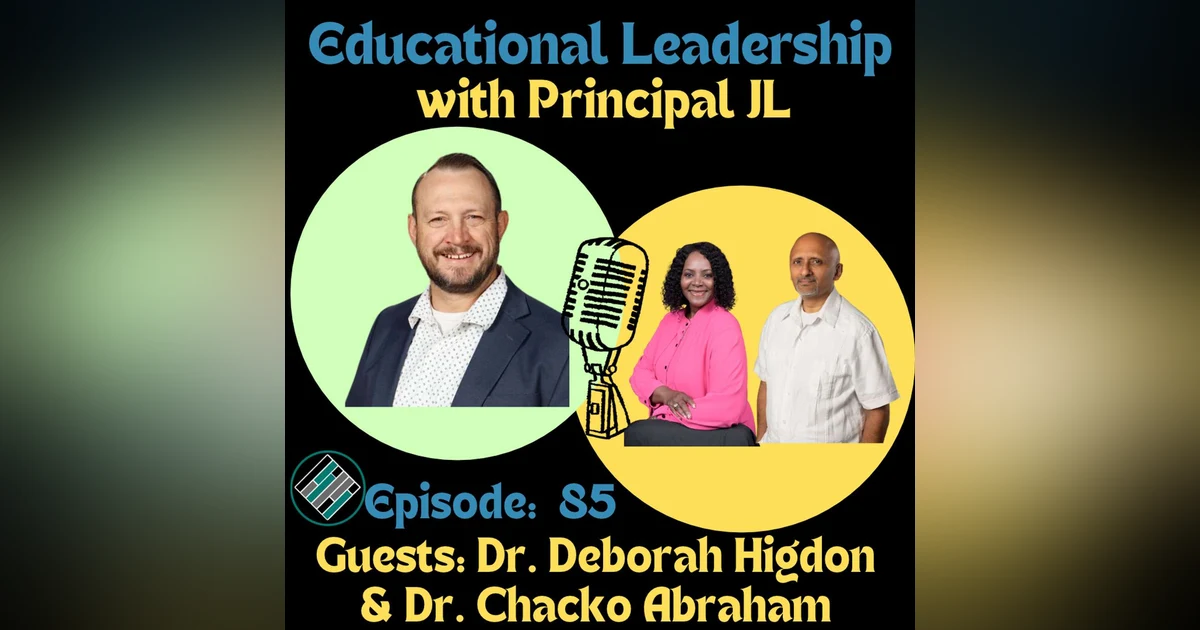

Connect with the Show Here! The fastest way to change a school might be hiding in plain sight: make fathers feel like they belong. We sit down with Dr. Deborah Higdon and Dr. Chacko Abraham, veteran educators and co-authors of The Dad Difference: How and Why to Invite Fathers into Your School, to talk about why dad engagement is more than a feel-good idea. It’s a concrete, low-cost strategy tied to stronger student achievement, better attendance, improved behavior, and a healthier school cult...


The fastest way to change a school might be hiding in plain sight: make fathers feel like they belong. We sit down with Dr. Deborah Higdon and Dr. Chacko Abraham, veteran educators and co-authors of The Dad Difference: How and Why to Invite Fathers into Your School, to talk about why dad engagement is more than a feel-good idea. It’s a concrete, low-cost strategy tied to stronger student achievement, better attendance, improved behavior, and a healthier school culture.
We get specific about what schools are missing and how the “invisible dad” problem often starts with everyday systems. Deborah points to registration forms that only leave room for one “parent” and to newsletters that ask for “classroom moms,” sending an unintended message about who schools expect to show up. Chacko shares practical entry points leaders can use immediately, from greeting dads at arrival and dismissal to creating consistent opportunities that go beyond one-time events. You’ll also hear why “phone fathers first” can change the tone of home-school communication overnight.
We dig into the leadership mindset behind the work: relationships, presence, and the habits that build trust, including management by walking around. Then we look ahead at what excites them about the future, from stronger school-family partnerships to ethical AI in education that supports personalized learning and saves teachers hours of prep time. If you’re a principal, assistant principal, teacher leader, or district administrator looking for real steps you can implement tomorrow, this conversation gives you a clear starting line.
Connect with Dr. Deborah Higdon & Dr. Chacko Abraham:
The Dad Difference: How and Why to Invite Fathers into your school (ASCD)
New and Improve
Teach Better Mid Roll Network Ad
Click Here to Connect with Principal JL:
00:00 - Why Father Engagement Matters
03:25 - The Unplanned Path Into Education
07:30 - Relationships As The Real Leadership Work
10:15 - Stepping Into Administration With Purpose
12:55 - Management By Walking Around
16:51 - A Zoom Mishap Sparks A Book
21:21 - No Cost Ways To Invite Dads
27:56 - Fix Forms And Fix The Language
33:41 - Research And Real Benefits For Kids
40:22 - Advice For Aspiring School Leaders
46:07 - AI And Stronger School Family Partnerships
49:32 - How To Connect And Final Challenge
Why Father Engagement Matters
Principal JLWhat if one of the most overlooked strategies for improving student achievement isn't found in a new curriculum, instructional strategy, or school improvement plan, but in something much simpler: getting more fathers involved in their children's education. Research tells us that parental involvement matters, but are we doing enough as educational leaders to make fathers feel welcomed, valued, and connected to our schools? Well, that's what today's guests are going to do. Today, I'm very excited to welcome two incredible educational leaders, Dr. Deborah Higdon and Dr. Chacko Abraham. Now, Dr. Higdon brings over 40 years of experience as a teacher, principal, district leader, and university professor, with a career dedicated to improving student achievement and in strengthening school communities. Now, Dr. Abraham brings more than 25 years of experience in education, both nationally and internationally, with a passion for understanding the impact fathers have on their children's life and success in academics. Together, they've co-authored the book, The Dad Difference: How and Why to Invite Fathers into Your School. Today we're exploring why fathers' involvement matters, what schools might be missing, and how educational leaders can create meaningful opportunities to bring more dads into our school. Now, let's get to the conversation with Dr. Higdon and Dr. Abraham. Welcome back to another exciting episode of the Educational Leadership Podcast. Today I'm so excited to have with me today Dr. Deborah Higdon and Dr. Chacko Abraham. Doctors, welcome to the show.
unknownThank you. Thank you for having us here. Thank you.
The Unplanned Path Into Education
Principal JLYou bet. I'm going to start with Deborah, then Chacko, you can chime in. I'm going to ask you guys the first question that I ask everybody that comes on the show. What inspired you to become an educator?
Dr. Deborah HigdonWell, my answer to what inspired me to become an educator is probably one that you've never heard before. I actually did not want to become an educator. My Bachelor of Sciences in Nursing. And because my mother was a teacher, and my aunt, and then my oldest sister was also a teacher, I wanted to do something different. So I became a registered nurse. I loved nursing. I did critical care nursing for many years. Then I got married, had my son, and around that time, hospitals were changing from eight-hour shifts to 12-hour shifts. And as a new mom, that just was not going to work for me. So in talking to my sister, who was an educator at the time, she said, Why don't you become a school nurse? Well, I poo-pooed that. And about two months into me being a new mom, I ran to her and said, Nope, these hours at the hospital aren't working. Give me the application. And I was hired to be a school nurse for Baltimore County schools, who also hired their nurses to become teachers. So that's how I ended up being an educator. So I was the school nurse. I also did the family life unit for middle schoolers called the sex unit. And then went on to become a high school teacher.
Principal JLAwesome. Chacko.
Dr. Chacko AbrahamWell, I think maybe a similar route as Deborah. I mean, education is something not something I initially had thought of. Honestly, to tell you the truth, not many people know about this. What I really want to go into was the priesthood. You know, so I really wanted to serve the church. And so that's my focus. That was really what my focus was. And it wasn't until I went through about three semesters of university, taking all the course, different kind of major classes you can take to realize when I took that first education class, light bulb just went off. Like this is where I need to be by serving in a classroom. So that's led me down this path. And I'm I don't regret it for a minute.
Principal JLI kind of have similar experiences as you guys as an educator. I'm a non-traditional educator, so I didn't go straight in education. I took what we call the tenure out to graduate college. Some people might call that a doctor, not me. And then there was a time that I thought about becoming a youth pastor, but then when I was looking at that, I actually felt like my calling was to be an education. So I mean, very similar to what you guys have gone through, and I really appreciate your guys' story. First off, Jaco, what did you teach? And then what did you learn as a teacher that prepares you to become an educational leader?
Dr. Chacko AbrahamJeff, I I spend most of my time in elementary schools as opposed to Dr. Higdon. Deborah's uh in secondary, I was more in primary, elementary section. And I have to tell you, my favorite grade is second grade. Second grade is the best. And I think one thing that really that kind of stays constant, whether you're teacher or administrator, is the fact that these roles that we step into is very relational. You know, we go into classrooms relating to the children that we're serving, connected to the families that they're connected through. But as we step into administration, now we're going from an ecosystem of 20 or 30 students that we serve in the families that we serve now to hundreds of families that we're serving. And their relational piece doesn't change, right? Now it just gets now that that spaces gets wider. So I do think that their relational context is very key when it comes to serving, whether in your classroom or whether you're an administrator.
Principal JLAwesome, Deborah?
Dr. Deborah HigdonYou know, I find it
Relationships As The Real Leadership Work
Dr. Deborah Higdonso interesting that the three of us didn't know each other, but yet we all started on similar pathways. My first job as a teacher was I was a Sunday school teacher when I was 16. And I actually did that for several years because I had such a love for the Bible, and I still have that love. And even then I didn't want to become a teacher, so I became a nurse. And once I became a nurse and then went back and got all of the education credits that I needed to become a teacher, I started off teaching 11th and 12th graders, medical careers and medical science. And as Chacko has said, there was a time I just loved high school. I thought I would never leave it. And then I got a job as a middle school assistant principal, and I love that. So I've done um pre-K all the way, pre-K through, I was going to say 12 through college because I'm an adjunct professor. And it doesn't matter what level I'm on, it goes back to exactly what Chato just said: the relationships. I come in looking for opportunities to build relationships because this whole business of education, education is a people business, it's built on relationships.
Principal JLYou bet I could subscribe to that all day long. I agree with it. Um, one of the things I'm doing with my staff is I'm going over the seven habits of highly effective people. And today we went over habit two, which is to begin with the end in mind and how those things relate and how relationships in there in what we do is important, no matter if it's relationships with your colleagues, relationships with your students, relationship with parents and community members. It's all goes together, and it's really an important piece of what we do. So you both were in the classroom and then you both got into administration. So can you guys give me a little bit more background? I'll start with Deborah since you kind of got into it already. About, you know, what was it that got you to become an administrator? What are some things you learned as an administrator that helped with your leadership today?
Dr. Deborah HigdonWhat got me into leadership was actually a former principal who saw something in me and who had volunteered me several times to take over different initiatives. And then when I was working on my master's, we all had to do a special project. And I took a project that was around taking the SAT and the words that we were the students needed to know for the SAT. And as a whole school, we we worked on those words, and for the first time, the school had made like a 25% jump ahead as a result of that. And so
Stepping Into Administration With Purpose
Dr. Deborah Higdonmany people came to me, and especially the principal, and said, You're a born leader. And I really thought about that. It's not that I was a natural one, but I was being made into one by giving different opportunities to lead and being supported and knowing that I had the help of the administration behind me. And that's one of the things that I've learned in leadership. So often we see something in someone and we put them in a position, but we have to put them in that position with support, just like we would do with any student. We would never just throw a student in the classroom and say, here's the curriculum, figure it out. We would give them the support of having a teacher or having a pair educator or classroom assistant in there with them. And that's what I found with leadership. The best leaders are those who have a support and those who become support for the new leaders.
Principal JLAwesome. Chacko.
Dr. Chacko AbrahamYeah, I think you know, honestly, for me, Jeff, it's you know, there's always uh a few students in your class who need extra time, extra attention. I mean, we were talking about behavioral aspects as well, right? But for me, it was, you know, those are the kids I really wanted to reach out to. But now stepping into leadership was I can reach out to a whole lot more of these students who some of us, you know, as we step into the classroom, we kind of take this, you know, kind of invisible oath to say we are here to serve each child that enters that room. But you know what? Unfortunately, not many educators come across really embracing that concept of 100% ownership of every child that comes in that class. You know, and so for me it was a sense of, you know, if I can reach a few of my students in my classroom, and if I step into administration, I'll be able to actually reach out to many more who are being kind of looked over, put aside, pushed over, you know, and kind of, you know, quote unquote, they're the problems, you know, and so they don't they're not they're misunderstood. So it's allowed me the the the possibility of really reaching out to those who are being misunderstood.
Principal JLAwesome. I love it, I love it, I love it. And so with that, you guys are in the admin role
Management By Walking Around
Principal JLand you're making an impact. And so what are you guys have like a favorite story as being an administrator that you could share? I mean, you probably have a lot of stories, but is there one that sticks out the most to you that you could say, yeah, that's that's why I got into this business, and that's the kind of impact I wanted to make.
Dr. Deborah HigdonI had some really great principals, two of them in particular. The one that my first principal when I was in Baltimore County, and then my second principal when I became an assistant principal, they they both did something that really impacted me and made me say, This is what I want to do. And I didn't have a name for it, but I knew it was something I wanted to do. And it wasn't until I sat with the second principal that he gave me a name, and that's called M B W A, Management by Walking Around. They both knew their building. Both of these principals, Alice Poole and Dennis Queen, they walked their buildings constantly. They were there early, they were the last ones to leave. They always knew what was going on inside, outside, in this class, in that class. You could never come to them with a situation that they didn't have some knowledge about. If it was even something good, yep, because I know this teacher, I've seen them do this, or if there was maybe a complaint and they would say, I'm already on it, I was aware of this and that. And that became my style. And actually, I'm a substitute administrator today, and I go in and out of lots of schools here in the school system that I work for, and I still do that today. That management by walking around. And I can tell you that it surprises the staff and they notice. And when I say the staff, I'm not just saying the teaching staff. Building service is usually the first people who say something to me like, you're different. And I always ask them, what makes me different? You walk around, you're everywhere, you show up everywhere. And then the media specialist will say something to me, the nurse will say something, the educators who see me out in the playground, the parents who will see me out in the morning as students are arriving or at dismissal. The best way to know what is going on and to lead from knowledge is that MVWA manage by walking around and being visible to know yourself what is going on with your students and with your staff and parents.
Principal JLGood bad. I I love that. That's something I try to do. Sometimes I get bogged down, especially with evaluations and stuff. But getting out there and getting to see what's going on, but having those connections is super important. Chacko, do you have a story you'd like to share?
Dr. Chacko AbrahamNo, it's the same thing, Jeff. I mean, you know, several of the principals I've worked with or worked for, that sense of presence was key. You know, they were everywhere, you know, not just you know, walking the halls, but in the classrooms, in the lunch rooms, you know, walking through, even coming into the staff lunch, the staff room cafeterias, you know, just that that visibility, and not just the visibility in the presence, but also knowing who's there, right? By name, they knew the students, they knew them, and so they it builds that relational piece back into knowing, saying that you know what, there's ownership in this space that each one of us is here for a purpose, you know and so that sense definitely that sense of presence is key as we step into uh leadership.
Principal JLBet thank you guys for sharing. So now you guys kind of have a story, you guys have been, you know, teaching, and then you've been administrators, and then how did you guys end up meeting and what was it that got you guys to write your book, The Dad Difference, right here?
Dr. Deborah HigdonI'll let Chacko tell this story.
Dr. Chacko AbrahamNo, no, I'm I'm gonna
A Zoom Mishap Sparks A Book
Dr. Chacko AbrahamI'm gonna defer this back, I'm gonna defer this to uh Deborah. I think she says it better.
Dr. Deborah HigdonWell, it was actually a divine intervention that brought us together. Chacko was doing a presentation for Bond Academy, and this was in 2020 during COVID. So every all of the conferences, etc., were virtual. And I saw his title of his presentation on father engagement, and I was like, oh, I've done this. I I definitely need to go on and hear what Professor Abraham has to say. So he was on, he was talking, and and there were probably about 50, 60, 60 of us on the Zoom with him, and all of a sudden he got disconnected. What we didn't know at the time was he was living in Bolivia. So most of us were from uh the eastern coast of America, and we didn't realize that he was so far away and there was this disconnection. So he's in Bolivia, he realizes that he's gotten disconnected. We don't know that. All of a sudden, we just started talking to each other. Well, somebody asked the question that they were going to ask Chacko about father engagement, and I don't even remember the question, but I said, I've done that and I have the answer. I started talking. You can tell I'm a talker. So about five minutes in, I started seeing the chat just going crazy, and I finally just stopped for a second and looked, and several people were trying to tell me, stop talking, the professor's on, he's waiting for you to shut up, in essence. And I was so embarrassed. So I quickly ended my sentence, listened to Chacko for a while, and then I got off. And I went and I sent an email to the organizers, and I apologized. And I said, I'm so embarrassed, I didn't realize what had happened. I need to apologize to them. And so one of the organizers knew me. He wrote me back and said, Thank you for letting us know. Yeah, he's the professor, not you. You like basically, it wasn't your show. And I think it's good that you apologize. So a few days later, I received an email saying that the professor wanted to meet with me. And I said, Okay, immediately, as soon as we connected, I apologize. I said, I I'm just sorry, I didn't know. And he's like, No, no, no, no, no, don't apologize. This is what got it. Chacko said, I've been praying, I have been asking God to lead me to someone who could co-author a book with me. And when I came back on and heard you talking, the Holy Spirit said, You're the one, and I was floored by that. And I said, Chacko, I'm a praying woman. I'm gonna pray about this first. I think you have the wrong person. I've never written anything, I'm a speaker, I'm not a writer, but I'm gonna pray about it. I didn't even get five words out in that prayer, and God said, This is what I want you to do. Yes, yes, and that started our journey of writing the book, The Dad Difference, How and Why to Invite Fathers into Your School, based on two things, our lived experiences, which we both did, as he said, he was basically on the elementary level and me on the elementary through high school, but mainly on the secondary level of father engagement. But it was his idea. If he had never mentioned it or said anything, I would have it it never crossed my mind to write a book.
Principal JLThat's awesome. It's crazy how God kind of puts people together and kind of puts people in your path. And when you least expect it, boom, there it is, right? So that's an awesome story. I really appreciate you guys uh sharing that out. And so, what are some things that people could take away from the book? Some practical strategies that people can implement. You know, I know there's great strategies in here, but if you guys can give us, you know, one to two strategies that you know that people make it's easy for people to start with, let's go with that.
Dr. Chacko AbrahamSo, Chacko, what what are some strategies out of this book that people will take away from these strategies that we have in the book is really no cost, and we got to keep that in mind. You know, there's nothing that you have
No Cost Ways To Invite Dads
Dr. Chacko Abrahamto prepare and purchase and you know get together. This is something you can kind of you know implement right off the bat, right? I mean, things similar, I mean, simple things like what Deborah has done, like you know, phone fathers first, you know, reach out to the dads, you know, uh allow them to be seen, you know, and be heard. A lot of times, you know, and we don't we don't put down moms, you know, give them any lesser roles, but the fact is the dads have equal part to play in in their children's education, right? So it's strategies such as you know, phone fathers first or allowing dads to come on in, doing walkthroughs, you know, and allowing dads to be present, be visible in the schools, the administrators to being out there to to greet them as kids are being dropped off, kids are being picked up. I mean, there's so many different things that we can do to allow, and a lot of times we talk about these, you know, one and done deals, Jeff, you know, donuts for dads, and you know, one and and you you it's a little checkoff you can do on your strategic and your you know your strategic plans for the year, right? But it's it's not about these entry points of and it is entry point really when you're talking about it, you know, your donuts for dads, and these events are entry points, but you want to transform them entry to transformational pieces, really. You want them long-term, you know, and it's because you they are a part of the community, and so it's different. There's so many different things that we we offer in the book where you can have dads come in and you can start tomorrow. This is not something that takes long-term planning in regards to having fathers back into school again.
Dr. Deborah HigdonMay I add something to that? That please it starts even with the registration form. I was having a conversation with someone who is a professor this morning who has two children who happen that they live in Florida, and she was talking about when she went to register her children, there was a small little space that said parent. So since she was doing the writing, it was her, her two children, and her husband there. She wrote her name. There was a place for numbers, she put her cell phone number. There was no place for information for dad. It just said parent, not even parents with an S. And so that's one of the things that schools have to do immediately, and they can do, is make sure when they have the registration form that there is a place for both parents. Fathers are parents too. T O O. They're not an extra, they're not the emergency person that you call. They are just as loving and committed to their children as the moms are. The other thing that we talked about, and we also have this, and Chacko and I've talked about this, and we have it in the book, is the language for the invitation. So often in schools, I will see a newsletter and it says, We need classroom moms. We need moms to volunteer for. Now you've totally eliminated all the fathers or father figures that possibly would look at that and say, Oh, I have time, I'm off, I'm available, I can. You shut them out. And when you think about that, none of us would be okay if we said we only want Christians to come into the school and help us. We only want black parents to come into the school and help us. We only want our Latino fathers to come, everybody else stays home. But what we're doing without saying it is we only want our moms to come in, dads don't come unless it is an emergency or your child is in really bad trouble. And that's a problem because so often fathers will say to me when I contact them, especially if it is for a discipline issue, why didn't you call me the first time? Why are you waiting till this is the fourth or fifth time this has happened? I could have taken care of this the first time. So we we have to start from registration and we have to start to change the narrative of school superintendents and school leaders to understand that they're unconsciously keeping a whole group of committed, loving parents away from the school by the wording. We're making our dads invisible. This whole business of education, it's about relationships. So I think we need to stay on that as we talk about father engagement, family engagement. Again, we're not getting rid of moms because when we do this thing right, our moms are happy to have the dads coming in. They're happy to share some of that responsibility. They like being uh being told, moms, the dads have this, you you just come and enjoy. They really enjoy that. So this is an opportunity that schools have to really not only partner, but to elevate and to seriously and intentionally engage with dad.
Dr. Chacko AbrahamWell, I think it's an intentionality, really, Jeff. I mean, you know, as a classroom teacher and and and administrator, and as a parent, I want to be in that classroom with my child as well, right? I'm I've sat on PTAs now. Now you know we live overseas, and it's the same story overseas as well, right? It's not just a US thing. I how many? I mean, I've been on I've been on PTAs, and a lot of times, you know, as the message goes out to the room parents and the parents send that out, it's usually hola mamas, right? But guess what? Where's the dads? You know, so right there, just like Deborah was talking about, there's that disconnect that happening. Like, wait a minute, I I I want to be a part of this also, you know, and so it's allowing you know us to be seen and us to be, you know, invited in as well, because we as dads want to play that role, right? And so it's to be intentional in inviting the dads in is very, very important.
Principal JLYou bet. So when you guys talk about inviting the dads in and being intentional about it, what is some benefits for having the fathers or the dads involved
Fix Forms And Fix The Language
Principal JLwith the child's education? Because I'm pretty sure there's got to be some benefits. So, what are some of those benefits you guys can speak to?
Dr. Deborah HigdonYou know, Jeff, the the research is so clear that whenever there is a significant adult involved in a child's education, they do better. The longest running educational study was the the Coleman report done by Johns Hopkins University, I believe it's almost 60 years ago now, and it's doing the test of time, where they they interviewed thousands of students and teachers and parents and came to that conclusion. But the most recent research has found that whenever that significant adult in that child's life is a father or one that represents a father as a father figure, that the lowest percentage of increase is 43 percent. Now that's the floor, not the ceiling. And so when we're looking at academic achievement going up minimally 43% based on research, why would we not bring our fathers in? But then, based on our lived experiences, we have seen that when our fathers come in, the academics go up. Number one, because they now know what's going on in the schools. And with our parents, we have to let them know when they come into the building, it's not like when you were in schools, it has changed for about 50, 60 years. Schools basically ran the same, but with the the advent of technology, there's been a lot of different changes in schools. So they come in and they see, oh, okay, this is different. That's why some parents are saying, but they don't bring home books. No, we use the technology. Come in and see why, and see how it's being used. Also, what happens is when we're talking about issues with chronic absenteeism, that's eliminated. When our dads are involved, the students come to school, but there's another big problem, big problem that dads handle. And this was some data that none of us expected to see. There's a big problem in schools where students will come to school, they come to the building, but they don't go to class. It's called internal truancy. So when we bring the fathers in and they're just present and they're walking around, they're here there in the morning, they go into classrooms, they're in the lunchroom, they're in the cafeteria, they're walking in and helping in different in uh classrooms as an extra hand. All of a sudden now teach the students go into the classrooms. So they're in the building and in the class. And so now teachers can do what teachers want to do best, which is teach. Teachers don't want to do discipline, which you already know. We hate making those kind of phone calls. I I tell parents that all the time. When they, oh, you called, and oh, and you're complaining about my child, no ma'am, no, sir. That's the last kind of call I want to make. And so when we have get our dads engaged regularly, coming in, into the building, into classrooms, into the different spaces here in the in the school room, the academics go up, the discipline goes down, attendance goes up, and there's another thing that happens that the students and the staff say they feel safe. There's a difference in the presence of dads in the building that makes them feel safe than mothers. And we don't really have to talk a whole lot about that when we look at what just happened last week, and that father who stepped in when he saw that student going into the school with a gun. And and God forbid, if this would happen again, but we don't have students afraid when they know our dads are here. They there's a different feeling, and it also goes to the dads. The dads get this fulfillment, they know that their presence is valued and it's needed. So it's everything goes up. It's one of the biggest win-wins that a school can have. And as Chacko already said, no to low cost, low cost, okay. Get the book. Here's the roadmap. I will say that that's going to be the cost. Give it to all the principals, all the administrators, your school leaders, your PTSA, and then let fathers and staff come together and talk about this. Is what they had. Let's suggest how we can make this ours. No new technology, no new staff development, no big $500,000 program, but a commitment to bring our fathers in and to engage them regularly and intentionally in our schools.
Principal JLAwesome. I love it. Thank you for sharing. Jaco, you got anything to add to that?
Dr. Chacko AbrahamNo, no, I think you know, it's data's there, right? We see it right in front of us. We know the data, but it's just like, you know, we're not taking the steps to move forward with this data. We know academic goes up, attendance goes up, behavior goes down, relationships increase, right? But it's we just, I mean, it's just taking that first step, right? It's just taking that first step, you know, and so the first step is always the hardest, right? And so if we can get those dads in somehow, then the work will start, right? Just being intentional, being intentional.
Research And Real Benefits For Kids
Principal JLYeah, but and then with anything, right? Being intentional is like the number one ingredient when you do something like you know, something that you're not used to doing. And it really resonates with me where you know, I see this a lot in elementary. This is just my experience, but they'll ask moms to do a lot of things, but not really dads. And so, like you said, that kind of shuts you off. So if they have ways to bring fathers in or they make it them just as important as moms at times, then they're gonna be the ones that are gonna step in and do some things. I know for me, I was able to, you know, I was able to do some things within my daughter's elementary school last year, but the only reason I did it is because they're asking dads to come. And so I'm like, oh, I'll go if they're asking dads, because normally you don't ask us, right? And so being involved with those things was was pretty neat. And so I really appreciate those perspectives. And so, Chacko and Deborah, there's a lot of aspiring educators that are listening to this episode right now. So, what advice would you give to an aspiring educator out there that wants to step into that educational leadership role?
Dr. Deborah HigdonGo ahead, Chacko.
Dr. Chacko AbrahamNo, go ahead. Think about that.
Dr. Deborah HigdonI got so many different things to share, but I would say to them, think about your why. I have I've been doing this as an educator now for 40 plus years. I've been an administrator for almost 20 years, and I've seen a lot of new administrators come in, and I always want to know what their why is. Why do you want to be an assistant principal, a principal, a district leader, supervisor, whatever it is, why? Because this work is hard. You know, it it it a lot falls on the leader. Whether you're responsible for everything or not, you are going to be held responsible for everything. You have to know your why. And so leadership also can become lonely at the top. You have to purposefully make those relationships and engage with people because when you're seen as the boss, sometimes people tend to pull back, even those relationships that were great before you got that title, all of a sudden they can start to feel a little funny being around you and sharing things. And so now you may even have to gather others who are in the same position to be font partners with you and to be friends with, so that you don't feel that loneliness. But you also have to know that on the worst day, on the day where the data is just tanking, kids are not doing what they're supposed to do, half of your staff may be out sick, or whatever it is that's going on, that you still have that same energy and that determination to come out the next day, start over and give it your best based on your why. My why is that I had a great education, and I honestly, even to this day, I know that every child deserves the best education we can give them, and that was always my why. I'm coming out because the others came out for me. I don't know what was going on in their lives, but man, they made me feel that I was the most important person and that they love teaching and learning. And once I made that decision to become a teacher, I wanted to bring that same energy into my classroom and into my building as a building administrator and to all of the educators as a district supervisor.
Dr. Chacko AbrahamYeah, I think for me, for me, Jeff, I'll, you know, uh, you know, as administrators, as Deborah was saying, you know, you end up in a kind of a lonely space, right? You're leading from a lonely space sometimes. So I think you know, it really comes down to you really have to listen to those you're serving because each one's voice is so important, so critical, right? You listen before you start communicating, you really have to listen, you know, and then once you get to that point, it's really working towards a shared purpose, you know, and that shared purpose is that every child that we serve is given a hundred percent of each of us, you know, and so that we are called to serve with a purpose, and so once we get the whole staff owning the fact that each child that walks into our classrooms are there for a purpose and we can actually fulfill that. So I think definitely listening, then communicating, and just and just you know, coming up onto that shared purpose that we all serve.
Principal JLAwesome. Thank you guys for sharing. Those are some great advice that educational leaders out there that are aspiring to become leaders, I can definitely take with them as they prepare themselves into that next step in their journey. So, this has been a great conversation. I really enjoy having you guys on the show. Um, but before we go, I want to talk about what gets you excited about the future of education.
Dr. Deborah HigdonI get excited about two things. Obviously, the father engagement, that now as we're getting this word out, more and more schools are seeing that this is such an opportunity to engage the whole family, and that fathers have a right for rightful place in schools, and that they are parents too. That's that that always excites me. But there's another thing that excites me, and that's what schools can do with AI, and how when we look at how AI can really personalize the learning
Advice For Aspiring School Leaders
Dr. Deborah Higdonand cut down some of the teacher preparation time in doing it, that when we use AI ethically and correctly, it can really be that bridge to reaching every student where they are and taking them higher. And so that really, really excites me, that ability to do that personalized learning. I I know at when I was a principal, we did a lot of that at my school, and it was very impactful. It took us from one of the lowest performing schools in Montgomery County public schools to one of the top middle schools, and we sustained it for years, but the staff paid a price in creating the personalization for the students, but now AI could do what it took us months to do in a day. That excites me.
Principal JLYeah, no, I hear you on that. I know we have some AI tools that my teachers are going to use, and they could scaffold their lessons and things that would take them hours and hours to build, they could do it in a matter of five minutes. But they're taking they take what they have and they're just put it in and they're able to adjust it to whatever the needs are for those kids. So we do see it in real in uh real time here um at Hastings High School, where a lot of teachers have taken advantage of that. That I want people to understand that AI is a tool, it's not what you it's a tool, it's a tool, and it's just like anything else, it's not replacing anybody, right? That's what some people are worried about. But like you said, you can get personalized learning a lot more because of it.
Dr. Deborah HigdonYes, and it can get into details for each student based on the prompts, and of course, like anything else with that's robotic, you do have to go back and check it. You know, we've heard these horror stories of what AI has put out or the siding is wrong. So you you do have to go back and manage it, you have to make sure it's not hallucinating or creating something that's not there, but just think about it, right? We didn't have this technology 15 years ago, 20 years ago, but we have it now, and and I'm so excited about what it can do. That potential is great for educators.
Principal JLYou bet. Jacko, what excites you about the future of education?
Dr. Chacko AbrahamI mean, I think the possibility of partnership really, you know, that it doesn't take a whole lot to be able to connect with somebody, and you know, and Deborah, you know, our focus with Deborah and myself is bringing dads back in, really, you know, and I mean to have a school-family partnership is ideal scenario, but it's not something that we can't attain, it can be done, you know, that possibility. So just understanding, like, you know, when you you sit down and look at your strategic planning for the year, I mean, how can we really be intentional on creating that partnership? And that's possible. That is possible, you know, and so and if if ideas are are running out, then as Deborah said, go back to AI. They can probably come up with ideas specific for your population, specific for your space, specific for the areas the families you're serving, how can we build those partnerships, right? And so, I mean, it's never too late to start that partnership with the families that we serve.
unknownRight.
Principal JLBut thank you guys for that excitement for the future of education. I'm just excited, just listening to you guys be excited. So, if people are here listening to this episode and they'd like to connect with you guys, what's the best way for them to connect with you?
Dr. Deborah HigdonThe best way to connect with me is on LinkedIn under my name, Deborah Higdon. Also, I do have a website, it is the daddifference, and it to get to it, it's daddifference.com. If someone would like to email me, they can email me at higdon, my last name, h-i-g-d-o-n, at dad hyphendifference.com.
Principal JLAwesome. Chacko.
Dr. Chacko AbrahamYeah, the best way for me, Jeff, is uh on LinkedIn as well. You know, just uh under Chacko Abraham and definitely reach out and be more than happy to you know connect with anybody who wants to connect and talk about this conversation and continue this conversation of dads and the importance of fathers.
Principal JLAwesome. And what I'll do is I'll put that information in the show notes so it makes it real easy for them to click on and find you guys in those spaces. So I appreciate everything you guys just shared. Now, this has been a great time. I really enjoy having you guys on the show. And before you go, before we go, is there anything you like to say?
Dr. Deborah HigdonMy motto dads are parents too. We have an excellent opportunity to engage them and bring them to their rightful place. We know that there are some schools who are facing lots of challenges. Don't face them alone. Bring in the best thought partners you can, which are the students' parents, mothers and fathers. Be very intentional and look for great results.
Dr. Chacko AbrahamYeah, for me, Jeff, I think it's you know, I always say, you know, the best time to actually have connected as a dad for fathers was yesterday, right? How we connect with our kids. The second best day is today. You know, so that opportunity
AI And Stronger School Family Partnerships
Dr. Chacko Abrahamis still there for us, for dads to connect and also just for school leaders, administrators to have that possibility to do it, you know. Another thing I want to share real quick, Jeff is uh I I forgot another another uh connection point for me, it's also as Deborah was talking about website. I started a website recently as well. And I have to say, Deborah is on the on uh technology much faster than I am. I mean, you know, I'm like a dinosaur compared to Deborah. So you can reach out to me on dadsandfams.com as d-a-d-s-a-n-d-f-a-m-s.com. And so we just started this up and we're just trying to get this momentum going and just the message out there. You know what? Fathers matter. Fathers matter.
Principal JLAwesome. Well, I appreciate you guys. I'm gonna go ahead and let you guys go for the evening. Have a great day. Appreciate it. What a great conversation with Deborah and Chacko. I really enjoyed learning how we can do simple things to bring fathers into the school and helping their child be successful in the school. And we all know mothers are important, the piece as well, but at the same time, it was really great to kind of just talk about what that looks like and what are some simple things we can do to not leave fathers out of the fold. Because I would say we kind of do that unintentionally, but I think it's really great that we have a resource now to help us do that much better. And I hope you guys enjoyed this episode as much as I did. If you did, please share with somebody um who needs to hear it. Please also like and subscribe to this podcast so you don't miss another outstanding episode like this one. And also, if you have time, I love to have it. Uh leave a five-star review, please. That'd be awesome. And so we can reach more people just like you with the podcast. I appreciate you guys listening in. Until next time, remember to always be curious and one percent better.