Episode 73: Tough Conversations That Transform School Culture with Erika Bare & Tiffany Burns
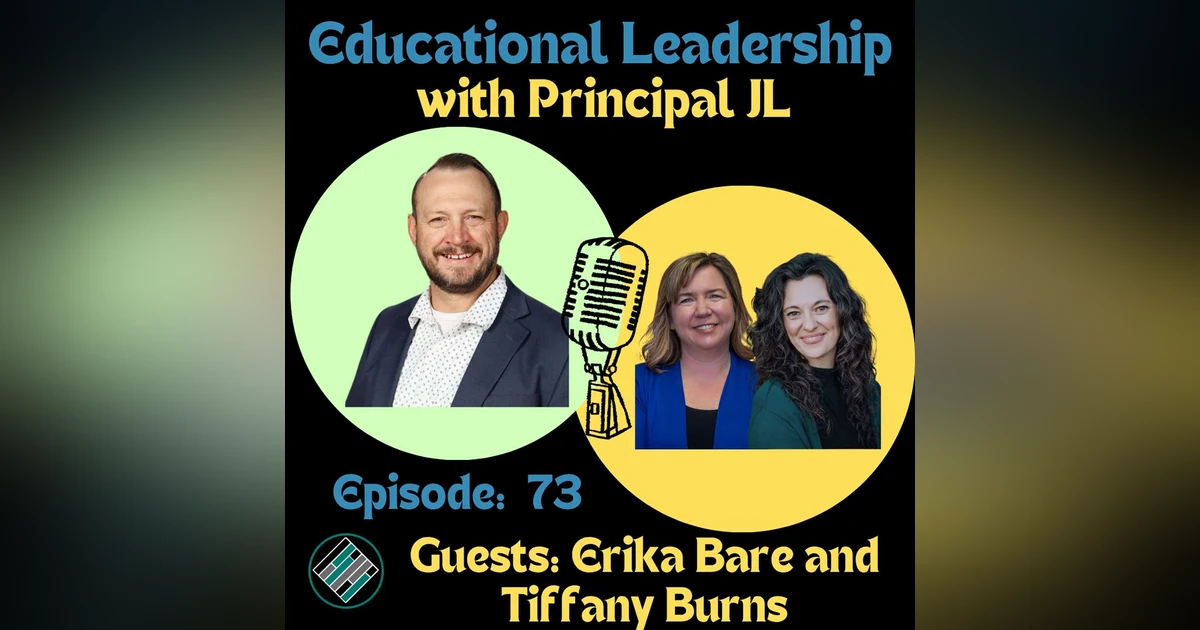
Connect with the Show Here! The conversation you keep delaying is probably the one shaping your school culture right now. We talk with superintendent Erika Bare and instructional leadership coach and former principal Tiffany Burns about how educational leaders can handle tough conversations with students, staff, and caregivers without slipping into power struggles, mixed messages, or avoidance. We dig into what “caring out loud” really looks like in classrooms and hallways, especially for st...


The conversation you keep delaying is probably the one shaping your school culture right now. We talk with superintendent Erika Bare and instructional leadership coach and former principal Tiffany Burns about how educational leaders can handle tough conversations with students, staff, and caregivers without slipping into power struggles, mixed messages, or avoidance.
We dig into what “caring out loud” really looks like in classrooms and hallways, especially for students who walk in guarded, overwhelmed, or unsure they belong. Erika and Tiffany share practical communication strategies that protect student dignity while still driving behavior change, including how to separate behavior from identity, use language that builds a positive student self-story, and create routines that make care visible and believable.
Then we move to the harder side of the job: adult conversations that feel uncomfortable but are necessary for instructional improvement and a healthy workplace. We unpack why leaders often talk themselves out of the conversation, how planning creates clarity, and why empathy and accountability are not a trade-off. You’ll hear concrete ways to name concerns, focus on impact vs intention, and pair clear expectations with real supports like coaching and scaffolds so people have a fair shot at success.
We also share advice for new principals and aspiring administrators on handling the loneliness of leadership, finding your “person,” and protecting time outside the job so you can lead with steadiness. Subscribe for more leadership conversations, share this with a colleague who needs it, and leave a review with the toughest conversation you’re working up the courage to have.
Connect with Erika and Tiffany:
Website: https://www.connectingthroughconversation.com/
Connecting Through Conversations: A Playbook for Talking with Students
A School Leader's Playbook for Tough Conversations
New and Improve
Teach Better Mid Roll Network Ad
Click Here to Connect with Principal JL:
00:00 - Why Leaders Avoid Hard Talks
05:07 - Meet Erika Bare And Tiffany Burns
05:53 - Why They Became Educators
09:51 - Moments That Shaped Their Leadership
13:21 - Lessons From Principal To Superintendent
21:54 - How Connecting Through Conversations Began
28:35 - Caring Out Loud With Students
34:15 - Why Tough Conversations Matter Most
41:42 - Empathy And Accountability With Adults
48:01 - Protecting Culture Through Consistency
52:53 - Advice For New School Leaders
58:50 - Resources, Where To Connect, Closing
Why Leaders Avoid Hard Talks
Principal JLWhat does it really take to have the conversations most leaders try to avoid? The ones with students who are struggling, the ones with staff when expectations aren't being met. The ones that ultimately define your culture as a school leader. If you're a principal, aspiring leader, or educator who wants to lead with clarity, empathy, and purpose, this episode is for you. This episode is a powerful one because I'm joined not by one, but two incredible educational leaders who are doing meaningful work to transform how we communicate in schools. Erika Bare currently serves as superintendent of the South Umpqua School District with over 20 years in education. She has served at every grade level in a variety of roles, a special education educator by trade. Erika is deeply committed to supporting all students through individualized support so they can reach their ultimate or unlimited potential. She is passionate about aspiring educators through professional development and building systems that truly meet students' needs. Joining her is Tiffany Burns, an instructional leadership coach, university instructor, and author. Tiffany brings over 20 years of experience across public, private, bilingual, and homeschool settings in Oregon, Alaska, and Mexico. She also served as a school administrator for 12 years, including nine as a principal. Today she supports schools and district leaders through evidence-based coaching focus on instructional improvement and sustainable systems. Together, Erika and Tiffany are the authors of Connecting Through Conversations, a Playbook for Talking with Students, and A School Leader's Playbook for Tough Conversations. Their work centers around one of the most powerful ideas. Their work centers around one powerful idea that every student deserves to feel loved, understood, and experience a deep sense of belonging. Now let's get to the conversation with Erika and Tiffany. I am so excited to bring on the show Erika and Tiffany. They are authors, they are educational leaders, they run their own company called Connecting Through Conversations. Man, they got a lot going on. Erika and Tiffany, welcome to the show.
Erika BareThanks so much.
Tiffany BurnsThrilled to be here. Thank you, Jeff. We're really excited to chat with you today.
Principal JLAll right. It's been kind of a long winding road for us to connect because you know we schedule that something comes up on your end or my end. And you know, it's really great that we finally get it to sit down, we get hit to record, and we get to talk educational leadership. So I'm gonna start you both off with the same question and ask everybody on the show. What inspired you to become an educator?
Tiffany BurnsWell, for me, I want to make the world a better place. And I know that that sounds kind of cheesy and naive, and I'm okay with it. Um I just I think that working with kids is not gonna say easiest, but it is just a way that guarantees that you get to help impact the future, and and it's a way to get to make the world the the place that I want to get to live in. And kids are the coolest, smartest, weirdest, wonderfulest,
Meet Erika Bare And Tiffany Burns
Tiffany Burnsjust most incredible human I've humans I've ever spent time with. I love getting to hang out with kids of all ages. So for me, it was, I guess it wasn't really a question for me.
Erika BareYeah, for me, I am am the oldest of two siblings, and I'm quite a bit older. So my sister is five years younger, and my brother is 12 years younger. And I, from a very early age, thought the very funnest thing to do was to play school, right? So my poor siblings had hours and hours and hours of forced education as delivered by, you know, a six, seven, eight-year-old. And I loved everything about caring for younger kids. I
Why They Became Educators
Erika Barelove hanging out with younger kids. And so again, it wasn't really a question for me. I fell right into education. It's kind of what I always thought I would do. And um I've been thrilled that it's it's been my journey for the last, you know, 20-some years.
Principal JLAll right. So, what grade levels or what content? I'm not quite 100% sure uh what subjects or what area of teaching did you guys get into. We'll start with Eric, then we'll go to Tim.
Erika BareSure. So I started out as a middle school special education teacher, which was super fun. Um, I've worked with all ages, and middle school for me is the funnest place to spend time with kids. I love all kids all ages, but middle school was super fun. I then moved into a position that had me working with special education, but with grades all the way from transition, you know, preschool all the way through transition age, so 21. So I got the chance to work at all grade levels. And then I've been an administrator at the high school and elementary level, and then district level, district level.
Principal JLSo you got to see the gamma, right? From pre-K all the way to transition. I mean, that's a big, big uh, big wheelhouse to be a special education teacher. I would say God bless you for that. So I appreciate the work that you've done. Now, Tiffany, what what teacher did you get to be when you grow up?
Tiffany BurnsUh well, I did it. I think I started teaching elementary, so I taught all the all the levels. I went elementary and then I went to middle, then I taught high school English and drama, which was pretty fantastic. Um, I now teach university, so I teach pre-service teachers. I get to coordinate the administrative program at the university I work at. I've been a school administrator since 2012. And then when Erika and I wrote our book, Connecting Through Conversation, a playbook for talking with students, we started traveling all over the country, doing professional development for districts and really helping them to build cultures of connection in their buildings and organizations. And it's kind of hard to be a principal and travel all over. So I thought, well, I'll take one year off. I'll just take one year leave of absence and started teaching at the university and then doing this travel and realized, gosh, this is really fun. So now I think I'm doing the job that I'll do for this part of being a grown-up. I'll let you know in a couple years what the next one is.
Principal JLBut so during your guys' teaching career, was there an experience or something that happened that you were that informed your educational leadership today? And we'll start with Tiffany and then we'll go to Erika.
Tiffany BurnsWas there an experience that led our journey? Well, okay. When I was a kid, I don't usually tell this story. When I was a kid, I didn't have the most fantastic teachers. I was kind of a too much kid. I talked too much, I had too much energy, asked too many questions. It's really odd to me that I wasn't just the coolest kid for all these teachers, but I was not. And so I think I had a middle school teacher who was pretty fantastic, and then I had some amazing high school teachers. And for me, why I went into education is I wanted to make sure every single student that came into my classroom felt really loved and cared for and was really um understood and included so they could learn and grow at the highest levels. And then I did that, I feel like I did that really well in my classroom, in my classrooms over the years. And I wanted to have a
Moments That Shaped Their Leadership
Tiffany Burnsbigger impact. I wanted to be able to be a principal or be an educational leader so I could create those environments for all the kids in the school. And I that's part of what I love so much about getting to do the work that we do now is really having an even greater impact and helping kids all over the country and educators, because educators are some of the most fantastic, selfless humans I've ever met.
Erika BareYeah, so for me, um in terms of you know how my experience led to leadership, there were a couple of different things that happened along the way, but it was kind of an accidental journey. Um, I was working as a teacher on special assignment and special education, and there were some pieces of that job that were very much like being an administrator. And so those were areas that I felt like I needed to shore up my skill set a little bit. And so I enrolled in the administrative program, which is actually where I met Tiffany. We can we connected in the administrative licensure program and was going through that program really to help me get better at the job that I was doing because I really enjoyed it and saw myself kind of supporting special education students at a system-wide level. That was kind of what I imagined for myself. And then in while I was in that program, an administrator, a high school principal came in to speak. And it was one of those moments where I was like, well, if I ever got the chance to work with her, I would have to really consider that because it was just she was very inspirational, and she had a lot of a lot of reasons to consider school administration as kind of a higher calling. And so a job happened to come open at the building where she was principal like two weeks later, and the job description was all about special education, and so it was the only job I applied for, and I was lucky enough to get it, and that kind of shifted shifted me into that official school leadership role.
Principal JLAwesome. So I'm gonna go with Erika, then the Tiffany. What educational leadership role have you know held, and what experiences or what have you learned from each role throughout your career?
Erika BareOh my gosh, that could be a really long answer. So I'm gonna kind of go with top lessons from from the different places that I uh have served. But I my first administrative role was as assistant principal at a high school, and it was kind of a medium-sized high school, about a thousand kids, eleven hundred kids while I was there. And I was assistant principal for three years, which I absolutely loved. I loved everything about it. I got to be very involved in individual student situations, right? So really supporting a special education, 504s, the MTSS systems, and of course, students supporting positive student behavior was a big part of my job as assistant principal as well. And then my principal left rather on a well, late in the year. And so I was asked to step into the principal role that I um, which I did rather reluctantly because of how much I loved the job I had. And it's funny that you asked this question because I just, well, I was just talking about the lessons I learned from Ashland High School at a graduation
Lessons From Principal To Superintendent
Erika Barethis past weekend. And the big lessons that I learned during that time were one, you have to be very grounded in your values. You have to be really clear on what you want to guide you as you're making decisions, because the decisions come fast, furious, and all day long. And unless you have some kind of compass to help you make those decisions, it's gonna be really hard to sleep at night because you're always gonna be wrestling with, you know, did I do the right thing? Am I fine? You know, all of those pieces. So that was a big lesson for me in that role. I um also learned a lot about the importance on leaning on a team and being supported by others, especially when hard things happen, which they absolutely do and will far more often than we want. So I'm gonna limit it to those two for that job. And then I went and I was an elementary principal for a period of time, which was so fun. And I think my biggest lesson from that job is like, yeah, I could have been a rock star. Like this is super fun. I love having adoring fans everywhere I go because the little people are just awesome. And so, and I also learned learned the importance of early intervention, getting, making sure that we're setting the stage for our kids really early so that we can set them forward on the right trajectory over time. Then I was a student services director, assistant superintendent, and I think there I learned a ton, but just the impact you can have at a systems level and breaking down barriers that make it really hard for historically marginalized groups to be successful. Like at the district level, you can have an impact that is significant if you really start examining how you do the things you do that you've always done. And I'm currently the superintendent of a small district in Oregon. And I'm you know, I'm learning every day, but I think the the biggest lesson I've learned here is that when you really work an improvement process, it really works. Um and you can see improvement as long as you stay consistently in that cycle of you know looking at the data, making good decisions, reflecting on those decisions, and making changes along the way. So yeah, that's as brief as I can be with that one. Good luck, Tiffany.
Tiffany BurnsWell, I was just sitting here thinking, gosh, I'm glad you went first. Well, I've done a number of different jobs in in administration. I I was K I was a principal of a K-8 outdoor school. I was the assistant principal of a middle school. There was one year that I was the principal of the K-8 outdoor school and the assistant principal of a middle school. And I learned I don't like that. That was that's too much job. And then I was the principal of an absolutely lovely, wonderful K5 elementary, and I did that job for nine years. I don't know that I can say, here's what I learned from this, here's what I learned from that, but I have some pretty big takeaways, I would say, from my time as an administrator and now getting to coach administrators. And that is excellent communication does not happen by accident. So much of our job relies, you know, comes down to our ability to communicate and how we talk with and about others. And that's not something that personally I was taught, you know, explicitly. And so that's really what Eric and I've dedicated our writing work, our books to is how do we have that excellent communication with students and with the adults? I would also say, you know, we have so much grace for students when they make mistakes with academics. Not only do we have grace, but we encourage students to make mistakes with their academics. That's how we learn, right? We we learn and we try something out and we get it wrong, and then that gives us information, and so we can do something different. And what I've seen is that we are excellent at that as educators with students around reading and writing and math and problem solving. We don't always have that same amount of grace for students when we're talking about behavior. And if we think about students making mistakes, that's part of learning, that's part of growing up, that's part of learning how to share space with one another. We have to really teach students explicitly how are we going to agree with one another? How are we going to be in dialogue with one another? How are we going to disagree in ways where we can still find harmony, where we can still end up sharing space. So I think I, yeah, I've learned a lot just really about how to best communicate. And that that impacts so many levels of what we do in education. That helps impact our whole school community, that really ensures that we're holding our students to really high expectations and high standards so we can provide those scaffolds to get them there. What a fun question, Jeff. Thank you. Thank you for asking that.
Principal JLYeah, no, it's always interesting that because to be honest with you, this is my PD. I get to interview people from all over the nation. I've had interview people from outside the country as well. And I always learn something. I'm always learning something from somebody's journey. And that's why this podcast exists. It's how can our stories impact other people that are doing this job and how can they learn from us. But, you know, I also get to learn from you guys as you guys come on the show and I get to listen to your story because, you know, there's always a little piece of your story that I can really I can concur on that because I've experienced it. And it doesn't matter where you're at, where you do this job. It could be South Central Nebraska, it could be southern Oregon, it could be Texas, Maine, New Hampshire, you know, Kansas, I don't know, Colorado, wherever, you're going to have similar experiences because the job isn't easy, it's a tough job, but we can be successful if we all do the things that help other people be successful. I think having great communication is one of those things because if you can't communicate clearly and with intention, it makes your job a lot harder. And I'm telling you what, I I sleep pretty good at night. I feel like consistent I communicate. There's times I don't do it a hundred percent all the time, but you know, for the most part, you know, I do the best I can and uh try to help people, you know, no matter where they're at in their in their education and their career as well. So thank you guys for sharing that. So let's talk about you guys connecting. So, how did you guys come up with connecting through conversation as a company and kind of lead up to what you guys are doing today?
Tiffany BurnsWell, so Erika and I, Erika mentioned earlier, we were in the same administrative licensure program together, and that was how old's my daughter. I was pregnant with my daughter, so 15 years ago. And we had the most fantastic professor. He was just oh, he was excellent, and he set up the most brilliantly facilitated conversation and discussion and different projects where he really did this excellent job of balancing theory with practice. And so we had a number of different group projects to do and and work together. And Erica was the smartest person in the room, and so I made her be friends with me. I was just like, we've got group projects. I want to hang out with her, I want to learn from her. You are gonna be my friend and you have no choice.
Erika BareAnd that's actually how that went, but yeah, no, we we connected for a lot of reasons, and we really connected through working on these projects together because we had the opportunity to write together and think together, and really what drew us together is that we had a really common value around what education should look like and
How Connecting Through Conversations Began
Erika Barehow we should be thinking about our kids, how we should be talking about our kids, all of those things. And we found we really, really enjoyed writing together. So we were kind of like, well, someday we should totally write a book, and then but kind of in a I'm sure that will never actually happen kind of way.
Tiffany BurnsAnd I know someday we would, but yeah, okay, so fast forward to we were just kind of getting out of COVID, not really out of it, still kind of in it, but we were back at school. And one of our educational assistants one morning had said to me, because we had kids came back from COVID with so many behavior challenges, and we've always had different behavioral challenges, but I think that number kind of grew exponentially post-COVID. And we had a number of new to the profession staff. And so one of our amazing um educational assistants, she's actually our student advocate, she said one day, Hey Tiffany, we have a staff meeting today. And I'm wondering if you maybe would share some kind of tips and tricks with folks about, you know, just about connecting with kids. And I was like, Kate, what are you talking about? She said, you know, like that you don't force eye contact and that you don't ask a question if it's not a choice, and just, you know, number of different of different things that I just kind of did. And I said, Oh yeah, I'm happy to do that. So I made this short, you know, quick little bullet list. And we go to the PD or the staff meeting, and I really pride myself on doing great professional development that's interactive, that allows time for processing and debriefing. And this was not that. This was just me like saying, you know, if if kids really escalated, stop talking. Like I'm just giving them this list of things that I do. And I look up, and every person in the room is writing down every single thing that I'm saying. And so I think I called Erica and I said, I've got it. I've I've got the book we need. It's how to talk with kids.
Erika BareRight. And at this time, Tiffany was a principal and I was the assistant superintendent in the same district. So it was my job at this point to help her whatever whatever she needed. Right. And so I'm like, okay, fine, I'll order you these books. And so I get on Google and I'm looking for it. I'm on Amazon and I had to text her back. I'm like, hey, I can't find it. Like, who's the author for this book that you want me to get? And she's like, no, that's the book we're we need to write. Um, and so that was really the genesis for the the first book, Connecting Through Conversation, a playbook for talking with students. And we it really led to this journey. Okay, so these were things that Tiffany and I just do, right? And we'd had years of being administrators together. We started as first year administrators together. And so we would, you know, role-playing these conversations, we'd be calling each other for advice, we'd be talking through all of these tricky scenarios. And so we'd helped each other get better and better over the years, and it had just kind of become just what we did. And so to take what we do and turn that into something that any educator could pick up and use as a resource was a really meaningful and um fun exercise. And we've seen it have a really strong impact because we really wanted it to be something that, like I said, anyone who talks with kids at school, we think of as educators. And so we wanted anyone to be able to pick it up, open it to the page that they need, and figure out okay, how do I make sure I don't get involved in power struggles? How do I make sure that every student knows that I love and care about them? How do I make sure that I'm set at using body language in a way that's going to be most supportive? And so it was really just this like how-to guide that was trying to share both the art and science of building relationships because we all know how critically important it is, and there's not a lot of resources for how to do it.
Tiffany BurnsWell, and then we we started traveling and doing that everywhere. And people inevitably in every single room that we were in, we'd have a leader come up to us and say, This is fantastic. This is a practical, step-by-step guide, all these strategies. I'm taking all these things back to my building or organization, and we're using them next week. We were like, Yes, great, so good to hear. And they're like, No, hold up. How do you do this with the grown-ups? Like, that's the part of my job. Like, how do you do this with caregivers, with parents, with staff? And we were like, Well, that's trickier. So we took just a couple years and and wrote that one. And so that is called A School Leader's Playbook for Tough Conversations. And it just came out this past spring.
Principal JLSo we're gonna get to that one, the second one you just mentioned. But let's talk about the playbook, talking with students. What are some of the big ideas that you wanted people to take away from that book?
Tiffany BurnsOh, I think caring out loud, I think is probably one of the most important ideas. Like for, I don't know an educator who who doesn't care about kids. Like, that is the reason that people, I'm sure when you ask people why did you get into education, inevitably they're saying, I mean, I bet very few people are like, I love summers off. You know, and it's an amazing perk. It's an amazing perk, but that's not often why we go into the job, right? We go into it because we care about kids, we love kids, and we want to, you know, help support them. And kids are not coming into our buildings every single day thinking, oh my gosh, I'm so lucky. Every single person that works in this building loves me, they care about me, they're dedicated to my success, they just want me to be successful. You know, our kids aren't thinking that. They're coming in with their own stuff, they're coming in with their baggage, they're coming in with maybe some adults who weren't trustworthy. And so they're they're coming in not necessarily knowing that, you know, how much
Caring Out Loud With Students
Tiffany Burnswe care about them. So, Erika and I really say that is our job, our responsibility to care out loud, to tell them explicitly and intentionally that we care about them, to build routines into our day-to-day, because educators are the most busy people I've ever met in my life. And so, how do we build those routines in to make sure that not only do kids know that we care about them, hear that we care about them, but they feel it and it's internalized. We have so many different strategies for how to do that. Well, I know it else, but go, Erika, you go.
Erika BareWell, I mean, there's there's so many things, but I think the the bulk of the book is really meant to be this this is how you have this conversation in such a way that is going to ensure that the student feels loved, cared for, and a deep sense of belonging. So you're gonna set up your body this way. You're going to avoid power struggles in this way, you're going to make sure that you are thinking about a student's behavior is what they did, not who they are. We're going to talk about how do we really dig into the root of the behavior so we can unwind it and change it moving forward. How are we going to have conversations with caregivers that are going to help support partnership around students having positive behaviors at school? How are we going to choose our language in a way that's going to ensure that we are framing things positively so that students create a positive identity about themselves? And we don't want any student to think of themselves as, you know, I'm using air quotes for those who can't hear me, but like as a as a bad kid, right? Like, how do we make sure that every student knows that that they're unique and wonderful for who they are? So it's really foundationally we have what's called the connected formula for learning. Did I get that right? And so it's really about how do we build trust, how do we listen carefully, and how do we treat everyone with dignity so that we can have these connected relationships for learning and every student can really thrive. So that's kind of the the the overlay of the whole thing. And then it's just really practical. Here's how you do it step by step, sentence frames, scripts, the whole thing.
Tiffany BurnsWell, and the idea is how do we talk with them in a way that's going to help transform their behavior? Because sometimes we say this and people are like, oh, this is great. You're those people that don't hold kids accountable. Or like, oh, you don't do consequences. And no, that's not worth saying at all. But it's how do we do that in a way that's caring? How do we do that in a way that is most likely to change behavior?
unknownYep.
Principal JLOh, I I totally agree, and I like I subscribe to what you guys are saying there. And I really appreciate you guys taking the time to write a book because I'll be honest, there's people out there that struggle with that. They struggle with how to connect with kids, they struggle with how to interact with the students based off of you know what's going on around them because some kids come in, they're defensive, right? Some kids, like the best part of their day is in school. You know, some kids just want to get out of school, you know. It just depends, every kid's different, but knowing, you know, hey, here's some tools, here's some strategies that help guide them through some of those those difficult situations, because I find the best teachers are the ones that can build a relationship with the kids based off of, you know, kind of how they interact with them, how they, you know, treat them, and things like that. And and it's a skill set that you can learn, but it's something you can practice, but not everybody has it. So being able to give people a resource is really important. And I appreciate you guys doing that. And what I'm gonna do for both books is I'm gonna put them in the show notes so people can find it when they listen to the show, so it makes it easy. One stop shot for them to make it, you know, to find those resources for you. So if they're hearing what you guys are saying, they can pick it up and read about it as well. And so let's talk about the other book that just came out this past spring, you know, called the School Leaders Playbook or Tough Conversations. So here's gonna be my question. Tough conversations are at the core focus of this book, right? So, why are tough conversations so critical in schools? And what kind of do leaders get wrong a lot of the time when they have these tough conversations?
Erika BareWell, I think the tough conversations are the ones that shift behavior, right? And so and they move things forward and they can create connection maybe where there wasn't connection before or there was a disconnect before. So the conversations are critical. There's there's lots of things that folks get wrong about this, that we get wrong about this. It's really challenging. They're hard, but I would say the biggest mistake leaders make is not having the conversation in the first place. I think these these conversations are, it's really easy to talk ourselves out of having them, right? Maybe we are worried about, oh, I don't want to damage the relationship, or what is this gonna do culturally, or that just sounds really uncomfortable, or I don't
Why Tough Conversations Matter Most
Erika Barewant to hurt that person's feelings. And so it can be easy for us to put it off or not or make excuses to not have it at all. Oftentimes we're we're saying it's for the other person's comfort, but it's most often because we feel uncomfortable or nervous, or we don't know that we have the skills to do it well. And so for me, the biggest mistake is not having it at all, because um, even an imperfect conversation is so much better than no conversation at all when there's something important for us to bring forward.
Tiffany BurnsAnd I think when there is something important for us to bring forward, taking the time to plan is really crucial. And so we have, again, with the same with our, you know, with our first book, our second book, the school leaders playbook for tough conversations, that we're talking about what are the step-by-step things to say? If someone says this, then what do you say here? Or let's say you have this hard information that you know you need to share, you've decided that yes, in fact, you are going to have the conversation. Well, thinking about all the other parts that go along with this. You know, what is my purpose? What do I want, what do I want the person to leave the conversation understanding? How do I want to leave the conversation? Where do where should I have this conversation? How long should I plan for it? How do I invite the person to have the conversation? Who needs to be included? You know, all of those pieces as school leaders, if it is a really tough, challenging, complicated, nuanced conversation, guess who's in charge of having it? It's just, it always goes to the school leader. And, you know, for me, I I didn't, I didn't have anyone say, here's how to do that. And like what you were talking about when we've got teachers that are so great with behavior, educators that are so excellent at behavior, and some folks aren't. But even the folks that are trying to explain what it is that you do is really hard. You know, trying to say, like, here we're trying to explain that to someone else. Like, here's the step-by-step thing to do. If you just do it, you do it. It's sort of an aid, it's something that you just go into doing. But you know, for Erika and I, when we were writing both of our books, we had to spend a lot of time thinking about why did that work? And why was this effective? And what what made that effective as a conversation? And how how come I was able to talk this person into or help this person see that this job was not a good fit for them? Like, how are we able to do this in ways that really honored who they are as a person, that really held their dignity? And what we found is that's wildly difficult. So we tried to write it down so that other folks could be able to experience it as well.
Principal JLWell, I appreciate that. I know being a principal, you know, I have had to have those tough conversations quite a bit more often than I like sometimes. But I can, you know, agree with you. You know, you gotta plan out what you're gonna say, how you're gonna say it, you know, how you're gonna set the mood. You know, these are all these things I think about when I go in these conversations. And what I have found out, as nervous as you're gonna be, or just you know, the tension you feel doing it, when it's over, like when the conversation has had it and it's done, it is such the biggest release you can have because you're just like, oh wow, it wasn't as bad as I was building it up to be sometimes. Sometimes I can build this conversation up, and like Erica says, you might try to talk yourself out of some of those things, but at the same time, as a leader, you have to do some of the tough stuff, you have to be willing to do it, because if you don't, you're not doing your job. That's part of your job, and I always tell people half you're gonna hate me and half you're gonna love me. And I don't know which one you're gonna be on from day to day just because I'm gonna make decisions. Hey, I wanted it to be a collaborative effort, but there's gonna be decisions made that you're not gonna like. And some people are gonna like my decisions, some people aren't, and that's just you know, but the thing is if you have systematic approaches and you know, collaborative, you know, approaches it makes those things easier, because then you can rely on the system or the collaboration piece that you work together to create this this process, which in the end can help you have accountability. And you talk about, you know, that piece of you know, you know, like some principals talk about, you know, don't, you know, like the kid some teachers think principals give a kid a lollipop to send the back of the back, right? You know, there's those there's those memes or those things that you see out there, but that's not true. I mean, we're trying to hold them accountable and we're trying to meet the kid out where they're where their needs are at. And the same thing with adults. I want to meet my adult where they're at and give them the support they need, but I also want to be empathetic, but also hold them accountable. So, how would you guys balance that accountability and empathy when you're working with adults when you're having these tough conversations?
Erika BareWell, I think the the most empathetic and caring thing you can do with any educator is to be honest, be clear, and really transparent about any concerns that you have. And make sure that it's not personal, right? Like you're really sharing information and like this is what I'm seeing, this is the concern, these are some things that we are gonna work on together. And I'm I I care about you personally, I care about you as a person, and I and I want to support you getting there. I care about your students, and so I I care about helping you get there, and I'm gonna do everything I can to support you along the way. But there has to be real clarity around what what the thing is that needs to be, that they need to be held accountable for. Like that needs to be really, really crystal, you know, as Brene Brown tells us, clear is kind. And also we have to be prepared to push up our sleeves and get ready to tackle the problem together. You know, it's not that we're gonna go in and and have more effective behavior management, but we are gonna go in and provide the supports that they need, the coaching that
Empathy And Accountability With Adults
Erika Barethey need, the resources that they need to make sure that they have every opportunity to reach the goal that we've set. And so when we when we scaffold both clear and transparent communication around what the concern is with the supports to help them meet what we need them to meet, then I think that that is our best way to balance that accountability and empathy piece.
Tiffany BurnsWell, and I think too, it's really so much of what Erika just said, and also thinking about, you know, the difference between intention and impact. And so much of the time folks are, you know, they're just I'm not gonna say so much of the time, but at times, you know, let's say somebody snapped at kids or they were yelling at students, right? And we go in and we we talk with them about how they're having those conversations. And what we might say is, look, I get that you're feeling pretty stressed out, or I understand where you're coming from. It's May or, you know, whatever, insert the month, really education. But just, you know, saying, like, look, I get where you're coming from and really acknowledge and validate how they're how you, you know, think they might be feeling while still holding that accountability. You know, even so, it's really important that when we're communicating with students or when we're communicating with colleagues, that we do so in a way that's respectful of them and that we communicate in ways that we want to model for others. And so it's it's I think it's, you know, you asked, how do you hold them accountable while also being empathetic? I think it's it is that it's be empathetic and don't let that get in the way of accountability. You know, like I don't I don't see those as opposite at all. I think that when you pair both of those together, that is when we're gonna see the most change. Because the person that we're asking, please change your behavior, we're not looking at them saying, gosh, you're a terrible person, or you know, you're you're bad. What we're saying is I get where you're coming from, or I think I get where you're coming from. And yet here's the expectation and here's the standard, and what support do you need from me or from others where we can make sure that that's that what we're doing is what's best for kids and what's best for our school and community.
Principal JLYeah, I love how you guys outlined the empathy and the accountability, how they kind of coexist and how you can kind of you know do that at the same time. I know for the four years ago I took this job at Hastings High, and you know, a thousand students at a large high school in Nebraska, it's not medium-sized school as large. But for us, I'm at a you know, one of the top probably 30 schools in the state for enrollment, and then there's 234 districts, I think if I remember right. But nonetheless, when I was interviewing for the job that I have now, I talked about empathy a lot, but I also said, don't confuse my empathy for me because I I'm gonna be empathy, I'm gonna understand where you're at. I'm gonna, you know, I'm gonna you know, walk in your shoes, but at the same time, there's a standard that has to be held, there's expectations that have to be met, and I'm here to support you to get there, right? And I think that's what people have, and I loved Erica how you talked about don't take it personal because they want to all the time, take things personal that you're having these tough conversations, they want to think that you're doing it to them. It's like, no, like we're just trying to help you. This is my job, and I tell people all the time if I didn't do this, it's because you know, if I do to do this, I do it's because I care. I don't do this because I don't care. And the other thing is I want to make you the best professional. I also want to have the kids have the best version of you, and so all these things wrap in together to do that. So I think really appreciate you guys kind of shining some light on that and how tough conversations can benefit. Now you kind of get to see how it benefits your culture and your building. So, what would you guys say? How do tough conversations, when you have them and you do it right, build the culture you want to have in your school?
Tiffany BurnsWell, I think you're when you're doing that, when you as the leader are modeling, here's how we have honest and yet empathetic and caring conversations. What I I was talking to a student teacher not too long ago that I get to supervise. And what I was saying to the student teacher is firm does not mean unkind. Those are not, those are not opposites. Firm can also still really mean kind. And as a leader, you're modeling the behavior that you want to see, right? And so when you start to have these conversations, or maybe not start, but when you have these conversations, you know, your the expectation is that other folks in the building are also having those conversations. Also, the part of the reason that you know Erika and I wrote these books is because we want to help build capacity. We're really great at student behavior. We're really pretty skilled at these tough conversations, but we don't want to be the only people in the building that know how to do that. We want everybody to be able to engage in those tough conversations. And so it's really just about how do you build that capacity? What are the tools and strategies that we
Protecting Culture Through Consistency
Tiffany Burnscan make sure that everybody has so that they're also having those conversations? If if I'm the only one, if I'm the building principal and I'm the only one that knows how to have really tough conversations, I'm using kind of overgeneralizing here, but if I'm the only one that knows how to have tough conversations with caregivers, I'm going to be the only one having tough conversations with caregivers. And there's so many other parts of my job that's hard. I can't be the only one doing that. And what we know is that the most important relationship is between the teacher and the students and the teacher and the families. And so we want to make sure that they have the skills and strategies and tools and frameworks and set and stems that they need so they can also do that. When we have a culture that is able to communicate in this caring and clear and kind and accountable way, oh my goodness. Like what we call that a culture of connection, where we're all really able to feel excited to go to work and excited to go to school.
Erika BareWell, and I think about, you know, as school leaders, what we permit, we promote, right? And so if there is a culture in our building of, I'm gonna say one thing, but not hold a group of people accountable for that expectation, that sends a really challenging message to the rest of the folks who work there, right? And and they don't appreciate it. And um, as soon as I have tough conversations with one group and not another group, then I have created a divisive culture in my building, right? If I allow behavior to go on that has a negative impact on my culture, maybe there's pockets of negativity in my building, or maybe folks are allowed to speak on kindly about students or their caregivers or their colleagues. If I let that go on and I'm not intervening with some of those tough conversations, then I'm not protecting the culture that is so critical for student success, right? So for me, it's about making sure that those standards of excellence are front and center and that we're gonna have a culture of holding each other accountable to those things that we've agreed are important, or that I've said these are the expectations in order for our students to really excel and thrive here. And so we're gonna hold each other accountable to that. I have to be the first one to do that. Um, the other piece I would say is sometimes when we have these conversations, I would say oftentimes when we have these tough conversations with an individual staff member, we know that that conversation is gonna be repeated 50 times, 50 different ways, right? They're gonna, not by me, but they're gonna go out and tell the story of how that conversation went. And I need to know that I showed up in my best possible way, that I treated the person with kindness and dignity throughout the conversation, because even if it isn't repeated exactly how I would have repeated it, that will that will come through. And and people will know that because they've gotten to know me and they know what my standards are and how I communicate, they'll they'll be able to see through and know that I am doing what's best for kids and what's best for for the adults that serve in the building. So to me, it's that it's that culture piece that's really critical from that second, second book. Yeah.
Principal JLWell, I appreciate everything you guys have shared so far. It's kind of crazy. Time has flown by here as we get ready to kind of wrap things up for this episode. So, what advice would you guys give new educational leaders out there that are getting ready to step into the role? Probably next, you know, coming up at 26, 27 school year. What's one piece of advice you guys each would give them?
Erika BareI my my first piece there's so much advice I would love to give new school leaders, but I think what I would say is find your person and make sure that you have a way to practice and think about and process these really difficult situations with both kids and adults, because school administration is lonely work. It's hard work, and being a building principal in particular is very lonely because there's only one of you. And so even if you're lucky enough to have an administrative team, having someone that you can call up and say, Oh my gosh, I have to have this conversation. What do you think I should do? How can I approach this? Give me some sentence stamps, or talk me down off the ledge and being like, okay, I feel like maybe you're you're responding a little over the top here.
Advice For New School Leaders
Erika BareLet's take a few deep breaths. I don't know how I could have done this work without without Tiffany. She's been my person for a really long time. And I think that's critical. And in absence of a person, use our books as a tool to really help support that. And as you find your person, use use those as a tool to kind of think together and and thought process together.
Tiffany BurnsI laughed when you said it, Erika, because I was gonna say, get your Erika was like I'm gonna just add on to that then. And it would be when you have your person, it should not be someone who disagrees with you. Like you really I think so many times I I would say to you things like, okay, challenge my thinking, or what am I missing on this? Or how could I think about this from a different perspective? I think sometimes, you know, we can connect with folks that think so similarly to how we do and how they'd respond in the same way that we would. And that's not giving us a little bit more of a rich or full perspective. So I think, yeah, find your person and also find your people. Who can I call about this thing? Who can I talk to really specifically about this? You know, figure out your speed dial. And then I'm gonna I'm gonna say something that I say every single time with talking to new leaders and experienced leaders, and that this is a job that you can do 24 hours a day, seven days a week, and still have more job. So schedule time that is not the job. Schedule time for things that fill you up, that make you excited, that make you happy. I I think about when I would have a really rough day in whatever building I was working in, when I had a rough day, there was a place that I would always go. Kindergarten was a spot we I would go in the morning and they would sing on the rug, and we would sing Z Avi and stretch on the rug with one of the most incredible teachers on the planet. And that just lit me up. That just helped my whole day. So I guess that was a whole bunch of advice, Jeff. Well, it's a hard job. That's a lot of advice needed.
Principal JLNo, I appreciate it. I mean, everything's really good. I I think about you know, finding that person find like for me, I have people that are outside my district that I can call on top of. And this is the reason why. I I love my administrative team. I have system principals that do a fabulous job, I have uh leaders in the building, I do a great job. We collaborate, we have our leadership team meetings, and we we do all these things together, but I can't divulge everything to them. I can't. There's certain things I gotta keep to my best. Like there's certain things I can't talk about to them personnel-wise because of you know the confidentiality piece and all that stuff. So I have to have people that I can go talk to outside of my district, outside of, you know, someone that's probably they could be an AP in another district, but they're a friend of mine that we can talk because we're not in the same, you know, district, we can talk through situations, you know, and things like that. I think that's really important because there's gonna be times you're gonna need that. So you don't so you know you're not crazy on some of this stuff.
Speaker 1That's right.
Principal JLI mean, because sometimes am I thinking through this right? Am I overthinking it? But to have people to connect with is is really important. And Tiffany, I really loved how you talked about finding things to fill your own cup, because if you let it, this job will take every take things from you and won't I mean it does give back, but it takes a while for it to give back. So there's the way I look at it, because the things that get that this job gives back to you is things that happen years later. Like situations, people coming in and saying, Because you did this, I'm doing this now, I'm successful because of this, but at the time you didn't think you're impacting them anything now. So there are things that do come back to fill your cup, but finding ways in the meantime to fill your cup. One of the things I like to do is go camping, boating, fishing. I've done it twice already this summer. I'm getting ready to do some more of it. Just because getting out on the lake and just just see you in and not having to worry about the stress of the job is really important. So I think finding things that make you happy, but also fill your cups that are outside of it. As much as I love my job, as much as I love working with other people, there's things I gotta do away from the job. And I I really appreciate those pieces of advice you guys give. So with that said, you know, what are you guys up to now? What are you guys doing? And how can people connect with you if they're interested and learning more about the work you guys do?
Tiffany BurnsWell, we are we are having so much fun traveling all over and doing professional development kind of all over the country, and we're keynoting all over. An easy way to get a hold of us would be to go on our website, www.connecting through conversation.com. We like to give away so many free resources, so many tools. There's all kinds of free downloads on our site. All kinds, like people can stay in touch with us, see what we're up to, see the different things that we can help support.
Erika BareYeah, it's I mean, say we are we are together, and so we've been doing a lot of work on the West Coast recently. Um, also have some some trips to I'm on my way to Orlando. If anyone's gonna be at ItSy, would love to see folks there. So yeah, do do reach out. Hello, at connecting through conversation.com is our email, and our website can get you to all the socials, subscribe to our newsletter, all of those, all of those great things.
Principal JLAwesome. And what I'll do is I'll put that website in the show
Resources, Where To Connect, Closing
Principal JLnotes so people can easily find you and connect with you as well. Well, Erica and Tiffany, it was a pleasure having you guys on the show. Is there anything you guys would like to say before we go?
Tiffany BurnsWell, thanks for hanging out with us. It sure was hard to get a schedule.
Erika BareSo thank you for the perseverance. Yeah.
Speaker 1Perseverance is a great work.
Erika BareYeah, thank you so much. And I'm just huge gratitude to all of the educators listening. It is hard work, and your work makes a huge difference and it matters a ton. And so thank you. Thanks for doing the work.
Principal JLThis was a powerful conversation and a necessary one because at the end of the day, leadership isn't about systems or structures, it's about people. Now, systems and structures are nice, but the people are the most important piece. And the conversations we choose to have or avoid ultimately shape the culture of our schools. So I would like to thank Erika and Tiffany for sharing their insights, their experience, and the incredible work they're doing to support leaders everywhere. If you have found this episode valuable, please make sure to share it with a colleague. Also, like and subscribe to this podcast so you don't miss another exciting episode like this one. Now, also, please reach out and connect with our guests. They would love to hear from you. Also, continue to grow in your leadership journey. As always, be curious and 1% better.