E30 - More of a Good Thing: Adapting Literacy Instruction for Multilingual Learners
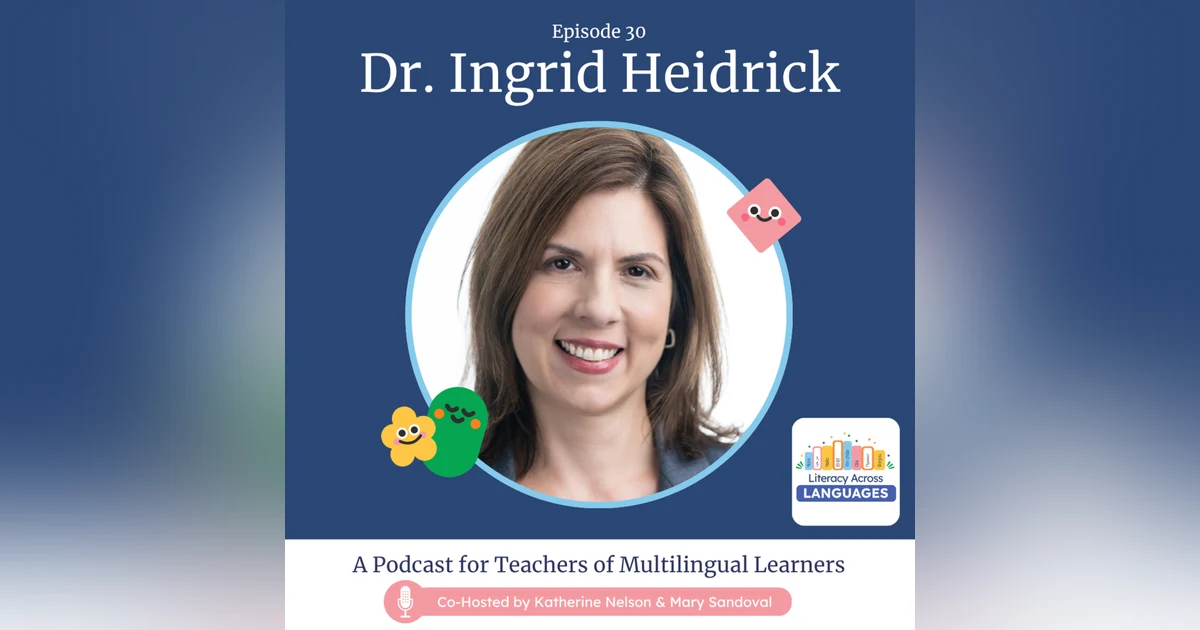


Dr. Ingrid Heidrick joins Mary and Katherine to explore how educators can use district-adopted literacy curricula while making intentional adjustments for multilingual learners. The conversation examines language demands, background knowledge and comprehension, foundational literacy, oral language development, instructional routines, and the gradual release of scaffolds. Throughout the episode, Ingrid emphasizes teacher knowledge and agency in integrating language development across content areas and the school day.
Dr. Heidrick is the founder of Advocating for Emergent Bilinguals Through Language and Literacy, or AEBLL, a New York City-based educational consultancy. A linguist specializing in bilingualism, adolescent literacy, and reading disabilities, she partners with schools and districts to advance outcomes for emergent bilinguals, students with disabilities, and all learners through evidence-based language and literacy instruction that sustains students’ cultural and linguistic identities. She is also the curriculum designer of Linguistics for Teachers, an online professional learning course, and a certified Orton-Gillingham practitioner whose work focuses particularly on adolescent multilingual learners developing foundational language and literacy skills while accessing rigorous academic content.
- District-adopted literacy curricula may include supports for multilingual learners without fully addressing English language development.
- Curriculum should serve as a resource rather than replace teacher expertise. Educators can make intentional adjustments based on the linguistic and academic needs of the students in front of them.
- Planning for multilingual learners begins with understanding what a text is actually about. Teachers should identify the background knowledge, concepts, and vocabulary students need before expecting them to analyze the text.
Timestamps:
(00:00) Welcome to Literacy Across Languages!
(01:31) Meet Dr. Ingrid Heidrick
(07:03) Implementing Mandated Literacy Curricula with Multilingual Learners
(15:00) Identifying Language Demands within Literacy Lessons
(20:20) Fidelity and Responsiveness within Disciplinary Literacy Lessons
(23:29) Fidelity and Responsiveness within Foundational Literacy Lessons
(30:35) Teaching Literacy Skills vs. Teaching Knowledge
(34:26) Oral Language as the Base for Literacy Development
(39:14) Effective Routines for Language and Literacy Development
(45:56) Working as a School Community to Support Multilingual Literacy
(53:35) The Brilliance and Resilience of Multilingual Students
(56:37) Until Next Time!
- Explore Dr. Ingrid Heidrick’s resources for putting evidence-based language and literacy instruction into practice at AEBLL.com.
- Read Dr. Ingrid Heidrick’s recent journal articles on evidence-based language and literacy practices for adolescent newcomers and using literacy assessment data to better support Spanish-speaking newcomers with developing literacy.
- Revisit our conversation with Dr. Ana Taboada to explore the Active View of Reading for multilingual learners.
Stay Connected!
Visit us at literacyacrosslanguages.com, follow us on Instagram, or connect with Mary and Katherine on LinkedIn.
Enjoying the podcast? Follow, leave a review, and share your favorite episodes with fellow educators to keep the learning going.
Keywords: multilingual learners, emergent bilinguals, literacy instruction, language development, science of reading, language acquisition, curriculum fidelity, curriculum adaptation, teacher agency, instructional decision making, instructional design, reading comprehension, background knowledge, vocabulary instruction, academic vocabulary, oral language, foundational literacy, phonics, morphology, decoding, adolescent literacy, text complexity, scaffolding, instructional routines, WIDA, Can Do Descriptors, standalone ENL, integrated instruction, written expression, multilingual literacy