Resistance Coaching Unlocked: Becca Silver’s Catalyst Mindsets for Real‑World School Change


 Apple Podcasts
 Spotify
 Castro
 RSS Feed
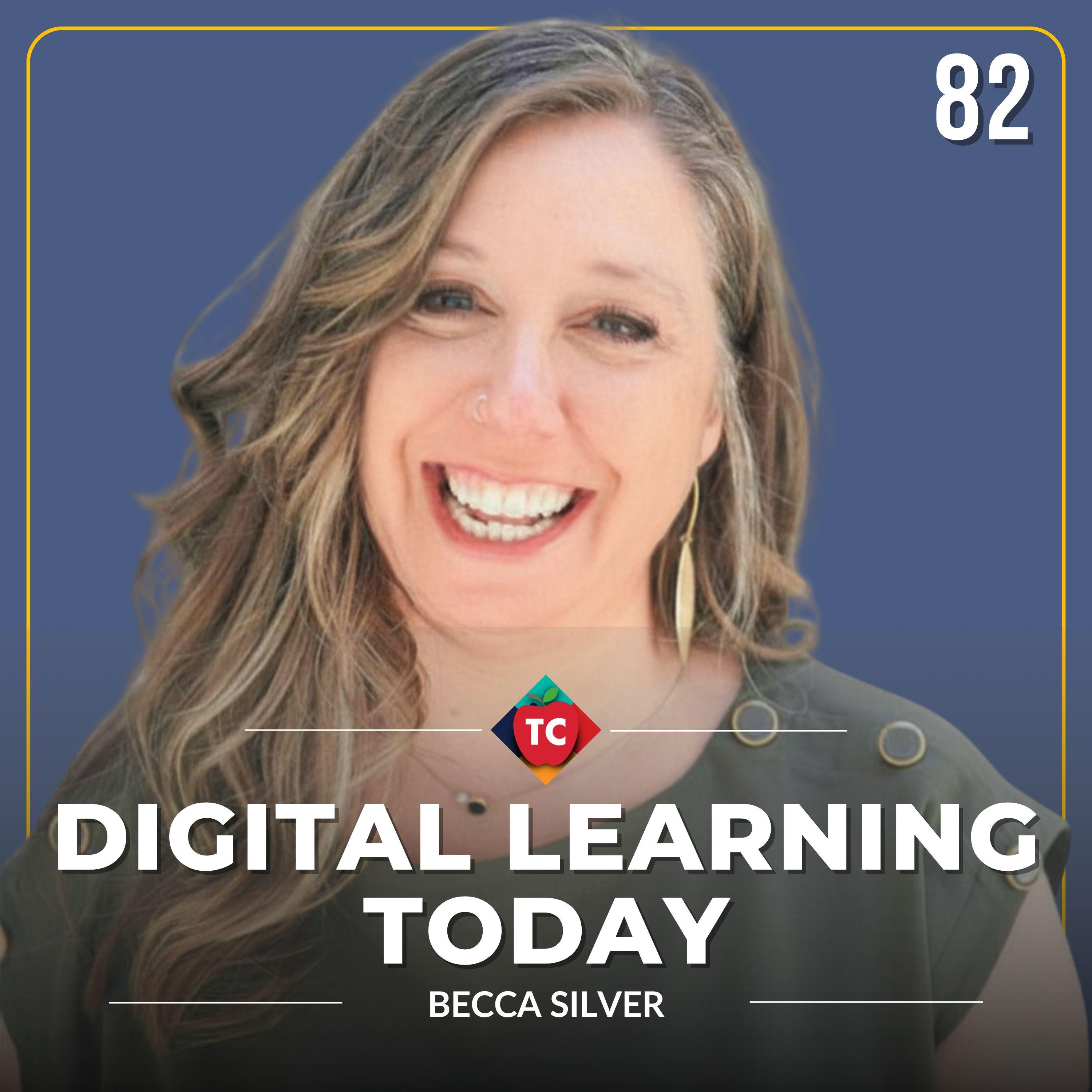
 Welcome to Digital Learning Today. In this episode, Jeff Bradbury explores the strategic systems that shape the future of education, focusing on Instructional Coaching, Artificial Intelligence, Professional Learning, and the latest Educational Technology Trends. In this episode, instructional coach Becca Silver discusses resistance coaching, the resistance audit, and strategies to overcome classroom entry barriers. She shares insights on diagnosing resistance through the catalyst mindsets and building trust with teachers.
Become a High-Impact Leader:
This episode is just the beginning. To get the complete blueprint for designing and implementing high-impact systems in your district, get your copy of my book, "Impact Standards."- Strategic Vision for Digital Learning:Learn how to create a district-wide vision that aligns digital learning with your educational goals, transforming how standards-based instruction is designed and supported.
- Curriculum Design and Implementation:Discover practical strategies for integrating digital learning into existing curricula, creating vertical alignment of skills, and mapping digital learning across grade levels.
- Effective Instructional Coaching:Master the art of coaching people rather than technology, building relationships that drive success, and measuring impact through student engagement rather than just technology usage.
Purchase your copy of “Impact Standards” on Amazon today!
In This Episode …
- Resistance coaching strategies
- The resistance audit framework
- Catalyst mindsets for diagnosing resistance
- Building trust with teachers
- Strategies for classroom entry at year-end
Chapters:
- 00:00 Introduction to Resistance in Education
- 02:46 Understanding Resistance and Its Causes
- 04:57 The Catalyst Mindsets Framework
- 07:28 Building Trust and Relationships
- 10:29 The Resistance Audit and Its Application
- 12:32 The Launch of Becca's Book
- 13:56 Conclusion and Future Engagements
About our Guest:
Becca Silver is a speaker, coach, and Resistance Specialist who helps instructional coaches and school leaders navigate the human side of change. As the founder of The Whole Educator and host of the Coaching the Whole Educator podcast, she works with coaches and leaders to understand what’s really underneath resistance so they can move beyond compliance and build genuine ownership. Her work centers on the Catalyst Mindsets™, a human centered framework for supporting meaningful change in schools.Links of Interest
- Website:www.thewholeeducator.com
- Twitter:https://x.com/BeccaSilver_edu
- YouTube:https://www.youtube.com/playlist?list=PLXwwkdnMVSc3gu9Uu1HOv0-8vxvfrcp-W
Let’s Work Together
- Contact Me Today:https://www.teachercast.net/contact
Follow on Social Media
- LinkedIn:https://www.teachercast.net/linkedin
- Twitter/X:https://www.teachercast.net/twitter
- BlueSky:https://bsky.app/profile/jeffreybradbury.bsky.social
- YouTube:http://teachercast.net/youtube
Subscribe to This Podcast
- Apple Podcasts:https://podcasts.apple.com/us/podcast/digital-learning-today/id546631310
- Spotify:https://open.spotify.com/show/0n6S0WcyzQ1rpKWJ8iZPLJ?si=a1227a7c5e0b48e4
Check Out Additional TeacherCast Programming
- Digital Learning Today:https://podcasts.apple.com/us/podcast/digital-learning-today/id546631310
- Ask the Tech Coach:https://podcasts.apple.com/us/podcast/ask-the-tech-coach/id1067586243
- The Jeff Bradbury Showhttps://podcasts.apple.com/us/podcast/the-jeff-bradbury-show/id519685828
Book Jeff for your Next Event
Jeff Bradbury (ISTE “20 to Watch” Award Winner and ISTE Certified Educator) is available for keynote speaking, workshop facilitation, and live event broadcasting. With expertise in educational technology and professional development, Jeff brings engaging content and practical strategies to conferences and professional learning events.- Visit Jeff’s Website:https://jeffreybradbury.com
- Contact Jeff Directly:https://jeffreybradbury.com/contact/
~ ~ ~ ~ ~ ~ ~ ~ ~ ~ ~ ~ ~ ~ ~ ~ ~ ~ ~ ~ ~ ~ ~ ~ [gravityform id="2" title="true"]
Jeffrey Bradbury (00:02.562)
My guest today is an instructional coach, a clinician, a featured speaker at this year's Simply Coaching Summit, and, and I'm proud to say this, an author of her very first book. I want to welcome today to my show Mr. Mr.
Jeffrey Bradbury (00:21.314)
My first one. Let's try this again, Becca.
Becca Silver (00:25.232)
Wait, wait, before you do, I'm not in the Simply Coaching Summit. I'm not presenting. It's the ASCD. No. ASCD.
Jeffrey Bradbury (00:29.791)
I thought you were. I'm What was that?
okay. I thought you were okay. I'm right.
Becca Silver (00:37.215)
I am feeling.
Jeffrey Bradbury (00:41.56)
So you're doing the resistance audit at the ASCD conference in July, June. Okay.
Jeffrey Bradbury (00:50.512)
let's talk about that then.
Becca Silver (00:52.118)
I'm a feature presenter for SREB, but not simply.
Jeffrey Bradbury (00:57.854)
I have an idea for you. Okay, let's get through this thing. I have an idea. You just made me bounce a couple ideas off of here. I have I have a couple ideas to sell some books from on both of our ends. Here go.
Becca Silver (01:00.67)
Yes.
Jeffrey Bradbury (01:12.14)
My guest today is an instructional coach, an amazing clinician. And this year she's going to be featured speaker at the ASCD conference presenting about the resistance audit. am proud to bring to the show today my good friend, Ms. Becca Silver. Becca, how are you today? Welcome to the program.
Becca Silver (01:28.086)
Thanks. Thanks for having me. I am doing amazing. I am so excited. We were just talking about, I just finished writing my book and it's coming out early summer and I'm doing great. And I just get to talk about resistance all the time. It's totally my jam.
Jeffrey Bradbury (01:46.7)
You know, as we get through this year, as the school year is winding down, I am having the opportunity to talk to so many instructional coaches. And the one thing that they say over and over is it is getting harder to get into classrooms. The weather is getting warmer. You know, I have a few days left. I got a few weeks left at this point. It is hard to get instructional coaches in. So let's talk a little bit about this today. When you say resistance, when you say resistance audit,
Becca Silver (02:01.536)
Mm-hmm.
Jeffrey Bradbury (02:16.46)
What exactly does that mean?
Becca Silver (02:17.43)
It means that we don't have to view resistance as defiance. We can view it as information or data. We can use it to understand what's going on because resistance is caused by one thing and that's unmet needs. And we can actually, created a framework for us to diagnose what the unmet needs are.
And so we can start to look at resistance, right? And when we're talking about resistance, talking about hesitation, pushback, avoidance, right? Having to have the same conversation over and over again. When that's happening, we can approach it with curiosity and say, huh, I wonder what's happening here. And I know we're gonna talk about this today, but you can use a framework to diagnose what's
Jeffrey Bradbury (03:07.534)
Well, I've noticed that as we're going through here, most of this resistance is because the coaching position, even now at the end of the school year, still isn't widely accepted. Principals aren't still sure what you're doing. Superintendents still aren't sure what you're doing. And if those two groups of people aren't clear yet on what the role of the coaches, your teachers have probably already bailed on coaches. And because of that, here we are at the end of the year, so many coaching positions are on the chopping box.
Where do we start with this conversation? How do we put this together? How does your framework help support coaches?
Becca Silver (03:45.566)
Yeah, so I mean, I think the thing you were talking about was role clarity, right? And there's pretty simple things we could do at the beginning of the school year to not assume people know, but to be really proactive and say, hey, this is my job and this is not my job. And after that, when we're going through our jobs, we are showing up in classrooms. We are observing. We're giving feedback. We're trying to get people to want coaching, right? And we, certain folks, are resisting the changes that are happening. Actually, let me back up for a second.
Resistance happens when change happens, right? When change happens, actually need to expect resistance. I see they're like besties. They come in together. And so we can be proactive, like, hey, a change is coming because in education, things are changing all the time, right? And we can say, let's be proactive about it.
And when you are listening to what someone is saying or watching what they're doing, I want you to listen for five different needs or five needs people have that get them kind of stuck in resistance. So these are the five needs are actually mindsets and they're called the catalyst mindsets. We can use them to diagnose. So here are the five mindsets. Value mindset. I value the change that is happening. I value this. Belonging mindset. I believe I belong.
here. Growth mindset, I believe I can improve. Success mindset, I believe I can be successful, which is the same as self-efficacy and ownership mindset. I believe that by taking responsibility, I can change things. And the main thing around ownership, and I want to say this around ownership, ownership versus buy-in. I have the levels of engagement in my book, and buy-in and ownership are next to each
other and there's a little there's a little lines an invisible line between them. The difference between building buy-in and building ownership is agency. Buy-in says you made the decision and you are getting me to want that. Ownership says I have some voice and choice in what's happening here.
Becca Silver (05:55.582)
And so when you're experiencing resistance from someone, you can ask yourself which of those five needs, those five catalyst mindsets is unsupported.
Jeffrey Bradbury (06:06.52)
So we've got value, ownership, belonging, success and growth. Is this something that every coach needs to be a master of throughout the year? Is this something that a coach can focus on one or two of these? What happens if not all of these are present in a coach's toolbox?
Becca Silver (06:26.023)
Your question is what happens what?
Jeffrey Bradbury (06:28.396)
What happens if a coach doesn't possess all of these? What happens if a coach is still working out there? We've got a lot of new coaches this year. How do you make sure that you're a master of all of these mindsets?
Becca Silver (06:34.133)
Mmm.
Becca Silver (06:38.485)
I'll keep, hang them up, print them off. I'll give you a link to a free PDF, print them off and hang them off. I equate diagnosing resistance to diagnosing reading or math, right? When we are teaching Susie to read,
We assess what she needs in reading, right? There are all these different skills. There's phonics, phonemic awareness, vocabulary, comprehension, right? And, and fluency, right? There's five. You know, and a teacher can't be like only good at two things. A teacher actually needs to be looking for all five every time. Same thing with catalyst mindsets. We need to be aware of that any of those needs can be unsupported at any time. So I say,
print it off and hang it up, right? And then the next step, once we've diagnosed it, the question is like, what do we do, right? And there are strategies, there's infinite number of strategies. I have some strategies that I use and are research-based to support them, but step one is understanding where the resistance is coming from.
Jeffrey Bradbury (07:51.116)
What advice do you have for that new teacher right now that is going through this phase where they want to help, but it is the end of the school year, we're in that fourth marking period, and they're just not being let into the classrooms, or maybe they are in the classrooms, but they're not coaching like they want to. How do you support those coaches?
Becca Silver (08:08.63)
Yeah, yeah, yeah, they're they're they're they're not able to get in. I love those. Okay, those are some of my favorites. So what this is, this is what I always tell people to do. And this is what I do, right? Because I'm a consultant. I've been doing this for nine years, I fly into places, people don't know me, half of them don't trust me at all. I have to build trust very quickly. I show up, they do not want me in their classroom. The thing I love doing is showing up and saying, how's it going?
And then reflectively listening, which I've newly started calling looping for understanding, but literally saying, like it sounds like da-da-da is happening, right? Is that accurate? It sounds like that's exciting for you. It sounds like that's frustrating for you. And then leaving, no agenda.
Like I came, I heard, I left. This is what happens to people's brains. This is not fluff. This is what happens to people's brains. It regulates them, right? So we know like the hand, we have the prefrontal cortex and the amygdala. We essentially, right, we flip our lid when we're dysregulated. If people aren't letting coaches in, there is something that's having them get dysregulated around the coach. And the coach is showing up and doing one thing, helping them regulate, helping them put their lid down and then say, okay, bye. And a sense of,
of safety and trust starts to get built with that coach as they keep showing up, reflectively listening, okay, bye, see you later. It helps so much and it's so effective.
Jeffrey Bradbury (09:40.472)
What is it like for you to walk into a school district where, as you said, people know you, they don't know you, they don't trust you, they're kind of skeptic, they're just put in a room and there's Becca. What is it like to watch that transformation and how long does it usually take when you're working with a school district?
Becca Silver (09:48.244)
Yeah. Yeah.
Becca Silver (09:54.103)
Yeah.
Oh my gosh, this is such a great question. I wanna tell you first of all, this is what I do with trust. Trust is not one thing. Trust is four elements, or I use the speed of trust as I call my trust Bible. But the speed of trust, Stephen R. Covey defines it as the confidence we have in someone's character and competence. And so when I'm going into schools, I know people are automatically assessing my character, do I have good integrity and good intent, and my competence.
have relevant capabilities and can I produce results? They are constantly asking that. So when I go in, I am proving that I have good integrity. I do what I say I'm going to do. I am straightforward and transparent about my intentions right up front.
I try immediately to help them produce some result, and usually that's with a tiny tweak. And this is what people don't realize. this is what research shows really helps with building efficacy. We can help people build efficacy and have them trust our competence when we help them grow. And when we help them grow quickly, it has to be small.
Sometimes when we walk into classrooms and there's 20 things that need to change tomorrow, right? And we're like, I don't even know where to start. It almost feels counterintuitive to do this, but we want to step back and change one tiny thing. Because when they get that win, when they experience that win, that's when trust starts getting developed. And that's when they become more open to making much bigger changes at once.
Jeffrey Bradbury (11:32.686)
know, I know you're talking about when you walk into work with coaches, but that is exactly what coaches should be looking at when they walk into a classroom with teachers. What is the one thing that I can do because coaching is not the short game coaching is the long game and I still think too many school districts are looking at coaching has a year to year but coaching is a multi year process just to get in to get relationships. I know there's a lot of coaches that are going to be listening to this thing. How do we work together?
I am so excited that we're going to be down in Orlando for the ISTE ASCD conference. Tell us a little bit about your session.
Becca Silver (12:09.68)
okay, the resistance audit is all about, so think about an audit, right? What does an audit do? You're assessing what's going on. And so the resistance audit is based on the catalyst mindset. And it's actually document, it's an actual document. And I'll send you the link to that as well if folks wanna download it. It's a document you can sit down, I actually formatted it very specifically for coaches to sit down with your instructional leadership team.
Everyone the whole team sits down and assesses what's going on with teachers What are teacher behaviors that are showing some kind of diagnostic things with the mindsets and what are we doing or not doing? That are supporting or not supporting those mindsets. So that's what the actual resistance audit is in a very physical Tangible way my session is about how what things you look for to diagnose which mindsets need support
And what I love, one of my favorite parts is the forms of resistance. There are five forms of resistance that show up in teachers. There's irrelevance, doubt, comfort zone. I'm like doing a little disconnection and helpless. And they all map onto the catalyst mindsets. So once you figure out which form of resistance is showing up, you can figure out which mindset you need to support.
Jeffrey Bradbury (13:33.838)
definitely sounds like a session I would like to go to. Do you remember when? When is it going to be this year?
Becca Silver (13:39.99)
Let me see. No, it's not on my little. What session? I don't know if I, do we know when our sessions are? I didn't write it down.
Jeffrey Bradbury (13:43.436)
Let's take a pause there.
Jeffrey Bradbury (13:51.118)
If you go into the, I don't have, I can cut that question out. It's in the, it's in the presenter portal somewhere.
Becca Silver (13:55.254)
Thank
It's probably, no I'm coming in for one day, it's probably the 30th. It's probably June 30th.
Jeffrey Bradbury (14:03.918)
Okay, so let's let's come back and I'll meet where you asked that question.
You know, Becca, that session sounds amazing. When are we going to be able to see that session? What day of the conference?
Becca Silver (14:14.696)
June 30th, come and find me.
Jeffrey Bradbury (14:17.77)
I'm looking so much forward to that. Now that's not the only big news that you have this summer. You've got a new project that's going to be launching. Tell us a little bit about it.
Becca Silver (14:27.015)
I do. Yeah, my book, it's called the resistance solution. And the first three chapters dig into why resistance happens in schools. And I took three full chapters to do that because I think it's really important that we understand the context of how we, how we do school actually creates some of that resistance. We didn't understand what's already happening. And then the next five chapters, each chapter is a mindset and each chapter is chalk
It has a tool, it has an example of the tool in action, it has why leaders and coaches struggle with the mindset so you can get right up into it. And also there's this section about the cost. And I really outline each section. What happens when this mindset is widely spread, is unsupported kind of in the culture?
What what behaviors unwanted behaviors start to show up? And so as you're reading the book i'm hoping that you're able to see yourself in it and my I already had pre-readers people that read it and their feedback was becca every page I kept seeing yes, that's me And and one of them even said the end I woke up with so much more energy as a coach i'm hoping this book is both helpful like a helpful tool, but also energizing Like it validates like yes, this is what i've been
and I can name it. And one of my deep beliefs is if you can name it, you can tame it. I don't believe in labeling people. Like I don't say resistant teachers. I say teachers experiencing resistance. It's something that we experience just like sadness and happiness. I'm not a happy person. I'm not a sad person, but I moved through that experience. Resistance is the same way. And I'm hoping that this book for people becomes a way people can name what's happening so we can do something about it.
Jeffrey Bradbury (16:24.834)
Where can we go to find that book when it when it gets released?
Becca Silver (16:29.173)
Yeah, I think Amazon will probably be the easiest way, but check out on my website. It'll be right there. I'll have a book section on my website and my website is thewholleducator.com.
Jeffrey Bradbury (16:40.366)
going to pause there. Try that one more time. Put in the website first.
So I just want to ask where can we find the book? Just give me the website address and we'll go from there because it's all there.
Becca Silver (16:50.751)
Okay, okay.
Jeffrey Bradbury (16:54.54)
Becca, I am so excited that your book is going to be launching early this summer. Where can people go to learn more about it?
Becca Silver (17:00.745)
Yeah, you can head to my website, thewholleducator.com. I will have a banner up top. I will make it very easy for you to find that book.
Jeffrey Bradbury (17:10.85)
Becca, I'm so excited that you are here today to share your love of coaching. You have been doing this for such a long time and have had the opportunity to help so many coaches and I am looking forward to seeing you in person, I think for the first time this year at the ISTE conference and the and the
Becca Silver (17:24.203)
Yeah.
Jeffrey Bradbury (17:27.854)
Let me try that one more time.
Jeffrey Bradbury (17:32.78)
I've done this before. It's totally cool.
Jeffrey Bradbury (17:37.794)
Rebecca, I am so excited for the launch of your new book. Congratulations on all the successes. And of course, again, the website is the whole educator.com. If somebody wants to reach out and get ahold of it doesn't make any sense. One second. I swear I've done this before.
Jeffrey Bradbury (17:57.87)
Well, Becca, I am so excited that you have...
Becca Silver (18:02.071)
That's enough for CardWabs.
Jeffrey Bradbury (18:08.482)
Yep. That's that's what this is. This is stepping into the batter's box after after retiring for a few months. This is paying the price.
Well, Becca, I'm so excited that you have joined us today and I'm looking forward to the launch of your brand new book. Again, the website is the whole educator dot com. Becca, please come on the show over the summertime when it comes out. I would love to share it with our readers and post it on our newsletter. Thank you so much for your time today, Becca.
Becca Silver (18:34.849)
Thank you so much. I've loved being here with you.
Jeffrey Bradbury (18:38.446)
One more time, I want to say thank you to Becca for coming on, sharing all of her passions, sharing a little bit about the resistance audit, which you can check out over at ASCD. If you're going to be down at the conference this year, I'm going to be down there. And I've got a lot of great presentations. You can head on over to teachercast.net slash ISTE to find out more about the great stuff happening this summer. And that wraps up this episode of Digital Learning today, episode number 82 on behalf of Becca and everybody here on TeacherCast. My name is Jeff Bradbury, reminding you guys to keep up the great work in your classrooms and continue sharing your passions.
with your students.
Jeffrey Bradbury (19:12.674)
Got it.
Becca Silver (19:13.24)
you