What is Decision Education? – Featuring the Aliance for Decision Education

 Apple Podcasts
 Spotify
 Castro
 RSS Feed
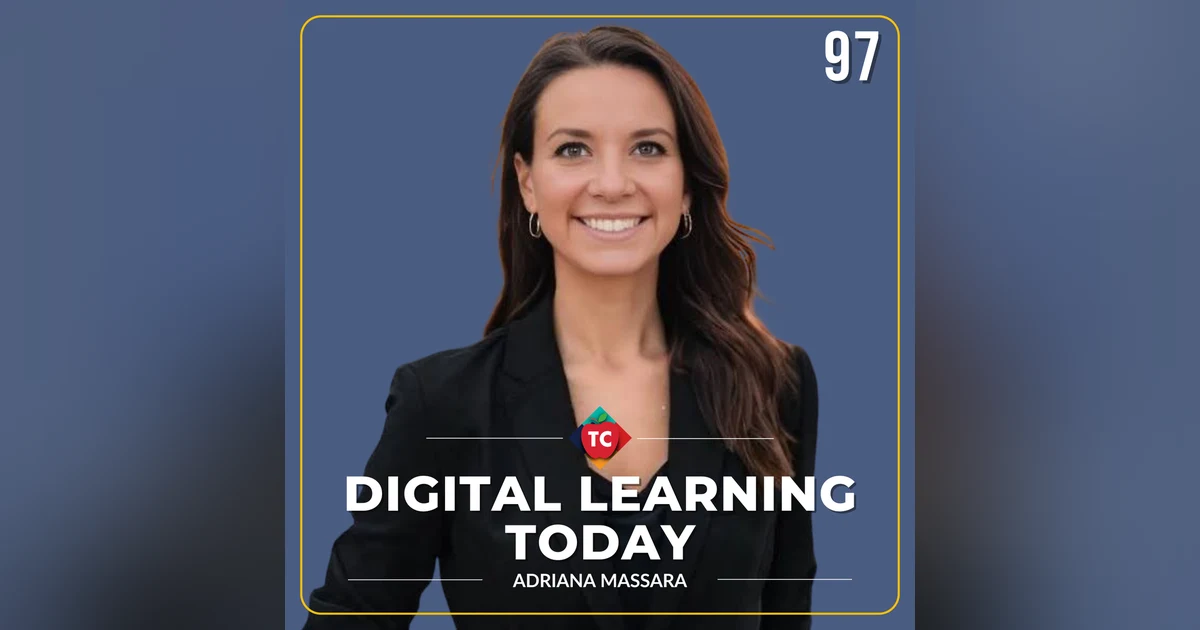
 Welcome to Digital Learning Today. In this episode, Jeff Bradbury explores the strategic systems that shape the future of education, focusing on Instructional Coaching, Artificial Intelligence, Professional Learning, and the latest Educational Technology Trends. In this episode, Jeffrey Bradbury interviews Adriana Masera from the Alliance for Decision Education about integrating decision-making skills into K-12 education. They discuss what decision education is, how it can be embedded into existing curricula, and its importance in developing lifelong skills for students.
Become a High-Impact Leader:
This episode is just the beginning. To get the complete blueprint for designing and implementing high-impact systems in your district, get your copy of my book, "Impact Standards."- Strategic Vision for Digital Learning:Learn how to create a district-wide vision that aligns digital learning with your educational goals, transforming how standards-based instruction is designed and supported.
- Curriculum Design and Implementation:Discover practical strategies for integrating digital learning into existing curricula, creating vertical alignment of skills, and mapping digital learning across grade levels.
- Effective Instructional Coaching:Master the art of coaching people rather than technology, building relationships that drive success, and measuring impact through student engagement rather than just technology usage.
Purchase your copy of “Impact Standards” on Amazon today!
In This Episode …
- What decision education is and its importance
- How decision skills can be integrated into existing curricula
- The role of decision education in critical thinking and metacognition
- Strategies for teachers to encourage decision-making and questioning
- The impact of AI on decision-making skills and education
- Long-term vision for decision education in K-12 schools
Chapters:
00:00 Introduction to Decision Education 00:26 Engagement and Resources for Educators 03:32 Understanding Decision Education 06:34 Integrating Decision Education in Classrooms 09:21 The Role of Critical Thinking 12:33 Implementing Decision Education at a School Level 15:15 Artificial Intelligence and Decision Making 18:31 Overcoming Teacher Overwhelm 21:12 The Future of Decision Education 24:22 Conclusion and ResourcesResources Mentioned in This Episode:
About our Guest: Adriana Massara
Adriana’s passion for education comes from a long line of teachers in her family. She joined Teach for America after graduating from college and taught elementary school. During her tenure, Adriana became a school leader and lead math curriculum planner. In those roles, she managed grade-level teams and teacher training. Adriana was also a Leadership for Educational Equity Fellow, where she worked for the Office of Equity and Access at the New York City Department of Education. Adriana joined the Alliance for Decision Education in 2015 as the Partnership and Training Manager. In that role, she oversaw school implementation of Decision Education and supported teachers’ practices with training and in-classroom coaching. As the Director of Community and Partnerships, Adriana managed the Alliance’s network of individual and organizational partnerships, including the Advisory and Ambassador Councils. She is now the Deputy Executive Director and Chief Strategy Officer of the Alliance. Adriana received her Master’s degree in Education from the University of Hawaii, and graduated with a B.A. in Consumer Psychology and Communications from the University of Pennsylvania.About The Alliance for Decision Education
The Alliance for Decision Education is a national nonprofit and field builder working to establish and integrate Decision Education into K–12 school systems nationwide. Our mission is to improve lives by empowering students with the essential skills and dispositions needed to make better decisions. Drawn from the sciences and humanities, Decision Education is an interdisciplinary approach that focuses on teaching students how to think, rather than what to think. Through this framework, students learn to evaluate risk, resist cognitive biases, utilize decision frameworks, and practice open-mindedness—essential tools for navigating today's complex digital landscape. By partnering with educators, families, policymakers, and community leaders, the Alliance is building a movement to ensure every student develops these durable life skills.Links of Interest
- Website:https://alliancefordecisioneducation.org/
- Twitter:https://x.com/AllDecisionEd
- Facebook:https://www.facebook.com/AllDecisionEd
- LinkedIn:
- YouTube:https://www.youtube.com/channel/UC5qYkn8DdYPOGW24PvHa_dQ
Let’s Work Together
- Contact Me Today:https://www.teachercast.net/contact
Follow on Social Media
- LinkedIn:https://www.teachercast.net/linkedin
- Twitter/X:https://www.teachercast.net/twitter
- BlueSky:https://bsky.app/profile/jeffreybradbury.bsky.social
- YouTube:http://teachercast.net/youtube
Subscribe to This Podcast
- Apple Podcasts:https://podcasts.apple.com/us/podcast/digital-learning-today/id546631310
- Spotify:https://open.spotify.com/show/0n6S0WcyzQ1rpKWJ8iZPLJ?si=a1227a7c5e0b48e4
Check Out Additional TeacherCast Programming
- Digital Learning Today:https://podcasts.apple.com/us/podcast/digital-learning-today/id546631310
- Ask the Tech Coach:https://podcasts.apple.com/us/podcast/ask-the-tech-coach/id1067586243
- The Jeff Bradbury Showhttps://podcasts.apple.com/us/podcast/the-jeff-bradbury-show/id519685828
Book Jeff for your Next Event
Jeff Bradbury (ISTE “20 to Watch” Award Winner and ISTE Certified Educator) is available for keynote speaking, workshop facilitation, and live event broadcasting. With expertise in educational technology and professional development, Jeff brings engaging content and practical strategies to conferences and professional learning events.- Visit Jeff’s Website:https://jeffreybradbury.com
- Contact Jeff Directly:https://jeffreybradbury.com/contact/
~ ~ ~ ~ ~ ~ ~ ~ ~ ~ ~ ~ ~ ~ ~ ~ ~ ~ ~ ~ ~ ~ ~ ~ [gravityform id="2" title="true"]
Jeffrey Bradbury (00:00)
Hello, everybody, and welcome to the Teacher Cast Educational Network. My name is Jeff Bradbury. Thank you so much for joining us today and making Teacher Cast your home for professional development. On this episode of Digital Learning Today, we're gonna learn about decision education, a way that you can promote asking your students to think critically and thoughtfully about the world around them. We have a fantastic guest on today. Don't miss this episode. I'm sure it's gonna be one that you're gonna take with you throughout the entire school year.
This is the first time you're checking out Teacher Cast. Don't forget to hit that like and subscribe. We love it when you guys leave us a comment, let us know that you guys are there. All of our archives can be found over at teachercast.net slash podcast and check us out for all of our blogs, podcasts, and our brand new book, Impact Standards, which you can pick up over at teachercast.net slash standards today.
Jeffrey Bradbury (00:46)
My guest today is the Deputy Executive Director and Chief Strategy Officer for the Alliance for Decision Education, where she oversees strategy and the mission of empowering every student with decision-making skills. It is a privilege today to bring onto the show Miss Adriana Masera. Adriana, welcome to Teacher Cast. How are you today?
Adriana (01:04)
Thanks much for having me. I am doing great. I'm really excited to talk today.
Jeffrey Bradbury (01:08)
I'm so excited to have you on. We're talking a little bit about what you guys are doing today at in your with your team. Talk to us a little bit about what's going on today with the Alliance for Decision Education.
Adriana (01:20)
Sure, so I can start a little bit about who we are. So we're a national nonprofit. We're working to bring decision education skills to all K-12 students in the US. So we work with teachers and ed leaders to develop and test ways to incorporate decision education into what is already being taught during the school day. We're also working with policymakers and organizations and agencies and industry leaders.
who can help us scale what we learned with the educators and the ed leaders to all students across the US. I'm happy to also go into what exactly is decision education when I'm saying that. Okay.
Jeffrey Bradbury (01:57)
Yeah. I I was
just I was just thinking about that. I'm not sure many people are familiar with the term decision education. How would you define that to somebody?
Adriana (02:05)
Yeah, so thanks. So so decision education is the teaching and learning of skillful judgment formation and decision making. So it's been around for decades. It you know, a number of our council members have studied this, have Nobel Prizes in it. It's really though only reaching at the moment at the adult level. So you can study it in postgraduate, you can get you could there's, you know, tech and healthcare and
All these industries focus on decision science. It just hasn't been brought to the K-12 system. So what it looks like is that students are learning things like how to evaluate evidence, how to think probabilistically, how to recognize and resist cognitive biases or consider different perspectives and weigh trade-offs and really make decisions under uncertainty. So a important thing too to also recognize here is that we are not adding something to the curriculum.
I'm a former teacher. I know how packed that school day is. I totally get it. So these skills can be integrated into what teachers are already teaching. And actually, really, our job right now, I think, is to make what's implicitly taught explicitly taught. So you can imagine like a student learning about probabilities in math. So I was a math teacher. I taught probabilities, but I never took it the next step, which was like, how could you actually use probabilities?
probabilities
to make decisions under uncertainty. Right. And that probably would have been really helpful for my students. So, you know, now when I'm working with students, I might say something like, Now let's take this to the real world. Imagine you see something on your cell phone, you know, or on TikTok and you see some like dramatic statistic. And it's like, well, what's the likelihood that this statistic is accurate? Or what's the evidence?
That would increase or decrease my confidence. And that's kind of how you can make the bridge. So it's really about connecting what they're currently learning to something, you know, these lifelong durable skills of decision making.
Jeffrey Bradbury (04:08)
You mentioned that you were a math classroom teacher. Was there a part in your teaching career that you noticed that this was something that needed to be focused on or that it wasn't focused on enough in schools?
Adriana (04:18)
Yeah, actually so I taught for five years and it is what led me to the alliance. And so I was I realized, you know, my lessons could be as they could be the best lessons in the world. It didn't matter if my students were choosing not to come to school, if they were choosing to text during class. Like if they were choosing not to be active participants in the, you know, math class that was teaching. And beyond that, there were so many decisions that they make throughout the day, throughout their lives.
Prior to you know, leaving my classroom, they would have incredible consequences on their classroom and on what they did in the school day. so that's when I really realized that, like, yes, I love math, but I really wanted to have a greater impact on students. And so that is what led me to doing a bunch of research while I was getting my master's degree. And I found the Alliance. so our co-founders are both it's
essentially decision scientist by training and one Annie Duke, she has her PhD, in cognitive psychology. and so they ha she's a World Series champion poker player. So they've really what would I say, they've benefited a ton from decision making skills in their adulthood and they've now made it their lifelong mission to bring it to kids. And so I found them and I was like, this is exactly what I want to be doing. so I joined the Alliance about ten years ago.
Jeffrey Bradbury (05:45)
Getting ready right now to get back into my classroom. I teach middle school, sixth, seventh, and eighth. And I know that the alliance talks a lot about the how rather than the what. What are some of the things that I can be doing when preparing lessons, putting projects together? How can I encourage my students to do more of the how thinking rather than the what thinking?
Adriana (06:05)
I love that question. well, first I always encourage educators to head over to our website for resources. And we have resources by subject areas. but if you wanted to just start it tomorrow, you could just really be focusing on, you know, how do students reach an answer? How did they come to the conclusion that they came to? So you could be asking what information did you use? What are the assumptions you're making? What are some other options you could be thinking of? You know, what would change your mind?
confident
you you are in this and so just really asking them the the questions behind their thinking versus asking them for a concrete answer to well how did you get to that answer and then asking those sub questions is a great way to start.
Jeffrey Bradbury (06:48)
Noticed that when I try that and when I go in that direction, often students stop talking to me. They they climb up, they're they're not really ready to risk their own thoughts and opinions. This is the same conversation we have when you know, ask the kid to read out loud. How do you encourage this? Because really, what I think we're talking about here in our classrooms is a cognitive culture shift.
It's the I now am responsible for my learning. I'm not just gonna sit here and wait for the bell to ring.
Adriana (07:20)
Yes, absolutely. I think it has to do with scaffolding. So I think when I started doing it, I would model, okay, I I came to this conclusion. This is how I came to this conclusion. and model it and scaffold it in a way that feels I mean, you know, we're all teachers, so it just feels approachable to the students. And so starting it with something that they feel comfortable sharing about. So
a unit that I did with my students was because I also used to be a third grade elementary school teacher, so I taught all subjects was with our science curriculum, and so it was animal adaptations. And what it was just a great way to get pe kids to think about alternative. It was really fun, it was a creative. You know, if a camel couldn't survive, it couldn't didn't have humps, what else would it use to survive in the in the heat? And that's helping them think of alternatives, right? And then you start bringing that, okay, now we start thinking of alternatives.
And how do we do this in our real life? So it's a lot of modeling, I think, in the beginning to get students comfortable, but chunking it and scaffolding in a way that feels I guess not as scary for students to share. And it's like you're not gonna mess up in this way.
Jeffrey Bradbury (08:27)
There seems to be a difference here that I think you're discussing here. And I'd love to have you break it down more, but you've got traditional thinking, you've got critical thinking, you've got all of these different components. Should these be thought of as separate teaching opportunities, or really are we trying to combine this into just a different way for a student to think, process the world and their learnings around them?
Adriana (08:53)
I think of everything that you mentioned really as part of decision making, you need to be able to think critically. You need to be able to you know, have metacognition, if you will, think about your own thinking, in order to ultimately make more rational decisions. And so I do think it is kind of all wrapped in together. The benefit of decision making is that there really is a science to it. You know, when I was teaching critical thinking, it was a little bit nebulous. It was a little bit like, okay, I don't really know how to teach.
you know, critical thinking. There's a lot of trial by fire. In this case, because it's been around for decades, there is a ton of research at the, you know, adult level that we've been able to bring to the student level and again kind of scaffold it in that way for students.
Jeffrey Bradbury (09:38)
These are really life skills we're talking about. Yeah, absolutely.
Adriana (09:40)
Yes, absolutely. Durable
life skills. Everybody you talk to you about is always like, Well, why didn't I get this earlier? And I'm like, Well, that's our whole goal here at the Alliance is to try and ensure that you do get these skills at an earlier age. And it's not just getting to the students who go to business school, who work in pharma, who work in tech. It's getting to all students at early age.
Jeffrey Bradbury (10:00)
Let's break down the work that you guys are doing at the Alliance for a moment. you're working not just at one level. You really are focusing on the school level, but you're also focusing on the national level. Talk to us a little bit about your team. What are some of the things you're focusing on as we hit to the back of school season? And how can somebody reach out to you? And and what would they work with you on when they reach out?
Adriana (10:23)
Sure. So we have like I was saying, we have a team that it's almost like our R D team. So it's our education team. and they work really closely with educators and district leaders to help them implement decision education into core content that they're already doing. So that could be through math or ELA social sites. It could also be media literacy or college and career readiness, that kind of stuff. So we work with them in order to
make it work for their school environment because we recognize that it is different for all schools and all districts. So that's one area, one big chunk of work that our team does and we have incubators. And so we call them incubator teams and we have cohorts, we have school supply or district supply. So that's definitely one way that listeners could get involved, just reach out to us. You can go to our website to inquire. We also work with
Policymakers, state policymakers. So we have a policymaker fellowship. We work with state leaders who are interested because honestly, like I said, a lot of this is already, you know, it's in portraits of a graduate. It's in it's already in state standards. It's just not being explicitly taught. So we we partner with these state leaders to make the decision education, the decision skills be taught more explicitly. so we align
We we basically do a crosswalk with decision education and the state standards, and then also work with their teams to help bring decision education at a statewide level. So a good example is you know, CTE. We're working with Tennessee Board of Regents. So we we're working with them, they have a CTE course. and it's great. We just visited, maybe it was like last year, and it was about
Students are starting their own businesses, right? And they have to make all these financial decisions. They're trying to figure out what's the best business model. It's all just but it all of it also involves decision education and they're they're learning about all these decision education terms through it. So that's a statewide initiative that we're working with them on. So those are probably the probably two most tangible ways that I would say that listeners could get involved with us on.
Of
we're obviously also on social media. We do a lot of outreach. We're going to conferences. Love to see people there as well.
Jeffrey Bradbury (12:41)
You mentioned a lot of global and and macro types of things that you're working with. You mentioned the portraits of the graduates, et cetera. When you are working with a school district and you're having those initial conversations, what does a roadmap look like? This clearly doesn't sound like a one-year initiative. This is a using the strategic plan, you're including your team. And this really needs to be long-term planning, I would imagine. What does it look like? How do you bring it in? What does professional development look like?
Where do you get started?
Adriana (13:12)
Sure. So we always start first with the the folks who are interested. So likely it's admin and then it's one or a few teachers that come into us. And then we kind of do a discovery. So where do they see opportunity? Where do they want decision education to be brought in? Like I said in Tennessee, it was in that CTE course. in other places it could be, you know, ELA or social studies. So we work really hand in hand with the school teams or with the district teams.
and then we once we kind of align on that, we also are providing professional development at the same time. So we have a professional development team that comes in, and all of them are former educators so or district leaders. So they come in, a couple hours of training, some resources, and then we also remain involved. So we coach, we have office hours. It's very much like how you know at certain schools you have your advisor and they come in and they advise you.
and you know, observe classrooms. We we do all that with teachers. and then those cohorts of teachers and and admin and district levels also work together. So they share their successes or share, you know, how something went or how something failed and what they learned this time. So it's very much like a almost like a PLE or PLC, sorry. but it's incredibly collaborative. And then at the same time it is, you're right, like it can't just be like a one month
thing. And so we usually start in the summer planning and we go through until the next summer. And then if a school would like to stay involved, we we absolutely have opportunities for that to happen.
Jeffrey Bradbury (14:49)
Let's switch topics to something that we discuss a lot here on the podcast, which is artificial intelligence. Where do you see artificial intelligence this year as we look macro? But also should we be bringing this stuff into classrooms? What's your thoughts on this? What's your implementation strategy? Where do you see the topic? And how do you support students in classrooms as we go through the school year?
Adriana (15:15)
Sure.
So it's a question we get a lot. and I think AI is only making decision education more relevant and more important. so it's not going away. And we're gonna have to, you know, train our students, and this is what I hear a lot about going in schools, is like AI literacy essentially. But I think we have to go a step farther than AI literacy. I think it's yes, is this you know information reliable?
How do I prompt that kind of that's incredibly important? It also should be, you know, what are the consequences if it's wrong? Does this recommendation actually align with like who I am as a person and what I'm trying to accomplish? It's about, you know, not removing the students' agency. I think that's what I'm really seeing is that like students are kind of becoming these passive or some s you know, a trend to passive recipients.
Of of the information that that AI is giving them and the algorithms recommend. So that could also be social media, right? So we wanna really see students believing that technology is a tool while also understanding that they are the decision makers, that they have the agency, that they are the people in the driver's seat of their own life. Because if we don't have that, I mean, to me that's a really scary future. So we just don't want them to be outsourcing, you know, their decision making and their judgment formation.
Jeffrey Bradbury (16:43)
How do you or how does the Alliance suggest students learn that evaluation process? And I'm asking this as the teacher who's gonna be sharing with it, with his students this year, how do we make sure that they have that decision making process that says this is good, this is bad? They don't seem to know yet that AI
Adriana (17:01)
Yes.
Jeffrey Bradbury (17:02)
comes in 32 different flavors. They just see LLMs.
Adriana (17:06)
Yep. I think the first thing to do is to ask them to question. I think that's a big thing that we're focusing on is so we we tend to say like question the assumptions. That's when it was humans, you know, question your own assumptions in your decision making, but now we're saying question the AI. Where'd you get that information from? Make it name sources, check those sources as well. That's a big one that that we do. We have an entire framework on our website that
That can help students go through a decision making process. But number one, it's going to be to question what the output is and to also again question are they giving out, are they being passive recipients of this? I think that it's it's almost becoming, I don't know how to say like second nature. it's like when people just blindly I mean, I do this all the time.
blindly listen to their GPS. And then I'm like, my God, I knew I wasn't going the right direction. I didn't put in my home. I put in work and now I'm like in a different I but like I'm just blindly listening to it. I I fear that that's something that if we don't have students start with the questioning and don't just blindly listen, don't be these passive recipients. We don't start that now, we see them losing their agency. So that is what I would probably do at the very beginning is just have them question and ask like, you know
If
a friend of mine said this to me, would I b be believing it? That's what I'm telling my nieces and nephews right now. I'm like, i if you saw that if I said this to you, would you believe it? Like you would ask me you would ask me a ton of questions. You always ask me a ton of questions. So do the same thing with AI and ask it to name its sources.
Jeffrey Bradbury (18:48)
Teachers walking into the classrooms these days, I'm one of them, are feeling extremely overwhelmed by all of this. And the concepts of decision teaching and and and all these different things that are popping up, it does start to have that one more thing. How can we improve the work that we're doing, enhance the learning in our students, yet not feel overburdened by yet one more thing? Whether
Our school is looking for us to do this, or maybe somebody's l listening to this podcast and going, It's a good idea. How do I start on my own? How
Adriana (19:24)
Yes.
Jeffrey Bradbury (19:24)
do we not overdo it yet be successful?
Adriana (19:29)
So I think the very first
thing that I would suggest, again, going to our website, s see a few examples. but what we hear back from teachers is that when they start making this explicit tie to decision making in students' lives, like I was explaining with the CTE course in Tennessee with the business plans, like students become more engaged. So then this is this is my experience. When students are more engaged, naturally other things start to flow.
fall off, you're not having to do as much behavior management. You're not having to do as many bells and whistles, if you will, of teaching. And you can really focus on the content while at the same time explicitly bringing out so you know asking students if if you're I if you're take that CTE course if it's okay what's the trade-offs? Are you gonna rent a restaurant or you're gonna have a food truck? What are the trade-offs of that? Now how do you apply
What is the trade-off? How do you apply that to a real life decision you're making right now? Do you join a soccer team or do you hunker down and study for, you know, your the next tests or something like that? Though there's trade-offs. I always say there's no perfect answer. There's always trade-offs to every single decision. And so I think as teachers can just like get a little bit more flavor of what is decision education and they can start saying pulling it out, I think you'll
they will see that it's making the students more engaged and it's just more exciting. and that just makes teaching inevitably easier on the teacher.
Jeffrey Bradbury (21:04)
What do you hope about the future for decision education in K-12 schools? Like what's the vision that you provide school districts when you start meeting with them?
Adriana (21:12)
So
our vision is that all students get decision education and they get it at such a level that it becomes second nature to them. we want students to be able to, like we were just talking about with AI, but like to question the information that they receive, to also be able to take the content that they learn in schools and be able to apply it to decisions that they make. We want it to become second nature. We know that that's incredibly beneficial.
but people are just getting it later in life and it's usually when they go to get their MBAs or they're you know at a corporate or C suite level. And so we really want all students to get this early in life so that everybody has the chance to have these type of jobs or a and and make the best decisions that are the most rational decisions for themselves. Because we really do believe that better decisions lead to better lives and ultimately a better society.
Jeffrey Bradbury (22:12)
Now, there might be somebody out there that's looking at this going, I wanna get involved, I wanna learn more, I wanna figure this out. Talk to us a little bit about something that you guys have going over at the Alliance for Decision Education. You are a pretty good podcast, don't you guys?
Adriana (22:28)
Yeah. So I would definitely encourage listeners to check out our podcast. So we have a podcast. We Annie Duke, like I was saying, our co-founder, she interviews some amazing experts in the field, not just decision-making experts, but you know, in sports or in business and really talking to them about their high stakes decision making and then how they break down their decisions and what tools and tips they use.
That then folks can walk away and and have right in their back pocket some ways to start implementing you know decision science in their everyday. So definitely recommend folks check out the our podcast. So again, if you go to our website, you'll see it on there, but it's called decision education podcast. Pretty easy to remember. and then I would also recommend again if if teachers are interested in look seeing resources, we've got a number of resources listed.
in our teacher section of the website, sign up for our newsletter, follow us on social. We're around. We we people reach out to us and we will always email back and especially if a teacher's just looking for a way to start. We have a starter kit. We've got also stuff for parents who want to be using this at home.
Jeffrey Bradbury (23:42)
Highly recommend you guys check it out over at alliance for decisioneducation.org forward slash podcast. They're just kicking off their season seven right now as we're heading to back to school. And of course, we're gonna make sure we have the links for this and everything we've been speaking of over on our show notes. You can find it over on teachercast.net slash podcast. Adriana, thank you so much for joining us today. One last time, where can somebody reach out and work with you and your team?
Adriana (24:08)
So if they go to that website you said, Alliance for Decision Education dot org, there is a connect at the bottom of the page. You can also just reach out to our email, which is connect at alliance for decision education dot org and somebody will be in touch and we're really excited to hear from people.
Jeffrey Bradbury (24:22)
Well, thank you so much for being on the show. We would love to have you back on. Bring your whole team and let's kind of continue
Adriana (24:27)
Okay.
Jeffrey Bradbury (24:28)
this conversation. And if you guys have any questions, you can head on over again, teachercast.net slash podcast. Check out this and all of our episodes. Adriana, thank you so much for your time today. It's a pleasure having you on the program.
Adriana (24:38)
Thank you so much. It was great.
Jeffrey Bradbury (24:40)
And that wraps up this episode of digital learning today. On behalf of Ardriana and everybody here on Teacher Cast, my name is Jeff Bradbury, reminding you guys to keep up the great work in your classrooms and continue sharing your passions with your students.