5 Ways Early‑Childhood Readiness Fuels AI‑Ready Learners

 Apple Podcasts
 Spotify
 Castro
 RSS Feed
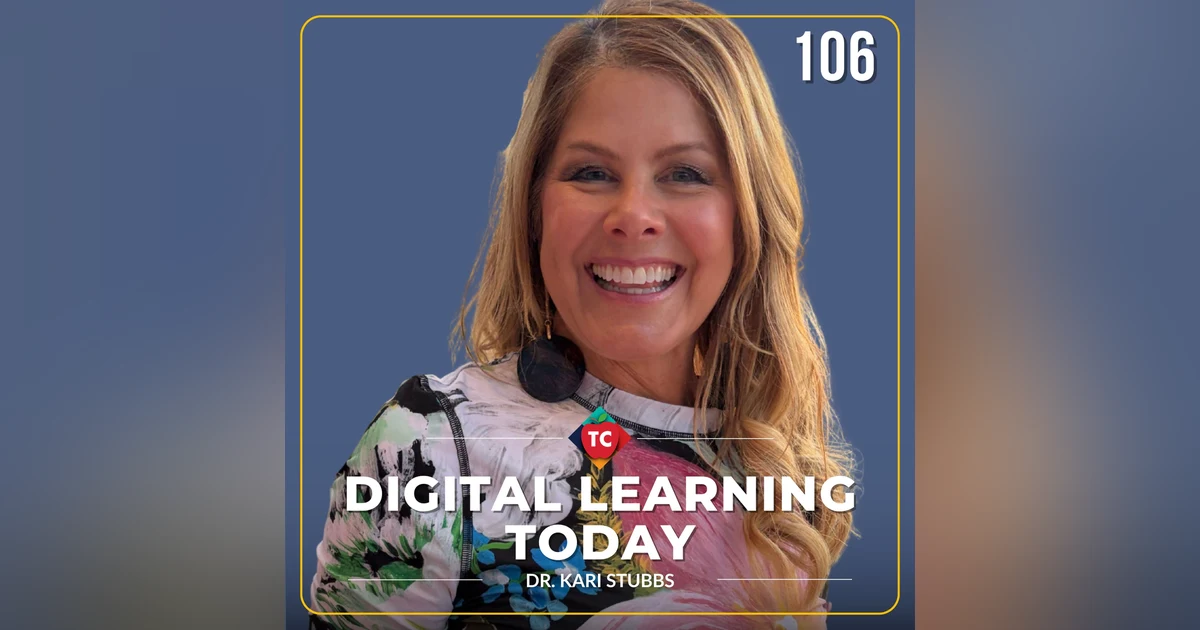
 Welcome to Digital Learning Today. In this episode, Jeff Bradbury explores the strategic systems that shape the future of education, focusing on Instructional Coaching, Artificial Intelligence, Professional Learning, and the latest Educational Technology Trends. In this episode, Dr. Carrie Stubbs discusses the critical importance of early childhood education, the impact of AI on learning, and how educators can leverage technology to support student development from the earliest years. She emphasizes the need for intentionality in tech use and shares practical insights for teachers and coaches.
Become a High-Impact Leader:
This episode is just the beginning. To get the complete blueprint for designing and implementing high-impact systems in your district, get your copy of my book, "Impact Standards."- Strategic Vision for Digital Learning:Learn how to create a district-wide vision that aligns digital learning with your educational goals, transforming how standards-based instruction is designed and supported.
- Curriculum Design and Implementation:Discover practical strategies for integrating digital learning into existing curricula, creating vertical alignment of skills, and mapping digital learning across grade levels.
- Effective Instructional Coaching:Master the art of coaching people rather than technology, building relationships that drive success, and measuring impact through student engagement rather than just technology usage.
Purchase your copy of “Impact Standards” on Amazon today!
In This Episode …
- The importance of the first five years in brain development
- Impact of screen time on young children
- AI's role in personalized learning and literacy
- The concept of the 'baton pass' in education transitions
- Strategies for supporting foundational skills in early learners
- The role of instructional coaches in AI integration
- Personal branding for educators and teachers
- Resources for understanding AI in education
Chapters:
- 00:00 Introduction to the Episode and Guest
- 02:17 The Shift in Early Childhood Needs: The “Wild West”
- 04:05 Foundational Skills and the Impact of Screen Time
- 06:54 Common Misconceptions About Early Childhood Development
- 08:52 The “Baton Pass” in Early Education Transitions
- 11:11 Resources and Support for Early Childhood Education
- 12:22 AI’s Role in Education and Future Opportunities
- 15:14 Using AI for Literacy and Research Skills
- 19:45 Supporting Literacy Development with AI
- 21:10 The Future of Student Skills in an AI World
- 22:33 The Role of Instructional Coaches in AI Integration
- 26:47 Personal Branding and Educator Creative Outlets
- 30:12 Closing Remarks and Where to Find More Information
About our Guest: Dr. Kari Stubbs
Dr. Kari Stubbs is a PhD educator and edtech executive who has spent her career at the intersection of technology, learning, and child development. A former ISTE board member, she has worked alongside school districts across the country helping them think carefully about where and how technology serves students best. In her current work she sits with early childhood directors who describe a kindergarten readiness crisis unlike anything they have seen before. Children arriving without the foundational skills that make learning possible. She believes the edtech conversation is asking the right questions about technology after children arrive in school buildings. Her work asks what happened in the five years before they got there. The First Five: Before Screens is her free weekly newsletter and forthcoming book built around brain based parenting strategies for the first five years of a child's life. It sits at the intersection of neuroscience, intentional parenting, and the urgent question of how we raise children who are genuinely ready to learn, connect, and thrive in a world shaped by AI. She spent fourteen years at BrainPOP, whose mission to ignite curiosity about the world within and around young learners deeply informed her thinking about how digital tools can support rather than replace the human interactions that build developing brains.Links of Interest
Let’s Work Together
- Contact Me Today:https://www.teachercast.net/contact
Follow on Social Media
- LinkedIn:https://www.teachercast.net/linkedin
- Twitter/X:https://www.teachercast.net/twitter
- BlueSky:https://bsky.app/profile/jeffreybradbury.bsky.social
- YouTube:http://teachercast.net/youtube
Subscribe to This Podcast
- Apple Podcasts:https://podcasts.apple.com/us/podcast/digital-learning-today/id546631310
- Spotify:https://open.spotify.com/show/0n6S0WcyzQ1rpKWJ8iZPLJ?si=a1227a7c5e0b48e4
Check Out Additional TeacherCast Programming
- Digital Learning Today:https://podcasts.apple.com/us/podcast/digital-learning-today/id546631310
- Ask the Tech Coach:https://podcasts.apple.com/us/podcast/ask-the-tech-coach/id1067586243
- The Jeff Bradbury Showhttps://podcasts.apple.com/us/podcast/the-jeff-bradbury-show/id519685828
Book Jeff for your Next Event
Jeff Bradbury (ISTE “20 to Watch” Award Winner and ISTE Certified Educator) is available for keynote speaking, workshop facilitation, and live event broadcasting. With expertise in educational technology and professional development, Jeff brings engaging content and practical strategies to conferences and professional learning events.- Visit Jeff’s Website:https://jeffreybradbury.com
- Contact Jeff Directly:https://jeffreybradbury.com/contact/
~ ~ ~ ~ ~ ~ ~ ~ ~ ~ ~ ~ ~ ~ ~ ~ ~ ~ ~ ~ ~ ~ ~ ~ [gravityform id="2" title="true"]
Jeffrey Bradbury (00:00)
Hello, everybody, and welcome to the Teacher Cast Educational Network. My name is Jeff Bradbury. Thank you so much for joining us today and making Teacher Cast your home for professional development. On today's episode of Digital Learning Today, we're gonna be talking about early childhood education, the rise of artificial intelligence for our early learners, and how you as an educator can think of yourself as a little bit of a content creator in this world where there's so much noise out there, so much social media.
How do you create something for yourself that may or may not be having to do with your classroom? But how can you create something that is going to get you ahead in your careers? So stick around for this episode. We have a fantastic show. I hope you guys have a chance to check this thing out for the full time. Hit that like and subscribe button. And of course, share this episode with your staff. We hope that you guys enjoy it. Thank you again so much for making Teacher Cast your home for podcasting and professional development.
Over the last few weeks, there have been so many great things happening over on the Teacher Cast Educational Network. You can, of course, find out our five-part series with 95% group started to launch. We also have a five-part series with World Book, both all about literacy and how you can support your young learners. We also have been starting a brand new YouTube series called Google Drive and Under Five, where we're gonna be breaking down each of the new features of Google Classroom, Google Gemini, and all of our great Google applications.
Check that out over on teachercast.net slash YouTube. Hit that like and subscribe for more information. And we look forward to having you guys be a part of our Teacher Cast family.
Jeffrey Bradbury (01:27)
My guest today has served over a decade supporting educational technology companies. She's a former member of the ISTE board, and she's here today to talk about how we can support our early learners, especially in a world of AI, screen time, and many online dangers that are facing our students this year. It is a pleasure to welcome on to the show my good friend, Dr. Carrie Stubbs. Carrie, how are you today? Welcome to Test.
Dr. Kari Stubbs (01:48)
I am amazing.
Thank you so much for having me as part of the conversation. I am so looking forward to catching up. We've got lots to
Jeffrey Bradbury (01:55)
I'm
Dr. Kari Stubbs (01:55)
talk about.
Jeffrey Bradbury (01:56)
I'm so excited that you're here today. We have a lot of things to catch up on, but you know, just looking over your breadth of work here. You were working for Brain Pop for a while, ISTE board, district ed tech strategies. Talk to us a little bit about your journey. How did you get from there to here? Who is Dr. Carrie Stubbs?
Dr. Kari Stubbs (02:17)
That is a fantastic question. I have dedicated my career to supporting educators in their effective use of technology to support teaching and learning that has been in the K-12 space. Plot twist. More recently, because of conversations I'm having with early childhood directors that are raising their hands about the change in student population that's showing up at their schools, I have paused.
And am really taking a deep dive into the importance of those five years before kids get into our education systems to see if I can be a part of the change, part of the improvement and part of the solution.
Jeffrey Bradbury (02:56)
Now you've described this early childhood moment of being in the Wild West. I can certainly
Dr. Kari Stubbs (03:02)
Yes.
Jeffrey Bradbury (03:02)
see how that comes up. Talk to us a little bit about why you've deemed it that way. And what are you seeing right now when it comes to early early childhood education?
Dr. Kari Stubbs (03:11)
Yeah, and
actually that term, you know, came straight from the mouth of an early childhood director in Ohio that I was meeting with. So to to paraphrase her observations for you, you know, historically you've always an anticipated a range of student need that was arriving at kindergarten Roundup, but you it was a pretty predictable for years and years, A to B. And her term was it's literally become the wild west, because they don't know.
what type flavor of student need is going to appear in the classroom. So shorten attention
spans, kids that can't sit still, don't know how to interact with other kids. I could go on, but there's an absence of some of the foundational learning skills that kids historically have brought with them in their toolbox of learning as they headed into formal, you know, schooling years.
Jeffrey Bradbury (04:05)
Well, I'm not gonna lie, Carrie, the short attention span, the self-soothing, the foundational readiness skills, those are things that they bring with them into middle school also. So how
Dr. Kari Stubbs (04:13)
Yes, yes.
Jeffrey Bradbury (04:15)
do we work with this? I don't wanna say deal with, I don't wanna say fix. How do we work
Dr. Kari Stubbs (04:19)
Yeah.
Jeffrey Bradbury (04:20)
with this? So that way by the time students are at a certain age, some of these things are self-explanatory, they're not needed anymore. And we do have students that are, you know, at least from my desk.
They're going into that fifth, sixth, seventh grade, ready to become seventh, eighth, and ninth graders.
Dr. Kari Stubbs (04:38)
That is such a great question. So right now in K-12, and you know, you brought up ISTE, hot topic there this summer at the conference, screen time debates, bell-to-bell
Jeffrey Bradbury (04:48)
Mm.
Dr. Kari Stubbs (04:48)
bands, like, you know, as someone who has her PhD in curriculum with a technology emphasis, right? Like there's a lot of reckoning with and conversations around, did we go too far with tech? Are we thinking about the intentionality of tech?
And most of those conversations at ISTE, predictably, we're starting with K-12. I am simply proposing that we pay attention to the guidelines and we think deeply about those five years before kids ever hit kindergarten, because that's when your brain is growing most rapidly, right? You're building all the foundational structures for cognition, for learning, for attention span, for curiosity, for numeracy.
Language, et cetera. And so I think a solution that will pay dividends, not just in the first five years, but throughout life. Just celebrated my son's 30th to date myself, right? So everywhere in between, including middle school, I think we could really come up with some beautiful and effective solutions if we pay closer attention to those first five years.
Jeffrey Bradbury (06:01)
I think a lot of teachers misunderstand those particular years. I'm saying this as a dad of three premies, right?
Dr. Kari Stubbs (06:10)
Yeah.
Jeffrey Bradbury (06:10)
I'm saying this as somebody who was their kids went to I mean, my kids went to two years, I believe it was, of preschool to get them ready for all of that stuff. What are some of the misconceptions and what are some of the things that you find in students who haven't had those years set up properly?
Dr. Kari Stubbs (06:26)
Yeah, that's a phenomenal question. So one piece of data that we we have to work with is the American Academy of Pediatrics recommends zero screen time for the first two years. That's when brain development is most rapid. That's when eyes are developing, all s you know, right? All sorts of foundational things. The average, which we believe might be underestimated, is that kids in that age range are on screens for an hour a day.
So an hour a day times seven days a week times blah, blah, blah, up to two years, right? Like that's a big disconnect. and so you know, not all screens, not all screens forever, but parents right now have the temptation of that device to sue the child to survive parenting, which is hard. You have three, right?
The problem is every minute that a child is front of that screen, they're missing a serve and return, a human connection. And the way that's showing up in school is, you know, one of my conversations last spring was with an early childhood director who's had a preschool teacher out with a concussion that she received from a three-year-old in their classroom. Right. So emotional outbursts are more common than not these days.
kids who are used to having that screen land in front of them at the restaurant or the grocery store or wherever the parent needs the survival moment, rather than a kid learning as their brain is developing that you're not always gonna get your way and you're gonna need to self-soothe. And sometimes you're gonna have to sit with some discomfort. And that's really good. And what educators are telling me is that is showing up writ large at you know,
kindergarten and carrying forth through middle school and and your older kids that you work with.
Jeffrey Bradbury (08:22)
How much of what you're seeing do you feel is students are having these experiences, maybe, versus the parents just aren't sure yet? Let's face it, when you're zero to five years old, we are all still new parents. But I know you talk about this idea of the baton toss, making sure that you go from that house into those first couple of years of school. What does that handoff look like? What should we make sure that our students are learning or need to learn by the time they do hit that kindergarten first year?
Dr. Kari Stubbs (08:52)
Yeah, that's a super great question. And yes, so sad to call a child a baton, but if you think of it as a baton pass, right? So your parents predominantly are in charge of the learning experiences. They're leading the charge with those learning experiences, zero to five. Child being the baton to a preschool experience or straight into kindergarten. I simply want to help my peers, my educators, my friends that are on the receiving end of that baton pass, if you will.
and the way at the systemic process that's happening is oftentimes it's an early childhood situation, attached to a school district or not attached to a school district, that first encounters and receives these kids that have some advanced developmental learning needs. And then there's a hope and a wish and across our fingers and a working really hard to try to course correct.
During the preschool experiences before kids get to kindergarten and start their K-12 path. The problem is sometimes those systems with early childhood don't talk to our K-12 systems. And so we're replicating this same struggle and tension with supporting a child through this catch-up experience, which is leading to it's definitely contributing to the teacher shortages we're seeing, which are by far at scale much worse in special ed than general ed. So we're
Creating a situation where truly all teachers need to be special education teachers, because we don't know what type of student need we're going to receive. So that's that's kind of where there's some tension with Baton Pass right now, honestly. And so rather than I'm taking my lessons learned from those conversations in K-12, at ISTI, at other conferences, with partners and colleagues in the field, and saying, hey, let's have those conversations, K-12, but let's not forget.
the vital importance of those first five years to tee us all up for success when we receive learners in our classrooms.
Jeffrey Bradbury (10:55)
Carrie,
where can we go for more information on this subject? I think it's extremely important, whether no matter if you're an early educator or a middle school educator or even a high school, where do we go? Where's the best places to look at? And of course we're gonna make sure that we have all the links in our show notes, but where should we start?
Dr. Kari Stubbs (11:11)
Thank you, thank you. Yeah, I have a free newsletter on Substack at Dr. Carrie Stubbs, K-A-R-I-S-T-U-B-B-S. That's where the mediat information is right now. It's free. I drop a weekly newsletter that is building toward a book. not there yet, right? I'm really seeking feedback, input, challenge my thinking, right? but I'm coming at those chapters through the lens of topics that I think when our zero to fives are beyond middle school and beyond.
High school and are entering the workforce in an AI world that none of us can predict, that we're in those first five years building toward skills that will AI proof to the best of our ability our career and life opportunities. The other place you can find me is on Instagram at at Dr. Carrie Stubbs. all sorts of related video content to support those newsletters. Thanks for asking.
Jeffrey Bradbury (12:06)
Talking today to Dr. Carrie Stubbs all about AI creativity and how we can get our students to support their problem-solving needs. And Carrie, you know, as we mentioned over the summertime, we were at our ISTE conference down in Orlando, and there was a little bit of talk, I guess you could say, about artificial
Dr. Kari Stubbs (12:22)
Little
Jeffrey Bradbury (12:22)
intelligence. What is the role in students learning? What is the role in teacher professional development? What should we be thinking about this year when it comes to AI?
It
can be used as a tool, it can be used as a supplement, it can be used as a co-teacher, it can be used
Dr. Kari Stubbs (12:39)
Yeah.
Jeffrey Bradbury (12:39)
to create. There's so much positive, yet there's so many different conversations. What are some of the things that we can think about when when it comes to AI and how it's changing our rapidly changing workplace work workplace?
Dr. Kari Stubbs (12:52)
Yeah, yes, AI was all over ISTE. If you had buzzword bingo, it would have been quite funny if every single tile just said AI. I think right now AI is changing rapidly. It holds so much glorious, yummy potential for how we can support kids. I think I would encourage folks that are trying to do their best at staying on top of it to do a few things. One,
Digital Promise has really broken through to the lead of offering really highly effective, highly intentional, well-researched resources to support, you know, whether you're a classroom educator, a paraeducator, a superintendent on challenging your thinking and encouraging you to be mindful about how you're learning about AI. I think it's particularly interesting right now that the rise of AI is happening during these screen time limit conversations. So
Think it's causing me personally to pause and think about folks like Panorama Ed that are leveraging AI for totally transforming student learning, but through the lens of data in a safe protected space behind the scenes for the district, rather than being an AI solution that merges screen time for kids. There are great, you know, folks are doing great things.
Through AI and a student-facing interface, yes, but because of the timeliness of the screen time limit conversation, I'm really paying a close attention to that. And then the other thing I wouldn't third and last thing, there are some folks out there that are just in the districts that are doing phenomenal work. And so identifying a handful of those. Rob Dixon from Wichita Schools immediately comes to mind. I'm a Kansas City girl, known him a long time.
Pick a few players and pay close attention, right? Come to Teacher Cast, right? Learn here, learn through this community, but arm yourself with information and know that it's moving quickly.
Jeffrey Bradbury (14:56)
Curious
to know where you are in the world of AI as a positive influence in the classroom and negative. Recently, I was looking through my basement, cleaning out some things. I came across this book, and it's called A Google a Day. This is over 10 years old. And the
Dr. Kari Stubbs (15:14)
Wow.
Jeffrey Bradbury (15:15)
whole idea of this book was that it's designed to give teachers something for students to look up. And then usually the questions in here are like.
Look at this and then look at this and then cross reference this and then so they're icebreakers, they're games. They I I looked at this and said, This is gonna be great for my middle school kids. And then I actually tried one of these things word for word and Gemini just said, Yep, here it is.
Dr. Kari Stubbs (15:40)
That's great.
Jeffrey Bradbury (15:42)
So the entire book. And in fact, if you look online, a googoladay.com was I think what the website was, no longer exists because
Dr. Kari Stubbs (15:48)
Amazing.
Jeffrey Bradbury (15:51)
your Google search now can do multi-faceted, multi-level, multi-layer,
Dr. Kari Stubbs (15:55)
Anything.
Jeffrey Bradbury (15:55)
complex searches that like like never before.
Dr. Kari Stubbs (15:59)
Yeah.
Jeffrey Bradbury (16:00)
What, in your opinion, is the right way or the best way to bring these skills in? I'm asking as a digital media teacher where I want to teach Google search.
But I don't want to be teaching necessarily AI skills, but these are now the same exact thing, whether it be in Google, in Chrome, in your web browser, or even in your Gmail. It's all the same search tools. Where are you on this topic?
Dr. Kari Stubbs (16:27)
I have several th so much to you've got me thinking, right? so I was part of the Brain Pop family for 14 years, super proud of my time there. They do right now have a very interesting partnership with Digital Promise, who I already lifted up as an expert in this AI conversation, to have explicit short animated videos that will teach kids about AI. It's just like you're referencing Google, you know, our back in the day, decade ago, it is helpful for kids.
you know, third grade and up to be learning about what is AI, the nuances of AI. You you've got to, if you set yourself in their mind, they're hearing different information from their parents. They're hearing probably inconsistent information from teachers. So you lifting that up just as a resource for some baseline information. Beyond that, though, there are some folks that are doing really cool things with AI. So your middle school, there's a company called Shoelace Learning that is addressing needs around adolescent literacy.
Through a game environment. So already kind of interesting to me because adolescent literacy is sometimes overlooked. Sometimes we really, as a as a whole collective education unit, we look more at like early needs for readers and like what what about the middle school kid that's still it hasn't clicked for, right? So what I'm fascinated by with Shoe Lice Learning is they're they've you know, I don't know how to make AI work, right? So they've magically figured out that sweet spot of challenge.
Where you don't want kids that are just guessing because something's too hard, but you don't want to overchallenge kids. I'm sorry, you don't want to underchallenge kids where they're just zipping through a game. So they have been able to leverage this new technology so that each child, whether they are a fifth grader reading at a third grade level or a sixth grader reading at a 12th grade level, they receive content through this captivating game environment that is just right for them.
And they are rewarded. You know, the technology can tell. It can snuff out the suspects, right? Like it knows if you're just guessing, it knows if you are plowing through stuff. And so any child can be successful in this game environment. They have fun tournaments. So, regardless of where you started, the smartest kid isn't being rewarded. The kid that worked the hard and made the most growth is being rewarded. I think that is a beautiful example of the use of this technology, right?
Jeffrey Bradbury (18:56)
Carrie, in the last few weeks, we have produced episodes with 95% group all about the science of reading and about literacy education. And we're just getting ready to launch a five-part series with WorldBook talking about their brand new literacy platform called Classmate. And we've been talking a lot on this channel here about how do we get our students to start reading on grade level? How do we bring those up, whether you be in, you know, grades three through five or
six through nine. How does AI support this? How does AI challenge this? Especially when we're in a world where we as educators want them to be able to read long form, have the stamina, and with AI it's nope, here's the three words that you need. And you got the answer. Let's move forward.
Dr. Kari Stubbs (19:45)
That is such a great rich question. I'm gonna pause. I think AI holds promise in several ways. So we've seen companies that are taking that like side-by-side AI tutor approach. So, you know, I'm struggling with this question, this comprehension question, and an AI tutor that lives side by side by that content that meets a child where they are and talks them through how to progress forward.
I think that's one example of the use of AI that shows a lot of potential. Another
example that shows so much potential for me that I already referenced was that behind the scenes analysis of all the data about this child, right? So what's their social emotional health look like that informs some of their literacy needs, their attendance records, how they're performing on standardized assessment tests, and being able to tap into AI.
to analyze all that data and then pinpoint exactly where a student is and have a personal plan for moving that child forward. I think that's also gonna be a really effective way of wrestling with moving the needle on literacy needs for these students.
Jeffrey Bradbury (20:59)
Where do you see the future of our students since they are growing up in a world with immediate gratification and not the need for mastering long form research skills?
Dr. Kari Stubbs (21:10)
That's a great question. I sat in on maybe my favorite session of the last 18 months, honestly, a panel that Dr. Julie Evans with Project Tomorrow led of high school students at ASUGSV alongside Arizona State. So it was four kids, very different student profiles. You know, each child's different, but they were reflecting on their future career opportunities, their experiences with AI in school, their
Self-regulation regarding how they were using it, if you know the the worries that the powers that be have about cheating. It was a very eye-opening conversation. I believe it was recorded. I should go back and see because I just love it and would honestly rewatch it. But the kids were policing themselves really well. The kids were wrestling with how to address a teacher that's scared of AI and almost hiding from it.
When they know good and well as a ninth, tenth, eleventh, or twelfth grader that they're about to land in a job opportunity situation where they want to be fully equipped. It's almost like maybe these were wildly mature kids, but they were paying very close attention to AI and its potential for harm or or support as they enter the workforce.
Jeffrey Bradbury (22:33)
You know that I love supporting and working with instructional coaches. It's it's my audience here, and I know
Dr. Kari Stubbs (22:37)
Yes, yes, yes, yes. It's your GM.
Jeffrey Bradbury (22:38)
there's a lot of coaches working. What do you see as the role for coaches in the world of AI? I know that there's coaches out there that are nervous that AI is going to take over some of the things that they've been asked to do, which I just don't agree with at all. I know coaches are trying to introduce the AI tools as an example.
Hey,
did you know that Copilot exists? Did you know that Gemini is now in Google Classroom? You've got these different advocates for the tools. I just came back from a few amazing days in Atlanta where we were learning about the new ISTI and Google AI training series that's out there and easy
Dr. Kari Stubbs (23:16)
Amazing.
Jeffrey Bradbury (23:17)
for any educator to know. But when it comes to coaching, should we be taking it as a one-to-one? Like, where is Carrie? Does she want to do this? Let's push, or should we be saying,
The district has an initiative. It's my responsibility to bring this out. Let's figure this all out together. What is that role of instructional coaches?
Dr. Kari Stubbs (23:39)
That is a great question. And it's particularly fascinating right now in states like Kansas. I'm a Missourian at the moment, but I'm a lifelong Kansan. we just as a state implemented a bell-to-bell ban, which is fascinating to me, right? And so there's this pendulum swing for an instructional coach in that situation, as an example, where you're gonna have some teachers that are, for lack of a better term,
Throw the baby out with the bathwater and just kind of go back to physical textbooks, only paper pencil, right? Not use any technology devices. My argument for an instructional coach that's in a very delicate situation, because you're gonna have some teachers like that that you're working with. You're also gonna have those teachers that are like, whoa, fun challenge, right? Build-a-bell band. This is how I'm gonna use AI.
the life of an instructional coach has never mattered more because you have such a beautiful opportunity to meet teachers where they are in this conversation that is such a moment in time, once in a lifetime topic, and move them forward. And by forward, I mean learn that it's not all bad. Learn that there are some positives. And if you're that trailbazer teacher and you're the instructional coach walking alongside them.
You're probably going learn some really glorious things together. I think it's just a really, really exciting time. I do not think AI is going to replace you. I think in that same example that I used a few minutes ago about leveraging AI to personalize instruction for our learners, what a cool time to be an instructional coach and be able to use AI to develop personal learning plans for the teachers and the teacher teams that you work with, the content areas that you're a part of.
It's exciting stuff.
Jeffrey Bradbury (25:38)
We're gonna make sure that we have the links to all of that stuff that we just mentioned. Highly recommend you guys check out that new Google AI series. It is fantastic. I went through it myself and they're coming out with new episodes like quarterly now throughout the school year. So definitely check all that stuff out. You can find more information on this episode over at teachercast.net slash podcast. And Carrie, before I let you go today, I want to talk about a subject that I'm getting a lot here, getting lots of questions on, which is personal education.
Which
is personal educator branding. You mentioned earlier you're writing a book. Congratulations, it is a huge accomplishment, but you've also, as you mentioned, started to write out your newsletter. Is it important for teachers to have, I'll say, an out or to have some kind of creative vehicle for them to share their thoughts, their opinions, their their news about the world?
Why is it important do you think for yourself to create this newsletter? And should other educators have these kinds of opportunities to share their passions with the world?
Dr. Kari Stubbs (26:47)
What a what a great question. Thank you for asking it. Absolutely. I am finding so much passion and purpose in this project. it's something I've considered doing for a long time. I just, you know, my son's 30, my daughter's 28. I feel like I've got these interesting receipts. I raised them during a very intentional, brain-based research, professional development era at my elementary school. So I approach their childhood as a lesson plan.
That was anchored to brain-based research methods. So I can see how this played out 30 years later. So I've toyed with this idea of a book for a while. It was these conversations I'm happening, I'm having with school directors that really took it from the idea in the back of my mind to let's do it. And I am finding a ton of passion and a ton of purpose in working on it. So to your question about encouraging other teachers, yes, it's really hard to get caught up in the day-to-day, I don't know, whack-a-mole spirit.
For lack of a better term, because you know, we're all surviving, we're all thriving, we're trying to find the right balance of the two. But your entire identity is not, does not have to be that you're an educator, right? You might be someone from Kansas City that's super interested in restaurants around Kansas City and all the new happenings, right? You might want to have a thread that supports other folks that are curious about downtown.
Downtown Kansas City that has absolutely nothing to do with your teacher brain. I I've dabbled in that a little bit. That's why I'm using it as a concrete example, because I live in downtown. I love it. I'm obsessed. or you might be curious about, you know, it it's an interesting plot twist for me to as a lifetime educator focusing on ed tech, to then be working on a parenting
Jeffrey Bradbury (28:31)
Okay. So that's what we want to appear to.
Dr. Kari Stubbs (28:34)
news article that kind of challenges the notion of too much screen time for babes. So in your personal brand as an educator.
Don't be boxed in and also be brave. that would be my biggest advice. Be brave. I think those of us that went into education grew up in this very structured K-12 system. We liked it. It felt safe. It felt cozy. We went back into teaching. And sometimes our brain needs a pause button to take a step back off the screen, have some reflection, and realize that there's a whole great big world out there.
That rewards risk takers and folks that will do something new. So as you're playing with your personal brand, give yourself permission to to try some wild different things on Versailles.
Jeffrey Bradbury (29:24)
I couldn't agree more. When a teacher is asking about, you know, should I create, should I not create? I always say it doesn't have to be about education. Start a food blog, start
Dr. Kari Stubbs (29:33)
Yes.
Jeffrey Bradbury (29:34)
a travel blog. You never know. You might start getting free trips to places, but just have some kind of creative outfit, right? Have
Dr. Kari Stubbs (29:39)
I should start a travel dog. Yeah.
Jeffrey Bradbury (29:42)
some place away from students. You know, like I do teacher cast, but on the other hand, I talk about entrepreneurship and brand building and newsletters and I I do a a
completely different podcast over there that's not about Google in classrooms. It's interesting to see all the different stuff that's out there. But Carrie, look, we could easily make this into a part one and part two. So I I thank you so much for coming on the show today. And you've always been a big supporter of Teacher Cast. So thank you so much. Where can people find out more information about the great work you're doing?
Dr. Kari Stubbs (30:12)
Yes, I would love if they would track me down on Substack at Dr. Carrie Stubbs, K-A-R-I, for the spelling, and also on Instagram, same handle at Dr. Carrie Stubbs. And yes, want to lift you up for how much you have changed our industry and our community of educators through your passion, passionate work at Teacher Cast. So thank you for attaching a microphone to the great work that so many people are doing that.
We wouldn't be able to learn from one another without you. You're the you're the grand connector, which is really beautiful and really powerful.
Jeffrey Bradbury (30:46)
We're gonna make sure that we have the links to this and all of our shows over on teachercast.net slash podcast. So check that out today. And on behalf of Carrie and everybody here on Teacher Cast, my name is Jeff Bradbury, reminding you guys to keep up the great work in your classrooms and continue sharing your passions with your students.