Literacy Is Every Teacher’s Job: Building Knowledge Across the Curriculum

 Apple Podcasts
 Spotify
 Castro
 RSS Feed
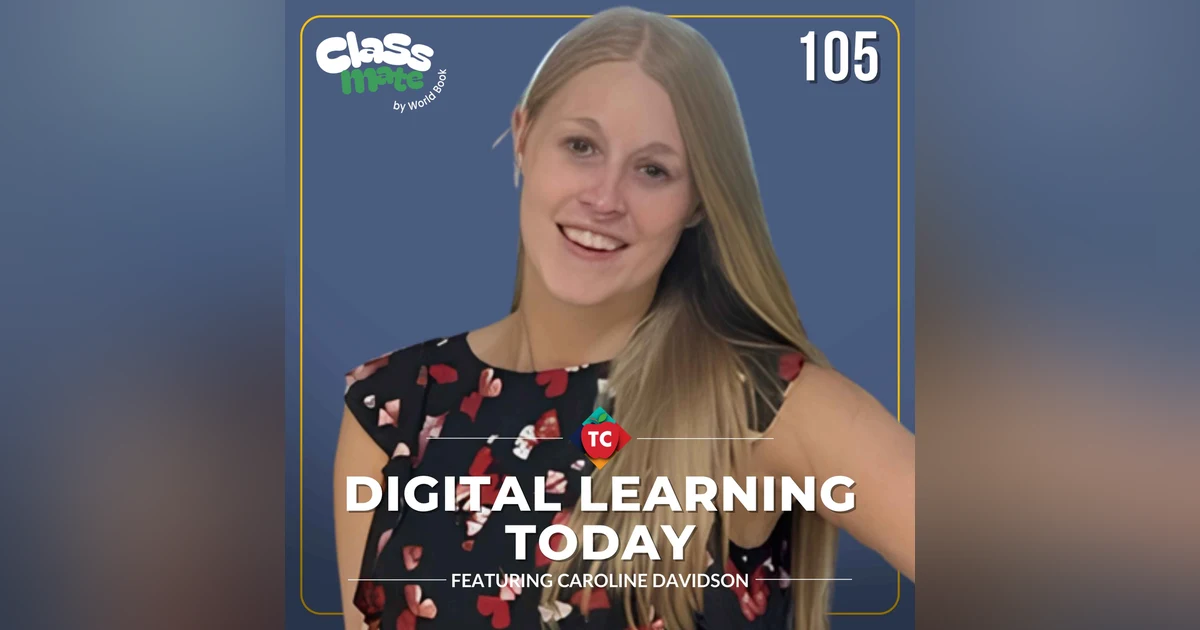
 Welcome to Digital Learning Today. In this episode, Jeff Bradbury explores the strategic systems that shape the future of education, focusing on Instructional Coaching, Artificial Intelligence, Professional Learning, and the latest Educational Technology Trends. In this episode, Caroline Davidson from World Book discusses how teachers can integrate literacy and content knowledge using tools like Classmate, emphasizing engagement, credible sources, and practical routines for effective teaching.
Become a High-Impact Leader:
This episode is just the beginning. To get the complete blueprint for designing and implementing high-impact systems in your district, get your copy of my book, "Impact Standards."- Strategic Vision for Digital Learning:Learn how to create a district-wide vision that aligns digital learning with your educational goals, transforming how standards-based instruction is designed and supported.
- Curriculum Design and Implementation:Discover practical strategies for integrating digital learning into existing curricula, creating vertical alignment of skills, and mapping digital learning across grade levels.
- Effective Instructional Coaching:Master the art of coaching people rather than technology, building relationships that drive success, and measuring impact through student engagement rather than just technology usage.
Purchase your copy of “Impact Standards” on Amazon today!
In This Episode …
- ClassMate as the bridge (literacy + content learning)
- Accesstrusted, kid-friendly nonfiction(articles, videos, images)
- Turn content intoassignments fast(or useready-madeones)
- Engage students with nonfiction
- Read with students(don’t “assign and walk away”)
- Addpause points+ “turn and talk”
- Requireevidence from the text: “Where did it say that?”
- Start-small routines (research + vocabulary)
- Number paragraphsfor shared references
- Main idea → highlight evidence
- Teach1 vocabulary wordin ~5 minutes;revisitlater in the week
- Credibility + AI note
- Teach credibility because teachers won’t always be the gatekeeper
- Credibility =accuracy + quality writing
- Caution: AI text can have a “non-human” tone students may mimic
- Motivation + independence
- Hook interest withrelevant, real-world content
- Model questions out louduntil students generate their own
- Reinforce reusable tools (ex:text-to-speech/speech-to-text) + “What did you do last time?”
- PD that builds culture
- “Secret sauce” =consistent team collaboration+ shared routines
Chapters:
- 00:00 Intro
- 01:46 What ClassMate is and how teachers are using it
- 02:35 Literacy + knowledge: making research meaningful
- 03:19 Engage with text (turn-and-talk, evidence in the text)
- 03:28 Bringing literacy into every subject area
- 04:25 Start small: routines (number paragraphs, main idea, vocab)
- 06:03 AI’s role + why human-reviewed writing matters
- 07:43 Motivating students to research with purpose
- 10:57 Teaching credibility: why it matters long-term
- 11:13 “Good text teaches like a teacher” (scaffolding + schema)
- 12:20 Teaching students to communicate (writing, speaking, media)
- 14:51 Modeling quality work + building a strong resource hub
- 15:30 Teacher feedback on ClassMate (time savings + literacy support)
- 16:36 District literacy culture: everyone does a little
- 18:30 PD that works: consistent team collaboration
- 19:26 Helping students speak up + building independence
- 22:38 Supporting parents: all reading counts (start small, keep it fun)
- 25:42 Final takeaway: practice makes progress
- 27:00 Trust + credibility + human-reviewed content (World Book’s focus)
- 27:24 Where ClassMate fits + where to learn more
Resources Mentioned in This Episode:
About our Guest: Caroline Davidson
Caroline Davidson is the Associate Manager of Learning Design at World Book, where she shapes educational resources that support meaningful learning. A former classroom teacher, she spent years working with students in grades 4–6 and holds endorsements in Reading K–12 and Mathematics K–8. She earned her M.A. in Differentiated Instruction, bringing both hands-on teaching experience and academic expertise to her work in creating effective, learner-centered content.Meet ClassMate by World Book
Meet ClassMate by World Book — the reading and learning platform built for and trusted by middle school teachers! For over 100 years, World Book has inspired curiosity and built reliable knowledge. ClassMate carries that legacy forward. Unlike AI tools built on the open web, ClassMate works exclusively within World Book's expert-written, editorially reviewed content library. Teachers create engaging classroom activities quickly and with confidence. The result: students build knowledge, strengthen literacy, and think critically, while educators spend more time teaching.Links of Interest
- https://classmate.worldbook.com/https://www.facebook.com/WorldBook/
- https://www.linkedin.com/company/world-book/
- https://www.instagram.com/worldbookinc/
Let’s Work Together
- Contact Me Today:https://www.teachercast.net/contact
Follow on Social Media
- LinkedIn:https://www.teachercast.net/linkedin
- Twitter/X:https://www.teachercast.net/twitter
- BlueSky:https://bsky.app/profile/jeffreybradbury.bsky.social
- YouTube:http://teachercast.net/youtube
Subscribe to This Podcast
- Apple Podcasts:https://podcasts.apple.com/us/podcast/digital-learning-today/id546631310
- Spotify:https://open.spotify.com/show/0n6S0WcyzQ1rpKWJ8iZPLJ?si=a1227a7c5e0b48e4
Check Out Additional TeacherCast Programming
- Digital Learning Today:https://podcasts.apple.com/us/podcast/digital-learning-today/id546631310
- Ask the Tech Coach:https://podcasts.apple.com/us/podcast/ask-the-tech-coach/id1067586243
- The Jeff Bradbury Showhttps://podcasts.apple.com/us/podcast/the-jeff-bradbury-show/id519685828
Book Jeff for your Next Event
Jeff Bradbury (ISTE “20 to Watch” Award Winner and ISTE Certified Educator) is available for keynote speaking, workshop facilitation, and live event broadcasting. With expertise in educational technology and professional development, Jeff brings engaging content and practical strategies to conferences and professional learning events.- Visit Jeff’s Website:https://jeffreybradbury.com
- Contact Jeff Directly:https://jeffreybradbury.com/contact/
~ ~ ~ ~ ~ ~ ~ ~ ~ ~ ~ ~ ~ ~ ~ ~ ~ ~ ~ ~ ~ ~ ~ ~ [gravityform id="2" title="true"]
Jeffrey Bradbury (00:01)
Hello, everybody, and welcome to the Teacher Cast Educational Network. My name is Jeff Bradbury. Thank you so much for joining us today and making Teacher Cast your home for professional development. This is the fifth episode of a five-part series featuring our friends at World Book and Classmate. And today we're gonna be not only wrapping up the series, but helping you guys put the pieces together to figure out how you can bring that knowledge, that content, and that amazing literacy into your classrooms.
This is the first time you're checking out our episodes. You can find us over on Apple Podcasts, Spotify, and everything's gonna be over on our YouTube channel. Each and every episode is gonna be accompanied by our show notes with links in every single description over on teachercast.net slash worldbook. Thank you guys for being here. I'm excited that you are.
Jeffrey Bradbury (00:43)
My guest today is a former classroom teacher serving grades four and five. And she's currently the Associate Manager for Learning Design at World Book. And I'm thrilled to bring her back on to finish this amazing podcast series with our friends at World Book. Want to introduce today Miss Caroline Davidson. Caroline, welcome back to the program. How are you today, my friend?
Caroline Davidson (01:02)
Hey Jeb, thanks for having me back. I'm really thrilled to be here. We had so much fun last time. Can't wait to do it again today.
Jeffrey Bradbury (01:07)
I am excited that you are here. Again, we are wrapping up five amazing episodes where we learned what it does take to actually put together a World Book encyclopedia. We learned a little bit about finding trusted sources, creating nonfiction content that teachers can use, but mostly we've been focusing on how do you take that nonfiction content? How do you put it into a package and share it with your kids? And we've been learning about a fantastic new application brought out by World Book called Classmate.
Talk to us a little bit as we start today's conversation about classmates and what you're hearing from teachers as they're starting to use this amazing platform.
Caroline Davidson (01:46)
Yeah, great
question, Jeff. Thanks. Classmate is one of our new products at World Book. It really takes that great encyclopedic content we have, that reputable, researched, well-written for kids content and puts it into an application that makes it easy to deliver to your students. Classmate lets you go in and find articles, videos, images, whatever related to most anything. It's an encyclopedia, and turn those into assignments.
Or find some of our pre-made authored assignments already so that you can just plug and play and push those out to your students so they can come in, do their nonfiction reading, grow their knowledge of what you're trying to teach in the content areas, grow both at that same time. Happy day.
Jeffrey Bradbury (02:27)
You know, I've been thinking since our last episode a few weeks ago, we were talking about literacy and knowledge, as you just mentioned.
Caroline Davidson (02:32)
Mm-hmm. Mm-hmm.
Jeffrey Bradbury (02:35)
How do these things start to work together so that way they're one thing? How can we make sure that our students, when they're looking at these materials and when they're doing
Caroline Davidson (02:43)
Mm-hmm.
Jeffrey Bradbury (02:44)
research anywhere that they have available to them, how do they start to take this research, synthesize it, pull it into themselves, and then really share that knowledge with the outside world?
Caroline Davidson (02:56)
Really good question. It's about interacting with that text, right? It's about engaging with it, interacting with it, just like we do with everything else in our world. We do better when we engage with it a little bit more. We understand it more deeply. Same thing when it comes to text. So first and foremost, as a content area teacher, bring in text. Find that solid, really good, well-written text for your kids. Bring it into your classroom. And then don't just be like, here kids, read bye.
That's not gonna really work. You need to read it with them. Maybe they read a little independently and then you pause and you talk. Have your kids turn and talk to each other. What'd you learn in the text? What
does it say? Where are your questions? Dive into it with them. Engage, engage, engage with that text. And then as always, have them find their evidence. They need to go back and find that evidence in the text. Where in the text did it say that? Go back to the text. Look in the text. Find it in the text. You're gonna say that a lot in middle school.
It's going to work and eventually stick.
Jeffrey Bradbury (03:50)
I've been thinking about some of the things that we've had spoken about back in episode two here. And one of the things that came to mind is how I, as a digital media teacher, can bring literacy and knowledge together for my own content area. Talk to us a little bit about some of the work that you've been doing, both as a teacher, but also with teachers. How can we take the concepts that we've been discussing on these past few episodes? Which again, you can find
Caroline Davidson (04:14)
Okay.
Jeffrey Bradbury (04:14)
over at teachercast.net/slash worldbook.
How can we bring this content and these skills into non-literacy topic and content areas?
Caroline Davidson (04:25)
Yeah, definitely start with what that content is. Start by finding that really good piece of content, right? Maybe you're a you're a tech teacher and you're trying to teach about hardware. Go find that really good article describing what the different pieces of hardware are. Maybe you're a social studies teacher trying to teach about the American Revolution. Find a sequenced article that's going to explain things very carefully. So you gotta start with the great content.
But then it's the, yeah, I have this content. What do I do with this content now? And this is where I think the best place to start is with a small routine. Especially if you're a content area teacher who doesn't have a huge background in literacy, maybe this is your first time bringing this in. Start somewhere small with a small routine. Maybe all you're doing for the first little bit while you're getting your feet wet here is you're having your kids start by taking their text.
Label all the paragraphs, number them. So when we go to talk about it, we're all on paragraph four. We all can all look at paragraph four together, right? Maybe that's just the first step. Then after a couple weeks, you say, okay, we're going to read this and we're going to all be highlighting to find that main idea. And you identify the main idea to your kids and then you have them highlight the evidence. You come back together and you review you review, excuse me, that evidence together, right? It's about kind of working with your kids and then building that routine over time. Maybe all you're starting with is a vocab word. Maybe twice a week you're gonna
explicitly teach a vocab word. You take five minutes at the beginning of your lesson twice a week on Mondays and Wednesdays, maybe. I don't know. And you teach that vocabulary word Mondays, maybe you repeat it Wednesdays, that's gonna grow your kids. Start small, start somewhere.
Jeffrey Bradbury (05:58)
Bring up the conversation that we had a couple episodes ago with Tom Evans.
And
Caroline Davidson (06:03)
Yeah.
Jeffrey Bradbury (06:03)
Tom and I were talking a little bit about AI and what the place of AI is, not only in finding the materials, but making sure that the lessons that we're creating and finding online, whether it be World Book, classmate, or other subjects, how can we take these nonfiction materials and make sure that they're hitting our students, not just any, but the ones in front of us.
What role do you see and what role does World Book see AI having in this? And where does Classmate fit in?
Caroline Davidson (06:32)
that's a really great question. So world book content and really all content when we think about it.
Really should mimic the type of writing we want our students to be doing, right? AI kind of has this voice to it. I don't know if you've noticed this if you engage with an AI chatbot a lot. It kind of has this weird tone to it, right? You'll start to see people talk about this a little bit more online or you'll hear it in discourses. You can tell when something's written by AI. It just kind of has this like, ooh, that's not really a human flavor to it. And we really want to be important about what kind of language we're putting in front of kids. And if we put something that's written by AI in front of kids, that's very clearly like.
That, guess what our kids are gonna start to do? They're gonna start to copy it, they're gonna start to mimic it. And eventually we're going to have a generation of students who aren't writing like people but are writing like an AI. And that can be problematic. So that's one of the reasons it's so so so important when you're looking for content. Yeah, your content has to be credible and accurate, but then you also have to ask yourself, what's the tone of this? How is this written? Is this really written for kids? And if it is, is it written for kids? And does it sound like actual
writing like real people will do like real kids what we want them to be doing in their future.
Jeffrey Bradbury (07:43)
One
of the things that I notice when we're looking at students doing research, they do need to know why they're doing it. They need to have a goal. I think if I sent my students or my own kids out into any platform and said, just go research, just go read, they're gonna get lost. We as teachers need to guide them. We need to give them purposeful reasons to look at that. How does World
Caroline Davidson (08:03)
Yes.
Jeffrey Bradbury (08:04)
Book and Classmates support that? And what advice do you give to teachers when you're trying to show them how to bring these subjects and topics of research?
Into their classrooms.
Caroline Davidson (08:14)
It's a really good question. Yeah, that piece of like that buy-in is so important. We know this with kids, right? Of any age really, but that motivation, that hook, that engagement, like if you don't have that, good luck, you gotta get them bought into it, right?
Two really good questions there with World Book Classmate. That's really our our school platform. That's my teacher is gonna find information and push stuff out. So as a teacher, I'm using that as my opportunity to share things that I think are stinking cool with my kids. Things that might not be in the textbooks, the real world applications. We have some very cool articles on WorldBook Online that are about real world stuff that you can then share with your students that way to hook them into the content.
Through some real world things. We have a ton of cool stuff with NASA in particular. We work really closely with the NASA crew and get some great content from them. So we have really cool ways to bring in that physics, that earth science, that space science learning and connect it to the real world. For that research angle, that's another really good question. I think one of the best things we can do is ask kids questions to encourage them to ask their own questions, get them started, and then once they start to be like,
well, I wonder about this. I wonder about this. Model those questions for them. If they're having trouble asking questions, start asking questions aloud. Even if you might not truly be all interested in it, it's okay. If you pretend to be interested in it and you get fake excited about it, they eventually will get excited about it. They might find that buy-in too.
then you can turn them loose to that real big area of World Book Online, that safe search engine, where they can go out and actually go dig into it. And then, I found this article and that made me want to read about this. And now I've read to read about this. And and suddenly it's just like when we were kids with the real physical books in front of us flipping through and I read this word and that makes me wonder about this. And I have to go get out the other book and flip flip.
Jeffrey Bradbury (10:04)
that we want in our classrooms each and every day, but it's only effective
Caroline Davidson (10:08)
Yeah.
Jeffrey Bradbury (10:08)
if the sources are credible. Why is it important that we make sure that students know the difference between credible and non-credible sources?
Caroline Davidson (10:17)
yes, because we need them to be look we need that for our world. We need them to be looking at credible stuff now so they know how to do it when they go off on their own. Right now, as the teacher, I'm the gatekeeper.
Right? I'm the one who's looking at what's credible, what's not before I put it in front of my kids. And I am that kind of like last person safety net before it gets in front of my students. In 10 years, in 15 years, and 20 years, when they're real people in the real world, they're not gonna have that safety net. They need to know the difference between what is credible and what is not. And then they also need to know how to discern that on their own. With younger students, we just start with what is it, what is it not. As they get older, we can start to teach them how to figure that out on their own.
Jeffrey Bradbury (10:57)
When
we're looking through that credibility though, there's a difference between, and I I I shudder to say this good writing versus not good writing. And I know it's often said that good text teaches you something or it acts like a teacher.
Caroline Davidson (11:13)
Hm.
Jeffrey Bradbury (11:14)
That's so important, especially. And I know you used to teach fourth and fifth grade, but as we're working with young readers, having text that's out there that we can provide that is not just read and learn, but really read and absorb for all of our.
Caroline Davidson (11:27)
Yeah.
Yes. And it's it's like you said, a good text teaches like a teacher does, right?
Jeffrey Bradbury (11:32)
Mm-hmm.
Caroline Davidson (11:33)
Good teachers don't just dive into the complicated stuff and assume you have all the background knowledge. No, we start by tapping into your background knowledge. We use what we know about schema theory to do that, right? We go, you might already know this. I'm gonna start there and I'm gonna draw a connection to this new thing. And then we slowly scaffold our teaching from really simple things that you already know to more complex, more abstract.
Same with a good text. It's not gonna dive in at the very beginning and dump all the hard stuff on you. It's gonna start small, it's gonna build up to those complex things, and it's going to explain all of that needed background knowledge right there. It's not gonna assume you know what you're talking about because it's it's a text. It's it's not a teacher. It doesn't know exactly what the teacher might know about you. It means to build all
Jeffrey Bradbury (12:18)
Well, let's flip that, right? Because we've been talking
Caroline Davidson (12:20)
Yeah.
Jeffrey Bradbury (12:20)
about stuff we've been reading and consuming.
Caroline Davidson (12:23)
Hmm.
Jeffrey Bradbury (12:23)
When we're teaching students to write this way, right? How do we
Caroline Davidson (12:27)
Yeah.
Jeffrey Bradbury (12:27)
teach students to write as a scaffold? How do we teach students to write in a way that acts as a teacher? And honestly, Caroline, we could be talking about the written world. In my class, we could be talking about making a presentation, building a video,
Caroline Davidson (12:42)
yeah.
Jeffrey Bradbury (12:43)
all of the different media out there.
My goal this year as a middle school teacher is how do I get the kids to go from right, right, right, right, right to actually become storytellers? How do you do that?
Caroline Davidson (12:55)
Ooh, it's communication piece, isn't it? Right? And I think
Jeffrey Bradbury (12:57)
What do you
Caroline Davidson (12:58)
you're hitting on something big there with like it's not just about take out my pen, take out my notebook, and I'm gonna write an essay and it's gonna follow the perfect five-paragraph essay structure and an introduction and body, body, body conclude. Yeah, that's good. We need that in school. But I think what you're getting at is this idea of communication is so much bigger, and communication in today's world, I mean, look at us, we're on a podcast, we're doing a video chat on a podcast. This is a new style communication compared to 20 years ago.
Communication as a whole, when we're thinking about writing, I think what a lot of content area teachers, I think it can be daunting. When I was teaching in math, it's like, how do I support that writing content in a middle school setting in a math classroom? Ooh, you don't necessarily have to be the five-paragraph essay teacher. You can be the we're gonna work on this communication style, right? Because speaking and writing are so much more connected than we realize. It's the same kind of brain processes.
Going on, right? It's all about what is the output I'm trying to get out and how am I going to get you to understand what's going on in here based on either this or this, either my words or my writing, right? So I think that's kind of that piece. And I would say for content area teachers especially, how do I do this? Again, start small. Start with more turn and talks. Start with, hey, you're gonna tell your partner this. That's already bringing in that communication piece. Then you can start to build in more of the writing opportunity.
Grab out a post-it note, I'm gonna put up a question on the board, I'm gonna pose a question out loud to you. And instead of having you turn and talk to your partner, write your answers on your post-it note first, then turn and talk to your partner. Okay, now we can bring it up to a third level. You're gonna write your answer on your post-it note and bullet points, then you're gonna turn and talk to your partner. Then you're gonna come back to your piece of paper and you're going to write me a sentence that has it, or two sentences, or three if we're really pushing for that rigorous writing, right? It's really about.
Bring it in, like I said, make it a routine, that's a big piece, and then model, model, model. Write for your kids and bring
in strong writing for your kids.
Jeffrey Bradbury (14:54)
That modeling is so important at all levels. And I I can speak to the middle school level of if I'm giving something that's slop, if I'm giving a video that no one's gonna
Caroline Davidson (15:01)
Yeah.
Jeffrey Bradbury (15:04)
want to list, they're not actually taking it in to be able to turnkey it back to me in their own words, in their own projects. And that's important to make sure that we have a resource hub for strong writing, for strong
Caroline Davidson (15:18)
Yes.
Jeffrey Bradbury (15:18)
writing that we can then tailor to all of our different kids and all of our different students.
I I wanted to ask one question here about the work that you guys are doing. When you're working with teachers, whether it be on the World
Caroline Davidson (15:30)
Right.
Jeffrey Bradbury (15:30)
Book side or through the new classmate, which you can find over at classmate.worldbook.com,
What is the feedback that you're getting from these teachers?
Caroline Davidson (15:39)
Yeah, it's a great question. We're getting the feedback that it's so much easier to find stuff than it was before, right? They're not like going out onto the wild, wild web and I have to find this type of article on this particular topic at this particular text level. That gets hard. So one, that's a big thing, and boy, that's a huge time save. And you know, better than most, time is
Everything for teachers, right? Time is your everything. the second thing we're hearing is that it's making it easier for them to bring that literacy into their classroom, right? It's taking that great content and it's filling those holes. It's being that supplement. It's it's reteaching if my kids didn't get it the first time. Maybe it's going and going, ooh.
My curriculum doesn't actually have a great lesson for this, or I don't like this, or I know my kids last year didn't respond to this well, so I want to try something slightly different, and using this instead. Just kind of there to fill the gaps and really to be that helpful tool when you need it.
Jeffrey Bradbury (16:33)
Many school districts this year are focusing on literacy. We kind
of
Caroline Davidson (16:36)
Mm-hmm.
Jeffrey Bradbury (16:36)
talked about this in our previous episode, but I wanted to see what your thoughts are on school districts that are doing it right versus school districts that need a little support. What do you see as an example of a school district that's that's getting it? Everybody's moving forward. The needles are going. Most importantly, all the teachers are on the same page, doing it the same way. What do you see when you're talking to school districts across the globe?
What's the secret sauce here? How do you do this the right way?
Caroline Davidson (17:06)
Yeah, it's that part of everybody's on board and everybody's doing it. And I think that sounds like daunting, right? It's like, boy, you're the one who has to fix the whole problem. You're the science teacher, you do it, you do it, you do it. And that's not necessarily the goal. The goal is you're the science teacher, do it little. Just do it a little bit. Because if you do it a little bit, and if the social studies teacher does it a little bit, and the art teacher does it a little bit and the health teacher does it a little bit,
It's going to come together. That's that kind of idea for kids that we tell them, right? We tell our middle school kids, our high school kids, boy, sometimes we even still have to tell our college kids this, right? Like you need to, you have a test coming up, you have an exam coming up. If you wait to the very last second to do all your work, good luck. Good luck to you. But if you are doing a little bit,
Every day, a little bit of review, a little bit of practice every single day, that's going to add up over time. And by the end, when you go to take that exam, holy moly, you're going to be so much more prepared. Same kind of idea around this literacy thing. So we're hearing at admin, we're hearing admin rightfully say, hey, contendary teachers, we need some help. The ELA teacher is trying. The intervention teachers are trying. We need some help. And contendary teachers are going, ooh, I want to help, but this is hard and I don't really know how to help.
Bring in something. Like I said, start small. Bring in the text to a little bit every day. You're not alone. If everyone is doing a little bit of something, you're gonna grow.
Jeffrey Bradbury (18:30)
What does professional development look like for a school district trying to bring this in as a culture?
Caroline Davidson (18:35)
Yeah, that's a really good question. I think it's going to be those consistent meetings, truthfully. And I know I know teachers hate to hear the word meeting, but what we ended up doing when I was teaching my middle school, one of our meetings, we had two preps a week with teams. It was it two preps, there were 45-minute meetings, that's all it was. and we had one with our grade level team and one with our content area team. I love my content area team. I could go to the math teachers and be, hey math teachers, help me teach this math concept. I am struggling. My kids are struggling, help me. That was great. My favorite though was my grade level team.
I loved being with my sixth grade level team right there because I could go to them, we had the same kids, and we could use common language. And once a week we sat down and we talked about what are we saying? How are we talking about this? this is what's going on in your class. Christian's struggling with XYZ, Ava's struggling with XYZ over here. Ooh, that's what I noticed too.
Was the math teacher? And I'm sitting there working with our avid teacher trying to be like, hey, hang on a second, Ava's having a hard time with her reading. I'm noticing that in her word problems that she's not understanding what the main concept of the word problem is. How can we bring us together? I know meetings are the teacher's least favorite thing to hear, but it's not a meeting to be taught something in professional development. It's that time to connect about your actual kids across the classrooms, across between those people that are sharing those students. Yeah.
Jeffrey Bradbury (19:53)
Well, let's talk about those kids, right? We're all working
here with 24, 30 kids in some cases, all different learning abilities and learning challenges. One of the things that I always find it difficult is for the students to speak up, whether it be publicly, privately to you and say, I'm not getting this, right? We've all had the situation where I've said, Hey, Caroline, why don't you read what's on the board? And Caroline goes, Not today. That's an unfortunate situation for both parties because you're not
Sure why, but you're not sure what you want to do. But now as a behavior thing, you don't want to say, well, now every kid can say no to me. How do you encourage your kids to speak up about their own challenges? And then how do you support that?
Caroline Davidson (20:37)
Yeah, first and foremost, it's that relationship piece. I brought this up the last time. I'm a biggie on relationship pieces, right? Like you gotta know your kids, you gotta make that safe space for your classroom. When your classroom is feeling safe when you make mistakes as the teacher, it's okay. Like own it. I've the number of times that I put something up on the board and I misspelled something or I read something wrong, you don't just go up there and go, I know I never made mistakes. No, own it and be like, whoops.
I made a mistake. That's a learning opportunity. Let's take this as a learning opportunity. Make it safe to make mistakes in your classroom for you. Then do it. Like I said, model it. Your kids are going to feel more confident making those mistakes too. But then also, the more you know your kids, the more you're going to know which ones like to read out loud and which ones maybe not so much, but want that push. Maybe it's with that particular student. I'm not calling on her to read out loud in front of my class, but I am going to go to her desk and make her read that problem out loud to me.
And then we're gonna talk about it, right? It's that's the first part I think is to really get to know your kids and to figure that piece out.
Jeffrey Bradbury (21:35)
It's almost like a student has to know that their teacher is full of tricks. They have a bag of tricks. They've got this goodie bag and as they're gonna come around, how can I reach into that bag of tricks and get something that's gonna help me? Cause that's gonna be different than my friend next to me.
Caroline Davidson (21:49)
Yes, and then it's about for that kid teaching them that they can become their own bag of tricks eventually, right? You can develop your own bag of tricks. I think when we think about like this development of kids really from kindergarten all the way up through 12th grade, right? In the beginning, we're doing a lot for them. Just like you were for your your kids when they were toddlers. They were doing a lot for them. And as these kids are growing,
We're trying to get them to become more independent. So yeah, sometimes I'm gonna come over and I'm gonna whip up my bag of trips and I'm gonna go, ooh, we're stuck on this word and we're going to segment it and we're going to blend it out. We're gonna sound it out, we're gonna blend the word together, we're gonna get there. Other times I'm gonna go over to this kid and maybe this is a kid that I know is ready for that little bit of push. I'm gonna say, how could you figure this out? Maybe that kid is gonna go, ooh, I don't know. I could say, hey, I bet we could segment the word or
If I'm not somebody who has that literacy background, I could go, ooh, I don't know how to get this kid to figure out this word because I don't know how to teach this as a literacy skill, but I've got speech to text. I bet I could get this kid to use this speech to text tool.
Here's what then happens. Kid maybe plays a speech text, listens to the word. all of a sudden I've heard it, I've gotten the oral input, I know the word now. I've just never seen it written on paper. I've never seen the word subtle. I didn't know it had a B in there. my gosh, what a strange thing. Now I've heard it, now I know what it is. I can keep on with my reading. And now the kid has a tool. So next time, I'm the teacher, I come over, my kids say, I'm stuck, I don't know this word. Okay, what'd you do last time? We teach them how
how to help themselves, right? Feed, give a man a fish, right? Teach a man a fish, it's that kind of thing. But when we help our kids help themselves, we're giving them the tools to be more independent in the future.
Jeffrey Bradbury (23:28)
Caroline, here we are at the end of a five part series. We've talked about teachers, we've talked about how administrators can support, we've talked about students. I want to hit the last topic here parents. How can
school districts, how can teachers support parents in the goal of bringing literacy into their homes to teach their children? I I come from a world right now where one of my triplets always has a book in his hands, thankfully, loves to
read.
Loves to share about all this. That's not the case for everybody. How
can we support our parents?
Caroline Davidson (24:04)
Yeah, great question. first, all literacy is literacy. Like I am a big believer in that. You're gonna have some people come out here and be like, audiobooks aren't reading. That ain't me. Nope. All literacy is literacy. If your kid is like I am a reluctant reader, I really don't want to read, start somewhere. That is my big message to you. Start somewhere. Maybe it's not a book. Maybe it's an audiobook. Maybe that's where you're starting. That's not a bad starting place. Audiobooks are great. I'm diving into one right now and it is dangerously eating up my time. But
We have we we make it fun. Bring that joy with your kids. I would say if you're having struggling readers at home, don't make it a chore. Do something fun with it. So maybe it's the kid gets to pick out the book. Maybe it's the kid is finding the topic. Maybe it's you and the kid are reading together. Maybe it's book club.
Maybe me and my s my child are gonna go to a book club with our neighbor and their child once a month. We find something fun, find something fun to make it fun because that's really what reading should be. It's about this joy. Yes, reading is a tool to help us in life. But really it's a tool to help us.
make it through life and enjoy life and be better pe like be good people in the world. And I think, I don't know, I'm a big I was a reading rainbow kid growing up. So, you know, I it's literacy does open doors. Reading opens doors. And I think the more we make it fun, the more we involve our kids in whatever they want to read. All reading is good reading. Maybe it's the back of the cereal box. I don't care. Make it fun, enjoy it, and hype up about whatever literacy is happening.
Jeffrey Bradbury (25:33)
Carolyn, when you look across the last four episodes, this is our fifth one here, what do you think is the biggest message that educators should be walking away with?
Caroline Davidson (25:42)
Yeah, I think our biggest message is that we need to be spending time in text. We need to practice, practice, practice, because practice makes progress. That is a big one for me. And as the teacher, the message is start where you can. Start somewhere, start small. Once you feel good, do a little bit more, but start anywhere. You are doing good things. You can do it.
Jeffrey Bradbury (26:05)
We've talked about literacy, we've talked about knowledge, and we've talked about content. Why should schools continue to be intentional about each of these words and not that they're all one single term?
Caroline Davidson (26:18)
It's a really great question.
You need to hold them together, right? You do need them all to work together, but that can't mean you can just go, we're gonna throw a good text at them and call it good enough. We do need to be intentional about each one individually, right? If we start thinking about them all together, we're gonna kind of lose some of the nuance with it, in like when they each have their individual pieces. The literacy piece is important. We do need explicit literacy and instruction. I don't want people to hear me say, there is nothing there. No, we need explicit literacy and instruction, but we also need an opportunity to practice.
That and build knowledge at the same time, right? You need to be doing both, but individually there are still some good things. A lot of magic happens though when you bring them together.
Jeffrey Bradbury (27:00)
Three other words that we've talked about a lot over the last few episodes is trust, credibility, and human-reviewed content. Why are these
Caroline Davidson (27:04)
Yeah. Yeah.
Jeffrey Bradbury (27:08)
three things important to World Book?
Caroline Davidson (27:10)
Ooh, why are they important to World Book? That's our bread and butter. It is who we are. It's who we've always been. Worldbook has been around for over a hundred years. Our goal is to bring in that strong, credible content to really encourage lifelong learning.
Jeffrey Bradbury (27:24)
And finally, this whole entire series has been brought to us by Classmate, a brand new application. Where does Classmate fit into the bigger picture? How can we use it? And finally, where do we go if we're looking for more information?
Caroline Davidson (27:38)
Yeah, absolutely. Classmate is a great tool to help really any content area teacher, especially in those middle school grades, bring in that literacy experience while also doing what they have to do anyway, which is teaching their content, building that content knowledge. So it's a little bit of like double duty to for the price of one kind of vibes with that. so that's really that goal with Classmate. And you can find more about Classmate at www.classmate.worldbook.com.
Jeffrey Bradbury (28:04)
We're gonna make sure that all of our links are in our show notes and our descriptions on the videos. Of course, you can find us over on Spotify, Apple Podcasts, YouTube, LinkedIn, all of the different places. But specifically, these videos are gonna be found over at teachercast.net slash worldbook, where everything is gonna get organized and archived. Caroline, it's been an amazing five episodes. I hope we have a chance to do this again and
I just want to say thank you for the opportunity. Thank you for the collaborations and thank you to the entire World Book team for bringing us on the journey. It's been an amazing summer together.
Caroline Davidson (28:35)
Right back at you, Jeff. Thank you so much.
Jeffrey Bradbury (28:37)
On behalf of Caroline and everybody here on Teacher Cast, my name is Jeff Bradbury, reminding you guys to keep up the great work in your classrooms and continue sharing your passions with your students.