Why Quality Nonfiction Matters More in the Age of AI

 Apple Podcasts
 Spotify
 Castro
 RSS Feed
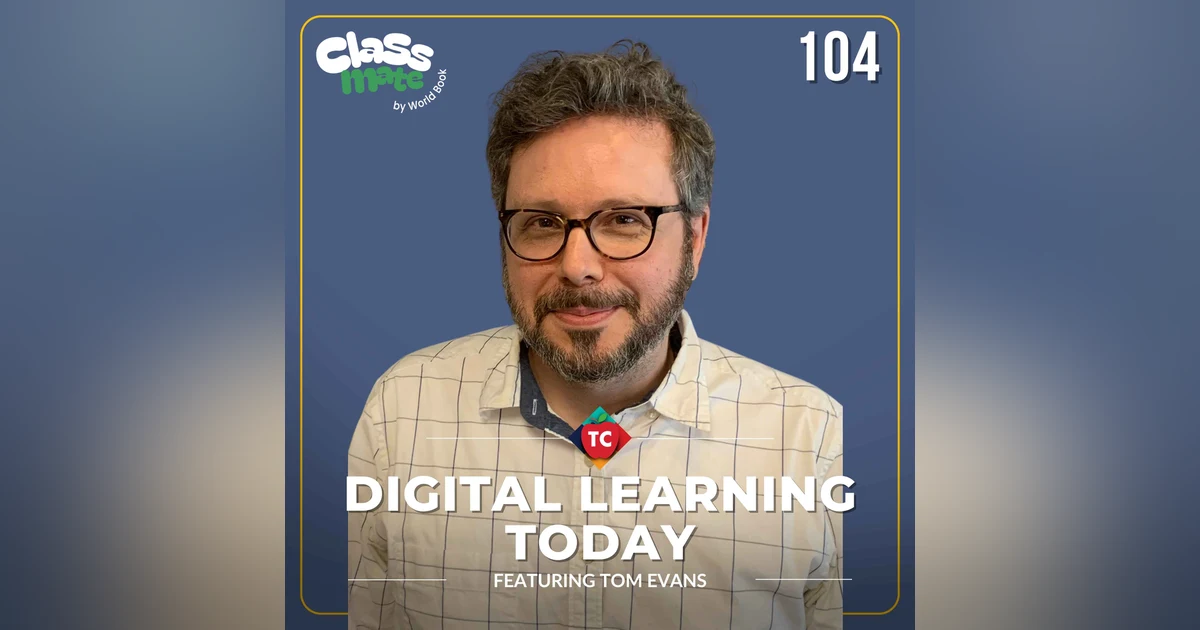
 Welcome to Digital Learning Today. In this episode, Jeff Bradbury explores the strategic systems that shape the future of education, focusing on Instructional Coaching, Artificial Intelligence, Professional Learning, and the latest Educational Technology Trends. In this episode, we explore the trusted world of World Book's educational content, focusing on how their nonfiction materials are created, updated, and used in classrooms. Guest Tom Evans shares insights into the process, the importance of quality, and the future of digital learning with AI support.
Become a High-Impact Leader:
This episode is just the beginning. To get the complete blueprint for designing and implementing high-impact systems in your district, get your copy of my book, "Impact Standards."- Strategic Vision for Digital Learning:Learn how to create a district-wide vision that aligns digital learning with your educational goals, transforming how standards-based instruction is designed and supported.
- Curriculum Design and Implementation:Discover practical strategies for integrating digital learning into existing curricula, creating vertical alignment of skills, and mapping digital learning across grade levels.
- Effective Instructional Coaching:Master the art of coaching people rather than technology, building relationships that drive success, and measuring impact through student engagement rather than just technology usage.
Purchase your copy of “Impact Standards” on Amazon today!
In This Episode …
- How World Book creates, reviews, and updates content to stay accurate and classroom-ready
- What “trustworthy nonfiction” looks like—and why it matters more than ever
- How articles are adapted for print vs. digital, and for elementary, middle, and high school readers
- The scaffolding moves that help students build knowledge (not just collect facts)
- How ClassMate uses responsible AI—inside a walled garden of vetted World Book resources—to help teachers build lessons
- Wild (and wonderful) World Book history: from the Yeti expedition to the Loch Ness submarine
- What’s next for digital learning as AI grows—and the guardrails educators should demand
Chapters:
- 00:00 Introduction to World Book and Tom Evans
- 03:06 The Evolution of World Book: 20 Years of Change
- 05:52 Content Creation: Balancing Print and Digital
- 08:49 The Importance of Quality Nonfiction Texts
- 11:53 Scaffolding Knowledge: Effective Nonfiction Writing
- 14:54 Navigating Current Events in Nonfiction
- 16:13 How ClassMate Supports Teachers in the Classroom
- 17:31 Introducing ClassMate: A New Educational Tool
- 20:25 AI in Education: Enhancing Learning with ClassMate
- 21:13 World Book's Legacy and Future
- 23:54 Responsible AI and the Future of Learning
- 27:20 Final Thoughts and Resources
Resources Mentioned in This Episode:
About our Guest: Tom Evans
Tom Evans is Vice President of Editorial at World Book, Inc., serving on the company’s executive leadership team and overseeing both Editorial and Marketing. With more than 20 years in educational publishing, he leads content strategy across print and digital platforms, guiding the development of trusted instructional and reference materials used in schools and libraries worldwide. Earlier in his career, Tom held roles with organizations including The Times (London) and Walt Disney Studios Motion Pictures. He has co-authored and edited dozens of children’s books, advised the Poetry Foundation, been speaker at the American Society of Picture Professionals, contributed to School Library Journal, and received a Partnership Award from NASA.Meet ClassMate by World Book
Meet ClassMate by World Book — the reading and learning platform built for and trusted by middle school teachers! For over 100 years, World Book has inspired curiosity and built reliable knowledge. ClassMate carries that legacy forward. Unlike AI tools built on the open web, ClassMate works exclusively within World Book's expert-written, editorially reviewed content library. Teachers create engaging classroom activities quickly and with confidence. The result: students build knowledge, strengthen literacy, and think critically, while educators spend more time teaching.Links of Interest
- https://classmate.worldbook.com/https://www.facebook.com/WorldBook/
- https://www.linkedin.com/company/world-book/
- https://www.instagram.com/worldbookinc/
Let’s Work Together
- Contact Me Today:https://www.teachercast.net/contact
Follow on Social Media
- LinkedIn:https://www.teachercast.net/linkedin
- Twitter/X:https://www.teachercast.net/twitter
- BlueSky:https://bsky.app/profile/jeffreybradbury.bsky.social
- YouTube:http://teachercast.net/youtube
Subscribe to This Podcast
- Apple Podcasts:https://podcasts.apple.com/us/podcast/digital-learning-today/id546631310
- Spotify:https://open.spotify.com/show/0n6S0WcyzQ1rpKWJ8iZPLJ?si=a1227a7c5e0b48e4
Check Out Additional TeacherCast Programming
- Digital Learning Today:https://podcasts.apple.com/us/podcast/digital-learning-today/id546631310
- Ask the Tech Coach:https://podcasts.apple.com/us/podcast/ask-the-tech-coach/id1067586243
- The Jeff Bradbury Showhttps://podcasts.apple.com/us/podcast/the-jeff-bradbury-show/id519685828
Book Jeff for your Next Event
Jeff Bradbury (ISTE “20 to Watch” Award Winner and ISTE Certified Educator) is available for keynote speaking, workshop facilitation, and live event broadcasting. With expertise in educational technology and professional development, Jeff brings engaging content and practical strategies to conferences and professional learning events.- Visit Jeff’s Website:https://jeffreybradbury.com
- Contact Jeff Directly:https://jeffreybradbury.com/contact/
~ ~ ~ ~ ~ ~ ~ ~ ~ ~ ~ ~ ~ ~ ~ ~ ~ ~ ~ ~ ~ ~ ~ ~ [gravityform id="2" title="true"]
Jeffrey Bradbury (00:02)
Hello, everybody, and welcome to the Teacher Cast Educational Network. My name is Jeff Bradbury. Thank you so much for joining us today and making Teacher Cast your home for professional development. As we enter the brand new school year, my question to you is how do you know that the materials that you're providing your students for research are the right ones? How do we know that they're providing the best educational content to make your students think a little bit?
On today's episode of Digital Learning Today, I have a fantastic guest from World Book where we're gonna be talking all about nonfiction sources. And I have a special offer for you guys to check out a brand new source material from World Book that's gonna knock your socks off.
If this is the first time you're checking out digital learning today, welcome everybody. You can find out more information over on Spotify, on Apple Podcasts. And of course, this is going to be streaming out on our video channel over at youtube.com. We would love to have you guys hit that like and subscribe button. Give us a thumbs up and let us know that you're there in the comments. It is great having you guys here as part of our teacher cast educational network family.
Jeffrey Bradbury (01:01)
My guest today is the vice president of editorial at World Book, where he oversees education and learning design. For more than 20 years, leading the creation of trusted educational content, Tom has been responsible for creating a lot of the great stuff you see each year in our World Book Encyclopedia set. I'm excited to bring on today my guest and my friend, Mr. Tom Evans. Tom, how are you today? Welcome to Teacher Cast.
Tom Evans (01:23)
I'm doing very well. Thank you. And thank you for having me.
Jeffrey Bradbury (01:26)
I am so excited to have you on the show. This, of course, is the fourth episode in our series featuring Worldbook and Classmate. We're gonna talk about so much stuff today about creating materials, building great nonfiction text. But for those who haven't quite heard all of our episodes, talk to us a little bit about your work at Worldbook. What is it like? What is the team like? And what does it actually take to put together an encyclopedia each year?
Tom Evans (01:54)
Sure. Yeah, well, I'm
very lucky because I have a great team. I really do. so obviously the editorial department, as you mentioned, as well as the learning design department. So editorial are the writers, the designers, editors, fact checkers. and then on the learning design, it's the the teachers behind everything. So that's the the group that's rethinking about the pedagogy and making sure all of our content is instructionally sound. really good team and
Know World World Book, as you say, I've been here for over 20 years, and when you think of it that being, you know, nearly a quarter of a century, that really says something. But it's it's a great time to be at World Book because we're really going through a a transition. We have been through a few years moving from that reference space where we've been and we still support, but into the classroom space. because we we know we've got the content and products the teachers like, we want to make it easier for them to access that.
Jeffrey Bradbury (02:46)
Talk to us a little bit about that transition. We've all grown up on WorldBook and what has changed in those 20 years? Not just the technology, but as far
Tom Evans (02:57)
Yeah.
Jeffrey Bradbury (02:58)
as creating and building and researching, how has the World Book team needed to evolve over that time?
Tom Evans (03:06)
Well well, let me actually answer that by saying what hasn't changed. And that really is World Book's commitment to providing trustworthy, reliable content. You know, the technology changes, but that commitment hasn't. But what really has changed is that, you know, we realized that teachers love our content. And w there's a great example of a school or an institution that was using our content. I think something like eighty percent of their curriculum was based off World Book content. And they've had real good success with with their program.
But we hadn't made it easy for them. You know, they'd gone into Wildbook Online, they pulled that content and built the standards, built all of their lessons around that. We hadn't done that for them. And that was an eye-opener for us because we realized if we just did a few things to make it easier for teachers to access the content, then they could use it in the classroom. So the real transition, as I say, over the last few years has been just to make that content accessible for teachers, align everything to standards, and really make it easier for them to be able to use.
Jeffrey Bradbury (04:02)
Now, World Book comes in a variety of different platforms, right? You still have the physical books that come out, but you also have your online. I'm curious, how do you determine what goes in what? Is it the same articles in each? How does that whole process work and how does the editorial work? I would also imagine you need to create it for elementary, middle, and high school readers.
Tom Evans (04:25)
Yeah, so
it incredibly we we still do print the encyclopedia. You know, that's a question people ask me all the time is you're you're still doing that. There is a demand. And while there still is a demand, we'll we'll still create a print encyclopedia. You know, we we my team creates content. If people want that in a physical form or in a digital form, you know, that's down to them. We're just creating great content and providing that. So yeah, there's still a print encyclopedia. It there are restrictions, of course. You know, we have limitations in the number of volumes and the number of pages.
So World Book Online is much more robust. There's a lot more article, many more articles in there. Everything we do for World Book Online, most of that does filter into the print set. So when we update articles, which we do dozens of times a day, all of that content is then feeding into the print encyclopedia. So that print product is still very much up to date. But yeah, making the decisions on what goes in there in World Book Online is is really based off a a few things. Mainly what's changed in the world.
We you know, I have a an editorial group where each editor is responsible for a set number of articles and they're subject area specialists, so they know those articles very well. Part of their job is to make sure they're keeping up with the news, making sure they're keeping up with scholarly sources of information to see what's changed that affects or impacts those articles and what updates they need to make. So they're constantly doing that. It's you know, that that's an endless job. but that filters then into
To Wellbook Online again, filters then into the print princess. That's a main focus. Secondly, is what people are looking for. You know, we we hear that directly from customers. It's incredible any people contact me on write in, but also then just looking on World Book Online, we have that transparency. We can see what kids are searching for, we can see what students are reading. So that helps us make informed decisions about where we need to focus in creating more content and updating content.
Jeffrey Bradbury (06:20)
So one piece of content, let's say what is an Apple, could look different in print for elementary, could look different online, could look different in the final book. How do you go about determining how much detail, how much information, and exactly what those articles could look like? I would imagine, including audio, video, graphics, anything like that. How does that whole process work? And for a given topic, how long does it usually take to go from
Concept to publish.
Tom Evans (06:53)
It it depends on the topic. Let me start with that one. So obviously if it's a small revision to an article or or an introduction of a new article, but it's something very small in scope or easy to understand, you know, those articles can be taken care of very quickly. You know, we we write articles, the team have done it so well. I've I've been at World Book twenty years, I've got people on my team that have been there far longer than I have that really are experts at creating the content. So creating new content can be very quick.
We do use contributors. You know, we have thousands of contributors who are experts in their fields, often university professors and the like. They'll review some of the work we do, give suggestions, help edit and write articles. So that can slow us down a little bit, but you can turn around around an article, you know, in a day or two. Longer articles are a lot longer and and more complex articles have gonna, you know, sometimes can take weeks or even months because we wanna get it right. It's we're gonna make sure that article is actually gonna have
value and help the students.
Jeffrey Bradbury (07:54)
You know, one of the things I'm excited to talk to you about today is the creation and the use of nonfiction materials in the classroom. Teachers right now are trying to figure out where they can send students to, what places online are trustworthy, and is it gonna provide students information in a way that they can then take it, synthesize it, and then build upon that. Why is it important for WorldBook to make sure that they get it right every time they hit that publish button?
Tom Evans (08:20)
Well, you know, we we've been doing this
Jeffrey Bradbury (08:21)
Yeah, you know.
Tom Evans (08:22)
a hundred years and really that's what's made us a reliable source of information because we've been consistent in that quality. And so it's really important to me and really important to my team that we don't ever deviate from that. You know, I'd rather put out far less content than get something wrong or not not produce that good piece of content. So quality nonfiction really is, you know, where we're aiming for. And you know, I'd say when it comes to
nonfiction text is it it isn't just about presenting facts. You know, we don't want to just give facts to the students and then ask them to memorize it. You know, that's not learning. What we're trying to do at World Book is produce quality nonfiction text that help students think for themselves, that help students build knowledge and hand in hand with that is building confidence and really kind of prepare themselves for what they're doing in the future.
Jeffrey Bradbury (09:17)
Well, let's talk about that knowledge building. What does that actually look like when it's done well from the world book side? But most importantly, what does it look like when it's done well in the classroom?
Tom Evans (09:27)
Sure. so I'll I'll give you a a line that I say quite frequently with my team and they've all got it embedded. That's great texts explain the why and the how, not just the what. And I think that's really important. You know, good nonfiction texts need to be designed for learners. And perhap perhaps I can take a moment actually just to go through some of the kind of secret source or some of the ingredients that are in there to to create great nonfiction texts.
First of all, you you need to write for the audience. So you mentioned already that we have products for different age ranges. You've got to write it at the beginning, knowing who that is. Because I you know, I see it and you've probably seen it lots, where you re-text and clearly that was either written down or written up. It's really butchered, you know, has a kind of Frankenstein feel to it because it wasn't written for the audience it was intended to. So we always start there. Make sure you know who you're writing.
You don't assume any prior knowledge. That's really important. If you've if you if you're doing that, then a kid's not going to be able understand the article because they don't have the background knowledge already to do that. So you need to explain things as you go along. And then part of that is the logical sequence. You start with introducing concepts and then you build on those ideas, slowly getting more complex or introducing the science or whatever it may be. you need to be concise. You know, that's a really important thing to the point.
you need to define vocab words as you're introducing them again, because if kid doesn't understand the words, then they can't understand the content. So you're really kind of building up that level, and you're you're trying as much as you can to connect the text with things that kids would be familiar with. So using examples, real life examples, relatable ideas, that's really key to creating good text. And then the outcome of that, of course, is.
Yeah, the student understands the topic more, they feel confident in it, and it really is basis for building further knowledge.
Jeffrey Bradbury (11:29)
What are some signs that a text has been intentionally organized to help students understand? I mean, there's so much stuff that's out there that's just putting out facts. But I know that World Book is designed to help kids take scaffold and build onto it. What are some examples that you might be able to share, or what are some of the advices that you have for your team when putting this stuff together so that way teachers know it's a, you know, trustworthy but also educationally sound content?
Tom Evans (11:53)
Yeah.
Ska scaffolding. Yeah, I I'm glad you mentioned scaffolding. I I hear that a lot from our design team. You know, every time we're creating new content or a new product or a new feature in a product, they're always thinking about scaffolding. And this is such an important thing, obviously, in the classroom. And when you you think how that works in the classroom, and you know, I I've not been a teacher. I've been around teachers all my life. My parents are teachers, I've friends and family are teachers. my father was actually the principal at the school I was at.
So, you know, that had some positives and some negatives, but I've been around teaching all my life. and I've seen this this scaffolding and I've seen what goes into scaffolding in the classroom. And when you think of what a teacher is doing, it really is what we should be mimicking or doing in editorial when we're creating new content. So, you know, a teacher will never start with the hardest concept. They, you know, they start with what a student will already know.
They're introducing one idea, laid onto the next idea, they're bringing in those vocab words, bringing in those e examples and analogies. You know, they're gradually increasing the the complexity of that text, not throwing a kid in the deep end. And editors need to do exactly the same thing when they're when they're writing texts. It has that same kind of scaffold in there. you know, if can give an example, well, if you take any Wabbook text.
On a high-level science topic, you can see how that meaningful, very purposeful content has been written and created. So an example will be chaos theory. The chaos theory is a really good example where, you know, this is a hard subject to for anyone to understand. if you were to compare, I think, the World Book article with an article perhaps you found just online on a free online resource, I think you'll see the difference. And
Even though they both factually may be correct, you would see that all those things I've just mentioned, all those kind of secret ingredients that made the worldbook text script a good text, you'll see that in the article. And with the Chaos Theory article, we I think it's either pool or billiards, there's some kind of game that we bring in as an example right at the beginning, that's then throughout that article. So it's something that a kid would actually understand as they're reading. They can get the theory more.
And then when we go through that article, you know, we're defining terms as students encounter them, building those ideas one on top of each other, really as best we can, trying to anticipate the reader's next question. You know, and that that I think is what makes good educational writing.
Jeffrey Bradbury (14:32)
How do you balance age-appropriate writing with nonfiction, with current events? How do you make sure that you're providing material that you know teachers are going to use and not maybe run away from due to topic, political, current climate, culture? How do you put all that together so people come back to you year after year?
Tom Evans (14:54)
Yeah. It's I mean, aga it it's hard, you know, and it does take skill. But, you know, the way that World Book writes is that we present information. You know, we are giving the facts, we're giving context, and we're trying to build knowledge, but ultimately what we're doing is just presenting the information. We then want students to critically think about that and then form their own opinions or thoughts around it. but it's it's tricky when you you know, you mention, you know, making sure that we're
not being biased, making sure you're kind of thinking about everyone's viewpoint. But to a certain extent, you've got to be careful there because if you present every side of an argument, you actually start giving weight to it. So, you know, an example there would be would be Earth. You know, the the Earth is round, or I think it's near round, probably not quite round, one of the science editors would put me right there. But in our Earth article, we're going to say that, you know, that the shape of the Earth is near round.
There are some people as we know that that don't think that. They think the earth is flat. But if we put that in the article, then it gives it validity. So you need to make sure you're just sticking with the facts and regardless of what people say, there usually is a fact. So we're just presenting facts and again then students use that to form their own opinion.
Jeffrey Bradbury (16:13)
talking today to Tom Evans from the World Book Company, all about trusted materials and how we as educators can make sure our students have the best nonfiction materials. And Tom, I'm excited because over the last few weeks, we've had an opportunity to learn about a new adventure for the World Book team called Classmate. Talk to us a little bit about what Classmate is, who's it for, and how teachers can use it in the classroom.
Tom Evans (16:36)
Yeah, so Classmates are wonderful product that we've created. It's our first real effort into the classroom space. It's designed for middle school. You know, I have a feeling when we're successful with middle school, we may branch, but it's a middle school product. It really allows any teacher to be able to teach using World Books content. And you know, we have content that covers every subject area. That content is aligned to standards, we've created it, and then we've put with it literacy skills and assignments.
So that when a a a teacher is teaching their subject, not only is the kid building knowledge in the subject, they're also improving their literacy. So it's it's a great it's a great program. And what I love about it, one of my colleagues described the literacy aspect as kind of hiding the broccoli on a kid's prate plate, you know, that they're they're learning the subject matter and enjoying that, but they are actually then improving the literacy, which is, you know, very needed, particularly in middle school.
Jeffrey Bradbury (17:31)
Now,
just so we're framing everything today correctly, is classmate something that a teacher goes to and uses, or is it something that you send your students to?
Tom Evans (17:41)
It's it's something that a teacher will use and then they can assign lessons and assignments through it. So it's it's both teacher and student facing.
Jeffrey Bradbury (17:49)
And walk us through a little bit about where Classmate fits in with that lesson planning workflow.
Tom Evans (17:55)
Yeah, so there's there's there's two aspects to it. My team, the editorial team with learning design, has created some great assignments. We've got hundreds of assignments in there based off subjects that we know are taught in the classroom. So we looked at standards, realized what's being taught, and we've create created using World Book content, lots of different types of assignments. Real plug and play. So if a teacher wants to teach, you know, habitats and biomes, we may have an assignment on it.
They can grab it, they can edit it or add to it, and then they can assign that to a teacher. But the other part of the program is that there is an AI generator in there to help teachers create their own assignment. So what I love about that, it's restricted to World Book's content. So the teacher can identify what it is they want to teach, and then the AI is looking at everything that World Book has. So we've got, you know, thousands of articles, videos, images, maps, whatever it may be.
And it will then compile an appropriate lesson that a teacher can then assign.
Jeffrey Bradbury (18:54)
So the AI is supporting that scaffolding that we were talking about earlier?
Tom Evans (18:57)
It absolutely is. yeah, and again, because it's restricted by the Wellbook content, which I know is already sound and reliable, it it does produce very good lessons for a teacher just to be able to very easily assign.
Jeffrey Bradbury (19:09)
Now I think many teachers out there have access to databases. They have access to books, whether it be online, in print. What makes classmate different than just a teacher saying, Go to the library and start doing research?
Tom Evans (19:21)
Yeah. What's interesting because you you you say that have access, but a lot of teachers I've talked to don't have access to good nonfiction texts. Or it's just very segmated. So what's great about World Book is it's a massive amount of r resources. You know, we have articles on every subject you can you can imagine for so this works for every sub you know, for every subject area teacher. And what what's great about it is that then
They can rely on that and it's in one place. We've even curated the content. So you can even just browse by the subject area. There's no reason then if you need supplemental text to go anywhere else. It is all there.
Jeffrey Bradbury (19:58)
Now you had mentioned that the AI feature. I I want to bring this up because it's important that we know that the AI is not going anywhere other than that trusted world book content. So you've got years of quality nonfiction texts that have been read through, vetted, changed around to make sure that it is educationally sound. Why is it important for teachers to know that there is a tool out there that is going to help create dynamic and amazing lessons for their students?
Tom Evans (20:25)
Well, I think I mean you you've kind of set me up for that because it you know, this AI can do good things, but it can clearly do bad things. And so it needs those guardrails. So the fact that the AI in classmate can only access World Book information, it can't go out and grab some random fact from the internet. It's a safe environment. And that's what teachers and librarians have always loved about World Book is that they do trust that content. So having this wall garden which it can't
reach out of just makes that t content feel good for the teachers and they have confidence in that.
Jeffrey Bradbury (21:01)
Now for any teacher that's interested in picking up classmate and checking it out this year, where would they go for more information?
Tom Evans (21:07)
they can go to classmate.wellbook dot com and yeah, sign sign up for a demo.
Jeffrey Bradbury (21:13)
We're
here today talking to Tom Evans from World Book all about the legacy that is World Book Encyclopedia in the classroom. Tom, as we start to think about bringing World Book in, bringing classmate into our schools, I bet you have some amazing stories to share about World Book and the history that it has brought into the world of education.
Tom Evans (21:34)
Yeah, I yeah, I absolutely do. Wa World Book's been such a fun place to work. And I had the opportunity to put together a company timeline. This was for our hundredth year anniversary, so it was little while ago, but through that timeline I was researching all of just the kind of bonkers things that Wild Book has done. And I can definitely give some examples. That the sixties was a particularly interesting time that in nineteen sixty-one, World Book sponsored an expedition to the Himalayas to find the Yeti.
and not only that, we we hi hired or worked with Sir Edmund Hillary. So he was leading the expedition into the Himalayas to to look for the abominable snowman. and it, you know, it sounds gimmicky, and you know, and to a certain extent it was, of course, but there was actually still good reasoning behind it and science behind it. So in addition to looking for the Yeti, and spoilers, they didn't find the Yeti. but in addition to that, they were
Trying to figure out how humans can adjust to life at high altitudes with little oxygen. So they were there for an extended period because they were doing some science research as well. You know, obviously in the papers at the time they were just playing up the Yeti because that was very fun. But, you know, there's all science behind that. And the same actually then at the end of the 60s in 1969, World Book sponsored the search for the Loch Ness monster. so we actually sent a scientist and an editor.
And then we actually built a submarine. It was called the Viper Fish. And the submarine was sent into Loch Ness to try and find Nessie. It didn't go so well from what I've read. We're definitely better at creating content than we are building submarines because they had a lot of technical issues. But again, there was lots of other scientific parts to that expedition. And also I just love the fact that you know I think both of those.
you know, that kind of reflect Well Book's curiosity and that hasn't changed. How we get knowledge has changed, but you know, that was a commitment at the time to getting first hand knowledge. Things have changed a little bit, but I think that's very reflective of kind of World Book.
Jeffrey Bradbury (23:42)
That that's an amazing story about the Yeti and going out. I y you know, again, we've been using World Book Encyclopedia f as long as I can remember, of course. You had mentioned off camera that it the
first year was what, 1917?
Tom Evans (23:56)
He's seventeen, yeah.
Jeffrey Bradbury (23:57)
So we're coming up on a hundred and ten, hundred and ten plus years. When did it officially start online? What were those conversations like of
Is the internet real? Should we start? What does it look like? What what was that that beginning transition into the digital world?
Tom Evans (24:12)
Sure, so so that even predates me, even, you know, I've been there for tw twenty odd years. but but Wellbook was not at the forefront, but pretty early on, I have to say, in in releasing a digital product. Or I think they started with floppy disks. And of course, you know, students wouldn't know what a floppy disks. I'm sure a lot of people listening might not know what floppy disks are, but that would have been how it first went out that basically that the print encyclopedia was put into digital form on a floppy disk and that was sent out. And I think for a while
If you bought a new computer like an IBM or something, it had World Book kind of installed on it. I remember that was a thing.
Jeffrey Bradbury (24:49)
Remember the when the CD ROM came out, it was and you can have the entire encyclopedia
Tom Evans (24:53)
Yeah.
Jeffrey Bradbury (24:53)
on a disc.
Tom Evans (24:55)
It's it's great, but that doesn't do well when you're trying to update it, of course. So that's when World Book Online came in. and you know, I can only imagine that was a slow process. When that first World Book Online first launched, I would imagine there would have been a few thousand articles, but not the hundreds of thousands articles we have now. but yeah, it's that would have been an interesting time, I'm sure of World Book.
Jeffrey Bradbury (25:18)
It certainly has come a long way. And it certainly has provided educators from around the world an opportunity to go and find that trusted information. Before I let you go, Tom, I want to talk a little bit about the future. You had already mentioned AI, human writing, making sure that trust is always kept up. What advice do you have for teachers moving forward in the world of artificial intelligence, in a world where we are telling our students?
not to trust what we read, back up the sources, make sure that we're doing our due diligence. And how can we start to navigate in the next year or two all the different material sources that were out there? And I'll end with why World Book? What makes World Book so special?
Tom Evans (26:05)
Sure. it's interesting 'cause I you know, I mentioned doing the research for that timeline and the the first editor at World Book for that nineteen seventeen edition, his name was John O'Shea. And I can't imagine if you asked him what what he would say, if you asked him that same question, you know, what is the future of World Book and and sharing information? It would have been very hard for him to see, you know, World Book Online, even if you a floppy disk, he'd never have had any kind of concept of that. And I have to say it, asking me that with AI, it's very hard to know.
With AI, we still don't know where things are gonna go. And I think what is incredibly important with the moment with AI is that is is that we we make sure that teachers are accessing it responsibly. Like there's responsible AI. And that is a term that is being way overused. So I expect everyone rolled their eyes when I said responsible AI. But you need to find examples where it is being used in that way. And so, you know, going back to classmate, classmate has
These guardrails that is making sure that AI cannot go outside of that, only has access to what put content. On the on the student side, there is an AI component on in classmade, which is really an assistant
for the student. But what's really important there, and I'm really glad this works so well, it doesn't give the answer. If some if a student's doing a project on biomes and they say, you know, what can you list out the different biomes? Nudge, it's called nudge.
It's not going to do that. It's going to nudge them back to the information and really encourage them to learn themselves. So it will say, hey, well, why don't you look at this article or read this this paragraph? And so I think that's really important as well. It's we we don't want to just give answers to students and certainly don't want to give wrong answers to students. So being wary of what content is out there is very important, making sure that if you are using AI, it really is done responsibly.
That's not just kind of somebody's claim. And you know, I'll say
Jeffrey Bradbury (28:08)
Yes.
Tom Evans (28:08)
then just to, you know, you're saying what what makes it World Book different. You know, I would say, you know, when a student has access to that trustworthy, thoughtfully written nonfiction content, they're not just learning facts. They are building the foundation that makes learning easier. And that's what World Book components.
Jeffrey Bradbury (28:28)
Tom, first of all, thank you so much for your time today. I would love to continue this conversation and pick your brain about different topics and just go through all the experiences that you have. But for everybody that's out there listening and watching right now, where can people go to learn more information about your work? Where can we go to find more information about World Book? And how do we get in touch with you at Classmate?
Tom Evans (28:53)
Sure. Yeah, you can
go to worldbook.com or you can go to classmate.worldbook.com if you want to hear more about classmate. And definitely sign up for a demo. Reach out to us. We'd love to hear from you.
Jeffrey Bradbury (29:04)
Highly recommend everybody checking out the great stuff over at classmate.worldbook.com. Had a chance to check it out myself firsthand at the ISTE conference this year. It was amazing. Teachers all over the place were checking it out, asking questions, and looking forward to using it this year. Classmate.worldbook.com. We're gonna make sure that we have a link to that in the in the description below. And we're also gonna make sure that we have a link to teachercast.net slash worldbook where you can find this and the entire podcast series that we're doing.
Tom, thank you so much for being a part of this and thank you for having us as your partner for this podcasting series.
Tom Evans (29:38)
Thank you very much, Jeff. It's been wonderful.
Jeffrey Bradbury (29:40)
And that wraps up this episode of digital learning today. Highly recommend one more time check out classmate.worldbook.com for more information about classmate and how you can enjoy quality nonfiction materials today with your classrooms. And on behalf of Tom, the entire World Book team and everybody here at Teacher Cast, my name is Jeff Bradbury, reminding you guys to keep up the great work in your classrooms and continue sharing your passions with your students.