How Career-Connected Learning Helps Students Move from Passengers to Explorers

 Apple Podcasts
 Spotify
 Castro
 RSS Feed
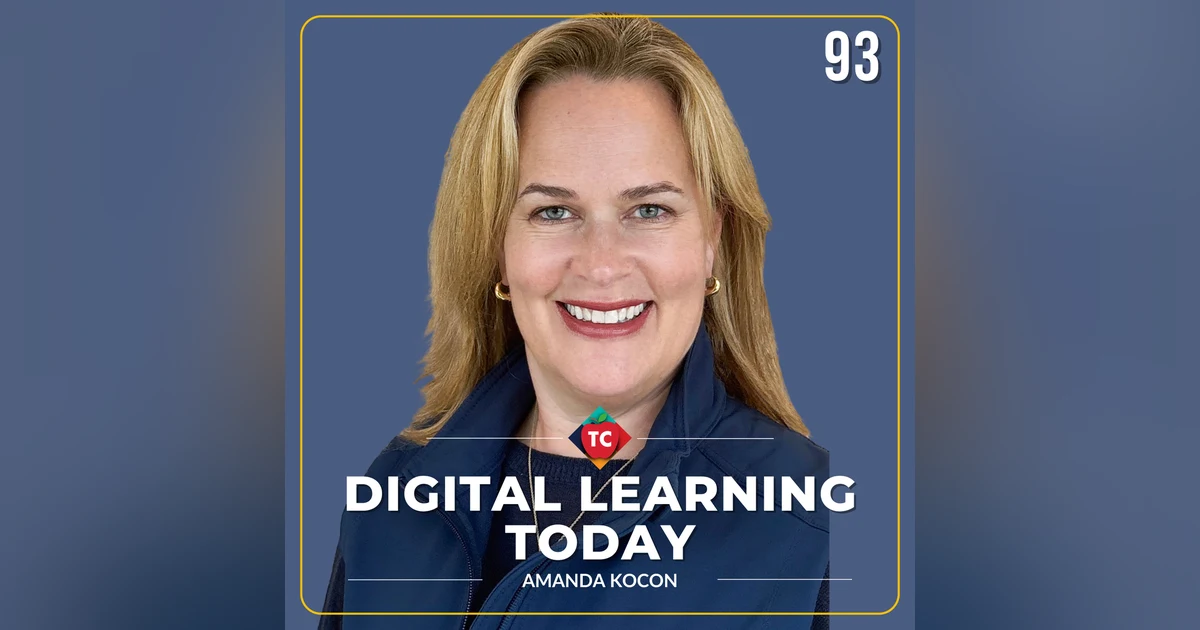
 Welcome to Digital Learning Today. In this episode, Jeff Bradbury explores the strategic systems that shape the future of education, focusing on Instructional Coaching, Artificial Intelligence, Professional Learning, and the latest Educational Technology Trends. In this episode, Amanda Kocon from Edmentum discusses how educators can connect academic and career readiness from kindergarten through high school, emphasizing relevance, engagement, and the role of emerging technologies like AI in education.
Become a High-Impact Leader:
This episode is just the beginning. To get the complete blueprint for designing and implementing high-impact systems in your district, get your copy of my book, "Impact Standards."- Strategic Vision for Digital Learning:Learn how to create a district-wide vision that aligns digital learning with your educational goals, transforming how standards-based instruction is designed and supported.
- Curriculum Design and Implementation:Discover practical strategies for integrating digital learning into existing curricula, creating vertical alignment of skills, and mapping digital learning across grade levels.
- Effective Instructional Coaching:Master the art of coaching people rather than technology, building relationships that drive success, and measuring impact through student engagement rather than just technology usage.
Purchase your copy of “Impact Standards” on Amazon today!
In This Episode…
Key topics we cover
- Road to Readiness (K–12):Helping students connect learning today to career options tomorrow.
- Motivation + active learning:Designing experiences that move students from passive “passengers” to engaged “explorers.”
- Personalized pathways + assessment:Using data and tools (including solutions likeExact Path) to support growth and measurable outcomes.
- AI literacy + responsible innovation:Preparing students for an AI-shaped world while keeping guardrails, transparency, and educator trust.
- Family + community engagement:Strengthening the home–school connection with clearer, more actionable learning information.
- Teacher support through insights:Turning classroom data into next steps teachers can actually use.
Practical takeaways for educators
- Start career-connected thinking early(even in elementary) so students can see purpose in their learning.
- Prioritize relevance and agencyto boost engagement and persistence.
- Use data to guide action—not just to report outcomes.
- Teach AI literacy on purpose:Pair curiosity with responsible-use expectations.
- Build a culture of motivationby connecting learning to identity, goals, and real-world pathways.
Chapters:
00:00 Introduction and guest overview 01:19 Edmentum’s focus on career readiness (K–12) 02:06 Moving students from “passenger” to “explorer” mode 03:31 Engagement through relevance + real-world connections 05:42 Building a long-term culture of motivation + personalized pathways 07:38 Measurable outcomes + purpose-driven learning 12:39 AI in education: potential + precautions 16:04 AI literacy + preparing students for a tech-driven future 17:02 Partnerships + tools that support career exploration 18:59 Supporting parents/caregivers with transparency 20:45 Building educator partnerships + trust 22:44 Final message: finding purpose + joy in educationResources Mentioned in This Episode:
About our Guest: Amanda Kocon
Amanda Kocon is Chief Strategy and Operating Officer for Edmentum. In this role, Amanda works to bring Edmentum’s long-term vision to life by connecting strategy to execution and ensuring that the organization’s goals for growth and impact are aligned with the current and future needs of our education partners and the students we serve. She has extensive experience setting strategy, growing and diversifying revenue across markets, and leading complex change. Prior to joining Edmentum, Amanda served as Chief Strategy Officer at The New Teacher Project (TNTP) and previously held senior leadership positions at JP Morgan Chase, including Chief Operations Officer of Global Futures and Options.Links of Interest
About Edmentum
Edmentum believes that every student deserves the opportunity to thrive everywhere learning occurs—whether they seek to catch up, stay on track, or chart their own path. When you pair Edmentum's comprehensive, research-backed learning acceleration solutions with empowered and supported educators, you can change the direction of students' lives. We partner with K–12 educators in all 50 states and 100+ countries worldwide to design, implement, and sustain the programs that deliver on this shared promise of learning acceleration for every student.Links of Interest
- Website:www.edmentum.comEd
- Facebook:https://www.facebook.com/Edmentum
- LinkedIn:https://www.linkedin.com/company/edmentum
Let’s Work Together
- Contact Me Today:https://www.teachercast.net/contact
Follow on Social Media
- LinkedIn:https://www.teachercast.net/linkedin
- Twitter/X:https://www.teachercast.net/twitter
- BlueSky:https://bsky.app/profile/jeffreybradbury.bsky.social
- YouTube:http://teachercast.net/youtube
Subscribe to This Podcast
- Apple Podcasts:https://podcasts.apple.com/us/podcast/digital-learning-today/id546631310
- Spotify:https://open.spotify.com/show/0n6S0WcyzQ1rpKWJ8iZPLJ?si=a1227a7c5e0b48e4
Check Out Additional TeacherCast Programming
- Digital Learning Today:https://podcasts.apple.com/us/podcast/digital-learning-today/id546631310
- Ask the Tech Coach:https://podcasts.apple.com/us/podcast/ask-the-tech-coach/id1067586243
- The Jeff Bradbury Showhttps://podcasts.apple.com/us/podcast/the-jeff-bradbury-show/id519685828
Book Jeff for your Next Event
Jeff Bradbury (ISTE “20 to Watch” Award Winner and ISTE Certified Educator) is available for keynote speaking, workshop facilitation, and live event broadcasting. With expertise in educational technology and professional development, Jeff brings engaging content and practical strategies to conferences and professional learning events.- Visit Jeff’s Website:https://jeffreybradbury.com
- Contact Jeff Directly:https://jeffreybradbury.com/contact/
~ ~ ~ ~ ~ ~ ~ ~ ~ ~ ~ ~ ~ ~ ~ ~ ~ ~ ~ ~ ~ ~ ~ ~ [gravityform id="2" title="true"]
Jeffrey Bradbury (00:00)
Hello, everybody, and welcome to the Teacher Cast Educational Network. My name is Jeff Bradbury. Thank you so much for joining us today and making Teacher Cast your home for professional development. This is Digital Learning Today, a show for educators, instructional coaches, and digital learning leaders. And on today's episode, we're going to be talking about you and your students going from K-12 classrooms into and throughout their careers. If this is the first time you're checking us out, head on over to TeacherCast.net/slash podcast. You can check out this and hundreds of episodes.
If you're instructional coach, you can head on over to your digital learningcoach.com and check out all of our blog posts, podcast instructional videos, and we would love to have you guys join all of our great communities. You can find more information over at teachercast.net. My guest today is the Chief Strategy and Operating Officer for Edmentum, and she's here today to share what's new and exciting as we head into the back to school season. It is a pleasure today to bring on my good friend, Miss Amanda Coken. Amanda, how are you today? Welcome to the show.
Amanda Kocon (00:54)
Thank you, Jeff. I'm great. it's really good to be here and good to be kicking off back to school.
Jeffrey Bradbury (01:01)
back to school season is here. So many things are great and happening. Of course, we've been supporting Edmentum all throughout the summer. Had a chance to meet everybody at the ISTE conference, and here we are looking ahead at the road in front of us. talk to us a little bit about what's going on at Adventum as students and teachers go back into the classroom.
Amanda Kocon (01:19)
Great
question. We are very focused as we have been for the past several years on making sure that kids really have a road to readiness that begins in kindergarten and all the way through career, really connecting academic and career planning, giving sense kids more of a sense of what's possible at every stage in an age appropriate way so that they they exit with a sense of possibility and motivation and the expansiveness of what their life.
fives can be as they exit K twelve.
Jeffrey Bradbury (01:52)
Let's talk a little bit about that. I remember being at ISTI and meeting everybody and we were talking about being on the road to readiness and how we're gonna connect these dots. What does that look like for Admentum these days? And what should that be looking like for our school districts?
Amanda Kocon (02:06)
School districts are really thinking a lot about not just what does it look like to be academically ready, although that is quintessential and super important that we attend to
Reading in mathematics, science, and making sure that kids have all of the skills and capabilities and collating soft skills to be ready. but it also means moving kids from what we call and what is called in the in the field the passenger mode to the explorer mode, that they're not feeling like they're in the backseat of their own
journey through school, but they're exploring and motivated and have a sense of what's possible. And it's connected to what active learning looks like, which we know is just tied to good learning science about how the brain works and is motivated both intrinsically and extrinsically. We we've been thinking about that a lot and bringing all of that into our products and into our services as a point of major innovation.
Across Admentum and across each and every one of our products that exist today.
Jeffrey Bradbury (03:11)
Let's take a look at that. Right now I'm getting ready to go into my middle school classroom. I teach sixth, seventh, and eighth grade digital media, and I'm always focusing on getting my passengers to become explorers. What could that be looking like in my classrooms? And how should I be thinking about creating lessons that are going to help my students succeed in their careers?
Amanda Kocon (03:31)
It's
a great question. you know, we think that there are really two things that are as important as any others from a just engagement. People talk about student engagement a lot. I think there's a lot of conceptions and even misconceptions about what true engagement of kids in their learning looks like. We know that relevance and agency are two of the most important things when it comes to creating real engagement, and that means making sure that kids
Have a sense of why they're learning what they're learning. I mean, we've all been through courses and coursework where we just don't get how this is gonna affect our life, how we're gonna use it. And so for Admentum, we've been bringing in a partnership with Road Trib Nation, and in other ways, bringing into our core courses real interviews with people that are in their careers. There's one thing to sort of hear about astronomy.
There's another thing to hear an interview by a NASA scientist on how she uses her learning from even middle school into high school in her everyday life. And so I think that relevance motivation is particularly important as we think about just the coursework, that it's not on the side, that it's part of how we're thinking about whether it's project-based learning or experiences to get a way to connect why you're learning.
geography or geometry or you know even even beginning math why it matters to to what might be possible for you in the future and connect that relevance.
Jeffrey Bradbury (05:08)
You know, as we're going into the classroom, this is the time where your building leaders, your district
Amanda Kocon (05:13)
Yeah.
Jeffrey Bradbury (05:13)
leaders are sitting here, they're gonna be s talking to teachers all over the place, going, These are the goals for this year. This is what we're looking for, this is how we're working. But with Admentum, you really are looking long term. How do we get that middle schooler to go through high school into their career readiness pathway? What advice do you have for district leaders these days that are looking to put together not just that one year goal, but really build a culture?
That's gonna support a student to go from fifth grade through and beyond.
Amanda Kocon (05:42)
I
think that often when we think about career, we think about that as something that happens after the fact. That it is somebody else's job to think about what this kid is gonna do. The thing we keep bringing into the work, and when we talk to educators and we talk to leaders, we actually know that kids that are motivated, that are engaged, are able to actually sustain in their learning better. And so having a sense of what they can use this for, having that
extrinsic motivation is huge for the day-to-day learning. Like you want kids that are kind of on fire about what they're learning, or at least are willing to sort of persist through it, knowing that it actually matters. and so my, you know, my my advice is to really understand where each kid is as much as possible to do that in a in a personalized way. it's one of the reasons that we've brought forward, obviously, Exact Path, which is one of the products that we use, particularly in elementary, very much in middle school.
it's a it is a K-12 product that helps understand and diagnose where kids are ahead or behind from a numeracy and literacy perspective and brings that into the conversation too. You want a kid who understands that they might be interested in medical. if we know now that they're a little bit behind in middle school, Jeff, to your case, there is still time to catch them up. There is still time to say, like, here's actually why it's important that you double down on on getting ready in math.
so that you can be ready for for this big career that you think you might be interested in, even if those interests later change.
Jeffrey Bradbury (07:14)
One of the things that I know I'm focusing on this year is making sure I know that my my lessons, my assessments somehow is measurable. I don't plan on doing a lot of multiple choice where it's a black and white, it's either right or wrong. I plan on doing a lot of project-based learning. Talk to us a little bit about where Edmentum can come in on a district and support measurable outcomes, both at the teacher level, building level, and district level.
Amanda Kocon (07:38)
we we actually don't believe that outcomes are the end point. They for us are where we begin. so every single one of the products and solutions that we bring forward start with a learning design that is purpose built for the outcome.
And what I mean by that is we take a very scaled approach to both learning design and research. Understanding that each and every minute that you spend and trust us and your kids' time is something that is moving kids' learning forward. So, from an outcome perspective, we like to talk about why the things we build work and really understanding the learning design around active learning, metacognition.
et cetera, and then demonstrate that by working with external researchers in particular to show the outcomes that you can expect. That comes with 18 ESA rated studies so far in counting. But probably most important, Jeff, is our ability to show you as an educator what those outcomes look like in in in real time with your kids.
One of the things we've worked on this year is a brand new parent report for Exact Path. We think that's important because we know that now more than ever, educators need the supports to show that the things that they're doing matter and are driving learning. And so we want to support that parent-teacher conference and really engage parents in what's happening in the classroom. How do they know what's working, what the time is being spent on, et cetera. And so
That parent report is something that as a parent I would have wanted, you know, with my own kids when they were in middle school in particular. And so we've we've built it with that in mind.
Jeffrey Bradbury (09:27)
I I I wanna bring up that word that you mentioned a couple of times, which is why, right? As administrators, we say to our teachers, do and and this is what we expect. And when we're in our classrooms, we say to our kids, do and this is what we're expecting. And when we meet with our parents, this is what we're doing and this is what we We don't always find the time to give the why. And I find that even in my classrooms, when I say to the kids, this is where we're going, this is the reasons why, let's try this together, and it may or may not work.
It's that why that's gonna help out with classroom behavior and management and all of those different things. Why is it important for Edmentum to help students, teachers, administrators focus on their whys?
Amanda Kocon (10:09)
The
why is what what drives all of us. I think that sense of of purpose, of mission, of my time is being well spent. And that is true for a student too. I think we owe it to our kids to make sure that their level of interest and engagement and just expansive options are available. I think you know, kids always
delight me and surprise me when you ask them, you know, what are they really interested in? What's motivating them, what's dri driving them, what what's holding them back? I think a lot of kids actually have a tremendous level of of self-reflection when when given a chance to to not just be told here's why we're doing something, but to understand, understand their why. I will say, you know, where we are
Literally obsessed is making sure that kids, kids can really only imagine the futures that they've been exposed to. and so we expand their their their possibilities of why and what when we expose them as early and as often to all the various careers and lives that are available to them in the future. we want kids who
don't just you know it is great to want to be a teacher or a doctor or a lawyer or the things that they sort of see on in in their lives or in in in in media. And it's also wonderful for kids to get a real sense of what their and is. I want to be a ballerina and an engineer is is pretty cool, right? and so really tapping into the expansiveness of of options for kids.
Jeffrey Bradbury (11:52)
Let's talk a little bit about that expansiveness for a second here. We are walking into a school year with more possibilities than ever before, thanks to brand new emerging technologies. Teachers right now are trying to figure out: is it for me? Districts are trying to figure out do we want to push the emerging technologies or do we want to go device less. Where is Edmentum sitting in all of this? We're trying to prepare our students and our teachers for their careers and futures.
But we're also very noticeable that not everybody needs a device constantly. Talk to us a little bit about the AI strategy that Edmentum has and how we can be successful this year when there's so much noise coming at us from emerging technologies.
Amanda Kocon (12:39)
You
I think the the trick for all of us is to really separate as as one of my favorite statisticians says, the the signal from the noise. And so there is a lot of noise. I do think really getting specific about what a school day looks like, what a week looks like, what a month looks like,
Edmentum certainly does not believe, nor do I believe, nor does anybody here who are parents and educators ourselves that kids should be on devices or on screens all the time. They have a role to play, and that role needs to be very purpose-driven. And by that I mean literally designed for the moment and for the need. And it's part of an overall program. It is not the thing.
it is certainly not the silver bullet. It is it is part of programming. I would say from an AI perspective, AI is actually not new. it is certainly had its moment and is continuing to have its moment as a consumer technology now as we all get sort of exposure to it. you know, Edmentum really believes in sort of the potential of AI.
but also trusts in humans and frankly in educators. So we see the risk too. And what I mean by that is it is really important that any time AI is used, that it is disclosed, that it is understood, that it is done so with tremendous security, particularly to students and educators, and that it never overtakes educator judgment, especially on high stakes things. So while it can be a tremendous efficiency,
and certainly has helped us from an engineering perspective bring features and functionality forward. It is always done with tremendous intent and the research that goes goes behind it. And that's super important. I do think we're in a particular moment on this, and that we should all walk, walk carefully and thoughtfully into what are we using, why are we using it.
and what purpose and outcome is it intended to drive it? And and and hold ourselves and frankly the industry accountable.
Jeffrey Bradbury (14:54)
that answer and as we're recording this right now I'm just a few days away from having parents and teeth and students come in and do that, you know, the walkthrough. And I know I'm gonna get the questions of W you know, what's the AI philosophy? What are you gonna be teaching them? How are they gonna know? And you know, I'm the guy that teaches Google search, which is all AI based at this point.
Amanda Kocon (15:13)
It is
Jeffrey Bradbury (15:13)
So how do you formulate the right answer, but the correct answer? But also how do you make it be something that the students are wanting?
to move forward with. And and so, you know, we're here in this back to school area here. Talk to us a little bit about some of the new things that we can expect from Edmentum and what are you excited most as you sit here and look at the brand new school year?
Amanda Kocon (15:36)
And
I think Jeff, one of the things that we're we are excited about and we think is pretty important, which is just a follow-on from our last part of this conversation, is it is incredibly important that our young people have AI literacy. And so when we talk to parents, when we talk to educators, that is one of the things that we talk to them a lot about. they need to understand how to use it, how to prompt it, how not to use it, when it's appropriate, when it's not appropriate. And as you said,
It is in almost everything our young people are actually engaging in from a consumer perspective. You can't Google something without engaging it anymore. And so really understanding how to question it. and so that leans a lot on how we think about critical thinking, literacy, media literacy becomes incredibly important. And so we're pretty excited about some of the courses we've brought forward that really drive at AI literacy and support educators and supporting kids in the world that they are
They are walking into and sitting in today. From a back to school perspective, we are very excited to continue expanding on our Road Trip Nation partnership. And so bringing, again, real career interviews into core curricula. And so it will no longer just be on the side, but will be part of those math courses, those English courses, science courses, social study courses. And so it kicks off the course. How might you use this? How do you think about this differently?
Is pretty important. We also are bringing forward something we call Ed on Call, which is support for kids, content area support. It is help on weekends and nights, seven days a week, and it is educator supported. So educators are there and able to talk to kids and make sure that they have really the homework help they need as they're working through and making sure that that's available.
This will also be the very first full year that we have with major clarity in our portfolio. This is really bringing the confluence of everything we do from an academic perspective and bringing it into career planning. And so you're able to do not academic planning on one hand and then sort of career planning on the other, but you can bring those two things together and really think about what is it I'm interested in from a career exploration perspective. Begin to plan your academic coursework as well as a lecture.
At CTE on the road to readiness for a career. And then finally, and I talked about this a little bit ago, very excited for the work we're doing to bring transparency on learning outcomes to parents and to caregivers through the Caregiver and Parent Report in Exact Path. And so we're going to continue to do more of that as we make sure that educators are supported.
and really being able to show the outcomes of of the work they're doing in the classroom every day.
Jeffrey Bradbury (18:29)
Let's expand a little bit on that. You know, the idea of supporting your parents, being, you know, supporting your communities through our students here is really important. We talk about it a lot here. I know myself, I want to do more with parent communication, but it always comes at the price of now I don't have time to spend on the kids. Why is it important that Edmentum and parents are are hand in hand with this and being supported by this these new district initiatives?
Amanda Kocon (18:59)
You
know, we think that really the relationship, you know, every in ideally each each kid comes to school with a team. there is a team that is behind this child. it is made up of the educators in the school and the caregivers at home and other trusted adults in their life. And so making sure that all of those team members are on the same page about
What the child is experiencing at school, increasingly bringing that forward. I think, you know, in an ideal world, parents really do have visibility and not just through a grade portal, but some visibility into how their kids are spending their day. What's exciting them, what's not exciting them, how they are actually progressing. We're being really honest about where they're ex where they're ahead and frankly where they're behind.
so that they have an opportunity to get supported and and to catch up while they're still while they're still in in K-12 education. There are plenty of opportunities with the right interventions to make sure that kids really get the support and the and the help that they need. But we've got to be honest about gaps that exist and close those as they move as they move through through their K-12 experience.
Jeffrey Bradbury (20:23)
Talking today to Amanda Koken all about the great things that Admentum is doing to support students and classrooms, I wanna end today by talking a little bit about your educator first partnerships. When a teacher is being supported by Edmentum, what does that look like? What does that relationship look like? And how can we reach out to get more information to better support our students through working with Admentum?
Amanda Kocon (20:45)
That's
a great question. Edmentum has been it is a company founded by teachers, for teachers. we spend literally tens of thousands of hours in classrooms and with with teachers. Each one of our partnerships, we like to say that we do not ask for trust, we earn it. from our educators, we do lots to get feedback directly from educators on what's working, what's not working, what they wish to be true. and that is really what
what is the foundation of any product roadmap or services that we we bring to the forefront. So we always want to hear from educators. We are on all of the socials and we'll always respond and certainly respond on admentum.com as well, making sure that we're reaching out. But you know, in our teams we have scaled support teams that reach out, talk to teachers, talk to educators, talk to our administrators literally every day. It is their
it is their joy and privilege to do so, and making sure that we're hearing from and addressing concerns. We know that teachers and administrators in particular's jobs have gotten harder and harder. We've only added to the things that we ask educators to do. and so the more that we can be on the front lines of understanding those those jobs, understanding the goals and aligning the programming that we participate in or bring forward.
with educators to those goals, we actually feel like we we get a chance to earn that trust.
Jeffrey Bradbury (22:20)
Manda, I want to say thank you so much for coming on and for the partnerships that we've had all throughout the summer. Before I let you go, I have one thing I'd like you to do here for me. Look into the camera, speak to all of the teachers, speak to all of the administrators out there. What is one thing today that they should be walking away, maybe from this conversation, or what can we be looking forward to as we head into the brand new school year?
Amanda Kocon (22:44)
I hope for all of the educators and administrators that this year you find that your why, that true essence and joy in the work that we all get the privilege of doing, which is supporting these tremendous young people and unlocking their potential so that they can thrive now and in the future.
Jeffrey Bradbury (23:05)
Amanda, thank you so much for coming on. Of course, you can find out more information over admentum dot com. And we have all of the great resources that we've had at teachercast.net forward slash edmentum from all of our shows this summer, from ISTI to today and beyond. Amanda, thank you so much for your time today.
Amanda Kocon (23:20)
Thank you, Jeff. This was really fun.
Jeffrey Bradbury (23:22)
And that wraps up this episode of digital learning today. If this is the first time you're checking it out, don't forget to head on over to our YouTube channel, Spotify, Apple Podcast, hit that subscribe button, hit that like button, and we would love to hear from you as we're starting off our school year. Leave that comment, let us know that you guys are out there and what you'd like to hear on our next episode of Teacher Cast. So on behalf of Amanda and everybody here on Teacher Cast, my name is Jeff Bradbury, reminding you guys to keep up the great work in your classrooms and continue sharing your passions with your students.