Finding Ways to Say What "Can't" Be Said


 RSS Feed
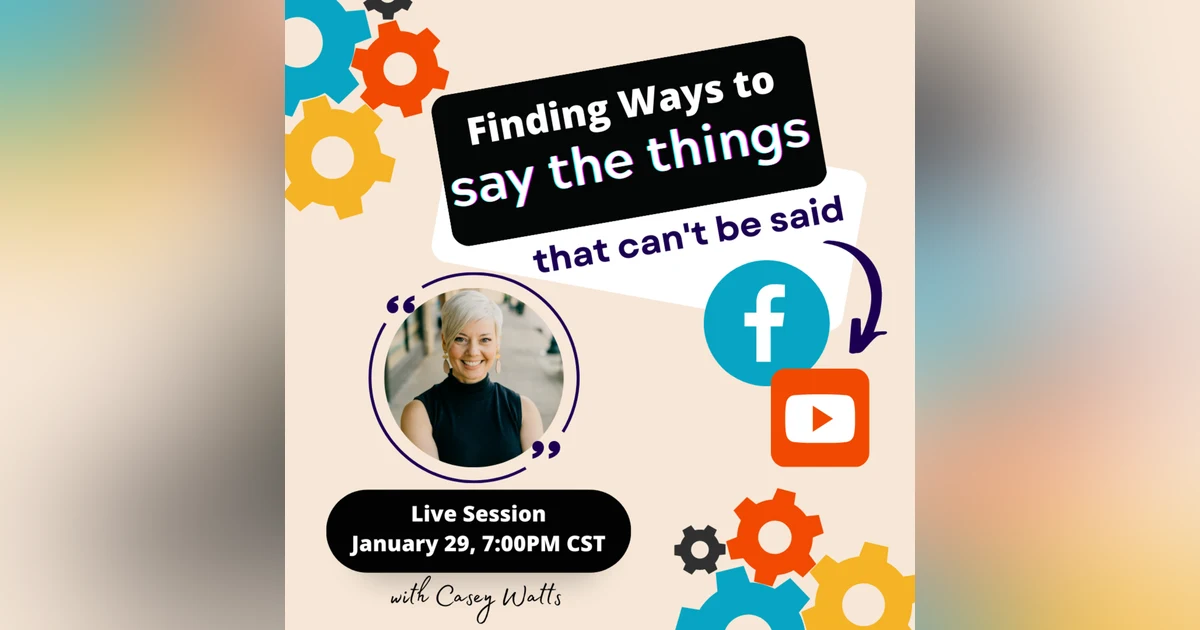
For just a moment, I want you to imagine you're in the beginning phases of what could turn into a crucial or difficult conversation. You feel yourself getting offended. Maybe you notice you're beginning to disagree with what's being said by the other participant in the conversation. Your heartbeat begins to increase. You feel heat creeping into your earlobes or neck. You know that you WANT and maybe even NEED to say what's on your mind, but you just don't know how (without it being a complete bust). Chances are, if you're having the feeling of NEEDING to say what's on your mind, it's a gut instinct you should listen to. But actually following through with this instinct in an appropriate and positive way is challenging IF you don't have the right tools and strategies to practice! In this live, I'll be sharing about one of the most effective ways to "say what can't be said". More often than not, we feel we CAN'T say the things, when in reality, these are the things that SHOULD be said. And it CAN happen with the right strategies!
Download copies of the Perception Checking Sentence Stems and the Perception Checking Reflection Guide!
#leadershipmatters #instruction #instructionalleader #instructionalcoach #betteryoubetterteam #betteryoubetterleader #collaboration #education #teamofteams #principals #teamleadership #PLC #plcs
--- Support this podcast: https://podcasters.spotify.com/pod/show/catchingupwithcasey/support0:00 Welcome to you and another collaboration conversation where we talk about anything and everything that has to do with building pieceof Vision driven teams, because this is where you Unleashed your impact. I am KC W impact coach and consultant and of course, the host of this show. Now Today's show is going to get started in just a few moments, but I want to take a quick pause real quick for you to introduce yourself in the comments. Let us know. Snow, who you are, where you're from, and what it is, that brought you to the show. And then I also want to get really real with you and ask you a question. Okay, so here goes, have you ever made assumptions?
0:46 I'm guessing the answer is yes, because everyone has made assumptions, right? Have your assumptions ever led to either negative consequences or stagnancy? I'm betting that your assumptions more than likely have led to those things, because that is true for me. I have been guilty of making the assumption that when two or more people are gathered together collaboration is naturally happening, or I've made the assumption that when teams get along, they are generally productive and effective. And I've also made the assumption that because we're working together, clearly, Lee. We all know the direction that we're moving and that is just not true.
1:37 Those assumptions have lead to ineffective teams that are going nowhere, fast. And I know that we want something different than that. We want teams, who can survive can Thrive instead of survive. We want teams who are less dysfunctional and are more of the kind of thing that they deserve to be a part of. These are the kinds of teams that can Propel your organization and benefit, not just the people who are on the team but can benefit the organization as a whole. Okay. And I want to tell you about something that can help them to get to this point where we're letting go of those assumptions and we're utilizing people. Well, so we can work efficiently, productively in toward a vision.
2:29 I want to tell you about how How you can build that cohesive Vision, driven team, let me read to you first a quote from Christine Caine. It's one of my favorite quotes to build a strong team. You must see someone else's strength as a complement to your own weakness and not a threat to your position or authority, okay? But I want to dig a little bit deeper. Sometimes we have this surface level knowledge of what our strengths and weaknesses are But how great would it be if you could dig down to a deeper level and truly understand, everyone's Geniuses their god-given talent, the kind of work, that brings them fulfillment and because it brings them fulfillment.
3:18 They are building capacity and you know what that built capacity helps your team to thrive How wonderful would it be if your team members knew each of their types of geniuses new? They're working competencies and new. They're working frustrations. I am going to be providing all of that information in an upcoming Marco Polo. Share Cast, we're going to be diving into the six types of working genius developed by Patrick Lencioni. And we're going to be thinking about how you you can recognize provoke and cultivate those Geniuses and support teams so that they are cohesive and All Vision driven so that you can Propel your organization forward faster and better.
4:17 I want to share all of this with you. If you want to learn more, you can go to bit.ly slash better. You better team, this will end Feb. E8. So registration closes February 28th. Be sure you get in before then if you want to learn more, just put in the comments, learn more and I will hit you up with more information. Okay. I'm excited to begin today's content so if you are ready, drop a hashtag ready. And let's get started. Hey everybody, welcome to another collaboration conversation. I'm really really excited about this episode tonight because we're talking all about how you can say the things that can't be said. Now, before we get started, I'm already seeing some people drop in the comments.
5:15 Hashtag ready. I want to know who you are. What your role is. What brings you to this year. Cast tonight, okay? So be sure you're putting those things in the comments so I can see who I am. Who I'm joined with because you'll notice the past three episodes. I've been with a guest and tonight, it is just me and this clean white board. And that's one of my very favorite things is to just have this blank whiteboard and start to go at it with all of my thoughts. And I'm going to make my thoughts public to you tonight. About how to say, The things that can't be said, okay? So let me know.
5:57 Do you follow. Are you following me? When I say how to say the things that can't be said? What do you think that means drop in the comments? Something that you think it means. When I say we need to say the things that can't be said anybody has some ideas or maybe you have a situation where you're like, there's this thing that needs to be said and I can't say it because maybe you don't know how. Okay are you are you following me? Just put hashtag follow or put? Yes I'm following you or tell me about your situation. Now while you are kind of thinking about that and thinking about the different situations in your work or in your life where there are things that man I really need to say some things but they're just not coming out of me or maybe you're kind of questioning.
6:48 Do I need to say this? Do I not That's the case this work that we're going to be diving into is going to be perfect for you. And it's coming from the work of Susan, Scott from Fierce conversations achieving success at work and life one conversation at a time. Now, this is a fantastic read. I mean you can see just from all of my sticky notes that it is full of gold, okay? Lots of great information in here and I it's interesting to me when I look at this cover. She has the word Fierce here, if yours conversations and a lot of us think about Pierce conversations as just- conversations.
7:29 But how much of that really is true. I wonder when we hear the phrase. Fierce conversations, weird pooled to feel negatively about it, because we think of fears, but because of the experiences that we've had, right? Like if you've only had struggling experiences with difficult or crucial conversations, Insane things that we're truth but made you feel uncomfortable. It feels -. But I want to read some of these synonyms that she has up to the side because they are fantastic and they're not all -. So let me read some of these, these synonyms Fierce robust intense, strong, powerful, passionate, eager unbridled, And I mean, which of those is standing out to you and makes you feel less negative and more positive about having a fierce conversation or a crucial conversation.
8:34 Let me read it again and put in the comments which of these really resonates with. You really would give you more confidence and state of anxiety when you're approaching the things. That can't be said, robust intense. Strong, powerful passionate eager unbridled, what is standing out to you? There are so many great synonyms there but none of them really equate to - right. So I'm seeing strong powerful. Absolutely, yes. Hey Ashley, I'm glad to have you here powerful and guys if you there's a link to allow string yard to show, Your information on like show your name and if you don't approve it, it'll just show up this Facebook user.
9:27 You can also tell me in the comments who you are. Okay. So like powerful, I want to know who said that so I can give you credit. Yeah. So we can have Fierce or crucial conversations without it being attached to negative experiences. And tonight, I want to tell you about one way that you can approach some things that Need to be set because here's the thing and Susan Scott talks all about this in this book, we have this thing called Instinct, right? Everyone of us has a gut instinct for a lot of us and I can say I am totally included in this for a lot of us. We get that gut instinct for what is right? What is wrong?
10:18 What should be done? What should not be done? What should be said. What should Not be said, and so often because of our anxiety and fear, we push it to the side and when you practice the habit of doing that of pushing it to the side, your brain will start to ignore those gut instincts. We don't want to ignore them, right? Most of the time, we have those gut instincts for a reason. So we want to figure out. Okay, how do I lean into that instead of avoiding it so that we can have more productive? Ships, stronger relationship. So we feel confident about the work that we're doing and we're actually helping our organization to move forward. Okay.
11:02 Do you feel me? Do you hear me there? Okay, let me know if like you're following me. Hey Tammy, it's good to have you. Okay? So let me tell you three things that make this happen, three reasons, we don't say the things that need to be said or three things that happen, okay? And I Want you to put in the comments, either the numbers 1 2 or 3 to let me know which of these things happen to you. Okay? So here we go. The first thing that can happen is that we have the idea of something that needs to be said, and we we ignore it for fear that it will cause conflict. Okay, so one if You know, what you need to say, but you just don't say it because you fear it will say it will cause conflict, okay?
11:58 To is, you know, what needs to be said, you lean into your your emotions and things come out of your mouth and because you haven't really spent some time processing, it it comes out the wrong way and causes friction, okay? So that's the second thing that can happen. The third thing that can happen. Is that you think about what needs to be said? And you believe I'm going to say something, but what comes out of your mouth is actually the opposite of what you want to say. Okay, let me give you an example of that.
12:39 Someone comes to you and they say. And this is a very basic example, but someone comes to you and they say, hey, we really need. We really need someone to complete this piece of the project. Can you come and do that for us? You know, that you are overwhelmed, you already, you know, that too much is on your plate. And maybe, you know, like, I'm not going to be great at getting that accomplished and instead of saying those things that need to be said, what comes out of your mouth is? Yeah, sure. I can do that and maybe it's not that excited, like, you're not that excited about it but you might be like, yeah, I can do that, right? So there is this big difference sometimes.
13:21 X between what we think and what actually comes out and we make public to people. So we're going to be going through one way that you can say what needs to be said, Autumn saying 3 is what happens for her. So autumn what happens for you is exactly what happens for me. Sometimes I am thinking one thing that because I don't really want to cause friction or I don't want to push the boundaries and I'm just kind of like Go go with the flow, kind of person, I will resort to just kind of agreeing or saying the opposite of what I'm thinking. Okay?
14:01 Michelle, this is really interesting. You're saying, you could fall into the categories, one, two, and three, depending on the day and I'm going to add to that. It could be depending on the situation to, right? So, if it's something that I'm really passionate about, my instinct is to, I've gotta say what needs to be. I said and you know what, everybody needs to hear what it is that I have to say because this is what's right? Or I can't believe everyone else is thinking these things. Surely, they need to hear what I have to say and then out it comes. And it causes disruption or it causes people to completely shut down and decide that they don't want to listen to what I have to say, right?
14:46 Because I'm coming to it with these strong emotions and I'm attaching my Shins to it and because I'm attaching my emotions to it often. What I say comes across as accusatory, and we don't want that to happen, Okay? So, let's talk about what you can do to eliminate this from happening. Let me tell you, one of the motor, my favorite things that Susan Scott says, in her book, I'm going to read just a few things from, for, for us here. Here's a quote that she says the most valuable thing. Any of us. Can do is find a way to say things that can't be said, listen to this piece of her book, okay? And give me some Emoji reactions. If some of this really resonates with you. My role is not to say what is easy or what we all can say. But to say, what we have been unable to say Whew, doesn't that just hit you at your core like?
15:51 That makes me feel so convicted, especially knowing the organization, in which I work, we work for schools, most of us. If you're here, I'm assuming you work for schools and who is it that we're really advocating for like, who's at the core? It's not us, right? We're not necessarily advocating, always for ourselves. We're not necessarily advocating for The procedures were not advocating necessarily for the buildings and the structures that were in, who are we advocating for? We're advocating for the kids, right? So any time we choose not to say what people are, when we choose to ignore what needs to be said, what people are unable to say, guess who we are affecting at the root of it.
16:44 We are affecting the students and the progress that they Are able to make and that should really let us lean into having those Fierce conversations. Okay, so tonight we're going to talk about is this one thing called perception. Checking perception, checking is what we're going to be practicing. And I'm really going to challenge you this week. I'm going to give you some tools at the end of this episode to take with you to practice. This strategy, this strategy is goal is just one way that you can say, what needs to be said, even in times where you feel like you can't say it. Okay, so I'm hoping that it really gives you the confidence to do that.
17:35 I want to read to you a little bit more of what Susan Scott says to help you think about perception checking. So here's what she says. We need to bring some of our private thoughts and feelings into the neutral zone by noticing them without attachment. They aren't right or wrong, they just exist. Okay, so we're going to talk about how to do this. How are we going to let the person wearing conversation with know what we've been thinking and feeling without inviting defensiveness? As though, we are interjecting our thoughts as like the capital truth, okay?
18:16 So I'm going to turn to my whiteboard. Hopefully, you can still hear me and we're going to be thinking about this T chart and this T chart represents your thoughts and what we want to bring to light. Okay, so we have our private thoughts. We have our public thoughts and then we have this Zone in the middle and this is what we're going to call the neutral zone. Now did I spell that rag in eut Ral? I think I did neutral zone. Often. What happens is we have these private thoughts and when we make them Club public we have failed to take them through the neutral zone. And so what comes out as public often is not What we intended it to be, it is either not what Our Truth is or it has come across as defensive, okay?
19:15 Or the other person can see it's be offended by it. So what we're going to do is think about this neutral zone as like a filter, okay, we're going to filter through and think about how we can neutralize these thoughts. So that we can say what needs to be said. Because again remember, You have this gut instinct, it's telling you something and you want to follow it, but you want to follow it in the right way that is helpful and beneficial for everyone. So what I'm going to tell you now are some questions that you can ask to help you filter through those thoughts. Now I will tell you this is take does take some practice, it takes a lot of practice and you will fail and that is Uh, okay, the trick is, when you fail at this that you let the person you're in conversation with know that you're trying out something, you can let them know that you feel like you failed at it.
20:18 You can get feedback from them and then you can go into a different conversation at the ready, right? This takes practice but it also takes vulnerability. If you don't aren't willing to do the practice, if you aren't willing to get vulnerable and work, Through some of the difficult times, then you never get to a point where you are. I don't want to say comfortable having a crucial conversation, but you're okay with it because, you know, that what can come out in the end is better than having not said anything at all, or having said something that came across as everyone's truth, right? And that's why it's called perception. Checking, because everyone comes to the table with With their own perceptions.
21:06 Okay. I'm going to get a drink of water and I need to get my notebook from my bag while I'm doing that. Would you put in the comments, what you're thinking, what's on your mind right now about this? What is standing out to you, what's on your mind? And what is it that you're really thinking about trying out with some conversations? You know, need to be had give me two seconds. I am still here. I'm just grabbing something. Did you see my workout pants? Because almost every time I have these live sessions I've got at least some would have some cuteness going on up top or I try and workout pants. Okay, here we go.
21:52 Are you ready? So we are give me a hashtag ready. Let me know that you are in the comments. We are going to be looking at four questions, that help you to filter your private thoughts and make them public because we want to make them public. Here we go. All right. The four questions are just going to pull this off. Who. No. Sorry what? What who How and when, okay, these are the four questions that are going to help you take your private thought, neutralize it and then make your thoughts public. Okay?
22:49 What, who, how? And when now, you're probably already making some assumptions about some of these questions. It'll be interesting to see how would I say As to what you're predicting or assuming I will say, okay, so be ready to be real. Real, with me in the comments. When you have a private thought. So let's say that my private thought is and I will be really honest with you. I had a conversation with a colleague of mine, not too long ago, probably in the last week. And one of the things that was really kind of rubbing me the wrong way, is how she was talking about this new program. We're thinking about implementing and it was just one of those like, Like I felt like she was kind of stuck in her ways and really focused on like getting good scores and why are we changing this program?
23:50 And my ears were starting to get red. You know how you feel when you're like, I can't believe we're about to have this conversation. I know I'm going to say something that that is not okay? Because I'm angry. Right? I want to take that private thought of. Are you kidding me? You are focused so much on the scores that we're not thinking about what's best for the whole child. Okay, I don't want to say that out loud because that is accusatory, right? Did you hear how I said you are you are right? You are thinking about good scores. So you are not considering the whole child.
24:31 You are not thinking about how to take this child from this grade level all the way to where they will be as a Functioning citizen of the world. Okay? So I want to take that private thought and I want to filter it through these different questions. That's why this takes practice and time because you really have to pause and think. So, here are the questions I'm going to ask What assumptions am I making? That's first and foremost. What you want to ask yourself? What assumptions am I making could I be making assumptions about this teacher? Am I assuming that? She is just focused on getting the good scores versus the whole child. Right.
25:16 I could be making some assumptions there. What assumptions am I making? The second question, who? Who benefits if I say this private thought and who suffers? Who will benefit if I make this private thought public and who suffers if I am realizing that I've made some assumptions and who is going to benefit? Could be myself because I've gotten things off my chest and who is going to suffer is the teacher and our relationship then. I know that I need to find a different way to say it or not, say it at all. Okay, so that's one great way.
26:01 That this neutralizing Zone can be so helpful because there can be private thoughts that truly don't need to be made public. But if you're having a gut instinct sometimes it's not that the gut instinct is I have to say it. I have to get it off my chest but the gut instinct maybe is hey yours, really struggling with some assumptions that Have take a step back and just give it some time, give yourself some time to reflect and be self-aware and self-help, some self-perception and social perception so that you can come back to it again with a different mindset, right? So our gut instincts, tell us different things you have to be really aware of what it is that it's telling you.
26:47 So, we thought about what, what assumptions am I making and then who benefits if I say, say something who doesn't or like, who suffers And I want to take that a step further, you know, how earlier we were saying how, like, our kids are at the root of this, right? So we're advocating for our kids. Imagine if I had said, what was on my mind that private thought that I had? Who gets the brunt of it. It's not necessarily me that gets the brunt of it. Although our relationship is affected. But it's the students because guess what's going to happen with that teacher.
27:30 When I make this assumption and I make that ugly private thought public and she goes back to her classroom. Guess what's going to happen in that classroom? Is she going to have her best teaching moments? Is she gonna have the the I guess motivation. That's the word I'm looking for. Is she gonna have the motivation? To instruct her students to the best of her ability. Probably not probably not so guess who suffers the students suffer. Okay. How this is the one that a lot of people make assumptions about when I get to it? Because a lot of people want to say that the question is, how do I say it? How do I say what needs to be said, but that's not the question you're still filtering through to decide if we're going to take that private thought and make it public the. How question is actually this How does this, like what I'm thinking and what I'm feeling because you do it, all of your thoughts, are attached to some kind of emotion, right? And they always will be.
28:37 How does this thought or feeling, fit with our values and goals? How does it fit with our Collective values and goals? If you can decide that it does fit in well, with your values and goals as an organization or as it, Team or as a partnership then you know that it's something you want to move forward with, if it does not fit in with your values and goals, then you may have to do again that self-reflection and take a step back and move away from saying or bringing that private thought public, okay? So the fourth question is when, when is it the right time is now in this moment? The right time to take this private thought public or do? I need to save it for another time? Now, here's the beauty of saving it for another time. The beauty of saving it for another time. Although it's not always possible is that you get to practice and rehearse what it is, you want to make public. You can think about how you want to make it public. Okay?
29:53 So let me know of these questions Because we've gone through four of them what assumptions in my making, who benefits, and who suffers if I say, what's on my mind, how does what I am thinking or feeling fit in with the, the collective values and goals? And then the last one when when is the right time to say it of these four questions, what is the question that you feel like you struggle with most? Or do you feel like will be most important for you to consider? Siddur when you're trying to neutralize your private thoughts, right? Because when we take our private thoughts to the neutral zone, we're almost detaching them from those emotions weird. Attaching them from what our perception of right and wrong. Is of, who is right, and who is wrong, okay? So I'm seeing Jewels.
30:48 Hey, Jules Jules is saying what? And who yeah. And if my struggle is what? Yes, Ashley, the what question I definitely make too many assumptions that are usually wrong. We all do it, it just happens and we wish that it didn't happen, but by golly, it happens too often. Okay, I'm really excited about this next part. So we've gone through the for filtering questions and now what we want to do is think to ourselves. Okay. We've I used our private thoughts, our guts telling us, we need to move forward. And say the thing that can't be said we are no longer going to allow ourselves to say the opposite of what we were thinking.
31:40 We are no longer going to allow ourselves to make these private thoughts public in an accusatory or derogatory way or defensive way. And we are no longer going to just a Ignore what needs to be said. Okay? If you're feeling like yes I've got to move forward, it matches all of these questions I've gone through them. I filter. Now I'm ready to make it public. The next thing you're going to do and We're going to ask for permission. This is the kicker. You want to do this every time you decide to make your private thought public.
32:25 And here's why when you ask permission to have someone check your thoughts, you are letting them know that you're bringing a thought to them. That is separate from your emotions. It's detached from your emotions. It is just a thought it is, not right? It is not wrong. It's not fact. It is just a thought and they get to come at that thought with their own perceptions and be able to analyze it with you, right? Isn't that beautiful? Isn't that beautiful? Will it work out that way? Every time?
33:06 Absolutely not. And remember earlier I told you, you're gone. I fail, I have failed multiple times. Hey Allison. I have failed and you're going to the trick is to keep persevering, okay, keep practicing. When you ask permission, you are simply asking them. If you can do some perception checking and I have a great tool full of sentence stems to help you think about what that looks like and sounds like I'm going to make this available to you. It's going to be right here on the leading collaborative teams, Facebook group and the files. So after the show and a pop, those into the group. If you're not a part of our leading collaborative teams group, go ahead and join super easy. You'll see all of the live sessions there. Plus all of the resources that I mentioned in these live shows, it also will be in my, on my website. So if you wanted to go to like, get my newsletter and Subscribe to that, super simple bit.ly slash Casey's newsletter and you can get this plus other resources that I email out every Wednesday, okay?
34:21 So here's how you're going to ask permission. And hopefully you guys can see these sentence stems but I'm going to read them to you. My actually I think I might even make that a little bit bigger. So here are some different sentence stems that you might use when you're asking permission to check your private thoughts when you're making them public. Okay. The first one, super simple would you like to hear something? I'm maybe it's feeling thinking wondering right now. Do they have the option to say? No, absolutely. Especially if you're in a tense situation, they might say no, not right now.
35:03 And guess what? That's okay. What are you gonna do? Then you're going to walk away and say okay? I respect that walk away. Come back to it later. They may just not be ready. Okay. The next one while you were speaking, I had a thought I would like to check out with you. It lets them know, two things. Number one while you were speaking. I had a thought I would like to check out with you. Huh, while you were speaking meaning I'm listening to you and I'm taking in everything that you're saying. Now I want to check out something with you, I want to check out some of my thoughts. What?
35:44 Yes, I love it because you're letting them know. I'm going to bring something for my mind and share it with you. And this is a really vulnerable spot to be. But how well respected is that the next one. Can I share my perception for you to check? Does it have to be complicated? Know these systems can be so simple. There are some things I've been thinking that I'd like to run by you. Is that okay? You're getting permission. I want to share what I'm thinking. If you're open to hearing it, as I've been listening, I've had the sense that and then you state the feeling what it is you're thinking what does you're wondering?
36:25 Is this accurate or is my thinking off? Wow. How different is it? To allow them to come in and analyze? Those thoughts that you are having alongside you. That is a crucial conversation, a partner conversation. I love it so much. This just makes me so excited. You've been telling me about blank And you seem blank, is there anything to this? Or am I off base? Can I have your permission to check some of the thoughts that have been rolling around in my head?
37:05 And then finally, the last one is there are some thoughts feelings or Curiosities, I've had, and I'd like to check what might be accurate or inaccurate. Okay. Again these perception checking sentence stems or completely free. Able to you. All you have to do is come to our collaborative teams group leading collaborative teams group or go to my newsletter or you know what you can just leave me a comment and I will get this to you. Okay? All right. So how are you feeling about saying the things that can't be set? Do you feel like now you probably can say some of those things that you haven't said or you said in an inappropriate way give me a A big capital, Y TS if yes you're feeling more confident, like this is something you actually can do, okay? And then I also want to share with you something else. That's kind of helpful, especially as you are practicing this because you may say to yourself, I'm not quite ready. I'm all ready, to make the plunge into this. I'm not ready to ask someone, if I can. They can check my perceptions.
38:21 Here's a way that you can practice without having to go through this with someone right off the bat and that is this perception checking guide. Again, this is going to be available also. But the perception checking guide is a way for you to make some notes. While you're encountering some different situations, where you feel like your gut instincts are at play right there, kind of pushing you or pulling you to say or do something yours, not quite sure yet. Not ready to do perception checking but you can make some notes here and this can be a way that you practice. Okay, here's what's even. I'm going to challenge you to do even more when you get to a place where you feel a little bit more comfortable and you've had a conversation or meeting, you write down your private thoughts. You think about practicing bringing them to the neutral zone and you think, okay, if I was going to make this public, here's what I would say and you write it down. Take this sheet to the person or a person who was in the situation and say, okay, this is the conversation we had or this is the meeting we had, I want you to read through this and tell me.
39:39 How do you feel like you would have responded in that situation? If I made my thoughts public in this way? Are you following what I'm saying? A great vulnerable place to allow people to follow you and to allow people to want to do that. Deep self reflection with you. All right, so you have two things that you can take with you after tonight's episode, the perception, checking sentence stems, which are fantastic. And the perception checking guide. All right. Now we're coming to a close. I want to know after tonight what it is. You are thinking, you need to say that can't be said and you don't have to put it in the comments if you want to just jot it down or you're thinking about a situation from your last couple of weeks that maybe you really want to make them public. And now you have a way to practice it, jot it down on a sticky note, put it in your phone, you can put it on comments on.
40:50 Love to see that. I would be more than thrilled. If you sent me a private message on Marco Polo or Facebook or Instagram or on YouTube, my email and you let me know. Hey, this is a time that I tried this out or hey, this is something that I'm thinking about making public. Can you help me out with what? That could look like? I would be all over. That would be so fun for me to have a conversation. Ation with you, okay? And finally tell me what was most useful for you here, today, put in the comments one thing that you felt like you're going to take away. One thing that really stuck out to you and put that in the comments for me.
41:36 I'm going to take a swig of water. I don't know about you guys but the weather's been kind of crazy. So we've had cold rainy weather for several days and then today it got like 270 degrees or something. And then I think tomorrow is supposed to be back into the 40s and 50s and rain all week. Okay. Jules said the four questions to filter your thoughts. Awesome. Yes. I love to for questions What else? Who felt like the perception? Checking sentence stems? Could be helpful for you. I felt like for me, that's gold because what I often do is in the moment, I'm thinking something.
42:22 I can't process quick enough and so what comes out of my mouth is like definitely not connected to what I was thinking originally so I have to have time to practice that and think about what I'm going to say. Okay guys, I so enjoyed our evening together. I can't wait for next week. We'll have another new live session. Remember to catch me up with how things are going for you and until then I will catch you next time. Bye. I want to give a big thank you to you guys for tuning in and I would love for you to do me to solid favors. Number one, if you've enjoyed this or any other shows, please hit subscribe.
43:02 I've got a lot of great gas. Stand content coming up and I don't want you to miss any of it too. If you know of someone who may be interested in building cohesive Vision, driven teams that collaborate well share this show with them. And until next time, I want you to go off and have the great collaborative conversations that help you and the people you work with two completely. Unleash Your impact. See you later.

